PeakMetrics / Fact Checks
Health & medicine fact checks
Explore claims publishers have checked about health & medicine. Read their original ratings and follow the evidence.
Search fact checks
Search by text or image13,676 published reviews in this topic
In Corona-Verdachtsfällen müssen Betroffene unter Umständen in Quarantäne. Seit einiger Zeit kursiert die Behauptung, Ämter wollten Kinder in solchen Fällen getrennt von ihren Eltern in Isolation schicken. In Facebook-Postings wird nun ein Screenshot eines Artikels geteilt. Demnach suche die Diakonie «Fachkräfte für Kindes-Entzug wegen Corona». Als angeblicher Beleg dient die Stellenanzeige einer in Köln ansässigen Diakonie für den Bereich der «Inobhutnahme».
Publisher’s rating: Die Stellenanzeige ist echt, sie wurde jedoch überarbeitet und der geteilte Screenshot gibt alte Informationen wieder. Grundsätzlich falsch ist, dass es eine der Aufgaben sei, Kinder bei einem Corona-Verdacht ihren Eltern zu entziehen. Vielmehr geht es bei dem Stellenangebot um die Betreuung von Kindern und Jugendlichen, die etwa bereits in einer Einrichtung der Jugendhilfe untergebracht sind und sich möglicherweise infiziert haben.
The claim links a Diakonie Michaelshoven vacancy for an “Inobhutnahme” service to the idea that staff would take children from their parents because of a Covid-19 suspicion. The review traces the screenshot to an article on mmnews.de, published on 8 August 2020, which linked to the Diakonie’s current vacancy but displayed an image of its earlier listing. The review reports that the original listing was posted on 6 August. That earlier version described care for children and young people who were quarantined because of a Covid-19 suspicion or a confirmed case in their immediate surroundings. The review explains that the listing concerned young people taken into care by the youth welfare office following a court decision. They could be cared for temporarily in a group before, for example, moving to a residential youth-care placement. This is materially different from taking a child from an intact family solely because of a suspected infection. The Diakonie revised the listing on 10 August to clarify that the role concerned children facing acute risks to their welfare or already living in a youth-care facility who also might be infected. The review also reports the organisation’s statement that the service was not intended to remove children from intact homes. Thus, the screenshot used an authentic but superseded listing, while the claim about the purpose of the role omitted the listing’s youth-care setting and the revised clarification.

Saint Luke’s Hospital recommends alcohol consumption to reduce the risk of COVID-19 infection
Publisher’s rating: FALSE
FACTLY investigated a notice circulated in Saint Luke’s Hospital of Kansas City’s name that said the hospital’s research showed alcoholic beverages might reduce the risk of COVID-19 infection. The review says the notice’s photograph had been shared on social media since March 2020, and that a user sent the image to FACTLY asking whether it was authentic. The decisive evidence described in the review is the hospital’s own response. FACTLY reports that hospital authorities had clarified in March 2020 that the notice was not authentic, and that the hospital repeated this clarification on its Facebook and Twitter accounts. It also cites a hospital tweet stating that vodka has no impact on the coronavirus. The account therefore treats the notice as a fabricated statement attributed to the hospital, not as a genuine recommendation or research finding from it. The review also cites a WHO Europe document, which says drinking alcohol does not destroy the virus and could increase health risks if someone becomes infected. It distinguishes that from alcohol at a concentration of at least 60% by volume, which can disinfect skin but has no such effect when ingested. WHO Europe’s cited advice is not to drink alcoholic products to prevent or treat COVID-19. Taken together, the hospital’s denial and the health guidance contradict the notice’s purported recommendation.
Een fotocollage met vijf foto’s die circuleert op sociale media toont mensen met roodheid en huidirritaties in het gezicht. 'Mondkapjes schimmel', zeggen meerderefacebookgebruikers maar veroorzaken mondmaskers echt zulke huidaandoeningen?
Publisher’s rating: Slechts één van de vijf foto’s toont huidirritaties door een mondkapje, en dan ging het om een verpleegster. De foto werd ook bewerkt. De andere foto’s tonen huidirritaties die niet veroorzaakt werden door het dragen van een mondkapje. De fotocollage deed ook al de ronde op Duitse sociale media, en dpa schreef er reeds een factcheck over.
The review examined a social-media collage of five faces with redness or other visible skin marks, shared with the suggestion that masks caused the conditions. It traced the images to their described sources and consulted dermatologist Bing Thio of Erasmus MC in Rotterdam. Its findings distinguish mask-related pressure marks from the other conditions pictured; the collage therefore did not support attributing all five images to mask use. (S1: “De foto rechts in het midden werd genomen van de Instagrampagina van Valeria Zedde, een verpleegster op een dienst intensieve zorgen in Milaan.”; “Op een foto na tonen de foto’s dus geen huidirritaties veroorzaakt door het dragen van mondkapjes.”) The review identifies the top-right image as a photograph from the English Wikipedia page on eczema herpeticum, uploaded in April 2018. Thio described that condition as a herpes-virus infection, sometimes complicating eczema, and said it is not acquired by wearing a mask. The bottom-right image came from a photo database and shows a woman with rosacea, a chronic skin condition whose exact cause the review says is unknown. The bottom-left image shows a child with marks Thio considered more like acne; he said a mask would not cause or worsen it. The origin of the top-left image was unclear, and Thio considered eczema likely. (S1: “De foto rechtsboven werd genomen van de Engelstalige wikipediapagina over de huidaandoening eczema herpiticum en werd in april 2018 geüpload.”; “De foto rechtsonder is van een vrouw met rosacea, een chronische huidaandoening.”; “De foto linksonder toont een kind met de typische kinderziekte waterpokken.”; “De oorsprong van de foto linksboven is onduidelijk.”) The exception was the middle-right image of Italian nurse Valeria Zedde. She posted it on Instagram on 13 March 2020, showing marks left by a tight-fitting medical mask. The review says that image was later altered: the marks in the circulating version appeared darker and deeper than in the original. Thio attributed the marks to pressure from the tight masks worn by nurses and said they were uncomfortable but temporary. Thus, the collage included one example of mask-related marks, but the review’s image-by-image account does not support treating the other four as mask-caused. (S1: “Ze deelde de foto van zichzelf met de maskerafdrukken op haar gezicht op 13 maart 2020”; “De foto werd later bewerkt: de markeringen op haar gezicht zijn donker en dieper dan in de originele foto.”; “Het soort van mondkapjes dat verpleegster dragen spant erg, en dat veroorzaakt die strepen. Het is oncomfortabel, maar het trekt weer weg”)

Postagem questiona ética da testagem de vacinas contra covid-19 em humanos. Para isso, usa a afirmação feita por um médico que também defende uso de medicamentos sem comprovação científica no tratamento da doença.
Publisher’s rating: Enganoso: Post em uma página de Facebook ignora que as vacinas precisam necessariamente de testes prévios em seres humanos para serem liberadas para uso e usa uma imagem antiga do governador baiano, Rui Costa, para relacioná-lo aos chineses
شیوع بیماری تنفسی ناشناخته در قزاقستان که کشندهتر از کرونا است.
Publisher’s rating: نادرست
Durch die sozialen Netzwerke flattert ein Dokument mit dem Titel «Rechtsgrundlage zur Corona-Situation» und dem Logo des Bundesgesundheitsministeriums. Darin wird etwa aufgeführt, dass Menschen ohne Mundschutz in Geschäften nicht abgewiesen werden dürfen. Außerdem dürften Restaurantgäste nicht gezwungen werden, ihre Personalien anzugeben.
Publisher’s rating: Das Schreiben ist nach Angaben des Gesundheitsministeriums eine Fälschung. Über Regelungen zur Maskenpflicht entscheiden die Bundesländer.
The review investigated a document circulating on social networks under the title “Rechtsgrundlage zur Corona-Situation,” bearing the Federal Ministry of Health’s logo. Among its claims were that shops could not turn away people without masks and that restaurant guests could not be required to provide their personal details. The review reports that the ministry confirmed to dpa that the document was forged. It also examined the document’s content against information from the federal government and responses from several state authorities. The review describes checking both the document’s form and the rules it purported to state. It notes misspellings and punctuation problems, including two inconsistent renderings of the data-protection regulation’s name, and says the ministry pointed to missing sources, a letterhead and a date, as well as features of the font and size. For the substantive claims, dpa sought responses from states. The review explains that rules varied by location and that decisions about access to shops could depend on the circumstances and whether a reason for not wearing a mask was credible. The restaurant claim was also not supported by the state responses described: in Schleswig-Holstein a guest could be turned away for refusing to provide details, and Bremen required guest data collection in places such as restaurants and pubs. The review further reports that in Saxony-Anhalt guests who did not provide their data could not be served. These examples show why the document’s broad assertions did not accurately describe the rules reported by the states.
Dr. Elisa Granato, one of the first volunteers of a COVID-19 vaccine trial in the United Kingdom, died.
Publisher’s rating: False

רוסיה פיתחה את החיסון הראשון בעולם לנגיף הקורונה
Publisher’s rating: לא מדויק

Jair Bolsonaro afirma que é a prova de que a cloroquina funciona contra a covid-19 e que o medicamento teria evitado 100 mil mortes no Brasil.
Publisher’s rating: FALSO: Ao contrário do que afirma o presidente da República, não há comprovação científica de que a cloroquina e a hidroxicloroquina possam evitar a morte de pessoas com covid-19
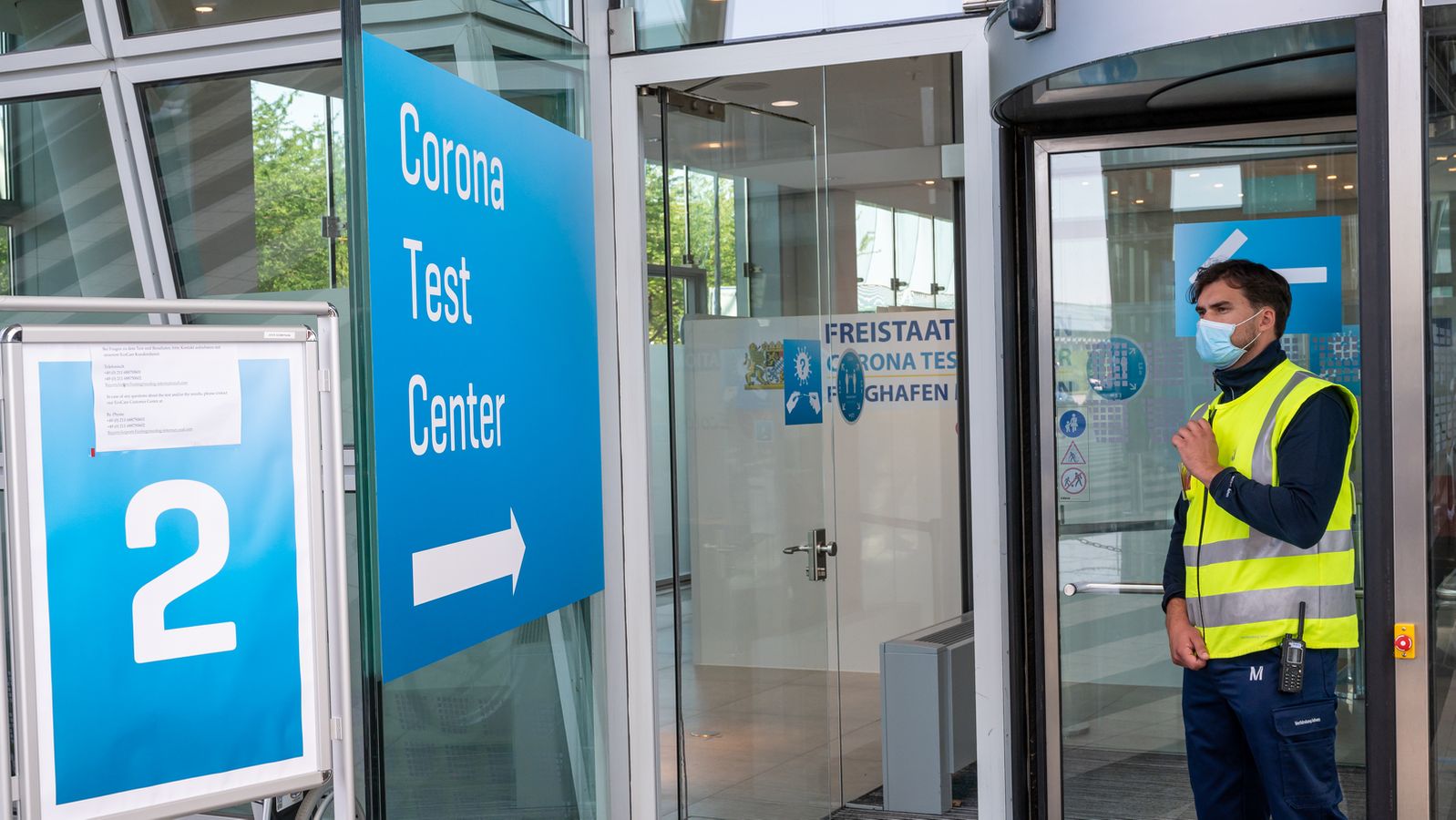
PCR-Tests könenn das Virus selbst nicht nachweisen und sagen nichts darüberaus, ob eine Infektion vorliegt, die Person krank oder ansteckend ist.
Publisher’s rating: Der Test weist Sequenzen der SARS-CoV-2-Virus-RNA nach, also des Erbguts. Dass diese sich finden, ohne dass der Patient infiziert ist, wäre zwar theoretisch möglich, ist aber extrem unwahrscheinlich. Der Test weist also mit sehr, sehr hoher Wahrscheinlichkeit eine Infektion nach. Darüber, ob der Infizierte krank oder zu diesem Zeitpunkt ansteckend ist, sagt er nichts aus. Dafür wurde er auch nicht entwickelt. Er soll den Erreger nachweisen.

Posts que comparam número de mortos em 2019 e 2020 e, a partir dos resultados, insinuam que a pandemia é uma farsa ou histeria.
Publisher’s rating: Enganoso: Publicações omitem a informação de que os dados do Portal da Transparência do Registro Civil não têm atualização imediata e que medidas como o isolamento social podem ter reduzido o número de falecimentos por outras causas em 2020. No estado de São Paulo, por exemplo, o número de mortes no trânsito de janeiro a junho caiu 11%, em comparação a 2019
President Kenyatta declares Kenya Covid-19 free
Publisher’s rating: False.

In den deutschen Bundesländern Hessen, Baden-Württemberg und Niedersachsen gilt die Anordnung, dass Kinder, die unter Corona-Verdacht stehen, getrennt vom Rest der Familie isoliert werden. Bei Zuwiderhandeln werden sie in einer geschlossenen Einrichtung untergebracht. Eine pädagogische Fachkraft, nach der derzeit gesucht wird, ist für die Inobhutnahme jener Kinder und Jugendlichen in Quarantäne zuständig.
Publisher’s rating: Die Schreiben stammen tatsächlich von Gesundheitsämtern in jenen drei Bundesländern, auch die darin genannten Maßnahmen stimmen großteils. Allerdings relativierten alle drei Ämter in Stellungnahmen die behördlich formulierten Passagen und betonten, dass die Vorgaben abhängig von Lebenssituation und Alter der Kinder zu betrachten seien und es nicht darum gehe, Kinder von ihren Eltern zu trennen. In der Stellenausschreibung sind Kinder und Jugendliche gemeint, die beispielsweise bereits in einer Jugendhilfeeinrichtung leben und sich zusätzlich möglicherweise mit dem Coronavirus infiziert haben.

Senador utiliza trechos de um vídeo gravado no início da pandemia pelo médico Drauzio Varella para tentar minimizar a gravidade da emergência sanitária.
Publisher’s rating: Enganoso: Trechos de vídeo gravado por Drauzio Varella antes do alastramento da pandemia de covid-19 na Europa e no Brasil foram tirados de contexto por Marcos do Val
Immer wieder wird in sozialen Netzwerken behauptet, es gebe keine Nachweise auf das Coronavirus Sars-CoV-2 mehr. Dazu werden offizielle Berichte und Tabellen des Robert Koch-Instituts (RKI) herangezogen, die die Behauptung belegen sollen - so auch in einem aktuellen Facebook-Post.
Publisher’s rating: Die Tabelle stammt aus dem Influenza-Bericht des RKI und zeigt Viren-Nachweise, die aus einem Grippe-Meldesystem stammen. Den überwiegenden Anteil der Corona-Nachweise erhält das Robert Koch-Institut jedoch von den Gesundheitsämtern.
The Facebook post used an RKI table showing no positive SARS-CoV-2 tests for calendar weeks 23 to 28 of 2020 to suggest that there were no longer any detections. The review identifies the table as part of an RKI monthly report from the Influenza Working Group, whose main purpose is monitoring influenza, rather than a comprehensive record of all coronavirus cases. The table therefore describes results from a particular surveillance system, not the full set of RKI case data. Supporting evidence: “In der gezeigten Tabelle werden für den Zeitraum von der 23. bis zur 28. Kalenderwoche 2020 keine positiven Tests auf das Coronavirus Sars-CoV-2 aufgeführt. Die Tabelle stammt jedoch aus einem Monatsbericht der «Arbeitsgemeinschaft Influenza» des RKI, die hauptsächlich die Ausbreitung von Grippeviren misst.” The report explains that the working group collects samples through sentinel medical practices, and that these samples were also tested for SARS-CoV-2 from calendar week eight of 2020. By week 28, this sentinel system had recorded only 13 SARS-CoV-2 infections. That limited count helps explain why a table covering the system could show no positive tests during the later weeks in question; it does not establish that there were no detections elsewhere. Supporting evidence: “Dazu arbeitet das RKI mit sogenannten Sentinelpraxen zusammen, also Ärztinnen und Ärzten, die «einen Überblick über die epidemiologische Situation der akuten Atemwegserkrankungen im Allgemeinen und der Influenza im Besonderen geben», wie das RKI schreibt. Bedingt durch die Corona-Pandemie werden die Proben aus diesen Praxen seit der achten Kalenderwoche 2020 «auch auf Sars-CoV-2 untersucht»”; and “Wie der Tabelle zu entnehmen ist, wurden über das Grippemeldesystem der Sentinelpraxen bis zur 28. Kalenderwoche allerdings insgesamt nur 13 Sars-CoV-2-Infektionen bekannt.” The review contrasts sentinel-practice results with the main reporting route: health authorities receive reports from doctors and laboratories, and relay them to the RKI. It gives the RKI’s report of 1,226 new cases on 12 August 2020 and says the RKI dashboard showed 219,964 confirmed infections as of 13 August. It also notes that the RKI had recorded tens of thousands of new infections since the start of calendar week 23. These figures show why the selected influenza table could not support the broader claim that SARS-CoV-2 was no longer being detected. Supporting evidence: “Der weitaus überwiegende Teil der Corona-Nachweise wird dem RKI von den Gesundheitsämtern gemeldet. Diese wiederum werden von Ärzten und Laboren informiert, die Verdachtsfälle und bestätigte Infektionen gemäß Infektionsschutzgesetz den Behörden melden müssen.”; and “Seit dem 1. Juni, also dem Beginn der in der Tabelle genannten 23. Kalenderwoche, hat das RKI Zehntausende Neuinfektionen registriert, wie unter «Fälle kumuliert» abzulesen ist.”

João Doria, que tomou e defendeu a vacina chinesa, pegou coronavírus
Publisher’s rating: FALSO: Ao contrário do que escreveu no Twitter um pré-candidato a vereador, o governador de São Paulo, que está com coronavírus, não tomou a vacina da farmacêutica Sinovac Biotech, que ainda está em testes
Wearing a single sanitary pad for long periods of time causes cancer in the uterus and bladder.
Publisher’s rating: False
خوردن نمک به جای ماسک و نقش کولر و بخاری در آسیبپذیری در برابر کرونا!
Publisher’s rating: شاخدار
Das Datum für den zweiten Lockdown steht schon fest
Publisher’s rating: Die Behauptung entbehrt jeder Grundlage. Grund: Die Behauptungen werden unter Berufung auf eine anonyme Quelle gemacht und sind daher kaum zu überprüfen.
56 girls died because of using Whisper, Stayfree
Publisher’s rating: No Basis