PeakMetrics / Fact Checks
Health & medicine fact checks
Explore claims publishers have checked about health & medicine. Read their original ratings and follow the evidence.
Search fact checks
Search by text or image13,676 published reviews in this topic

Virus Corona Covid-19 dibuat di laboratorium militer Partai Komunis Cina
Publisher’s rating: Keliru
Ein Posting auf Facebook zeigt eine Google-Trefferliste, die belegen soll, dass Medien das gleiche Foto eines Buben für die Berichterstattung über verschiedene Coronavirus-Tote genutzt haben sollen.
Publisher’s rating: Das Foto zeigt einen 14-Jährigen aus Portugal, der im März nach einer Infektion mit dem Coronavirus starb. Er wird in allen der vier gezeigten Artikel zusammen mit dem Foto erwähnt - in zwei Artikeln geht es jedoch vorrangig um andere junge Corona-Tote. Der Screenshot zeigt eine Trefferliste der Bilder-Rückwärtssuche von Google, so dass der falsche Eindruck entstehen kann, jeder der Artikel sei mit dem gleichen Foto aufgemacht worden.
The Facebook post used a Google image-search results screenshot to suggest that several outlets had used the same boy’s photo to illustrate different young coronavirus victims. The review examined the four listed articles: one from Metro, two from the Daily Mail and one from the Sun. It reports that the Metro and Sun articles, dated March 29, 2020, concerned a 14-year-old from Portugal who died in a Porto hospital after contracting coronavirus. (The review says newspapers reported that he was then Europe’s youngest pandemic death.) The two Daily Mail articles were dated March 31 and concerned different children: a 12-year-old girl in Belgium whose death was announced that day, and a 13-year-old boy from London reported to have died on March 30. The review says both articles also mentioned the Portuguese boy and showed his photo. But it distinguishes a photo appearing within an article from a photo illustrating that article’s main subject: text and captions identified the image as the Portuguese boy, not either of the other children. The review also explains why the screenshot could mislead. It identified the image as a Google reverse-image-search results list, citing the displayed image dimensions as a clue. Searching with the photo and terms such as “Coronavirus” and “Victim” returned articles that discussed other deaths and later mentioned the Portuguese boy. Google’s results view displayed those articles’ headlines about their principal subjects alongside the image, creating the impression that the image illustrated each headline’s subject. The review therefore supports the narrower conclusion that all four articles included the boy and his photo, but not that the two Daily Mail stories used his photo to depict the other children.
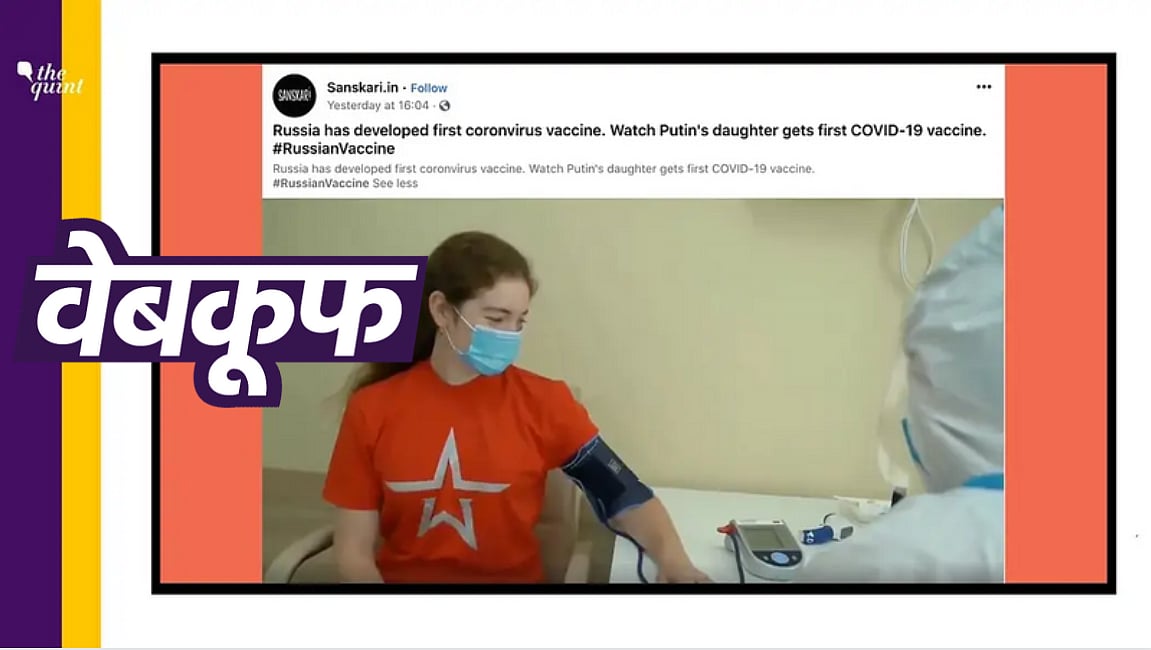
Putin’s Daughter Being Vaccinated for COVID-19
Publisher’s rating: FALSE
Zum Schutz vor Corona-Infektionen gilt für Fahrgäste im öffentlichen Nahverkehr und in Zügen die Pflicht, einen Mund-Nasen-Schutz zu tragen. Doch in der Praxis hält sich nicht jeder daran. In einem Artikel wird nun behauptet, wer keine Maske trage, dem drohe angeblich eine Gefängnisstrafe.
Publisher’s rating: Richtig ist, dass in mehreren Bundesländern Maskenverweigerer Bußgelder zahlen müssen. Die Deutsche Bahn will die Einhaltung der Maskenpflicht in Zügen zusätzlich mit Verweisen durchsetzen. Es stimmt aber nicht, dass Fahrgästen ohne Maske eine Gefängnisstrafe droht.
The claim concerned passengers in Germany’s public transport and trains: although masks were required, a cited article asserted that people who refused to wear one could be sent to prison. The review distinguishes that alleged criminal penalty from the rules and enforcement measures it describes. It reports that all federal states required masks on buses and trains, while each state determined the details. Several states had introduced fines for passengers who refused to wear a mask; the amounts varied, with the review giving examples of €150 in Bavaria and North Rhine-Westphalia and €40 in Hamburg. On imprisonment, the review’s decisive finding is that no state had enacted a pandemic-era rule providing for a prison sentence for someone who failed to wear a face covering as required. It also describes a separate measure on trains: the Deutsche Bahn planned to enforce the mask requirement with removals from trains, not prison. The review says train staff would repeatedly ask a non-compliant passenger to wear a covering and call the Federal Police if the passenger continued to refuse. The review points to the Railway Traffic Regulations as the basis for excluding passengers who endanger the safety or order of railway operations, or disobey railway staff. It says exclusion from carriage does not entitle the passenger to a refund. These fines and possible removals are distinct from the claimed jail sentence; the evidence in the review supports the conclusion that refusing to wear a mask could bring penalties or removal, but not imprisonment under the rules it examined.
Kein Mundschutz in der Zahnarztpraxis? Bei Facebook kursiert das Foto eines Infozettels, der angeblich in einer Zahnarztpraxis im deutschen Bundesland Saarland aufgehängt wurde. Mit diesem fordert der Zahnarzt seine Patienten auf, in seiner Praxis bitte keinen Mundschutz zu tragen. Zur Erläuterung heißt es: «Hier gilt die behördliche Anordnung nicht und ich kann diesen hygienischen Unsinn mit dem Mundschutz aus fachlichen wie hygienischen Gründen nicht nur nicht unterstützen, sondern lehne dies komplett in Laienhänden und erstrecht in der Öffentlichkeit ab» (Sic!).
Publisher’s rating: Der Aushang ist echt. Doch die Behauptung, in einer Zahnarztpraxis gelte nicht die behördliche Anordnung, eine Mund-Nasen-Bedeckung zu tragen, ist falsch. Der Aushang musste darum unterdessen entfernt werden.
The review examined a Facebook-circulated photo of a notice attributed to a dentist in Saarland. The notice asked patients not to wear a mask and asserted that the official requirement did not apply in the practice. The review checked both whether the notice was genuine and whether the claimed exemption matched the rules in force. To check the notice’s provenance, the agency compared its design and practice logo with the dentist’s website. It also reported that a spokesperson for the municipality of Bous confirmed both that the practice existed and that the misleading notice had been displayed. The dentist had not responded to the agency’s inquiry at the time of the review. The review then examined Saarland’s pandemic regulations. It says the amendment dated May 29, 2020, effective June 1, expressly required visitors to dental practices to wear a mask, subject to exceptions for health reasons or when the nature of treatment made a mask incompatible. The review reports that subsequent regulations through the version effective at the time repeated this provision. The Bous spokesperson said the mask requirement applied in dental practices and that local authorities had secured removal of the notice. The review also noted that the photo continued to circulate online as of August 12, 2020.
In Corona-Verdachtsfällen müssen Betroffene unter Umständen in Quarantäne. Im Internet kursiert dabei die Behauptung, Ämter wollten Kinder in solchen Fällen getrennt von ihren Eltern in eine Isolation schicken. Angeblich würden sogar schon Mitarbeiter gesucht, um die Kleinen zur Umsetzung einer Corona-Quarantäne aus ihren Familien zu holen. Als angeblicher Beleg dient die Stellenanzeige einer Diakonie für den Bereich der «Inobhutnahme».
Publisher’s rating: Die Stellenanzeige ist echt. Falsch ist jedoch, dass es eine der Aufgaben ist, Kinder bei einem Corona-Verdacht ihren Eltern zu entziehen. Vielmehr geht es bei dem Jobangebot um die Betreuung von Kindern und Jugendlichen, die zum Beispiel bereits in einer Einrichtung der Jugendhilfe untergebracht sind und sich möglicherweise infiziert haben.
The claim concerned a Diakonie Michaelshoven vacancy in the field of “Inobhutnahme.” It was presented online as evidence that authorities planned to remove children from their families for COVID-19 quarantine. The review examined the vacancy and the purpose of the service it described, distinguishing care for children already in youth-welfare situations from taking children out of an otherwise safe home because of a suspected infection. The review says the advertisement was genuine, but describes the children concerned as those taken into care by the youth welfare office following a court decision. If COVID-19 infection was suspected, they would temporarily be cared for in a group before, for example, moving to a residential youth-welfare placement. The Diakonie clarified that the service was not intended to take children from an intact family; it was meant to help children facing acute danger in their home environment or already living in a youth-welfare facility. The vacancy was revised on August 10, 2020, to specify that it concerned children with an acute child-welfare risk or children already living in a youth-welfare facility who also had a suspected coronavirus infection. The review separately discusses quarantine orders and possible compulsory isolation in extreme cases. It says those measures required a judge’s order and that the Karlsruhe district authority did not envisage separating a child from parents; the child could be accommodated with one or both parents.

Video of Russian President Vladimir Putin’s daughter getting vaccinated
Publisher’s rating: FALSE
The claim concerns a video shared as showing Russian President Vladimir Putin’s daughter receiving a COVID-19 vaccination, after Putin announced that Russia had approved its Sputnik V vaccine and that one of his daughters had been vaccinated. FACTLY’s review identifies the woman shown in the circulated video as Natalya, a volunteer in the Russian vaccine trials—not Putin’s daughter. It says she had been vaccinated as part of those trials. To identify the woman, the review says it searched screenshots from the video using Yandex reverse image search and found videos with similar visuals. One video, uploaded by a Russian channel in July 2020, described a group of volunteers being discharged from Burdenko Main Military Clinical Hospital after a vaccine trial. The review also matched the woman to images and video published by Zvezda: an article from June 2020 and a video about the Russian clinical trials published on July 13, 2020. Zvezda identified her as “Natalya” and as a cadet at the Military Medical Academy named after S.M. Kirov. The review further says the same woman could be seen without a mask in another Zvezda article, and contrasts her identity with reporting that Putin’s daughters are Maria Vorontsova and Katerina Tikhonova. Taken together, the review’s reported image comparisons and the earlier trial-related media identify the vaccinated woman as a trial volunteer, not Putin’s daughter. The supplied excerpt does not provide links to the archived social-media post or the cited Zvezda materials, so those underlying items cannot be independently assessed from this evidence alone.

రష్యా అధ్యక్షుడు వ్లాదిమిర్ పుతిన్ కూతురికి కోవిడ్-19 వాక్సిన్ ఇస్తున్న వీడియో
Publisher’s rating: FALSE
Suntik KB bisa menyebabkan penyakit kista ovarium
Publisher’s rating: Keliru
Gilt im deutschen Bundesland Saarland nicht die Pflicht, einen Mund-Nasen-Schutz zu tragen? Ein Foto zeigt einen Infozettel, der angeblich in einer Zahnarztpraxis in der deutschen Gemeinde Bous (Saarland) ausgehängt wurde. Mit diesem fordert der Zahnarzt seine Patienten auf, in seiner Praxis bitte keinen Mundschutz zu tragen. Zur Erläuterung heisst es: «Hier gilt die behördliche Anordnung nicht und ich kann diesen hygienischen Unsinn mit dem Mundschutz aus fachlichen wie hygienischen Gründen nicht nur nicht unterstützen, sondern lehne dies komplett in Laienhänden und erstrecht in der Öffentlichkeit ab» (Sic!).
Publisher’s rating: Der Aushang ist echt. Doch die Behauptung, in einer deutschen Zahnarztpraxis gelte nicht die behördliche Anordnung, eine Mund-Nasen-Bedeckung zu tragen, ist falsch. Der Aushang musste darum unterdessen entfernt werden.
The claim concerns a notice photographed in a dentist’s practice in Bous, Saarland. The notice asked patients not to wear a mask and asserted that official requirements did not apply there. The investigation found that the notice was genuine, but that its assertion about the rules was incorrect. The review states that the notice was later taken down after local authorities intervened. [S1: “Ein saarländischer Zahnarzt behauptete jedoch auf einem Aushang, die behördliche Anordnung gelte in seiner Praxis nicht. Der Aushang, der offenbar von Dritten fotografiert und im Netz verbreitet wurde, ist echt.”; “Örtliche Behörden hätten darum erwirkt, dass der Aushang abgenommen worden sei.”] The decisive evidence was the Saarland regulation in force at the time. The review says the amendment dated 29 May 2020, effective 1 June, explicitly required visitors to dental practices to wear a mask, subject to exceptions where health reasons or the nature of treatment made that impossible. It reports that subsequent versions of the regulation through the version then in force on 8 August retained this requirement. [S1: “In der saarländischen Verordnung zur Änderung infektionsrechtlicher Verordnungen zur Bekämpfung der Corona-Pandemie vom 29. Mai 2020 (gültig ab 1. Juni 2020) ist in Paragraf 2 (2.4) explizit notiert, dass die Besucher von Zahnarztpraxen verpflichtet seien, einen Mund-Nasen-Schutz zu tragen – «sofern gesundheitliche Gründe oder die Art der Leistungserbringung nicht entgegenstehen».”; “Auch den nachfolgend in Kraft getretenen Verordnungen ist eben dies zu entnehmen (Verordnungen vom 12. Juni, 26. Juni, 10. Juli, 24. Juli, 8. August - letztere ist die derzeit gültige).”] To check the notice’s provenance, the review compared its design and practice logo with the dentist’s website. It also reports that a Bous municipal spokesperson confirmed both the practice and the misleading notice, and said the claim about the rules was definitively wrong. The dentist had not responded to the agency’s inquiry at the time described. [S1: “Im Internet findet sich eine Webseite des saarländischen Zahnarztes; Seitendesign und Praxislogo entsprechen der Aufmachung des Aushangs.”; “Eine Sprecherin der saarländischen Gemeinde Bous, in der der Arzt niedergelassen ist, bestätigt gegenüber der Deutschen Presse-Agentur ebenfalls die Existenz der Praxis – und des irreführenden Aushanges: Sie wisse darum.”; “Der Arzt selbst hat sich auf Anfrage der Deutschen Presse-Agentur bislang nicht dazu geäussert.”]

"I’ll be pursuing a major executive order requiring health insurance companies to cover all pre-existing conditions for all customers. ... This has never been done before."
Publisher’s rating: ACA Already Did That
Viele Menschen sorgen sich, ob mit dem Tragen einer Maske gegen das Coronavirus gesundheitliche Probleme einhergehen. Aktuell verbreitet sich in sozialen Medien eine Bildcollage, die fünf Menschen mit Rötungen oder Bläschen im Gesicht zeigt. «Durch Masken verursacht», heißt es dazu in einem Facebook-Posting.
Publisher’s rating: Es stimmt, dass Hautunreinheiten durch das Tragen einer Maske grundsätzlich möglich sind. Doch gibt es keinen Beweis, dass die Fotos solche Krankheiten zeigen. Vielmehr stehen die Hautkrankheiten auf drei Bildern der Collage nachweislich nicht im Zusammenhang mit Gesichtsmasken. Zudem wurde das Foto einer Pflegerin nachträglich manipuliert.
The review examined a Facebook collage of five people with facial redness or blisters, posted with the assertion that masks caused the skin changes. It did not treat the images as proof that masks cannot affect skin: it says irritation can occur after prolonged mask wearing. Its central finding is that the collage does not establish that the pictured conditions were caused by masks, and that several images have other documented explanations. The review traces the top-right image to a photograph of a young child with eczema herpeticum, uploaded to English Wikipedia in April 2018; it identifies the bottom-left image as a child with chickenpox, found in a photo database and on a parental information page; and it identifies the bottom-right image as a woman with rosacea, also depicted in a disease-information article. These origins predate the pandemic or identify conditions distinct from mask irritation. The review separately identifies the collage’s center-right image as a photograph of Valeria Zedde, who said she worked as an intensive-care nurse in Milan. She posted an image of mask marks after a hospital shift on 13 March 2020. But the version in the collage had been altered: the marks were darkened to look deeper. The remaining image, of a girl, was reported by her mother as an allergic reaction after several hours in a cloth mask; the review notes the mother’s Facebook post had been deleted and that online posts described treatment and a switch to a different disposable mask. Thus the collage combines images with different histories, including a personal report, rather than providing reliable evidence that all five conditions were mask-caused. The review’s qualification matters: it reports that skin irritation can occur with prolonged mask use and that people with skin conditions may experience flare-ups in the warm, humid environment under a mask. It also relays a dermatologist’s statement that wearing a mask for hours is normally not a problem, and cites practical advice to wash cloth masks daily, change disposable masks, and remove masks where they are not required. Those points distinguish a possible general effect from the unsupported attribution of the collage’s images.

అమెరికాలో ఇప్పటివరకు దాదాపు 25 వేల మందికి పైగా పిల్లలు కరోనా కారణంగా చనిపోయారు.
Publisher’s rating: FALSE
Mengkonsumsi coklat setelah makan mi instan bisa memunculkan reaksi kimia arsenic trioxide yang sangat beracun
Publisher’s rating: Keliru
Einige Menschen fühlen sich durch das Tragen von Masken eingeschränkt und hinterfragen deren Effektivität gegen das Coronavirus. Anhand eines Videos wird Ende Juli 2020 behauptet, die Weltgesundheitsorganisation (WHO) empfehle einen Mund-Nasen-Schutz nur für Menschen mit Krankheitssymptomen. In dem verbreiteten Clip ist das Statement einer WHO-Mitarbeiterin zu hören.
Publisher’s rating: Das Video ist von Februar 2020 - seitdem hat sich der Standpunkt der WHO über Masken weiterentwickelt. Mittlerweile empfiehlt die Organisation allen Menschen das Tragen eines Mund-Nasen-Schutzes an Orten, an denen es etwa nur schwer möglich ist, Abstand zu halten.
The claim relied on a WHO employee’s statement in a video to suggest that, in late July 2020, the WHO recommended masks only for people with symptoms. The review says the video was not a statement of the WHO’s guidance at that later time: the WHO uploaded it to YouTube on 5 February 2020, when its position did include advising people without symptoms that they did not need to wear medical masks. The video therefore reflects earlier guidance, rather than establishing the organization’s recommendation in July.
The number of COVID-19 cases in the University of the Philippines Diliman increased because of the SONAgkaisa protest.
Publisher’s rating: No Basis
Een groep Spaanse dokters, die zichzelf 'Medicos por la Verdad' (of 'Dokters voor de Waarheid') noemen, gaven op 25 juli een persconferentie in Madrid. Daarin werden een aantal opmerkelijke beweringen gedaan. Die worden nu ook op Nederlandse sociale media gedeeld, waaronder in deze Facebookpost. Zo beweren de artsen onder andere dat de coronapandemie in Spanje al voorbij is en dat er mogelijk een link is tussen het griepvaccin en COVID-19. Tenslotte spraken ze zich ook uit tegen het dragen van mondmaskers door de brede bevolking.
Publisher’s rating: De beweringen van de artsen zijn fout en maakten veelal reeds het onderwerp uit van een dpa-factcheck. De doeltreffendheid van mondmaskers is al aangetoond in het verleden, hoewel ze zeker geen perfecte bescherming bieden. De coronapandemie in Spanje is nog steeds gaande. Ook is er geen bewezen link tussen het griepvaccin en het SARS-CoV-2-virus, en PCR-tests zijn wel degelijk geschikt als middel om vermoedelijke patiënten te testen op COVID-19. De WHO heeft zich ook niet uitgesproken tegen lockdown.