PeakMetrics / Fact Checks
Health & medicine fact checks
Explore claims publishers have checked about health & medicine. Read their original ratings and follow the evidence.
Search fact checks
Search by text or image13,674 published reviews in this topic
Filipino woman in New York developed blood disorder after getting Moderna's COVID-19 vaccine
Publisher’s rating: Needs Context

ASPIRANTES A OFICIALES DE CARABINEROS FUERON VACUNADOS CONTRA EL COVID-19 EN PROVIDENCIA
Publisher’s rating: Real

In Südafrika ist die Lage hinsichtlich Corona-Infektionen trotz neuer Mutation entspannt.
Publisher’s rating: Tatsächlich verzeichnet Südafrika derzeit verhältnismäßig wenige Corona-Neuinfektionen und hat seine Maßnahmen gegen die Ausbreitung des Virus gelockert. Vor einigen Wochen hatte das Land aber noch mit steigenden Infektionen zu kämpfen. Der Anteil der neuen „südafrikanischen” Variante machte bei sequenzierten Fällen im Jänner 94 Prozent aus.
Vaksin flu dapat menyebabkan infeksi HIV dan kanker, maupun penyakit serta gangguan serius lainnya
Publisher’s rating: Keliru
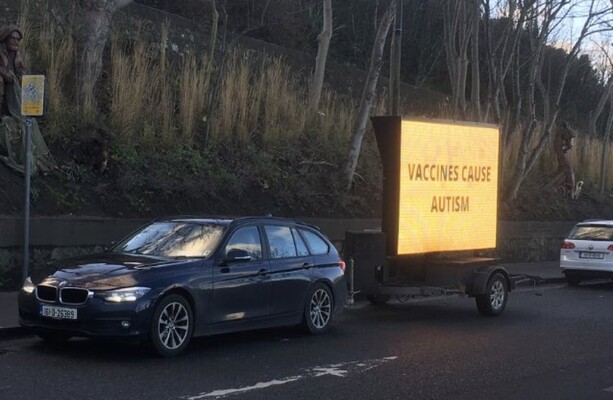
Covid-19 claims shared on a LED display driven around a number of locations in Ireland about tests, vaccines and masks
Publisher’s rating: False
TheJournal.ie investigated an unofficial LED display that had been parked beside roads in multiple Irish locations and broadcast claims about Covid-19. The review identifies messages alleging that Covid tests were fraudulent or often false positives, vaccines caused autism or had not been tested, and masks spread germs. It also reports a message describing Covid-19 as a psychological operation to collapse the world economy. The review assessed the claims individually rather than treating every message as one proposition. [S1]
Sind Lockdown und Masketragen ein wirksamer Schutz gegen das Coronavirus? Sind die harten staatlichen Maßnahmen zur Eindämmung der Pandemie gerechtfertigt? In den sozialen Medien sorgen solche Fragen immer wieder für heftige Debatten. In einem Blog-Beitrag (hier archiviert) werden nun verschiedene wissenschaftliche Studien angeführt, die angeblich die «Wirkungslosigkeit» des Lockdowns offenbaren: Staatliche Maßnahmen hätten demnach keinerlei Auswirkung auf die Entwicklung der Infektionszahlen.
Publisher’s rating: Die Studienergebnisse sind ihrem Kontext entrissen sowie verkürzt widergegeben. Die verschiedenen staatlichen Maßnahmen wie Kontaktbeschränkungen, Schulschließungen und Masketragen führen - zusammengenommen - sehr wohl zu einem Rückgang der Infektionszahlen; unklar ist allenfalls, wie stark jede einzelne Maßnahme wirkt.
The reviewed blog post cited several studies to support the assertion that government measures had no effect on infection trends. The review says the studies’ findings were taken out of context and presented too categorically. Its account distinguishes evidence about the combined effect of measures from the harder question of how much each individual intervention contributes. «Die verschiedenen staatlichen Maßnahmen wie Kontaktbeschränkungen, Schulschließungen und Masketragen führen - zusammengenommen - sehr wohl zu einem Rückgang der Infektionszahlen; unklar ist allenfalls, wie stark jede einzelne Maßnahme wirkt.» One cited paper, “Four Stylized Facts About Covid-19,” analyzed Covid-19 death-rate trends in regions after they had recorded 25 deaths. The review reports that the authors observed growth rates approaching zero after 20 to 30 days, but says they used those observations to caution against overestimating non-pharmaceutical interventions—not to conclude that interventions had no effect. It also notes that the paper described itself as offering observations and warnings to stimulate discussion, rather than establishing that government measures were ineffective. The review describes a second study of Denmark’s Jutland region, where infections were already declining before a lockdown was announced, as well as in neighboring regions without restrictions. The researchers suggested voluntary behavior changes and close monitoring of infection clusters as possible explanations, and emphasized that falling infections usually reflect multiple factors. The review says this does not establish that lockdowns had no effect. A third cited paper estimated substantial social and economic costs from lockdowns, but the review notes it was a preprint that had not undergone expert review. As further evidence, the review reports that comparative analyses by Germany’s Robert Koch Institute and an international research group found that measures including contact and assembly restrictions, school closures, and mask-wearing were associated with substantial changes in infection rates, while acknowledging statistical uncertainty. It also quotes an evidence-based-medicine expert who said that separating the effects of individual measures is methodologically difficult, but that this uncertainty does not mean the measures are ineffective.
Ang Singapore ay nakapagbakuna lamang ng 1.98% ng populasyon nito laban sa COVID-19 hanggang Peb. 2.
Publisher’s rating: Hindi totoo
Mit Kritik an angeblich «gleichgeschalteten Wissenschaftlern und Medien» versucht ein Artikel auf dem Blog «Philosophia Perennis», Zweifel an den bisherigen behördlichen Erkenntnissen zum Zusammenhang von Corona-Impfungen und Todesfällen zu wecken (hier archiviert). Der Vorwurf: Bei den bislang offiziell genannten 113 Menschen, deren Tod in einem zeitlichen Zusammenhang mit einer Corona-Impfung von den Behörden registriert wurde, würden hohes Alter und Vorerkrankungen als Faktoren angeführt - anders als bei den offiziell gemeldeten Corona-Todesfällen. Die Rede ist von «exorbitant hohen Sterbefällen» - gemeint ist wohl eine unerwartet hohe Zahl an Sterbefällen nach Corona-Impfungen. Zudem behauptet der Artikel: In Österreich gebe es «umfangreiche Weigerungen von Pflegepersonal», sich impfen zu lassen.
Publisher’s rating: Die 113 Fälle stellen nach Einschätzung des zuständigen Paul-Ehrlich-Instituts und von Experten keinen unerwartet hohen Wert dar. Der Vergleich mit Corona-Todesfällen hinkt zudem: Während es bei den erwähnten 113 Todesfällen nach offiziellen Angaben keine Hinweise auf einen kausalen Zusammenhang zwischen Impfung und Tod gibt, ist bei den offiziell vermeldeten Corona-Toten die Erkrankung eine oder die alleinige laborbestätigte Todesursache. Die Impf-Verweigerungen in Österreich beziehen sich nur auf einen konkreten Impfstoff - aus Sorge, dass dieser nicht wirksam genug sein könnte.
The article under review questioned official findings about deaths reported after COVID-19 vaccination, describing 113 such cases as “exorbitant” and comparing them with COVID-19 deaths. It also said there was widespread refusal among care staff in Austria to be vaccinated. The review traces the figure of 113 to a Paul-Ehrlich-Institut (PEI) safety report published on 4 February 2021, based on reports of deaths occurring after vaccination—not necessarily because of it. Doctors are required to report complications after vaccination, including those occurring only in temporal association. The report covered vaccines from BioNTech/Pfizer and Moderna. The PEI listed several reported causes or circumstances: 20 deaths during COVID-19 illness, 33 involving multiple pre-existing conditions, 10 involving other infectious diseases, and 50 with unknown causes. The review notes that the report did not identify vaccination as a cause of death. The PEI’s probability calculation also found that the observed number of deaths after vaccination did not exceed the number expected without vaccination, taking into account factors including doses administered and usual mortality in the relevant age group. An updated report maintained that assessment as the reported numbers rose. The comparison with COVID-19 deaths is not equivalent, the review explains: those deaths were associated with a laboratory diagnosis, whereas the 113 reports after vaccination did not establish a causal link to vaccination. As for Austria, the reported objections concerned several hundred staff at the University Hospital Graz and a plan to use the AstraZeneca vaccine. The review says their stated concern was its potentially lower effectiveness against newly emerged virus variants, not fear of side effects.
Singapore has vaccinated only 1.98% of its population against COVID-19 as of Feb. 2.
Publisher’s rating: False
Tanging ang Singapore, India at Indonesia ang nagsimula ng COVID-19 vaccination sa mga bansa sa Asia hanggang Peb. 2.
Publisher’s rating: Hindi totoo
Only Singapore, India and Indonesia have started COVID-19 vaccination among countries in Asia as of Feb. 2.
Publisher’s rating: False


రాజస్తాన్ లోని పసిఫిక్ ఇన్స్టిట్యూట్ ఆఫ్ మెడికల్ సైన్స్ అందరికి ఉచితంగా వైద్యం అందిస్తుంది
Publisher’s rating: FALSE

Those who receive the COVID-19 vaccine will face a 1-in-10,000 chance of death
Publisher’s rating: Not Legit
The MediaWise review examined a Rebel News video that said people who received the COVID-19 vaccine faced a 1-in-10,000 chance of death. The review traced that figure to the FDA briefing document on Pfizer’s vaccine trials. It reports that two of approximately 21,000 trial participants who received the vaccine died during the trial—one from a heart attack and one from arteriosclerosis. The review explains why those trial deaths do not establish the claim’s stated risk: a death occurring during a trial is not, by itself, evidence that vaccination caused it, and the review cautions against extrapolating the trial result to the whole population. It also cites another FDA document stating that investigators assessed none of the deaths as related to the study intervention. On that evidence, the review says there was no evidence that the vaccine gave a person a 1-in-10,000 chance of dying. The article’s method, as described in the excerpt, was to look for official statistics in FDA documents and distinguish deaths recorded during the trial from deaths attributed to the vaccine. It does not provide the full documents or additional trial data in the supplied text, so the explanation here is limited to the figures and assessment the review reports. The printed rating is “Not Legit.”
Die Verbreitung von falschen Informationen rund um die Corona-Pandemie reißt auch beinahe ein Jahr nach Auftreten der ersten Fälle in Österreich nicht ab. In einem Facebook-Posting (hier archiviert) werden derzeit etwa einige Behauptungen aufgestellt: Es gebe keine Pandemie mehr, da die Weltgesundheitsorganisation (WHO) am 15. Oktober 2020 bestätigt habe, dass Corona gleichzusetzen sei mit der Influenza. Die geltende Maskenpflicht sei vom Verfassungsgerichtshof (VfGH) aufgehoben worden und die Regierung setze sie weiter ein. Da der VfGH bereits 80 Prozent der Verordnungen von Gesundheitsminister Rudolf Anschober (Grüne) aufgehoben habe, bedeute das, dass auch alle zukünftigen Verordnungen aufgehoben werden würden. Friseure dürften - im zum Erstellungszeitpunkt des Postings geltenden Lockdown - im mobilen Service arbeiten. Im privaten Bereich würden nämlich keine der Regelungen greifen.
Publisher’s rating: Die genannten Behauptungen sind falsch. Die WHO hat nicht bestätigt, dass das Coronavirus gleichzusetzen ist mit der Grippe. Die Maskenpflicht gilt weiterhin. Der VfGH hat zwar einzelne Covid-19-Maßnahmen aus formalen Gründen rückwirkend für verfassungswidrig erklärt. Damit werden jedoch nicht automatisch alle zukünftigen Verordnungen aufgehoben. Friseure durften im Lockdown auch nicht im mobilen Service arbeiten.

Diretor-presidente da Anvisa admite que população corre risco grave ao tomar a vacina
Publisher’s rating: FALSO: Em vídeo postado no Twitter, Antônio Barra Torres aparece dizendo que a população “corre risco sanitário grave”, mas as imagens foram editadas para fazer parecer que ele se referia às vacinas já aprovadas.
Viele schwere Nebenwirkungen durch Corona-Impfstoffe, aufgeführt in einem offiziellen Bericht der britischen Arzneimittelbehörde MHRA: Diese Behauptung wird derzeit in mehreren Artikeln aufgestellt, die sich in den sozialen Netzwerken verbreiten. So sollen fünf Menschen erblindet sein, 21 einen Schlaganfall erlitten haben, vier eine Fehlgeburt und 107 Menschen sollen gestorben sein - «und das alles als Folge eines experimentellen, notfallmäßig zugelassenen Impfstoffs», wie die Seite «Unser Mitteleuropa» schreibt (hier archiviert). Auf der Schweizer Seite «Uncut-News» heißt es (hier archiviert): «Alles dank eines experimentellen Impfstoffs». Was aber besagen die offiziellen Behördenangaben aus Großbritannien wirklich?
Publisher’s rating: Den Artikeln liegt ein Irrtum zugrunde. Der britische Bericht listet Meldungen über gesundheitliche Probleme und Todesfälle auf, die aufgrund eines zeitlichen Zusammenhangs möglicherweise Nebenwirkungen von Impfungen sind. Wie die Behörde an vielen Stellen ihres Berichts betont, handelt es sich nicht um bestätigte Nebenwirkungen nach Corona-Impfungen. Die MHRA wertet solche Meldungen statistisch aus - bislang ohne Auffälligkeiten.
Bill Gates is calling for mandatory vaccinations of all people
Publisher’s rating: Not Legit
The review examined a Rebel News YouTube video alleging that Bill Gates wanted everyone—including pregnant people and children—to be forced to take a COVID-19 vaccine. MediaWise treated that as a claim about compulsory vaccination, distinct from the video’s separate assertion that vaccination carried a 1-in-10,000 chance of death. (“A YouTube video from Rebel News claims that Bill Gates is calling for the mandatory vaccination of all people, and states that the billionaire Microsoft co-founder wants pregnant people and children to be forced to take it.”)
Pandemi flu Spanyol bukan disebabkan oleh virus, tapi pneumonia bakteri yang berasal dari masker
Publisher’s rating: Keliru
Seit einiger Zeit gilt unter anderem im Handel in Österreich eine FFP2-Maskenpflicht. In Sozialen Medien werden seither zur Wirksamkeit der Masken vermehrt irreführende Beiträge verbreitet. Ein User teilt etwa in einem Facebook-Posting (hier archiviert) eine Tabelle, die die Einsatzbereiche der FFP2-Maske denen der FFP3-Maske gegenüberstellt. Bei der FFP3-Maske heißt es, sie schütze unter anderem vor Aerosolen und im Umgang mit Viren. Bei der FFP2-Maske steht das nicht.
Publisher’s rating: FFP2-Masken können effektiv vor Viren wie Sars-CoV-2 schützen, wie viele Studien belegen. Auch das Unternehmen, das die Tabelle ursprünglich veröffentlicht hat, bestätigt dies.
The claim concerns an Austrian Facebook post comparing the stated uses of FFP2 and FFP3 masks. The post’s table omitted a virus-protection statement under FFP2, while listing protection against aerosols and viruses for FFP3. DPA traced the table to the German industrial respiratory-protection company Bartelsrieger and found that the post used an older version. In the version current as of February 15, 2021, the table also said FFP2 masks protect against aerosols and viruses in risk group 2, and in exceptional cases risk group 3. Bartelsrieger told DPA by phone that it had added this information in January 2021 after callers asked for more detail about FFP2 protection against viruses. The company said the original table was intended for industrial customers and was incomplete on this point, rather than false. The review also cites the German Federal Institute for Drugs and Medical Devices, which says FFP masks’ filtration performance protects against particles, droplets and aerosols, and the University of Münster, whose experts said SARS-CoV-2 aerosols are very likely bound by FFP2 filter material. Virologist Norbert Nowotny told DPA that FFP2 masks are not “virus-tight” like FFP3 masks, but still protect against viruses. Thus the old table’s omission did not establish that FFP2 masks cannot protect against viruses; the source says they can, while distinguishing them from the more tightly filtering FFP3 masks.