PeakMetrics / Fact Checks
Health & medicine fact checks
Explore claims publishers have checked about health & medicine. Read their original ratings and follow the evidence.
Search fact checks
Search by text or image13,667 published reviews in this topic
you can get fair feet instantly using a quick home remedy
Publisher’s rating: Mostly False
a Coca-Cola concoction can reverse the graying of hair
Publisher’s rating: False

using mobile phones affect vision
Publisher’s rating: Missing Context
there is a new drug which can cure Diabetes
Publisher’s rating: False
the use of toothpaste increase the risk of cancer
Publisher’s rating: Half True
applying potato poultice can treat inflammation
Publisher’s rating: Mostly False
Related reporting describes raw potato poultices as a traditional remedy for inflammation and swelling, but the supplied excerpts do not provide clinical evidence that they treat either condition. One article says raw potato may be applied to an inflamed area and attributes cooling and other effects to it; another mentions a potato poultice for tissue swelling. These are descriptions of asserted uses, not reports of a controlled test or documented clinical assessment. A separate home-remedies article discusses raw potato in the context of insect bites and stings, but the excerpt does not include the specific potato-remedy instructions or results. It broadly says the listed remedies are reader-tested and work to reduce itching and inflammation, without supplying study methods or evidence specific to potato. Taken together, the excerpts document traditional and anecdotal claims, not proof that applying potato poultice can treat inflammation.

‘Doe één eetlepel azijn in een glas lauw water en drink het een tiental minuten voordat je aan tafel gaat, of gebruik azijn bij je eten: in een salade of op je (afgekoelde) rijst. Volgens wetenschappelijk onderzoek zou azijn een positief effect hebben op de bloedsuikerspiegel. Azijn zal er niet alleen voor zorgen dat de bloedsuiker niet de hoogte in schiet, maar ook dat de suiker meer en sneller wordt opgenomen door de spieren, waar het kan dienen als energie.'
Publisher’s rating: Eerder onwaar
onions can cure cough, allergies, sore throat, and fever
Publisher’s rating: Mostly False
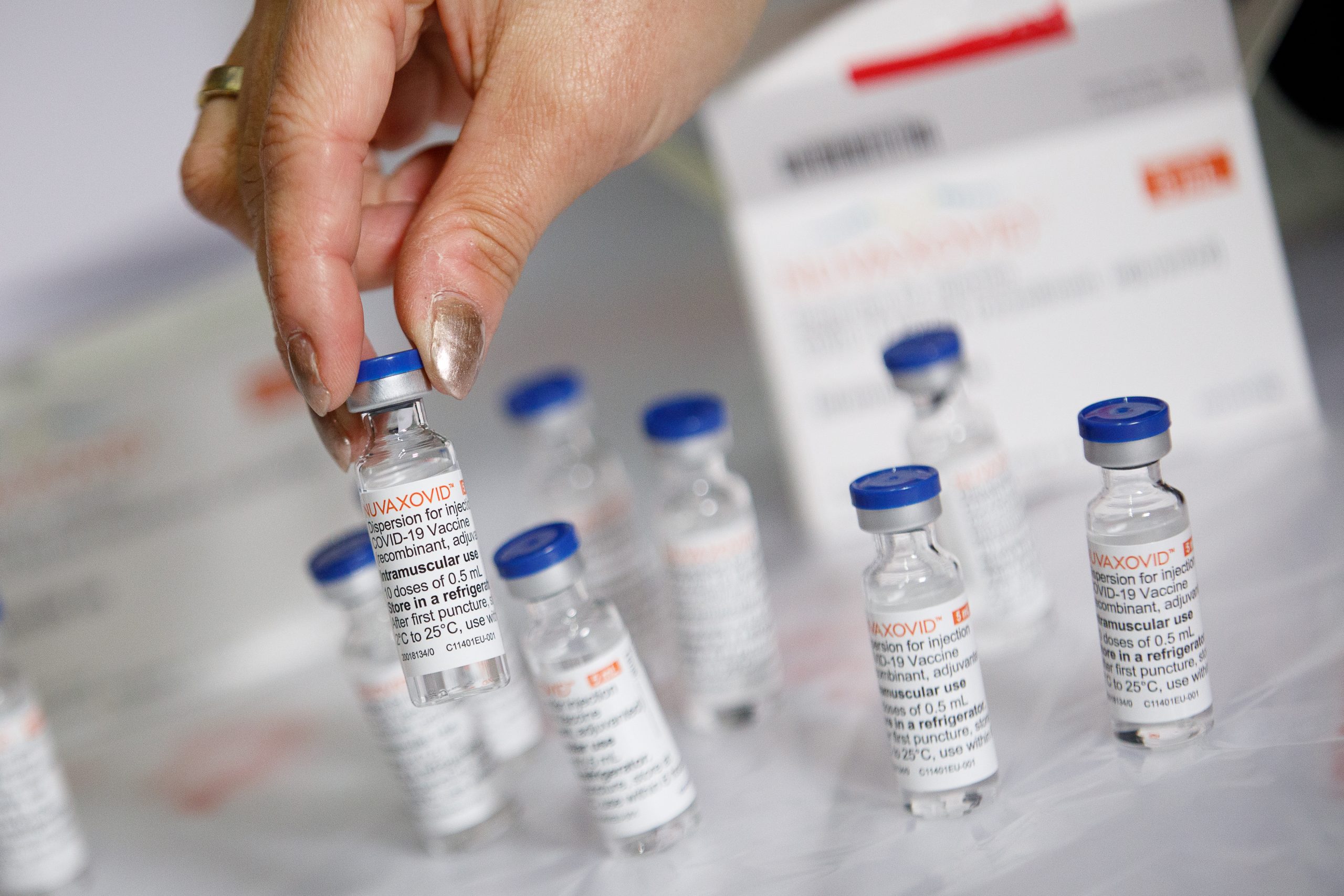
Die Wirkung der Covid-19-Impfung hat laut aufeinanderfolgenden Headlines in Zeitungen kontinuierlich abgenommen.
Publisher’s rating: Die Darstellung, die mit den im Video verwendeten Zeitungsüberschriften suggeriert wird, ist irreführend. Die Überschriften sind chronologisch falsch wiedergegeben und es werden teilweise „Real Life“-Studien mit klinischen Studien verglichen, was wissenschaftlich wenig Sinn ergibt.
The APA review examines a circulating video montage that arranges newspaper headlines and quotations to suggest that COVID-19 vaccine effectiveness steadily fell. It reports that the montage includes 111 items, moving from a claimed 100% effectiveness to 85%, 50% and 39%, before questioning whether vaccination is worthwhile. The review’s central finding is that this presentation does not provide a reliable chronological account: the headlines are shown out of order, and the montage compares results from different kinds of studies that are not directly comparable. To illustrate the chronology problem, the review checks the first few headlines against their dates. A headline about an AstraZeneca study reporting 100% effectiveness against deaths and hospitalizations referred to a March 2021 study; the next, from Fox News, appeared in February 2021; and another screenshot was from September 2020, before vaccines were authorized. The reviewed screenshots span September 2020 to October 2021, a period when vaccines moved from development toward authorization and use. The review also identifies one item as a 2011 report about a different vaccine, against pneumonia. The review explains that the cited results concern different vaccines, virus variants, and study settings. In particular, it contrasts a Phase III clinical trial for AstraZeneca with a later CDC “real life” study, noting that real-world participants and conditions can differ from those in controlled clinical trials. It also says the vaccines were initially developed principally to prevent deaths and severe disease, not necessarily infection. The video therefore cannot establish a steady decline in effectiveness by lining up these headlines as if they measured the same thing under comparable conditions. The review does acknowledge that effectiveness against asymptomatic and mild infections declined over time and as the virus mutated, but says this montage is not an informative account of that process.

Postagem afirma que houve um aumento “monstruoso” de tumores malignos entre 2021 e 2022 entre pessoas jovens na Inglaterra, que chegaria “perto de 50%”, e de mortes por causas cardiovasculares. A autora afirma que o Ministério da Saúde britânico atribui isso à Covid longa, mas que o fenômeno teria sido causado, na verdade, pela “terapia genética, rotuladas [sic] como vacina anti-Covid — a verdadeira causadora desta explosão de doenças e mortes”. O post traz dois gráficos com legenda em inglês e o link para uma pesquisa que supostamente identificou o problema.
Publisher’s rating: Falso
The post claimed that malignant tumors and cardiovascular deaths surged among younger people in England between 2021 and 2022, and blamed Covid-19 vaccines. Its cited investment-firm publication presented excess cancer deaths among people aged 15–44 in England and Wales, but the review says the publication did not establish whether the people who died had been vaccinated. It also found no other evidence in that publication supporting a causal link between vaccination and those deaths. The review compared the post’s “near 50%” figure with official mortality data obtained from the UK Office for National Statistics (ONS). It reports that cancer deaths in England and Wales rose by 1.4% in 2021 and 4.3% in 2022. Comprova’s tabulation found 1,744 excess cancer deaths across the two years, equivalent to 0.57% of the 300,896 cancer deaths in that period. The cited publication discussed excess deaths calculated using its author’s own method, not the change in the absolute number of deaths; the review says that measure alone cannot establish vaccination as the cause. The review also reports that scientific studies and British medical organizations attributed increases in cancer and heart-disease deaths during and after the pandemic to disruption of healthcare, including delayed diagnoses and interrupted treatment. It says those sources did not identify vaccination as the cause. Separately, it cites a University of Birmingham study showing that vaccination reduced Covid-19 deaths among cancer patients. The evidence described in the review therefore does not support the post’s claim that vaccines caused the reported increases.

Fue aprobada una “vacuna aérea” contra el covid-19 de Bill Gates para vacunar sin el consentimiento de las personas.
Publisher’s rating: Falso

Las mamografías no son seguras y sus beneficios no superan los riesgos.
Publisher’s rating: Falso

Johns Hopkins University has foreseen a pandemic occurring in 2025
Publisher’s rating: FALSE
The claim arose from a social-media post sharing a screenshot of a newspaper dated 17 October 2025, which discussed an unfamiliar illness. The post treated the screenshot and Johns Hopkins’ SPARS document as evidence that the university had foreseen a pandemic in 2025. The review identifies that document as a publication by the Johns Hopkins Center for Health Security titled “The SPARS PANDEMIC 2025-2028,” and says it was published in 2017—not as a forecast, but as a written exercise about possible pandemic challenges. The key distinction is between a hypothetical scenario and a prediction. The review describes SPARS as a self-guided exercise and says its 2025–2028 coronavirus scenario was intended to explore challenges such as communication and finding an effective treatment. It also quotes the document’s disclaimer, which calls it a hypothetical scenario illustrating public-health risk-communication challenges that could arise during a naturally occurring outbreak. The scenario’s future dates therefore describe the exercise, not an announced expectation that an outbreak would occur then. The review also addresses the post’s comparison to a 2019 simulation involving the Johns Hopkins Center for Health Security, the World Economic Forum and the Bill & Melinda Gates Foundation. It acknowledges that the exercise took place before COVID-19, but explains that simulated scenarios and conferences do not establish that the later pandemic was premeditated. Taken together, the report’s stated purpose, its hypothetical-scenario disclaimer and the review’s account of the 2019 exercise do not support the claim that Johns Hopkins predicted a pandemic in 2025.

Consuming sweet salads impact masculinity.
Publisher’s rating: “The association of sweets with femininity has historically led to a stigma against male consumption of sweets”, there is no scientific evidence to prove that they impact masculinity in anyway.
COVID-19 vaccines poisonous
Publisher’s rating: Mostly False
sea moss increases libido
Publisher’s rating: Mostly False