PeakMetrics / Fact Checks
Economy & business fact checks
Explore claims publishers have checked about economy & business. Read their original ratings and follow the evidence.
Search fact checks
Search by text or image7,104 published reviews in this topic
"There's a million Australians doing two jobs and there's a million Australians who are underemployed."
Publisher’s rating: Correct

My administration has so far improved its (Ondo state) IGR from N700 million monthly to over N1.5 billion monthly.
Publisher’s rating: The claim that his administration improved the state IGR from N700 million was PARTLY FALSE as the state average monthly IGR from 2012 to 2015 has been more than N700 million, except in 2016 when it fell by 14 percent to N723.7 million!
Ondo IGR now over N1.5 billion monthly – Akeredolu
Publisher’s rating: TRUE, Governor Akeredolu’s claim that Ondo state monthly IGR has increased to over N1.5 billion was correct as the state generated an average monthly IGR of N2.07 billion in 2018.
There are 10.5 million jobless Filipinos as of 2016
Publisher’s rating: False: The correct figure is 2.4 million.

Suecia ha implementado jornada laboral de seis horas
Publisher’s rating: Falso
The claim is that Sweden implemented a six-hour workday nationally. The review says this is not the case: Swedish law sets a 40-hour workweek, and the six-hour schedules that prompted the claim were limited experiments or particular workplaces. It reports that Sweden’s embassy described the normal schedule as eight hours, while acknowledging that experiments had taken place. Supporting quotations: “En este país la jornada laboral fijada por ley es de 40 horas semanales”; “Desde la embajada de Suecia señalan que ‘siguen siendo ocho horas aunque ha habido experimentos’.” The main example was a trial in a Gothenburg nursing home, not a nationwide change. The municipality decided in 2014 to test six-hour days without reducing pay, and the project began the following year at Svartedalen. The review says 17 nurses were hired to cover the hours and that the trial ended in 2016, according to the city council. Supporting quotations: “En 2014, el Ayuntamiento decidió experimentar con la jornada de seis horas sin reducir el salario”; “El proyecto empezó un año después en la residencia de ancianos de Svartedalen y se contrató a 17 enfermeras más para cubrir las horas”; “Pero el proyecto terminó en 2016, como nos confirma el Ayuntamiento de la ciudad.” The review attributes the false impression to coverage of the Gothenburg experiment being misrepresented as a national policy. It also notes that other six-hour arrangements existed, including two Toyota shifts for 36 mechanics and one Sahlgrenska hospital unit; these examples likewise do not establish that Sweden adopted a national six-hour workday. Supporting quotations: “muchas páginas web concluyeron erróneamente que a través de esta prueba el país escandinavo estrenaba las 30 horas semanales”; “la fábrica de coches Toyota, que cuenta con 112 empleados, lleva más de trece años con dos turnos diarios de seis horas para 36 mecánicos”; “Una de nuestras unidades de cirugía implementó una jornada laboral de seis horas en febrero de 2015”.

Claim: State Govts opposing GST for petrol diesel
Publisher’s rating: TRUE
The review investigates a viral Dinamalar video claiming that state governments were preventing GST from being applied to petrol and diesel. It identifies the speaker as auditor Shekar and says the video was posted on April 4. The review describes his argument as being that state governments opposed the change because fuel sales provide them with tax revenue, and that prices would fall if GST were applied. The publisher’s stated conclusion is that the Facebook post’s central claim was supported. To check the video, the review says it searched for supporting reports and found that petroleum products had not yet been brought under GST. It also cites reporting in The Economic Times in which Union oil minister Dharmendra Pradhan said applying GST to petroleum products without state governments’ approval would be difficult. The review further reports that the central government had sought states’ views through the GST Council and that some states objected on revenue-loss grounds. The evidence presented supports the narrower point that state governments’ approval and revenue concerns were obstacles to including petrol and diesel in GST. The excerpt does not identify which states objected, provide the cited news reports’ dates or details, or establish that every state opposed inclusion. Nor does it independently demonstrate the video’s prediction that applying GST would automatically lower fuel prices.

Modi has used the 280 tonnes of the country’s gold as collateral.
Publisher’s rating: FALSE
The review examines a social-media post alleging that Modi used India’s gold as collateral. Its account identifies an important difference in the amount: the post’s allegation is described in the review as 280 kg, whereas the claim supplied here says 280 tonnes. The review does not support the allegation at either scale; its stated finding rests on the Reserve Bank of India’s response about whether gold was moved abroad. To check the allegation, the review says it searched for reporting on the issue and found a press release from RBI Chief General Manager Yogesh Dayal addressing reports that RBI had shifted some of its gold holdings abroad in 2014. Dayal said RBI had not shifted gold from India to other countries in 2014 or thereafter. On that basis, the review concludes that Modi did not use the country’s gold as collateral. The excerpt does not describe a separate inquiry into a pledge or collateral transaction, so the documented evidence specifically addresses the reported transfer of gold abroad.
"We enacted the biggest tax cuts and reforms in American history."
Publisher’s rating: False
"After years of wage stagnation, we are finally seeing rising wages."
Publisher’s rating: Mostly False
"Americans pay vastly more than people in other countries for the exact same drugs, often made in the exact same place.”
Publisher’s rating: True
$77 billion of the Government's tax package would go to people earning more than $180,000 a year.
Publisher’s rating: Justifiable
The claim arose during the 2019 federal election campaign. In a leaders’ debate on May 3, Opposition Leader Bill Shorten said that $77 billion of the Coalition government’s tax package would go to people earning more than $180,000 a year over a decade. The review tested that specific figure against estimates of the Coalition plan’s tax benefits for that income group. It reports that the government had not provided its own figure for the value of tax relief going to those earning above that threshold. [S1]

US government has issued 100 dollar note with Dr Babasaheb Ambedkar's photo
Publisher’s rating: Fact Crescendo Rating - FALSE

[Le stime di Bruxelles] Corrispondono alle previsioni già fatte nel nostro Def, quindi ce l'aspettavamo
Publisher’s rating: Vero

Ci danno al +0,2 per cento, con la Germania che è il massimo a +0,5 per cento quest’anno
Publisher’s rating: Panzana pazzesca
The claim concerns Luigi Di Maio’s May 7, 2019 remarks on the Italian television programme Cartabianca. He said the EU forecast Italy’s GDP to grow by 0.2 per cent that year and described Germany’s 0.5 per cent forecast as the highest. The review checked those statements against the European Commission’s latest forecasts, which it says were published on May 7, 2019. It also distinguishes the newer figures from an earlier forecast: Italy had been projected to grow by 0.2 per cent in February, but the updated estimate was 0.1 per cent. On Germany, the review accepts the 0.5 per cent figure but disputes the claim that it was the EU’s highest forecast. It reports that 26 member states had higher projected growth than either Italy or Germany, placing Italy last and Germany second-last. The review gives examples across the range: France and the United Kingdom at 1.3 per cent, Greece and Spain at 2 per cent, and Malta, Poland, and Ireland at 5.5, 4.2, and 3.8 per cent respectively. It also reports an EU average forecast of about 1.4 per cent. The review’s conclusion therefore rests on two separate corrections: Italy’s 0.2 per cent figure was out of date, while Germany’s 0.5 per cent figure was accurate but not the highest in the EU. Its account identifies the Commission’s updated estimates as the basis for both comparisons.
Treasurer Josh Frydenberg claims that 99 per cent of people on unemployment benefits, Newstart Allowance, are also receiving another benefit.
Publisher’s rating: True - The checkable claim is true.
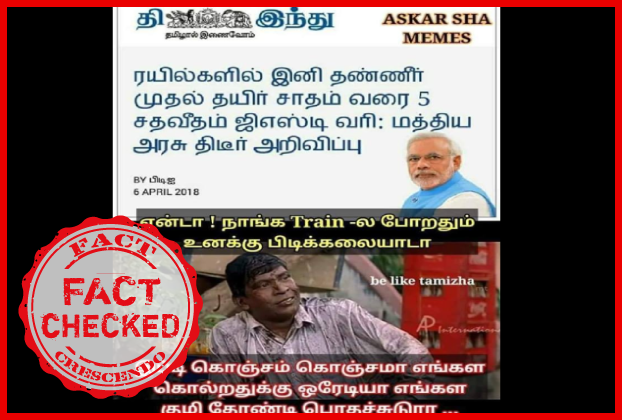
Claim: Modi looting Indians in the name of GST
Publisher’s rating: MIXTURE
Prime Minister Scott Morrison defends his tax reform plan and its impact on the highest-income earners.
Publisher’s rating: Somewhat False - Mostly false, but there is more than one element of truth.

Due to Modi 36 businessman fled from India
Publisher’s rating: MIXTURE