PeakMetrics / Fact Checks
Economy & business fact checks
Explore claims publishers have checked about economy & business. Read their original ratings and follow the evidence.
Search fact checks
Search by text or image7,104 published reviews in this topic

[La minor spesa per il reddito di cittadinanza] non è deficit. Questo dimostra proprio che non è deficit come si diceva
Publisher’s rating: Pinocchio Andante



Indian Government secretly transferred RBI's 200 tonnes of gold overseas
Publisher’s rating: Fact Crescendo Rating - FALSE
China's economy is growing "double digit every year"; 700M Chinese were lifted from poverty in 20 years.
Publisher’s rating: False: In the last 40 years, China's GDP grew double-digit only in 16 years. It took 37 years to reduce China's poor population by more than 700M.
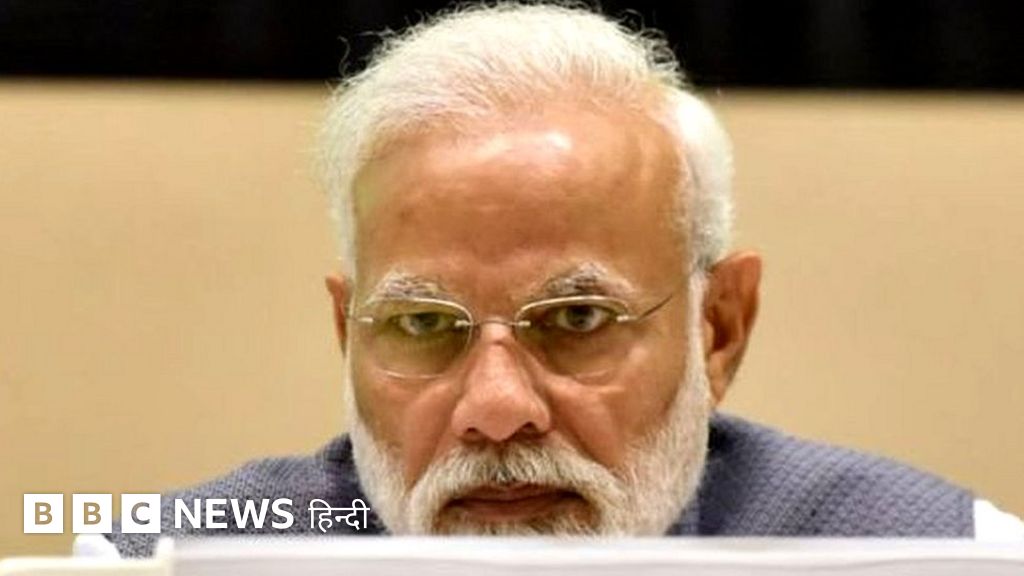
A rumour that the Modi government secretly transported 200 tonnes of the Reserve Bank of India’s (RBI) gold reserve overseas after coming to power in 2014 is being widely shared on social media. But according to the Reserve Bank of India, the claims are false.
Publisher’s rating: Misleading

Claim: Vijay speech on Demonetisation
Publisher’s rating: Fact Crescendo Rating: Mixture
The review examines a Facebook video presented as Vijay criticizing the Modi government’s demonetisation and urging viewers to change the government. It says the video circulated with text about people who died because of demonetisation and a “one-finger revolution.” The review distinguishes those added claims from what Vijay actually said in the interview: it reports that he called the policy’s aim commendable and said it could improve the Indian economy, while also questioning whether it was fair for 80 percent of people to bear the impact for the benefit of 20 percent of wealthy people. He also spoke of hardship, including weddings being stopped and people struggling to earn their daily living. To trace the clip, the review says it extracted a frame from the Facebook video and performed a reverse-image search using Yandex. That search led to a Puthiya Thalaimurai news item about Vijay’s interview. The review dates the interview to November 15, 2016, and reports finding a longer copy of the same Puthiya Thalaimurai video, bearing the channel’s logo, on another person’s YouTube page after it could not locate the video on the channel’s own page. It says that from the 46th second, Vijay’s comments matched the viral clip, and concludes that the Facebook version had been edited to show only part of his remarks. The finding is therefore mixed: the review says Vijay did speak about demonetisation and its effects, but the video’s framing that he directly attacked the central government, as well as the call to change the government and stage a revolution, did not represent his words. The review attributes those latter statements to the people sharing the clip, not to Vijay.

En Baviera, Île-de-France y Lombardía el paro es del 4% y el abandono escolar es 3 veces inferior al de Madrid
Publisher’s rating: Falso
The claim concerns a statement by Ignacio Aguado, then a Ciudadanos candidate for president of the Community of Madrid. On 2 May, during an Onda Cero broadcast marking the region’s holiday, he said Madrid should compare itself with Bavaria, Île-de-France and Lombardy, where unemployment was supposedly 4% and early school-leaving three times lower. The review checked both comparisons against Eurostat regional data; it says Aguado’s press team also identified Eurostat as its source, though its figures did not match the claim. 〔S1〕 For unemployment, the review used the latest year with data for all the regions being compared: 2018. It reports 12.2% for Madrid, 8.8% for Île-de-France, 6% for Lombardy and 2.2% for Bavaria. Thus, only Bavaria’s figure was close to Aguado’s stated 4%; the other two regions’ rates were substantially higher. 〔S1〕 The review also compared 2018 early school-leaving rates, defining the measure as the share of people aged 18–24 whose education reached no further than compulsory secondary school. It gives Madrid’s rate as 14.4%, against 7.4% in Île-de-France, 13.3% in Lombardy and 7.2% in Bavaria. None is three times lower than Madrid’s rate: the review says that comparison would require a rate around 4.8%. The evidence therefore supports the review’s conclusion that the combined claim was inaccurate, while preserving the limited exception that Bavaria’s unemployment rate was the one figure that aligned with Aguado’s comparison. 〔S1〕
"We have lower electric vehicles sales than any other country in the OECD."
Publisher’s rating: Close to the mark
Mark Butler, the Labor Party’s climate change and energy spokesman, said Australia had “lower electric vehicles sales than any other country in the OECD.” The review assessed that statement by comparing electric-vehicle sales as a share of new-car sales across OECD members, rather than treating total sales alone as the measure. It reports that finding consistent, complete data for all OECD countries was difficult and identifies ev-volumes.com as the best available resource, adding that the website shared its figures with Fact Check. On that comparison, Australia was behind 32 OECD members and ahead of Mexico, Chile and Turkey. The review characterizes those three as emerging economies, not countries usually considered at Australia’s level of development. It gives the latest reliable figures for them as 2017: electric vehicles accounted for 0.1 per cent of new sales in Chile, 0.02 per cent in Mexico and 0.01 per cent in Turkey. For Australia, it reports a 0.2 per cent share of new-car sales, drawing on ClimateWorks analysis adopted by both major political parties. The findings support the substance of Butler’s comparison with most OECD countries, while qualifying the literal breadth of “any other country”: three members had lower sales rates. The review says he would have been more accurate to compare Australia with developed countries of similar standing. It also notes that Labor’s proposed 50 per cent target for electric vehicles among new-car sales by 2030 could move Australia closer to similar countries, but was unlikely to put it ahead of most OECD members.
World Bank setting up a ‘Central Bank of Biafra’
Publisher’s rating: False
"[The] real minimum wage has gone up under us every year. Under the Labor Party, it actually went backwards."
Publisher’s rating: Fair call
Cabinet approves Sh478 billion for Westlands to JKIA expressway
Publisher’s rating: False.
One Nation senator Peter Georgiou claims Western Australia has the nation's highest unemployment rate and is not receiving its fair share of a government program to subsidise apprenticeships.
Publisher’s rating: Mostly False - Mostly false with one minor element of truth

of the total loan accounts (under the MUDRA scheme), 76% are of women and over 50% are SCs, STs and OBCs
Publisher’s rating: TRUE
The claim concerns the demographic breakdown of MUDRA loan accounts. FACTLY’s review says it checked the claim against year-wise performance reports on the PMMY website, covering the scheme’s first three financial years, 2015–16 through 2017–18. The review reports 12.27 crore total loan accounts in that period, of which 9.03 crore belonged to women entrepreneurs and 6.71 crore to SC, ST and OBC borrowers. Those figures imply shares of about 73.6% for women and 54.7% for SC, ST and OBC borrowers. FACTLY describes them as around 74% and around 55%, respectively. Thus, the evidence supports the claim’s assertion that more than half of accounts belonged to SC, ST and OBC borrowers, but the reported women’s share is about 74%, not the 76% stated in the claim. Despite that difference, FACTLY labels the claim TRUE. Its stated basis is the PMMY performance-report data and the resulting approximate percentages; the excerpt does not explain why it treats the 76% figure as compatible with its own estimate of around 74%.
Under the Stand-up India scheme, 239.12 crores for SC entrepreneurs (up to May 2018)
Publisher’s rating: UNVERIFIED

Raghuram Rajan has been appointed as Bank of England Governor
Publisher’s rating: Fact Crescendo Rating - FALSE

Las personas mayores de 65 años que cobren pensión de viudedad y no cobren otra pensión, se sube el porcentaje aplicable para calcular dicha pensión del 52 al 56 % pero hay que solicitarlo, no se aplica automáticamente
Publisher’s rating: Falso
The claim concerns whether eligible widow’s-pension recipients had to apply to receive the increase in the rate used to calculate their pension, from 52% to 56%. Newtral reports that the warning circulated from late August 2018 and was accompanied by an image of a purported form for the Social Security administration. The review says the National Social Security Institute (INSS) contradicted the warning and stated that the increase was applied automatically, “de oficio.” The review attributes confirmation to a communication from the Ministry of Labour dated August 29, 2018. It also describes the limited exceptions given by the INSS: pensions governed by international rules, or cases where the beneficiary lives abroad. Those qualifications mean that the claim’s broad assertion that eligible recipients had to request the increase does not reflect the general procedure described in the review. Newtral identifies the policy behind the increase as a measure in the 2018 General State Budget and Royal Decree 900/2018, approved by the Council of Ministers on July 20. The review therefore distinguishes the existence of the increase from the claim about how it was applied: according to the cited INSS clarification, it was ordinarily applied automatically, subject to the stated exceptions.