PeakMetrics / Fact Checks
Crime & justice fact checks
Explore claims publishers have checked about crime & justice. Read their original ratings and follow the evidence.
Search fact checks
Search by text or image6,853 published reviews in this topic
DPP issued a statement on polic brutality in nairobi county assembly
Publisher’s rating: False.

Il faut faire condamner à 30 ans de prison pour intelligence avec l'ennemi
Publisher’s rating: Le juge pénal ne peut donc appliquer une loi à des actes qu’elle n’a envisagés. Il ne peut donc étendre l’infraction de crime d’intelligences avec l’ennemi à une situation de terrorisme
The claim concerns a specific proposal by Nicolas Dupont-Aignan: using Article 411-4 of France’s Penal Code to sentence jihadists to 30 years in prison. The review reports that he made the demand during a CNews morning programme on 21 July, arguing that existing sentences of five to ten years were too lenient. It assesses whether that article could legally support the proposed sentences—not whether every person described as a jihadist should receive a particular sentence. The review’s central legal point is that Article 411-4 addresses dealings with a foreign power, enterprise or organization and sits in the Penal Code’s chapter on treason and espionage, rather than its terrorism provisions. It says criminal law must be interpreted strictly: a judge cannot extend an offence to conduct that lawmakers did not expressly include. For terrorism, the article says, judges must rely on offences provided under the Code’s terrorism title. On that reasoning, Article 411-4 cannot be extended to terrorism to impose the proposed 30-year term. The review also identifies difficulties with the offence’s factual and organizational requirements. It says “maintaining intelligence” requires a positive act involving interaction, and reports that a 2016 justice-ministry position considered a single, unilateral contact insufficient. It further notes a dispute over whether the Islamic State qualifies as a foreign organization for this provision: a penal-law specialist said it might, while the review cites a ministerial response that the offence was intended for an organization genuinely qualifying as a state. The review concludes that Article 411-4 cannot be applied to jihadists on this basis.
In een post op Facebook wordt beweerd dat er op 29 juli 2020 in het Noord-Brabantse Geldrop vier mensen zijn vermoord. De politie zou bezig zijn met een zoektocht om de slachtoffers te identificeren. Bij de post zijn twee beelden geplaatst die forensisch onderzoek van de politie op een plaats delict laten zien, suggererend dat het om de veronderstelde moord in Geldrop gaat.
Publisher’s rating: De stelling is fout. Er is bij de politie geen moord in Geldrop op de aangegeven dag bekend, dus was er ook geen politieonderzoek op een plaats delict. De beelden zijn afkomstig van een liquidatie in het Noord-Hollandse Zaandam in 2014.


Image of official seizing dog meat at Nasik railway station recently
Publisher’s rating: FALSE
The claim concerns an image presented as showing officials seizing dog meat recently at Nasik railway station. FACTLY says the image instead shows meat seized at Chennai Egmore railway station in November 2018, and reports that the meat was sheep or goat, not dog. This addresses both the image’s identification and the claimed location and timing. The review states: “The meat seized by the officials in the image is not ‘dog’ meat. Also, the incident happened at Chennai Egmore railway station in November 2018, not recently in Nasik railway station.” To investigate the image’s provenance, the review says it used reverse image search and found a tweet with similar pictures. The tweet attributed the seizure to Chennai Egmore, although its claim that the meat was dog was not confirmed by later testing: “When we subjected the image to reverse image search technique, a tweet with similar pictures was obtained in the results. In the tweet, it was mentioned that dog meat was confiscated at Chennai Egmore railway station.” The review then describes finding news coverage of the Chennai incident. A report dated November 18, 2018, said officials seized suspected dog meat and sent samples for examination; a later report dated November 22 said testing identified the meat as sheep or goat. Thus, the image was linked to an earlier Chennai seizure, while the dog-meat identification and the Nasik setting in the circulating claim were contradicted by the review’s account: “Food safety officials of Chennai have seized ‘suspected’ dog meat from Egmore railway station and have sent the meat samples for examination.” “Food safety officials of Chennai have revealed after the tests that the large quantities of meat seized were that of sheep or goat.”
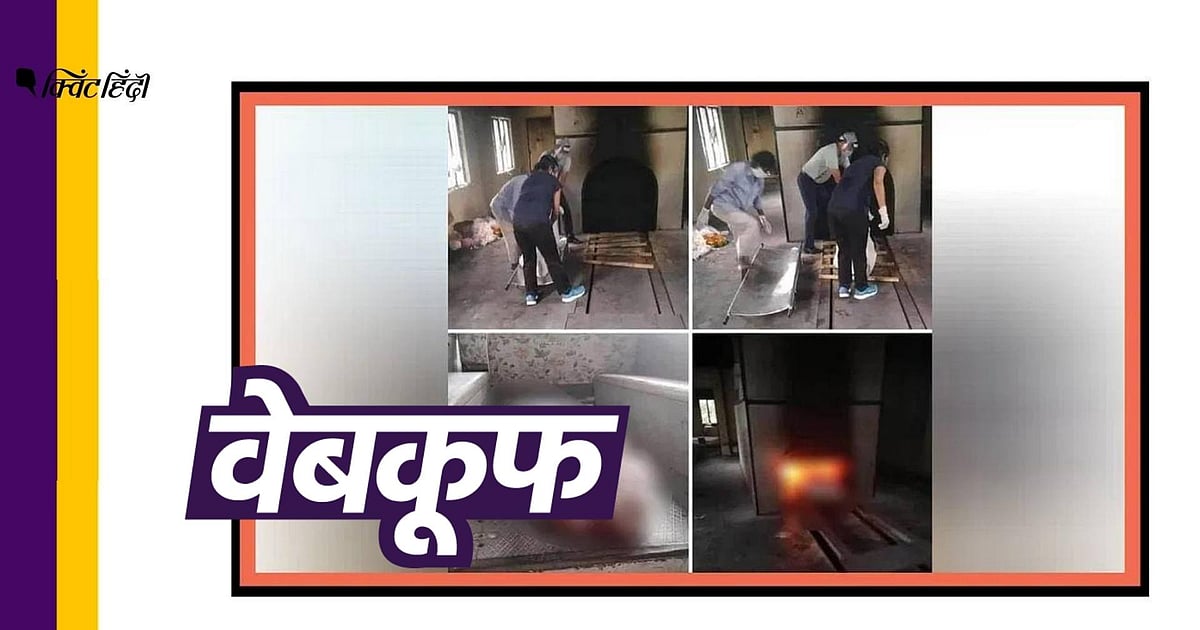
महाराष्ट्र में कोरोना की आड़ में ही रही अंगों की तस्करी
Publisher’s rating: FALSE

కాన్పూర్ పోలీసులు మాస్క్ ధరించని కారణంగా ఒక మేకని అరెస్ట్ చేసారు
Publisher’s rating: FALSE

A Goat has been arrested by the Kanpur police for not wearing a mask
Publisher’s rating: FALSE
The claim concerned a goat taken to a police station in Kanpur, Uttar Pradesh, and alleged that police arrested it because it was not wearing a mask. The investigation says the Kanpur Nagar Police described the goat as unclaimed and roaming near Dada Miya intersection. According to its tweet, the goat was taken to Beconganj police station and later returned to its owner, identified as Khanikujjma, son of Mohammed Ali. The review also reported a different account from Saifuddin Beg, Circle Officer of Anwarganj Police Station. Beg said a man accompanying the goat ran away on seeing police because he was not wearing a mask, leaving the goat behind. Beg told the reviewer by phone that police took the goat to the station and later returned it to its owner after fining the man for not wearing a mask. The review acknowledges that these accounts differ, but neither describes the goat itself as arrested for a mask violation. The key distinction is between the man’s alleged mask violation and the goat’s being taken to the station. The article reports Beg’s characterization of the claim that the goat was arrested as “funny,” and says he added that an animal cannot be arrested under the IPC or CrPC. It concludes that Kanpur police did not arrest the goat for not wearing a mask.
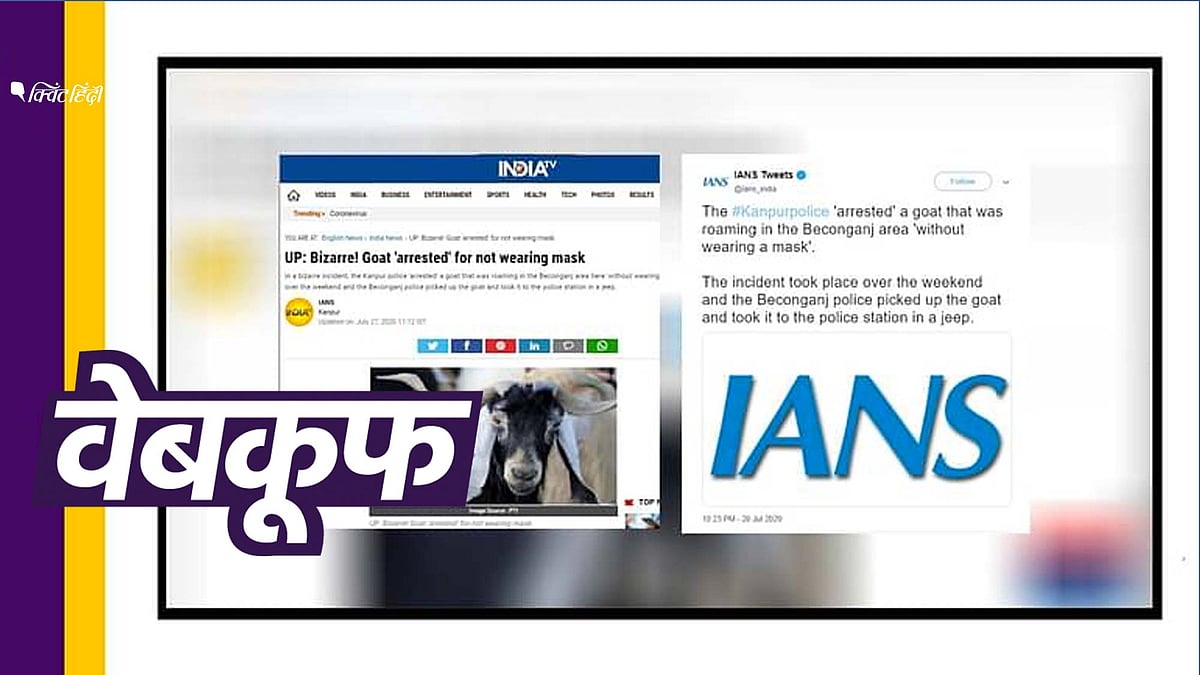
was a goat arrested in kanpur for not wearing mask?
Publisher’s rating: FALSE

এই মৃত ছোৱালীজনী পশ্চিম বংগৰ উত্তৰ দিনাজপুৰ জিলাৰ ধর্ষিতা মাম্পি সিংহ হয়
Publisher’s rating: মিছা
പൂച്ചക്കുട്ടിയെ പെട്രോൾ ഒഴിച്ച് തീ കൊളുത്തി കൊന്ന പൈശാചിക കൃത്യത്തിനു പിന്നിൽ യുവമോർച്ചാ നേതാവ് സതീഷ് പുൽപ്പറമ്പിൽ
Publisher’s rating: FALSE


‘10 ಜುಲೈ 2020’ರಂದು ಗ್ಯಾಂಗ್ಸ್ಟರ್ ವಿಕಾಸ್ ದುಬೆ ಎನ್ಕೌಂಟರ್ ನಂತರ ಉತ್ತರಪ್ರದೇಶ ಪೊಲೀಸರು ಖುಷಿಯಿಂದ ನೃತ್ಯ ಮಾಡುವ ವಿಡಿಯೋ.
Publisher’s rating: FALSE
Op Facebook heeft iemand een foto geplaatst van een blonde jonge vrouw met een jong kind. In de begeleidende tekst beweert de man dat het om zijn schoonzusje en haar 1-jarige dochter zou gaan die vermist zouden zijn. Hij vraagt namens zijn hele familie om hulp en roept op om de foto zo veel mogelijk te delen.
Publisher’s rating: De posting is kennelijk een hoax. De foto wordt al jaren op sociale media gedeeld, door tal van verschillende mensen, telkens met de bewering dat het om hun verdwenen schoonzus met kind zou gaan.
The claim concerns a Facebook post showing a blonde young woman with a child. Its text presented them as the poster’s missing sister-in-law and her one-year-old daughter, asked for help on behalf of the family, and urged people to share the image. The review concludes that the post is apparently a hoax: the same image had been circulated for years by different people making the same kind of missing-relative claim. To check the image’s history, the review reports searching for the photo with Google. That search returned 25 earlier posts by other people; counting the Facebook post under review, the review says the photo had been posted 26 times on Twitter or Facebook by 26 different people, each claiming the woman was their sister-in-law. This repeated use of the same image with changing personal claims is the central evidence against treating the Facebook caption as a reliable identification. The review also traces the image to an earlier example: a tweet dated 25 June 2012 from an account presenting itself as belonging to Dinie van Diermen of Velsen, Netherlands. It notes that the account was not verified, so Twitter did not vouch for the account holder’s identity. The review cites a 2014 fact-check that said the image had been circulating since 2012. The supplied excerpts do not identify the woman or child, or establish who originally took the photograph.
دریادار حبیبالله سیاری بازداشت شده و تحت شکنجه قرار دارد.
Publisher’s rating: شاخدار

«La legge Severino si conferma una misura incostituzionale che viola in modo palese i principi garantisti presenti nella nostra Carta fondamentale: la presunzione di innocenza fino al terzo grado di giudizio»
Publisher’s rating: Pinocchio andante
The claim was made by Forza Italia deputy Matilde Siracusano after a Palermo court convicted Catania mayor Salvo Pogliese on 23 July in the case involving alleged misuse of the Sicilian Regional Assembly’s funds. She argued that the Severino law was unconstitutional because it violated the presumption of innocence. The review says the law can trigger suspension from local office after a first-instance conviction for specified offenses, including embezzlement, the offense for which Pogliese was convicted. Suspension is automatic, limited to a maximum of 18 months or until a final judgment, and may lead to removal if the conviction is upheld; it ends if the person is acquitted. These consequences explain the immediate setting for Siracusano’s criticism, but do not themselves establish that the law is unconstitutional. [S1: “La deputata di Forza Italia Matilde Siracusano ha commentato il 24 luglio la condanna del giorno prima, da parte del tribunale di Palermo, di Salvo Pogliese” and “La ‘legge Severino’ prevede in particolare, per quanto riguarda gli eletti negli enti locali (come appunto il comune di Catania), che questi siano sospesi automaticamente dalla loro carica (art. 11) se condannati anche solo in primo grado per una serie di reati”] The review’s principal evidence is the Constitutional Court’s repeated rejection of challenges to the law. It reports that in 2015 the Court held that suspension under the law was a precautionary measure, not a punishment, and reaffirmed that characterization in 2016. In 2019, it again upheld the law against several constitutional challenges. The review therefore finds no support in those rulings for the broad assertion that the law had been found unconstitutional. [S1: “La Corte Costituzionale ha rigettato il ricorso (sentenza 236 del 2015), spiegando che la sospensione dalla carica prevista dalla legge Severino non ha natura punitiva ma cautelare.” and “Ancora nel 2019, infine, la Corte è stata investita da un ricorso che aveva come oggetto la ‘legge Severino’ e di nuovo ne ha ribadito (sentenza 36 del 2019) la legittimità rispetto a diversi articoli della Costituzione.”] There is an important qualification: the review says the Court had not directly examined whether the law violated the presumption of innocence. Its conclusion on that specific objection is consequently an assessment, not a direct ruling: constitutional-law experts considered rejection likely because the Court treated suspension as precautionary, and precautionary measures can coexist with the presumption of innocence. The article thus supports calling Siracusano’s claim unfounded, while distinguishing that conclusion from a Court decision squarely resolving the presumption-of-innocence issue. [S1: “Nelle sentenze citate non è mai stata analizzata direttamente la questione se la ‘legge Severino’ non violi il principio costituzionale di presunzione di innocenza.” and “Tuttavia, secondo gli esperti di diritto costituzionale (qui e qui si possono leggere alcuni autorevoli pareri), questa questione verrebbe probabilmente rigettata al pari di quella sulla non retroattività.”]