PeakMetrics / Fact Checks
Crime & justice fact checks
Explore claims publishers have checked about crime & justice. Read their original ratings and follow the evidence.
Search fact checks
Search by text or image6,853 published reviews in this topic


“Trampa vietnamita instalada en la casa de miembros de la CAM cubierta de ramas. Carabineros de Chile gravemente heridos al asistir al procedimiento. Gobierno de Chile actuemos, no más querellas, actuemos como toda una nación espera que lo hagamos”
Publisher’s rating: Falso
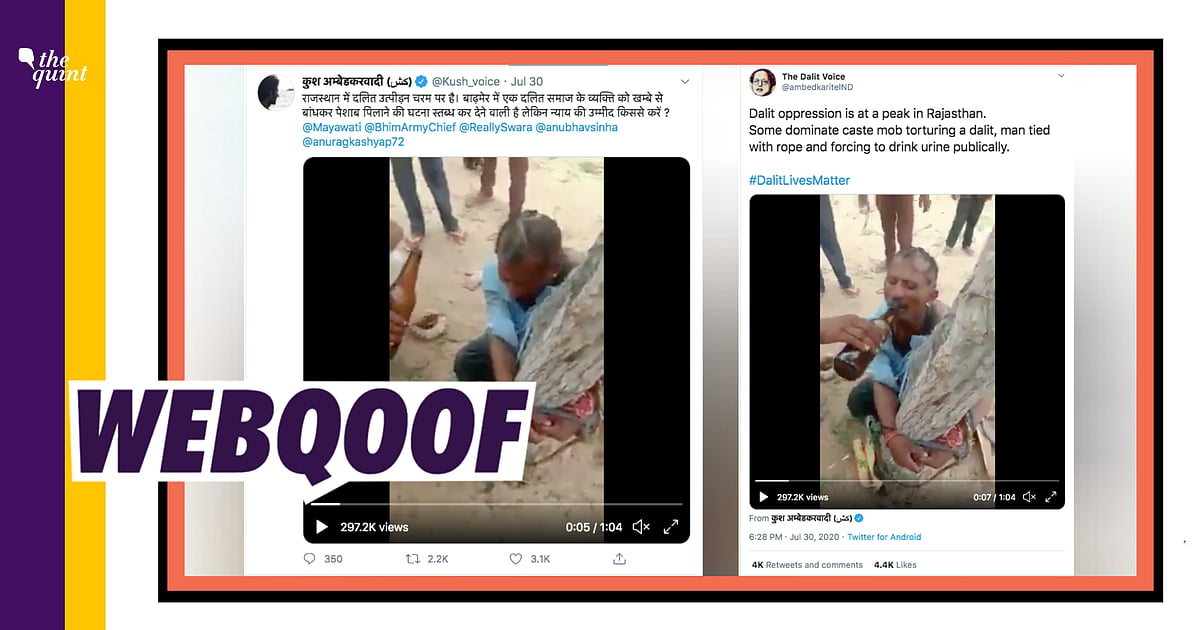
यह वीडियो राजस्थान से है जहाँ एक चमार दलित व्यक्ति पर उच्च जाति के पुरुषों द्वारा हमला किया गया है
Publisher’s rating: False

ಮೂತ್ರಪಿಂಡಗಳ ಕಳವಿಗಾಗಿ ಕೋವಿಡ್-19 ನೆಪದಲ್ಲಿ 125 ರೋಗಿಗಳನ್ನು ಕೊಂದು ಮೊಸಳೆಗಳಿಗೆ ಆಹಾರ ನೀಡಿದ ವೈದ್ಯರನ್ನು ದೆಹಲಿ ಪೊಲೀಸರು ಬಂಧಿಸಿದ್ದಾರೆ.
Publisher’s rating: MISLEADING
വ്യാജവാറ്റുമായി യുവമോര്ച്ചാ പ്രവര്ത്തകനെ വള്ളികുന്നത്ത് പിടികൂടി
Publisher’s rating: FALSE

Delhi Police arrested a doctor who killed 125 patients on the pretext of COVID-19 for their kidneys and fed the patients to crocodiles
Publisher’s rating: MISLEADING
The post combined real details about Devendra Sharma’s arrest and alleged crimes with a false COVID-19 connection. FACTLY identifies Sharma as the doctor shown in the shared image and reports that Delhi Police arrested him in July 2020, after he absconded while on parole. The review says his alleged involvement in around 125 illegal kidney transplants dated from 1994 to 2004—not from the COVID-19 pandemic. FACTLY says it searched for the Times of India article pictured in the post. Its account describes Sharma as an Ayurvedic practitioner and discusses the alleged transplants and his earlier arrest, but does not mention COVID-19. The review also cites an Indian Express report quoting police officials: they said Sharma disclosed that he had arranged more than 125 illegal transplants during 1994–2004, for which he was paid Rs 5–7 lakh each. The crocodile detail appears in a different part of the alleged crimes, not as evidence that patients were killed for their kidneys. According to the police account quoted by the review, Sharma and associates killed taxi drivers and dumped their bodies in a canal that had crocodiles. The review’s central correction is therefore that the alleged transplant activity and the body-dumping account were not crimes committed under the pretext of COVID-19.

Claim: Dalit man attacked by casteists in Rajasthan
Publisher’s rating: False

In een post op Facebook wordt melding gemaakt van een groep loverboys die actief zou zijn in het Gelderse Huissen. Het zou gaan om "getinte jongens met krulletjes" die contact zouden leggen met meisjes om ze "vervolgens de auto in proberen te trekken". Ze zouden rijden in een Golfje en op een scooter. "De politie is op de hoogte", aldus de posting, maar klopt dat verhaal wel?
Publisher’s rating: De post is fout. De politie is niet op de hoogte van een groep 'loverboys' die meerdere meisjes hebben lastiggevallen. Er is geen melding of aangifte gedaan.
The review investigated a Facebook warning about alleged “loverboys” in Huissen, Gelderland. The post described boys who supposedly approached girls and tried to pull them into a car, and claimed that police knew about the group. The review reports that police in the Oost-Nederland region did not recognize the alleged group or the incidents described: the spokesperson said there had been no report or formal complaint about anyone trying to pull people into a car. The article also says police did not know of the alleged new group of “loverboys.”

UP doctor caught selling the kidney of a corona patient
Publisher’s rating: MISLEADING
FACTLY examined a social-media post alleging that a doctor at Garg hospital in Uttar Pradesh had been caught selling the kidney of a corona patient. Its review says the kidney-theft incident behind the post was reported in 2018, before COVID-19 was reported in India, and that the incident was not connected to the pandemic. The review describes two checks. A reverse-image search linked the post’s picture to an article from June 2018, which reported an allegation that Dr. Garg stole a patient’s kidney during surgery to remove stones. A keyword search also found reports of the same incident in Muzaffarnagar, Uttar Pradesh, naming the doctor as Vibhu Garg and saying he was arrested on suspicion of stealing a patient’s kidney. The crucial distinction is between an earlier, alleged kidney theft and the post’s added COVID-19 connection. FACTLY says the images and reports concern the 2018 incident, while the post falsely recast it as involving a corona patient. The cited material describes an allegation and arrest; it does not establish that the doctor was convicted or that a kidney was sold.


"We now have a 10-year rule … You touch our courthouse, you go to jail for 10 years."
Publisher’s rating: Overstates the law
"Actually, (the violence in Portland) is getting better (since federal agents went in). We’ve arrested a lot of people."
Publisher’s rating: Disputed by local officials
"Police have killed white people. In a larger number, police have killed white people."
Publisher’s rating: Needs context

Dognappers are marking houses to target with stickers on ESB pillars
Publisher’s rating: False
The claim arose in social media posts from different counties in Ireland alleging that red stickers on ESB mini pillars marked homes where dogs would later be stolen. TheJournal.ie describes posts from Kerry and Waterford, as well as Snapchat posts, that urged people to watch for stickers or chalk near their homes. One post also linked a sticker to a drone seen over the poster’s home. The investigation examined the proposed link between these markings and dog theft, rather than treating the presence of a sticker as proof of targeting. The article says the posts “have claimed that dog thieves are placing stickers on ESB mini pillars to target houses for pet theft” and recounts a Kerry user’s report: “A drone flew over my house Friday evening and Saturday morning, driving my dogs mad and then this sticker appeared.” A central piece of evidence was ESB’s explanation of the stickers’ ordinary purpose. The company told TheJournal.ie that they are safety inspection markers attached by technicians after inspecting mini pillars. Their colour records the inspection year; the article notes that red, blue, green and yellow stickers had been used in recent years. Thus, the sticker’s presence has an explanation unrelated to marking a house for theft. The article quotes ESB: “On completion of each inspection, our technicians attach an easily identifiable sticker to each individual minipillar which has been visited.” The investigation also considered what gardaí said about dog thefts. It reports that the official number of reported thefts had not recently increased, while acknowledging that some thefts might go unreported. Gardaí familiar with investigations considered most thefts opportunistic and said it was “highly unlikely” that signals were being used on a wide scale to mark homes. Taken together, the inspection purpose and the reported assessment of theft patterns do not support the social-media allegation that these stickers were being used to target homes.

ಮಾಸ್ಕ್ ಧರಿಸದ ಮೇಕೆ ಒಂದನ್ನು ಉತ್ತರಪ್ರದೇಶದ ಕಾನ್ಪುರ ಪೊಲೀಸರು ಬಂಧಿಸಿದ್ದಾರೆ.
Publisher’s rating: FALSE
DPP issued a statement on polic brutality in nairobi county assembly
Publisher’s rating: FALSE