PeakMetrics / Fact Checks
Science & space fact checks
Explore claims publishers have checked about science & space. Read their original ratings and follow the evidence.
Search fact checks
Search by text or image1,577 published reviews in this topic
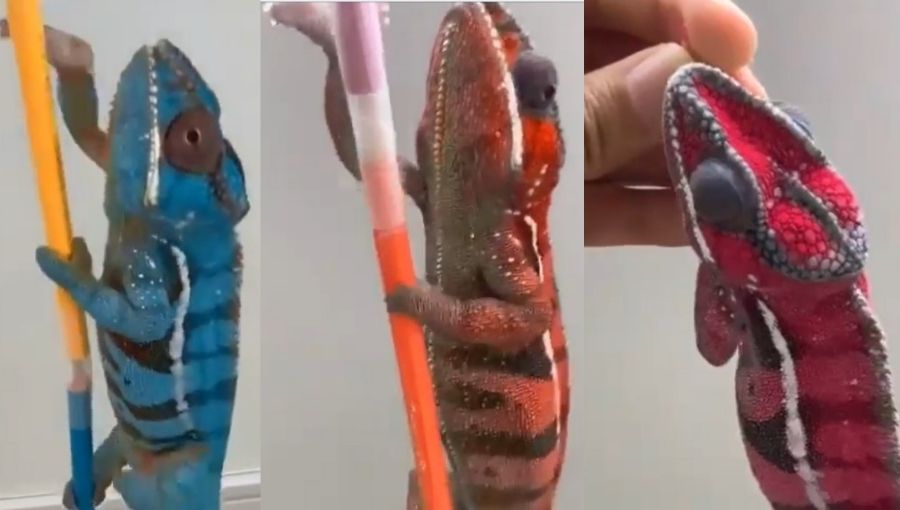
Videonun çok hızlı renk değiştiren bukalemunu gösterdiği iddiası
Publisher’s rating: Yanlış

Video zeigt riesiges Wolfsrudel samt einäugigem Tier in Österreich.
Publisher’s rating: Falsch. Das Video ist in der kanadischen Provinz British Columbia entstanden.
यह वीडियो नासा द्वारा जारी किया गया है, जिसमें 14 दुनिया दिखाई दे रही है।
Publisher’s rating: False
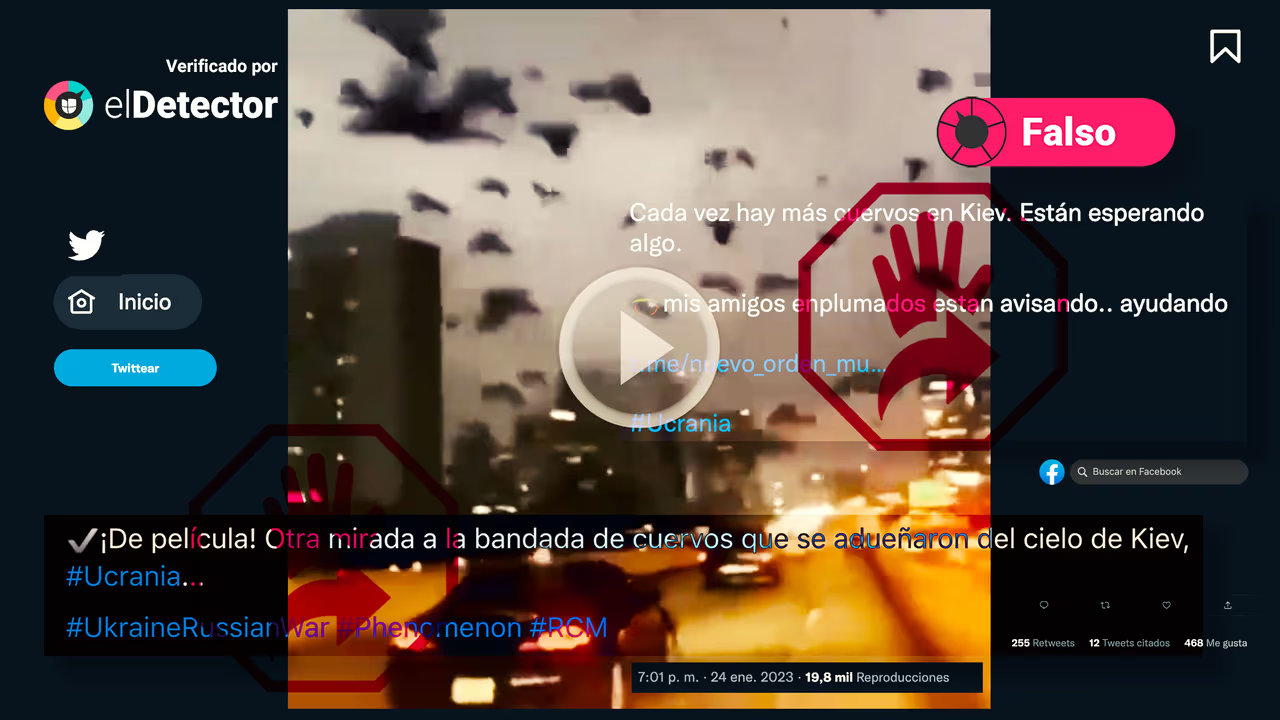
Video muestra bandada de cuervos que se adueñaron del cielo de Kiev.
Publisher’s rating: Falso
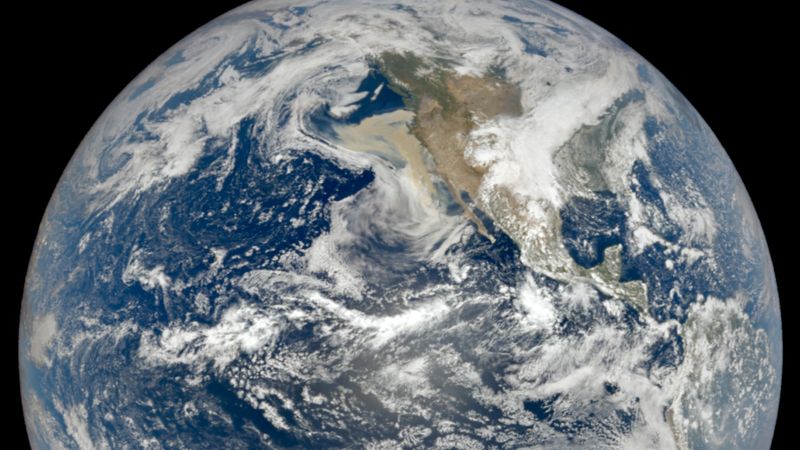
La NASA et la CIA admettent que la Terre est plate, selon ces documents officiels.
Publisher’s rating: Les documents relayés sur les réseaux sociaux sont authentiques. Cependant, ceux-ci ne prouvent pas que la Terre soit plate. Ce n’est d’ailleurs pas la position de la NASA, qui a souligné auprès de la dpa avoir toujours parlé d'une Terre ronde. Le modèle hypothétique d’une « Terre plate et non-rotative » est souvent utilisé par les chercheurs pour simplifier leurs calculs, mais ne remet pas en cause la sphéricité de notre planète.

This is a real image of a T4 Bacteriophage (a virus) as seen through an electron microscope.
Publisher’s rating: Fake
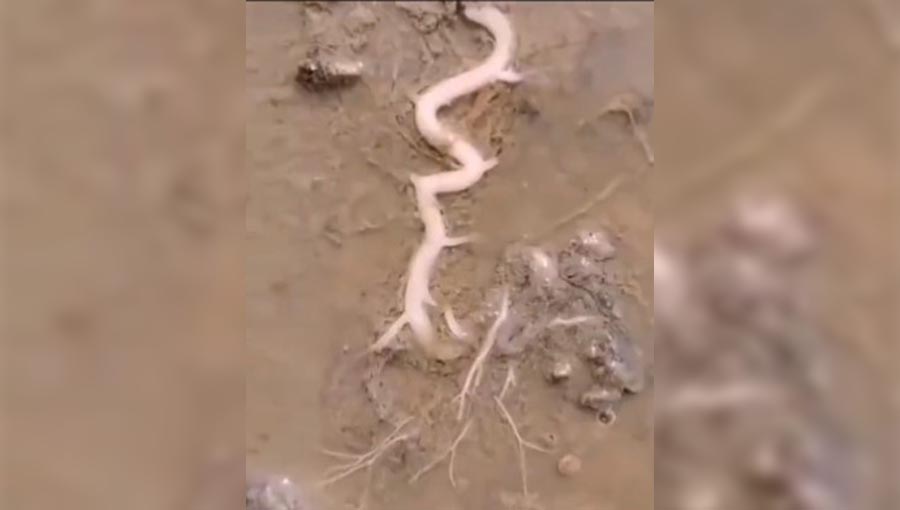
Videoda hareket eden canlının zombiye dönüştüren bir tür mantar olduğu iddiası
Publisher’s rating: Yanlış
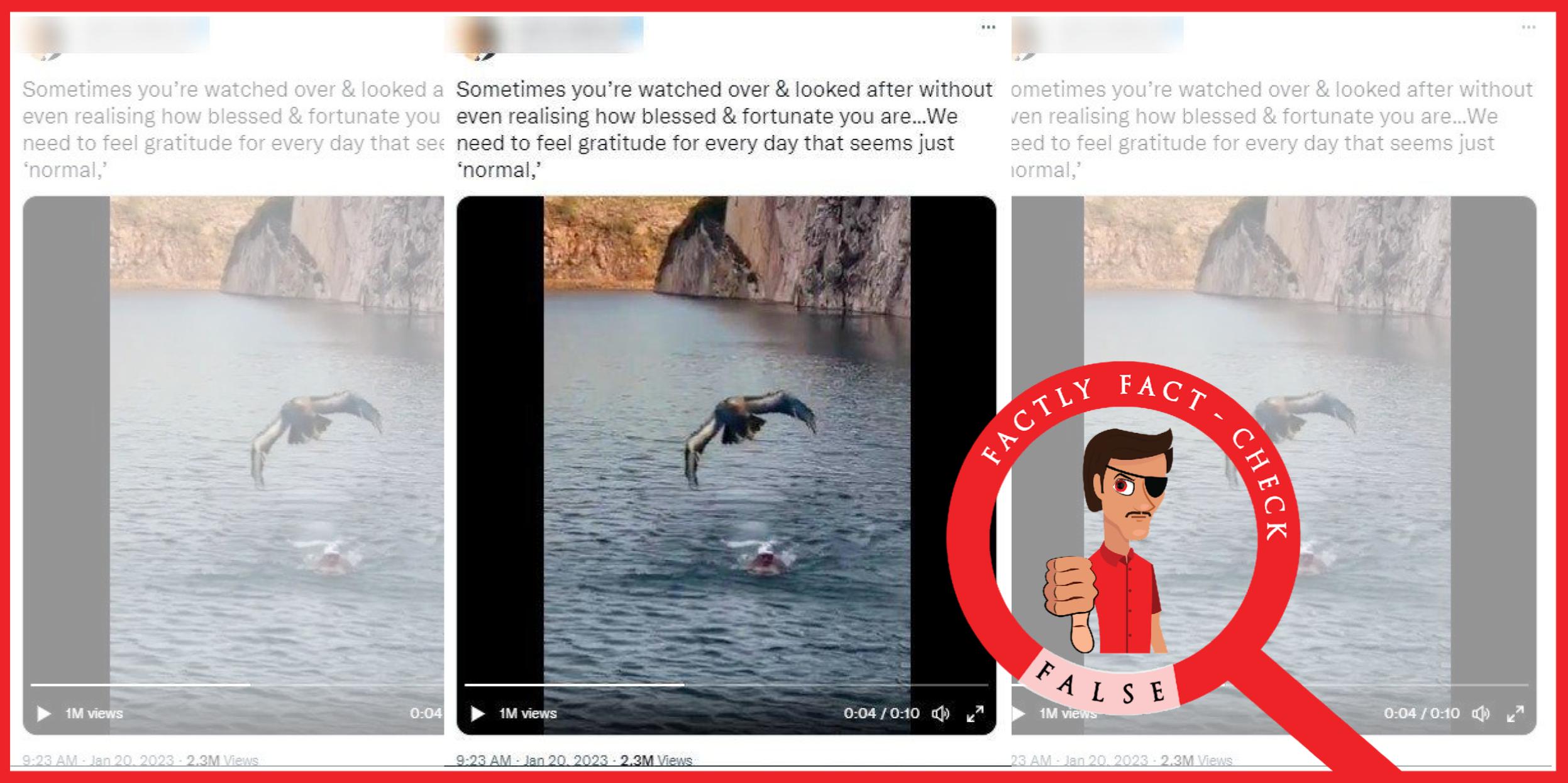
Visuals of an eagle diving dangerously close to a swimmer before it flies away
Publisher’s rating: FALSE
The claim concerns a video that appears to show an eagle diving dangerously close to a swimmer and then flying away. FACTLY investigated whether the footage depicted a real encounter. It concluded that the video was digitally created, rather than evidence of an eagle approaching the swimmer in a real event: the review says the eagle footage was a stock green-screen clip combined with a separate clip of a person swimming. It also notes that investigators could not find the swimmer clip. To trace the video, the review describes using Yandex reverse-image searches on screenshots. That search led to a YouTube upload from November 2022 titled “Eagle attack man,” posted by a channel called PakForecaster. The review says that upload contained the same video with different audio, but its description did not provide information about an incident or the video’s origin. Finding an earlier copy therefore helped identify the footage’s circulation, but did not establish that it showed a genuine encounter. The decisive evidence reported was visual: on close inspection, FACTLY found green-screen spill and smudges around the eagle’s body. It then located stock green-screen footage of an eagle flying and reported that it matched the eagle in the viral clip in a side-by-side comparison. On that basis, the review concluded that the video combined the stock eagle footage with other footage of a swimmer, making the apparent dive a digital edit.

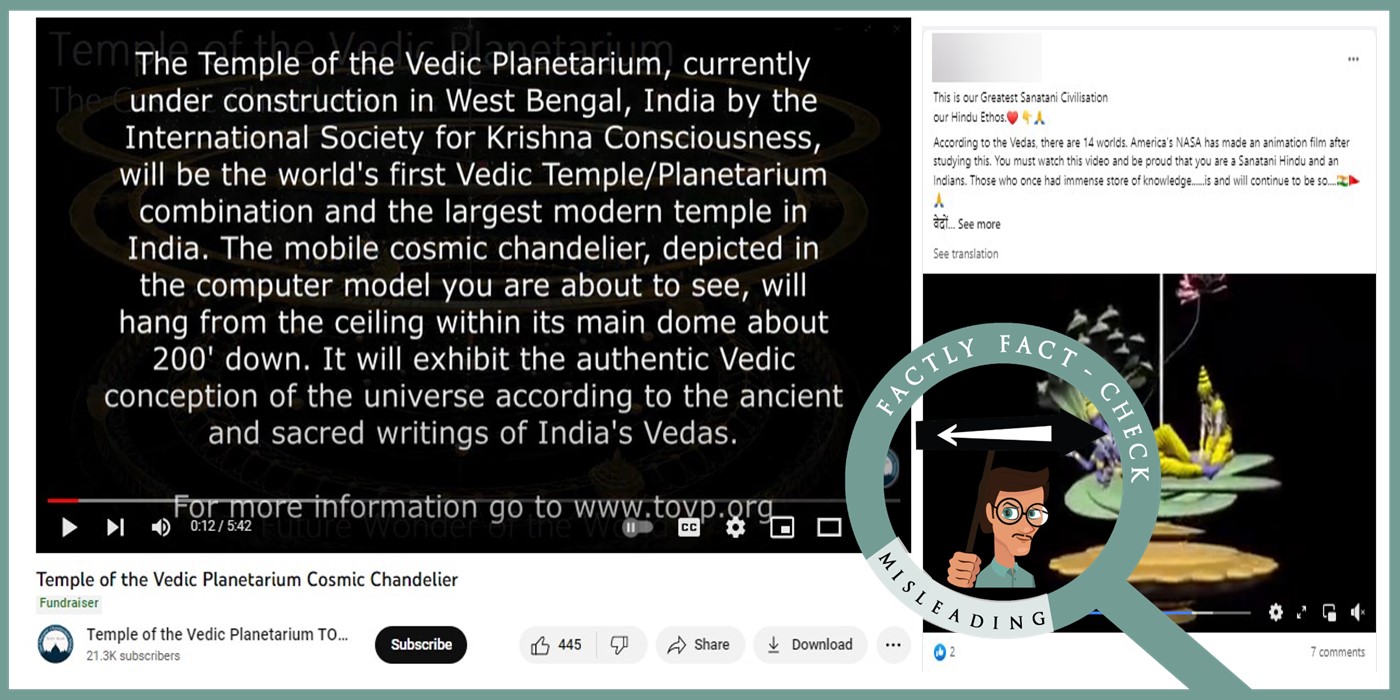
Animation video made by NASA which shows 14 worlds according to Veda
Publisher’s rating: MISLEADING
The claim concerns an animation showing the 14 lokas, or worlds, described in the Vedas, which was circulated as a NASA production. FACTLY’s review identifies the video instead as an animation of a mobile cosmic chandelier designed for the Temple of Vedic Planetarium (TOVP), an ISKCON project in Mayapur, West Bengal. The review says the chandelier “exhibits the vedic conception of universe,” explaining why the video depicts that cosmology without establishing that NASA made it. To check the attribution, the review reports searching relevant keywords and finding the same video on YouTube, uploaded by “Temple of Vedic Planetarium (TOVP)” on 11 January 2021. It says the video’s description and introduction identify it as a computer model of the chandelier intended to hang from the temple ceiling. The review also reports that the same video appears on TOVP’s official website. The review further says it found no such video on NASA’s website and no media reports about a NASA video of this kind. Its cited provenance points to the temple project, not NASA; the evidence presented therefore supports the conclusion that the NASA attribution is misleading.

“Febrero de este año tiene lo siguiente que sucede solo una vez en 823 años. Este febrero tiene: 4 domingos 4 lunes 4 martes 4 miércoles 4 jueves 4 viernes 4 sábados”.
Publisher’s rating: Falso
The claim concerns February 2023: it says the month would contain four Sundays, four Mondays, and four of each other weekday, and that this combination would occur only once in 823 years. The review identifies this as misinformation and explains that the claimed pattern follows directly from February’s usual length: 28 days divided evenly among the seven weekdays. The review says it checked calendars for different years. It reports the same four-of-each pattern for February 2022 and February 2025, as well as February 2023. This evidence addresses the claim’s asserted rarity: the pattern is not an exceptional alignment of dates but what happens in any ordinary 28-day February. The review adds that leap years are the exception, because February gains an extra day. The example of February 2024 illustrates that qualification. Because it had 29 days, the review says it contained five Thursdays and four of every other weekday. Thus the 823-year framing misleads by treating a recurring feature of non-leap-year February as a once-in-centuries event, while overlooking the additional day in leap years.
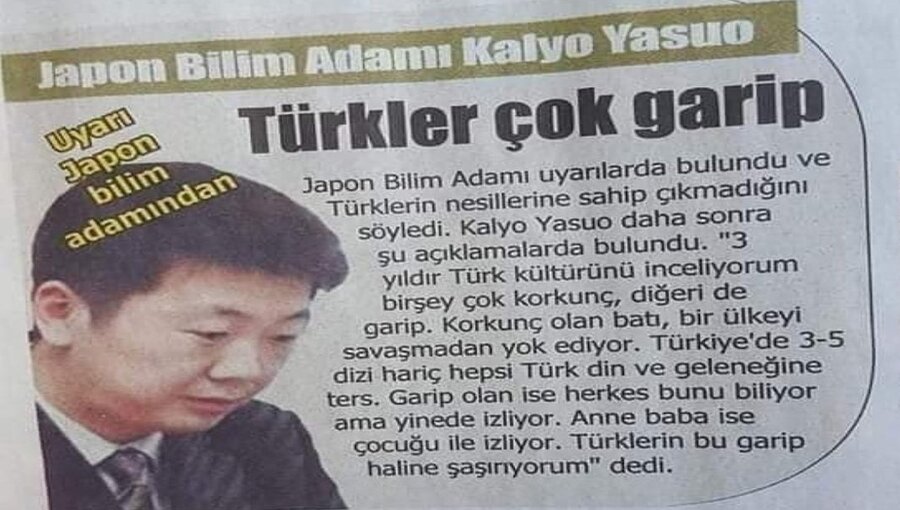
Kalyo Yasuo isimli Japon bilim insanı gerçekten var mı?
Publisher’s rating: Yanlış

Satürn'ün Uydusu Dione'yi Gösteren Fotoğraf Gerçek mi?
Publisher’s rating: Doğru
বৃহস্পতি গ্রহের ৬৭টি এবং শনি গ্রহের ৬২টি উপগ্রহ রয়েছে
Publisher’s rating: মিথ্যা
NASA's defunct satellite will fall on the Korean Peninsula between 12:30 and 1:20P.M. today (January 10).
Publisher’s rating: Misleading
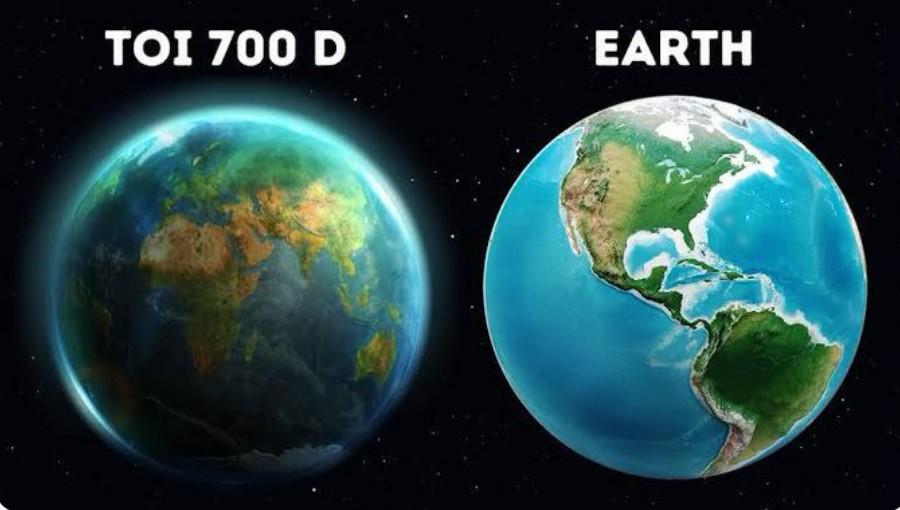
NASA’nın keşfettiği yaşama elverişli gezegenin, 100 milyon ışık yılı uzaklıkta olduğu iddiası
Publisher’s rating: Yanlış

టిబెట్లో మేఘం నేలపై ఒరిగింది. ఆ వింతను వీడియోలో చూడవచ్చు
Publisher’s rating: MISLEADING

Photo of a Bee Humming Bird, the world`s smallest bird !!
Publisher’s rating: False
The claim concerns a widely shared picture said to show a Bee Hummingbird, the world’s smallest bird. The review investigated that specific image and reports that the pictured bird is not a real bird but a miniature figurine made by Malinik Miniatures. It says the image had circulated with captions identifying it as a Bee Hummingbird and that one Facebook post had been shared more than 500 times.