PeakMetrics / Fact Checks
Science & space fact checks
Explore claims publishers have checked about science & space. Read their original ratings and follow the evidence.
Search fact checks
Search by text or image1,577 published reviews in this topic

ஜப்பானில் விசித்திர நிகழ்வு – தீவு முழுவதும் சூழ்ந்த ஆயிரக்கணக்கான காகங்கள்.. இயற்கை பேரழிவின் தொடக்கமா..?
Publisher’s rating: Fake

L'astronaute français Thomas Pesquet avoue que personne n'a marché sur la Lune.
Publisher’s rating: Il s’agit d’une fausse information vieille de plusieurs mois, que Thomas Pesquet a lui-même démentie. Dans cette interview, il évoque les objectifs de la mission Artemis, qui ambitionne le retour de l’humanité sur la Lune. Il fait référence à la trajectoire prévue dans le cadre de cette mission, plus lointaine que ce qui a été réalisé par le passé. Il ne dit pas que l’humanité n’a jamais marché sur la Lune.
The claim arose from a social-media excerpt of Thomas Pesquet speaking about the planned Artemis mission. In the clip, he says the mission will go farther from Earth than any human has gone before and wonders whether it is humanly possible to go there. The review identifies the footage as coming from a France 2 news interview on August 28, 2022, around the launch of Artemis’s first rocket, and explains that Pesquet was describing the mission’s planned trajectory—not denying that people had walked on the Moon. The review points to the interview’s fuller context: near its beginning, Pesquet describes Artemis as the “grand retour” of humans to the Moon. It also reports that he responded to the circulating distortion on Twitter: “Bien sûr que oui, l'humain est allé sur la lune pendant les missions Apollo. Et on va y retourner.” The review further explains the distance comparison: Artemis planned to send a spacecraft beyond the Moon, farther from Earth than previous crewed missions had gone. The excerpt’s “as far as” wording refers to that proposed record distance, not to whether Apollo astronauts reached the lunar surface.

"Imágenes reales de un ovni derribado en Alaska".
Publisher’s rating: Falso

Ein niederländischer Wissenschaftler hat einen modularen Menschen entwickelt, dessen Organe sich wie Legosteine zusammensetzen lassen.
Publisher’s rating: Den künstlichen Körper gibt es ebenso wenig wie den dazugehörigen Wissenschaftler. Es handelt sich beim «modularen Körper» um ein Science-Fiction-Projekt eines niederländischen Künstlers.
The claim presents a modular, Lego-like human as a real creation by a Dutch scientist. The review traces it to a Facebook post from Luxembourg, which showed a video said to depict the “first modular body” and attributed its creation to Dutch biologist Cornelis Vlasman. The post described “Oscar” as a living organism made from the biologist’s cells, with parts that could be connected to make the body move. The review says that neither Oscar nor Cornelis Vlasman exists. It identifies Oscar as a fictional digital-art creation made in 2016 by Dutch artist Floris Kaayk. The video’s depiction of organs and body parts as connectable modules is therefore part of the artwork’s fiction, not evidence that a scientist developed a working human body. The review also notes that a linked Rio Times article repeated substantially the same claims, but says that account did not reflect reality. The review points to the project’s own presentation as decisive context: its website described The Modular Body as an online science-fiction story about creating Oscar, and a video explaining the project included screenwriter Ine Poppe saying it was a science-fiction story and was not true. The review further reports that Kaayk discussed the modular body as an idea premised on what might become possible in the future, and that the project received an award at the 2016 Netherlands Film Festival. These details support the distinction between a fictional artwork and a real scientific achievement.

Un nuage lenticulaire est la preuve que HAARP a déclenché les tremblements de terre en Turquie.
Publisher’s rating: Les nuages aux formes inhabituelles constatés dans le ciel turc n’ont rien à avoir ni avec les tremblements de terre, ni avec le programme de recherche américain HAARP.
The claim links an unusual lenticular cloud seen in Turkey to the deadly earthquakes there and alleges that the US research program HAARP caused them. The review traces the image to Bursa: it says the photograph was taken on January 19, 2023, by Halit Mirahmetoglu, head of Bursa’s Gökmen aviation and aerospace training centre. Anadolu and Mirahmetoglu identified the pictured formation as a lenticular cloud when the image was first published. The review explains that lenticular clouds can form when air flows over hills or mountains, creating waves; if the air contains enough moisture, rising air condenses into a lens-shaped cloud. It notes that Bursa lies beside the Uludağ mountain massif, making the local terrain conducive to this type of formation. The cloud’s distinctive appearance does not establish a connection to seismic activity. For the earthquake allegation, the review describes tectonic movement and cites geophysicist Oliver Heidbach: earthquakes occur when stress on rocks produces a fault and sudden displacement, generating seismic waves. It also reports that HAARP studies the ionosphere, not the Earth’s crust. Robert McCoy, director of the University of Alaska’s Geophysical Institute, said HAARP cannot affect natural phenomena, including earthquakes; Heidbach said radio waves cannot move crustal rocks or change pressure. The review adds that HAARP’s 3.6-megawatt system is far too weak to trigger an earthquake.

“Video exclusivo de EE.UU persiguiendo el OVNI de Canadá para derribarlo”
Publisher’s rating: Falso
Piece of sun breaks off, creates tornado-like swirl, leaving scientists baffled.
Publisher’s rating: Misleading
சூரியனின் மேற்பரப்பிலிருந்து ஒரு பெரிய பகுதி உடைந்து, அது அதனுடைய வட துருவப் பகுதியில் ஒரு பெரும் புயலைப் போல் சுற்றி வருவதாக விஞ்ஞானிகள் தெரிவித்துள்ளனர். சூரியனின் வட துருவத்தின் மேல் நெருப்பு சூறாவளியாய் சுழன்று கொண்டிருக்க, பூமிக்கு என்ன மாதிரியான தாக்கத்தை ஏற்படுத்தும் என்ற அச்சத்தில், விஞ்ஞானிகள் ஆராய்ச்சிகளை மேற்கொண்டு வருகின்றனர். இதனிடையே, ஜேம்ஸ் வெப் தொலைநோக்கி வாயிலாக எடுக்கப்பட்ட காட்சியை நாசா வெளியிட்டுள்ளது..
Publisher’s rating: Misleading

Görüntüler Kanada'da Kaydedilen bir UFO'yu mu Gösteriyor?
Publisher’s rating: Yanlış

වසර 3000 වරක් පිපෙන උදුම්බරා මලක දර්ශන පෙළක්
Publisher’s rating: False
The claim concerns a video circulated in Sri Lanka that purportedly shows Udumbara flowers blooming on a wire beside a small roadside shop. The review describes claims that the flowers bloom once every 3,000 years and that their appearance signals the arrival of a good king. It distinguishes those beliefs from the narrower question it investigates: whether the structures in this particular video are rare flowers. The account also reports differing versions of the number of structures said to have appeared or remained when the video was filmed; those figures are part of the circulating story, not evidence that they are flowers. (S1: “සමාජ ජාලා සටහන් වසර 3000 කට වරක් පිපෙන උදුම්බරා මලක් පිපුණු බවක් , මෙය යහපත් රජෙක් පහළවීමේ පෙරනිමිති බවත් පවසමින්, පාරක් අයිනේ පිහිටි කුඩා පෙට්ටි කඩයක තිබෙන යකඩ කම්බියක් මත මෙම අරුම පුදුම මල් පිපී ඇති බවක් දැක්වෙන වීඩියෝවක් සමාජ මාධ්ය ඔස්සේ සංසරණය වෙනවා.”) For its examination, the review says it consulted Professor Subhani Ranasinghe, an assistant director at the National Botanical Gardens Department. She described a prior departmental investigation of similar structures reported in Kandy: samples were examined microscopically, and the structures were identified not as plants but as eggs of lacewing insects in the Chrysopidae family. This is evidence about the nature of the structures, rather than an assessment of the religious beliefs associated with the name Udumbara. (S1: “මෙම සාම්පල අණ්වීක්ෂීය පර්යේෂනවලට ලක් කළ බවත්, සත්ය වශයෙන්ම එහි දැකගන්නට ලැබූ ව්යුහයන් කිසියම් හෝ ශාකයක් නොව, Chrysopidae විශේෂයට අයත් ලේස්වින්ග්ස් (lacewing) කෘමියාගේ බිත්තර ලෙස තහවුරු වූ බවත් ඇය පැවසුවා.”) The review applies that finding to the video, concluding that its structures are most likely lacewing egg-laying structures, not flowers that bloom once every 3,000 years. It also notes that accounts of a 3,000-year flowering interval are not supported by a recorded example in the article, and cites the Guinness record entry it discusses as describing a Bolivian plant that flowers after 80–150 years. The conclusion is limited to identifying what the video most likely shows; the review explicitly says it did not assess the truth of religious beliefs about Udumbara. (S1: “අප විසින් සිදුකරන ලද කරුණු විමසීම අනුව තහවුරු වන්නේ වසර 3000 කට වරක් පිපෙන උදුම්බරා මල් ලෙස සදහන් වෙමින් සමාජ ජාලා වල පළවන වීඩියෝවේ කරුණු අසත්ය සහ නොමගයවන සුලු බවයි. විද්යාත්මක සාක්ෂි අනුව බොහෝ දුරට සිදුකල හැකි නිගමනය වන්නේ මෙහි දැක්වෙන්නේ lacewing නම් කෘමි සත්වයා මගින් බිත්තර දැමීමේදී සැකසී ඇති ව්යුහයන් බවයි.”)
এবারের ফেব্রুয়ারি নিয়ে রহস্য, যা দেখা যাবে ৮২৩ বছর পর
Publisher’s rating: মিথ্যা

Electrically-Charged Rocks Found In Congo!! (Video)
Publisher’s rating: Missing Context
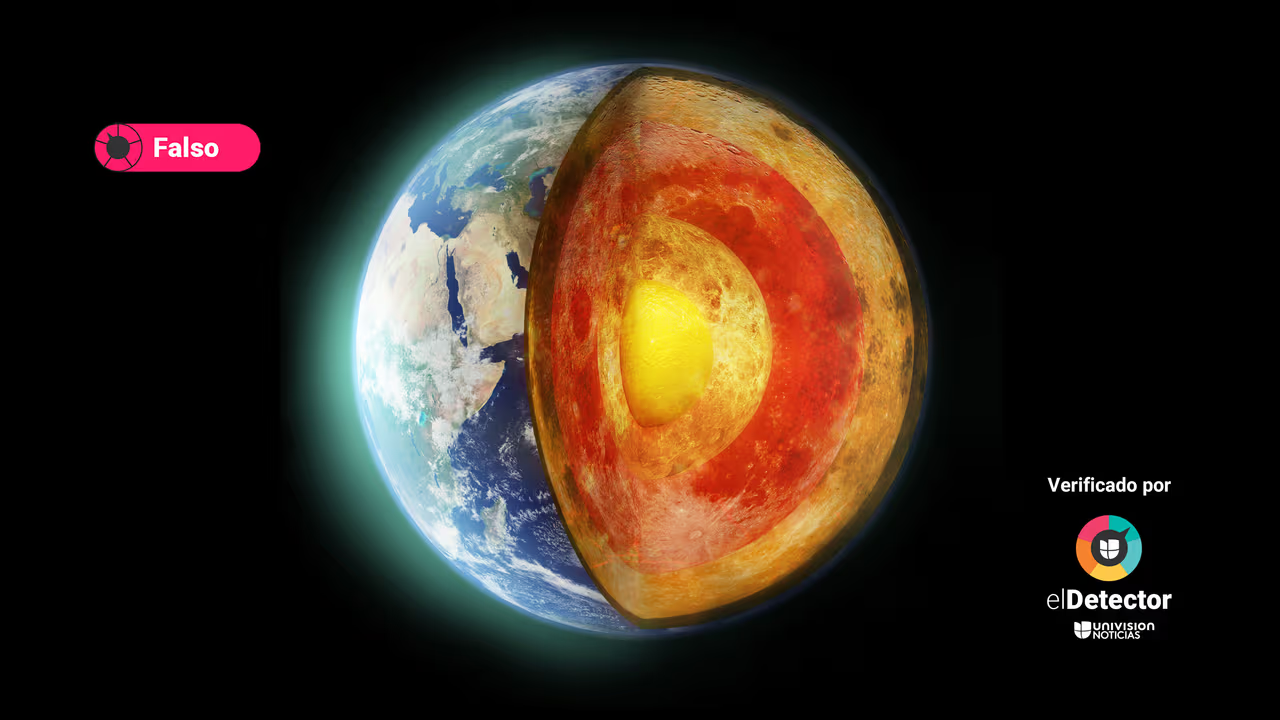
El núcleo interno de la Tierra se detuvo.
Publisher’s rating: Falso
UFO កប់ក្រោមទឹកកក រុស្ស៊ីរកឃើញយូរហើយ តែពួកគេលាក់ទុកស្រាវជ្រាវតែឯង។
Publisher’s rating: False
Giant snake attacking its natural prey, vans are incredibly dangerous but not for this enormous creature.
Publisher’s rating: Fake

Hallaron figuras alienígenas durante la construcción del Tren Maya.
Publisher’s rating: Falso

Foto muestra una “telaraña congelada por las bajas temperaturas en Estados Unidos”.
Publisher’s rating: Falso


"En Rusia cayo un meteorito el dia de hoy".
Publisher’s rating: Falso / Fuera de contexto