PeakMetrics / Fact Checks
Politics & government fact checks
Explore claims publishers have checked about politics & government. Read their original ratings and follow the evidence.
Search fact checks
Search by text or image12,754 published reviews in this topic

23.09.2014 தமிழக அரசு வெளியிட்ட அரசாணைப்படி சான்றிதழ்களின் நகல்களில் சான்றொப்பம்(attestation) அரசு அதிகாரிகளிடம் வாங்குவது மக்களுக்கும், அதிகாரிகளுக்கும் நேரம் விரயம் என்பதால் அரசு சார்ந்த வேலைகளுக்கு சுய சான்றொப்பம்(self-attestation) மட்டும் போதுமானது என அறிவித்துள்ளனர்.
Publisher’s rating: True

La Junta gasta más en publicidad institucional que en pensiones no contributivas
Publisher’s rating: Verdadero
The claim concerned spending by the Junta de Andalucía and was made by Teresa Rodríguez, then a candidate for the regional presidency. The review says she repeated it in two election debates. It compares spending on extraordinary supplements to non-contributory pensions with institutional advertising spending for 2015–2017, rather than comparing advertising spending across every Junta body with all pension expenditure. For pensions, the review describes an annual supplement for non-contributory disability and retirement pensions, funded from the regional budget. It reports total spending of €37,040,917 over the three years. For advertising, it says the Junta’s transparency portal published figures separately by organization and quarter, without an overall total. The review therefore identifies the scope of the advertising figure using information from Adelante Andalucía: it concerned only the Empresa Pública para la Gestión del Turismo y del Deporte de Andalucía, S.A. The reported advertising figures for that company were €17 million in 2015, €11 million in 2016, and almost €14 million in 2017. The review gives a three-year total of €41,937,898.69—nearly €4 million more than the pension supplements. It cites the Junta’s transparency portal and regional budgets as its sources. Its conclusion is supported for the specific comparison examined, with the important qualification that the advertising total is for one public company, not a consolidated total for the whole Junta.

La Junta de Andalucía es la institución más transparente de España
Publisher’s rating: Falso
பேஸ்புக்கில் அரசையோ, அரசு அதிகாரிகளின் தவறையோ சுட்டிக்காட்டுவது தவறல்ல. உச்ச நீதிமன்றம் அதிரடி.
Publisher’s rating: True

54,000 ramps and railings built and 50,000 special toilets for Divyang children.
Publisher’s rating: UNVERIFIED
The claim appeared among government claims about school education on a 48-months portal infographic. It stated that 54,000 ramps and railings and 50,000 special toilets had been built for Divyang children. The review assessed the figures against information it describes from government schemes and a Lok Sabha response, focusing on whether the facilities could be attributed to the current government. The review explains that the centrally sponsored Sarva Shiksha Abhiyan provides for barrier-free access in elementary schools, and that the Persons with Disabilities Act scheme also supports barrier-free environments in educational institutions. It cites a government answer in the Lok Sabha from March 2018: more than 7.66 lakh government schools had ramps, and more than 2.18 lakh had toilets for children with special needs. These figures describe facilities in schools overall; they do not establish how many were built by the current government. That distinction is decisive. The national totals are much larger than the figures in the claim, but the review does not treat them as confirmation or disproof of the claimed construction numbers. Because the cited information did not show how many facilities were built by the current government, the review concluded that the claim could not be verified and printed the rating “UNVERIFIED.”

En la encuesta del diario El Periódico, la propuesta que hace el Gobierno de España de fortalecer el autogobierno de Cataluña cuenta con un 56% de apoyo. La de GAD 3 para La Vanguardia alcanza el 70% de los encuestados
Publisher’s rating: Engañoso
The statement concerned two surveys cited by Spanish Prime Minister Pedro Sánchez during a Senate debate on Catalonia. The review says the El Periódico survey reported that 56% preferred “negotiating an improvement in self-government,” compared with 34.8% who preferred pursuing independence and 4.4% who chose neither. The article linked that 56% to an offer to negotiate and vote on improved Catalan self-government, so the review found that part of Sánchez’s account accurate: “Aquí Sánchez dice la verdad.” (S1) But the El Periódico text, according to the review, did not identify the question asked of respondents who selected the 56% option. That matters because the reported preference was not evidence that respondents had been asked whether they supported the Spanish government’s specific proposal. The review notes that the article connected the result to Sánchez’s offer, while leaving the survey question unspecified. (S1) For GAD3’s La Vanguardia survey, the review reports a result of 68.8%—not 70%—for a specific option: a constitutional reform, voted on by all Spaniards, allowing a new Catalan Statute with clearly defined powers. It says neither the general question nor that option mentioned Sánchez, the Spanish government, or “strengthening Catalonia’s self-government.” Thus, although Sánchez’s rounded figure was close to the reported percentage, the review says the survey did not measure support for his proposal as he described it. (S1)

「世界各國都是先以專法保障同性婚姻,再來考慮要不要適用民法。」?
Publisher’s rating: 事實釐清
The review examined an argument heard in Taiwan’s same-sex-marriage debate and referendum campaign: that countries usually first recognize same-sex couples through a separate law, then consider extending ordinary civil marriage law after the public becomes accustomed to the change. It consulted legal scholars and compiled information about other countries’ legal arrangements. Its central caution is that the claim’s categories do not readily support a simple worldwide comparison: a partnership statute is not necessarily a marriage law, and a law available to both same-sex and different-sex couples is not necessarily a same-sex-marriage-specific statute. For its comparison, the review reported a tally of 29 countries compiled by an education scholar: three directly granted marriage rights, while 26 first provided partnership rights; among those 26, 19 later also granted same-sex marriage rights and seven, at the time of the review, provided only partnership rights. The tally therefore describes legal sequences, but it does not establish that all countries first enacted a special law for same-sex marriage and then moved to civil law. The review specifically says that partnership rights and marriage rights are distinct, and that the “special law” category can include arrangements that are not marriage. The review also challenges the suggested explanation that countries changed only after society became accepting. The scholars it consulted described legal and legislative considerations, including different rights being governed by different laws and the limits of partnership arrangements in resolving legal inequality. Its conclusion is that legal change cannot be reduced to waiting for public acceptance or to a uniform progression from a special statute to civil law.
Embakasi North MP James Gakuya is not related to Kasarani MP Mercy Gakuya
Publisher’s rating: False.

Que el Poder Judicial se nombre a sí mismo iría a contramano de democracias similares a la nuestra
Publisher’s rating: Engañoso

Votaron en contra de la Ley de la Oficina Anticorrupción los tres partidos que me acompañan
Publisher’s rating: Falso


Susana Díaz ha preferido históricamente socios a la derecha
Publisher’s rating: Engañoso
The claim was made by Pablo Iglesias shortly before the start of the Andalusian regional election campaign. In an interview, he argued that Podemos was not among Susana Díaz’s preferred coalition partners and said she had historically preferred partners on the right. The review examines that broad historical claim against coalition and governing arrangements described in its account. The evidence includes examples that support part of Iglesias’s characterization: after Díaz won the 2015 election without an absolute majority, she reached a legislative agreement with Ciudadanos. The PSOE in Andalusia also supported its lawmakers’ abstention in the investiture of Mariano Rajoy after the June 26, 2016 election. The review further notes that Díaz had said she did not see a coalition government with Podemos. But the article identifies an important counterexample. After the 2012 Andalusian election, the PSOE formed a governing pact with Izquierda Unida (IU), and Díaz, then regional president’s minister, was responsible for sealing it. The pact continued when Díaz became president of the regional government; the review says she later ended it and called an early election. The article also notes a Sevilla city-council pact between the PSOE and the Partido Andalucista during Díaz’s time as a councillor, despite the availability of IU votes. Taken together, the examples show why the claim’s sweeping historical wording leaves out significant evidence of left-wing and other non-right partnerships.

En este país la Constitución nunca se ha reformado, siempre se han derogado
Publisher’s rating: Verdad a medias
The review says Spain’s 1978 Constitution has not been replaced in its entirety, but it has been amended twice. It also notes a historical exception to the claim that constitutions were always repealed: the 1837 Constitution gave way to the 1845 Constitution without technically being repealed.
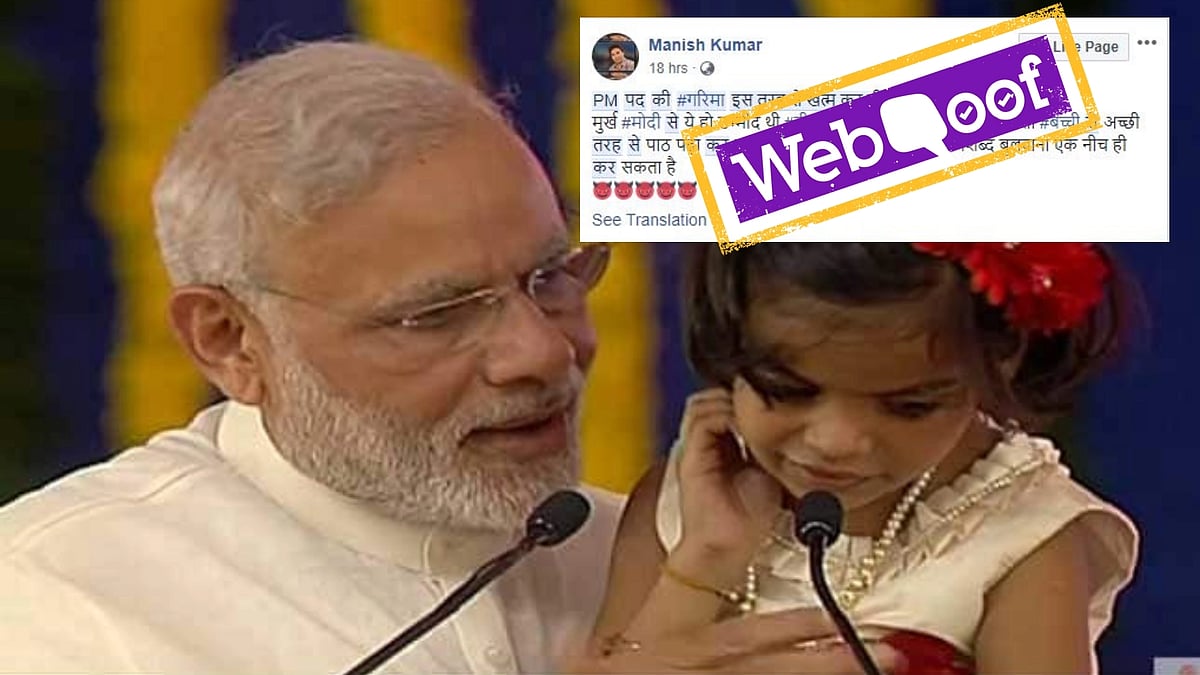
वीडियो में PM मोदी बच्ची को ‘राहुल पप्पू है’ बोलने के लिए कह रहे हैं.
Publisher’s rating: FALSE
نظارت مجمع قانونی است و وظیفه هیات عالی نظارت، انطباق مصوبات مجلس با سیاستهای کلی است.
Publisher’s rating: گمراهکننده
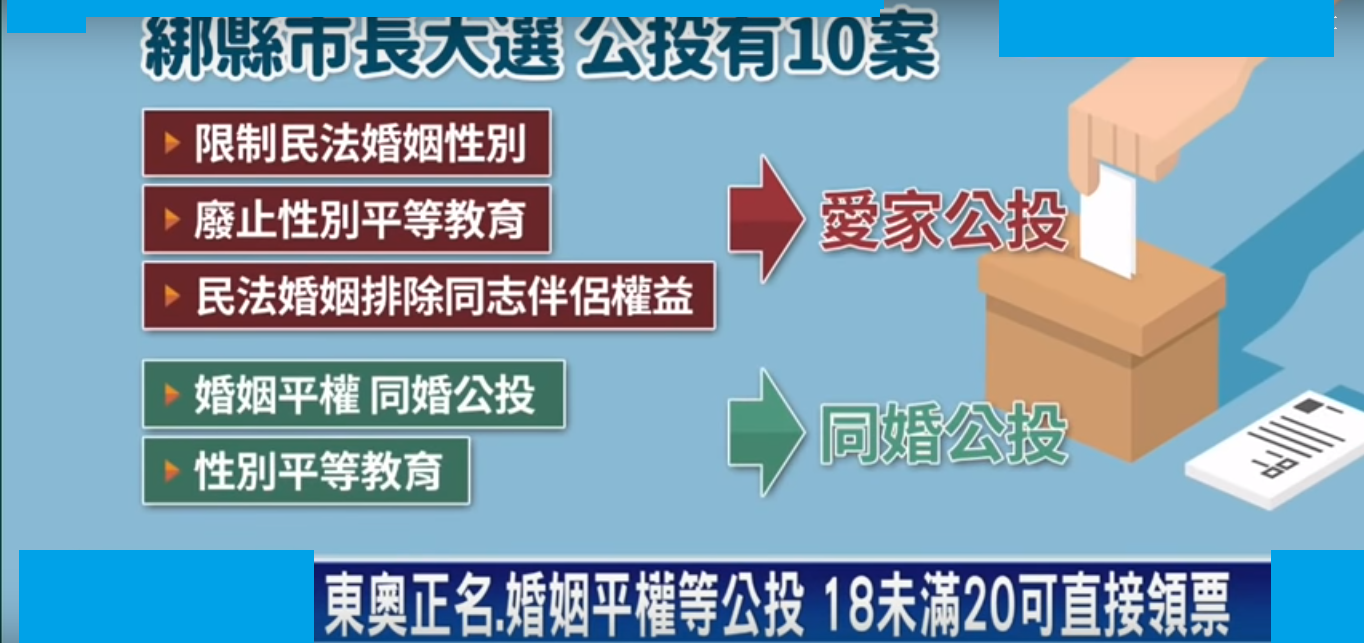
限制民法婚姻性別、廢止性別平等教育、民法婚姻排除同志伴侶權益
Publisher’s rating: 部分錯誤
The claim concerns descriptions of Taiwan’s referendum proposals Nos. 10, 11 and 12: that they would restrict the genders eligible for civil marriage, abolish gender-equality education, and exclude same-sex couples from civil-marriage rights. The Taiwan FactCheck Center checked the proposals against material on the Central Election Commission’s referendum website, including their formal questions and explanatory statements. Its review finds that two descriptions accurately reflect the proposals, while the description of Proposal 11 overstates its scope. Proposal 10 asked whether civil-marriage rules should be limited to a union of one man and one woman. The review says its explanatory statement expressly supported that limitation, so describing the proposal as restricting marriage by gender is supported. Proposal 12 asked whether the rights of two people of the same sex in a permanent shared life should instead be protected through a form other than civil-marriage rules. The review says its statement favored keeping the civil-marriage definition based on a man and a woman and protecting same-sex couples through separate legislation. Thus, the review treats the description of Proposal 12 as excluding same-sex couples from civil marriage as an accurate account of its position. The description of Proposal 11 as abolishing gender-equality education is not supported by the text examined. Its question concerned whether schools should provide the specified same-sex education to students in elementary and junior-high school, and its explanatory statement addressed that education rather than calling for the abolition of gender-equality education as a whole. The review therefore distinguishes opposition to this particular component from ending the broader subject. Overall, the three-part description is mixed: the first and third descriptions match the proposals, but the second mischaracterizes the narrower target of Proposal 11.

Every village has been electrified under Deen Dayal Upadhyaya Gram Jyoti Yojana
Publisher’s rating: MISLEADING
FACTLY examined a government claim that every village had been electrified under the Deen Dayal Upadhyaya Gram Jyoti Yojana (DDUGJY). Its central qualification is that village electrification and electrifying households are not the same measure, and that the reported nationwide achievement cannot be attributed to DDUGJY or to the current government alone. The review explains that the definition of an electrified village changed over time. Under the definition it says had been in use since February 2004, a village qualified if basic distribution infrastructure was provided in inhabited localities and any Dalit Basti hamlet, electricity reached specified public places, and at least 10% of village households were electrified. Thus, a village counted as electrified did not necessarily mean every household had a connection. For the claim’s attribution, FACTLY cites annual reports of the Rural Electrification Corporation and a Lok Sabha answer. It reports that more than 18,000 previously unelectrified villages were electrified during the current government’s term and that all inhabited census villages had been electrified by April 2018. But it also notes that the UPA government had electrified more than a lakh villages during its term, following the launch of the RGGVY in 2005. The review therefore says the nationwide result was not solely the current government’s achievement and was not achieved solely under DDUGJY. It also reports that DDUGJY’s separate intensive-electrification programme had reached 548,875 of a stated scope of 780,337 villages.
पीएम मोदी ने 15 लाख सैलरी पर मेकअप आर्टिस्ट रखा है
Publisher’s rating: FALSE