PeakMetrics / Fact Checks
Health & medicine fact checks
Explore claims publishers have checked about health & medicine. Read their original ratings and follow the evidence.
Search fact checks
Search by text or image13,677 published reviews in this topic


Claim luppo coconut cream bar has tablets which causes paralysis
Publisher’s rating: FALSE

“Five hundred thousand people go bankrupt because of medically related issues. They come down with cancer, and that’s a reason to go bankrupt?”
Publisher’s rating: Exaggerated
In den sozialen Netzwerken kursiert ein Text mit der Überschrift: «Pharma-Lüge aufgeflogen». Darin heißt es, der Bundesgerichtshof (BGH) habe in einem Urteil bestätigt, dass Masernviren nicht existieren.
Publisher’s rating: Es gibt kein BGH-Urteil zur Existenz von Masernviren. Das Gericht wies lediglich eine Beschwerde im Zusammenhang mit einem nicht gezahlten Preisgeld zurück.
The dpa review examines a social-media text claiming that the Federal Court of Justice (BGH) had confirmed in a judgment that measles viruses do not exist. Its account traces the court case to a €100,000 prize offered by biologist Stefan Lanka in November 2011. The stated condition was a scientific publication that proved the measles virus existed and, among other things, determined its diameter. Medical student David Bardens sent Lanka six scientific publications and sought payment after Lanka did not pay. The courts addressed whether Bardens had met the offer’s conditions, not whether measles viruses exist. The Ravensburg Regional Court ordered Lanka to pay, but the Stuttgart Higher Regional Court ruled for Lanka. The dpa account says the higher court found that Bardens had not met the condition because he submitted several publications rather than one. It also states that the existence of measles viruses played no role in the court’s reasoning. Bardens then filed a complaint with the BGH after the higher court did not allow an appeal. The dpa review reports that the BGH rejected that complaint on 1 December 2016 because the case did not have fundamental significance and did not require a decision by the revision court to develop the law or ensure consistent case law. The review says nothing further can be inferred from that rejection about the existence of measles viruses. Thus, the social-media claim turns a procedural decision in a dispute over prize-money conditions into a ruling on a scientific question that the courts did not decide.

石榴煮水喝,可以溶解結石。
Publisher’s rating: 錯誤
The review examined the specific claim that drinking pomegranate boiled in water can dissolve stones, including claims that stones would then leave the body as powder or particles. It reports that a urologist interviewed by the Taiwan FactCheck Center said pomegranate contains citrate and potassium and may help prevent stone formation, but that it cannot dissolve existing stones. The review also notes that evidence from small animal studies of pomegranate extract does not establish that the results apply to people. (S1: “石榴具有抗氧化效果,且含有檸檬酸、鉀離子等成分,可以鹼化尿液,避免草酸形成結晶,進而達到預防結石的效果,但無法「溶解結石」” and “目前有小規模動物實驗,認為石榴萃取物可能可以減少結石的形成及沉積,並保護腎臟。但目前沒有設計良好的人體實驗,因此不一定能套用到人體身上。”) The review’s account distinguishes preventing stones from treating or expelling them. The physician said dietary changes are mainly used to prevent stones, and that there was no clinical evidence that diet could make stones dissolve and pass. A separate fruit-fly study described in the article found an effect for potassium citrate, but not for fruit juices; the review cautions that those results cannot be directly applied to humans either. (S1: “飲食調整主要是用於預防結石產生,目前臨床無相關證據能靠飲食使結石化掉而排出。” and “發現檸檬酸鉀對預防結石有效,但果汁無效。研究結論提到,該果蠅實驗結果還不能反推到人體實驗上。”) The article also addresses a related claim that thick or sticky urine shows stones have passed. The interviewed physician said it does not prove that, and could instead indicate infection, inflammation, or mixed secretions. The review further warns that people with poor kidney function or kidney disease should avoid excessive pomegranate because of its potassium content. (S1: “黏稠狀尿液不代表結石排出,反而可能代表感染、發炎,或是混合分泌物,應盡快就醫檢查。” and “腎功能有問題的人,吃多了恐怕會引發心律不整、電解質不平衡”)
"Over 90 percent of the people support funding for Planned Parenthood and making sure that women can get the health care they need."
Publisher’s rating: This is exaggerated.

Los fármacos antigripales con fenilpropanolamina provocan «riesgo de muerte»
Publisher’s rating: Falso
The claim concerns a viral warning that flu medicines containing fenilpropanolamina pose a risk of death. The warning said that Spain’s health ministry had suspended the substance’s distribution, handling and sale after the US Food and Drug Administration found fatal adverse effects, including cerebral bleeding. Newtral reports that the ministry had already denied the message in January 2008, and that it circulated again in 2017. The article distinguishes between the use examined in the research and the use described in the warning. It says Spain’s medicines agency, AEMPS, assessed a Yale study published in May 2000. That study suggested a higher risk of cerebral bleeding among young women taking high doses of the substance as an appetite suppressant for obesity. But, according to the article’s account of the assessment, the study did not show a statistically significant increase in that risk when the substance was used as a decongestant in flu medicines. The article also reports that no medicine containing fenilpropanolamina was authorized in Spain as an appetite suppressant, while two medicines for symptomatic treatment of flu-like illnesses contained low doses of it for nasal decongestion. It says the AEMPS and ministry had considered those medicines safe. The warning therefore conflated the high-dose appetite-suppressant use discussed in the study with lower-dose use in flu medicines, and falsely claimed that authorities had suspended distribution. The article notes, however, that these medicines are contraindicated for certain patients and require caution in others.
Von Impfstoffen gegen Masern soll eine größere Gefahr ausgehen als von der Krankheit selbst. Das behauptet ein Text, der sich auf verschiedenen Seiten im Internet findet. Innerhalb von 10 Jahren seien demnach über 100 Menschen in Folge einer Masern-Impfung gestorben, an der Krankheit selbst jedoch niemand. Der Text bezieht sich auf Daten einer US-amerikanischen Behörde. Maserninfektionen seien zwar rückläufig, aber nicht wegen der Impfungen, sondern wegen besserer Hygiene und Ernährung
Publisher’s rating: Die Daten, auf die sich der Text bezieht, sind nicht überprüft. Auch durch gute Hygiene und einen guten Ernährungszustand lassen sich Erkrankungen, die so leicht übertragen werden wie die Masern, nicht verhindern.
The claim combines two assertions: that U.S. records show more than 100 deaths caused by measles vaccination over ten years and none caused by measles, and that declining measles infections resulted from better hygiene and nutrition rather than vaccination. The review identifies the records behind the claim as reports in VAERS, a vaccine-effects reporting system run by the CDC and FDA. It explains that these reports are not checked and that anyone can submit a suspected case, so they cannot establish that a vaccine caused a reported death: “Die Daten werden jedoch nicht kontrolliert. Jeder kann das System mit vermeintlichen Fällen füttern. Aus den Daten lassen sich also keine verlässlichen Aussagen ableiten.” The review contrasts those reports with information from Germany’s Paul-Ehrlich-Institut (PEI). It says that since 1995, a fatal connection with measles vaccination was established in two cases, both involving people with severe immune deficiencies that were not known at the time. For other reported deaths after vaccination, the PEI found no established connection. The review also gives German measles-death figures: 15 deaths between 2001 and 2012, and 33 between 1998 and 2017. These figures provide context but are not a direct count of U.S. deaths or a validation of the claim’s U.S. data. On the hygiene-and-nutrition argument, the review reports that the PEI rejected it as an explanation for the decline. It describes measles as highly contagious and says about nine in ten unvaccinated people become ill after exposure. It also reports the PEI’s estimate that measles vaccinations prevented about 20.3 million deaths worldwide between 2000 and 2015. Thus, the cited evidence does not establish the claimed vaccine-death total from VAERS, while the review’s reported epidemiological evidence conflicts with the suggestion that hygiene and nutrition alone account for declining infections.


Claim: Onion and Sesame oil removes tooth cavity
Publisher’s rating: FALSE

«Sono migliaia gli emiliani e i romagnoli che vanno altrove a farsi curare [...]. Sono più quelli che escono [di quelli che arrivano]»
Publisher’s rating: Panzana pazzesca
The claim concerns remarks by Lega leader Matteo Salvini about healthcare in Emilia-Romagna. During his election tour in the region on November 18, he said that thousands of residents went elsewhere for treatment and that more patients left than arrived. The review checked this comparison against the Ministry of Health’s annual hospital-activity report, published in January 2019, which contained the latest available patient-mobility data, for 2017. The review compared treatment in Emilia-Romagna for non-residents with treatment outside the region for Emilia-Romagna residents. For ordinary inpatient admissions for acute conditions in 2017, the region recorded 78,941 admissions for people from elsewhere and 29,951 admissions outside the region for its own residents: 48,990 more arrivals than departures. The same direction held for acute day-hospital admissions: 16,414 incoming patients compared with 9,692 residents treated elsewhere, a difference of 6,722. The review also reports more incoming than outgoing admissions for rehabilitation, both ordinary and day-regime, and for long-term care. The comparison is specifically about hospital admissions, not every possible form of healthcare. As a broader check, the review also reports that Emilia-Romagna’s 2017 balance of credits and debts for healthcare mobility exceeded €300 million, the second-highest positive balance among Italian regions. On the evidence it examined, the review concluded that more patients came to Emilia-Romagna for care than left it; the figures therefore contradict Salvini’s claim about the direction of patient flows.

Uma criança do sexo masculino segundo informações nasceu em um hospital público da cidade de Santarém Pará com um rabo
Publisher’s rating: Falso

Eupatorium Perfoliatum 200 CH medicine can cure Dengue in just two days.
Publisher’s rating: MISLEADING
The review examines a social-media post claiming that the homeopathic medicine Eupatorium Perfoliatum 200 CH can cure dengue in just two days. It distinguishes between the medicine being prescribed for dengue and evidence that it cures the disease within that specific timeframe; the review says the latter is not supported by credible information. To investigate, the review says it searched Google for information about the medicine and consulted material from the 1mg medical website and the government website Vikaspedia. It also refers to a doctor’s response on Practo, which describes Eupatorium as one medicine that may match dengue symptoms, rather than the only medicine used. The review notes that the cited material discusses prescribing the medicine, but does not establish a two-day cure. The review further reports that hospitals and the US CDC describe dengue care as treatment for symptoms, and that Government of India and World Health Organization reports give the febrile phase of dengue as lasting two to seven days. That duration describes a phase of the illness; it does not demonstrate that this medicine cures dengue. On the evidence described, the review concludes that the specific two-day cure claim is misleading.
Alerta sobre «snacks con pastillas que provocan parálisis» en EEUU o Israel
Publisher’s rating: Falso
The warning concerned Luppo coconut-cream snack bars made by Şölen. It claimed that each pastry contained pills capable of causing paralysis, and that the product was made in Turkey and exported to the United States and Israel. The review examined both the alleged contents of the snack and the claim about where it was sold. Şölen’s spokesperson told Teyit that the product was made in Turkey but sold only in Iraq, contradicting the warning’s stated destinations. The review also describes the video’s provenance and the clues used by Teyit to assess where it was filmed. The video first appeared online on October 28, 2019; Teyit considered Iraq’s Kurdistan region the likeliest location, citing Sorani Kurdish heard at the end and a chicken brand visible in the background. Those clues concern the likely filming location, not independent proof of what was inside the pastry. For the alleged pills, the review reports that Şölen provided Snopes with SGS inspection documents concerning its production plants. It says the production filtration systems blocked particles larger than 0.7 millimeters in either height or width, while the objects shown in the video were larger. The review also relays France 24’s observation that the pastry briefly leaves the camera’s focus and, when visible again, has a round hole whose position appears to match the objects. Taken together, the reported sales information and production and video evidence undermine the warning’s claims, though the review describes the filming location as probable rather than certain.

About 2% of pregnancy terminations take place between 20 and 24 weeks.
Publisher’s rating: ACCURATE. In 2018, 1.8% of all abortions in Great Britain took place at gestations of 20 weeks and over; 1.7% of all abortions in England and Wales took place at gestations of 20 to 24 weeks.
Account spreading toxic cancer message belong to Waiguru
Publisher’s rating: False.
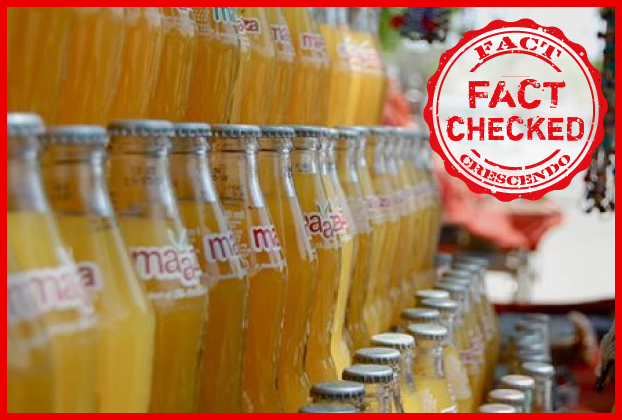
Claim: Dont buy Maaza which has HIV blood
Publisher’s rating: Fact Crescendo Rating: False
Fact Crescendo investigated a Facebook rumor alleging that Maaza soft drinks contained HIV-infected blood. The review says it examined a post shared by a Facebook account named Hari Ram on August 19, 2015, and notes that others had also shared the claim as true. The review links the Maaza allegation to an earlier rumor that HIV was present in Bovonto soft drinks, describing the Maaza version as a renamed version of that claim. It also says the rumor was examined by multiple media outlets. The excerpt does not identify those outlets or detail their investigations, so it does not provide their methods or findings independently. As its explanation, the review states that HIV cannot survive for long outside the human body and says it is transmitted between people through routes including blood and semen, not through water or soft drinks. It concludes that the Facebook claim it examined was false. The excerpt does not describe laboratory testing of Maaza or provide specific test results.