PeakMetrics / Fact Checks
Health & medicine fact checks
Explore claims publishers have checked about health & medicine. Read their original ratings and follow the evidence.
Search fact checks
Search by text or image13,676 published reviews in this topic
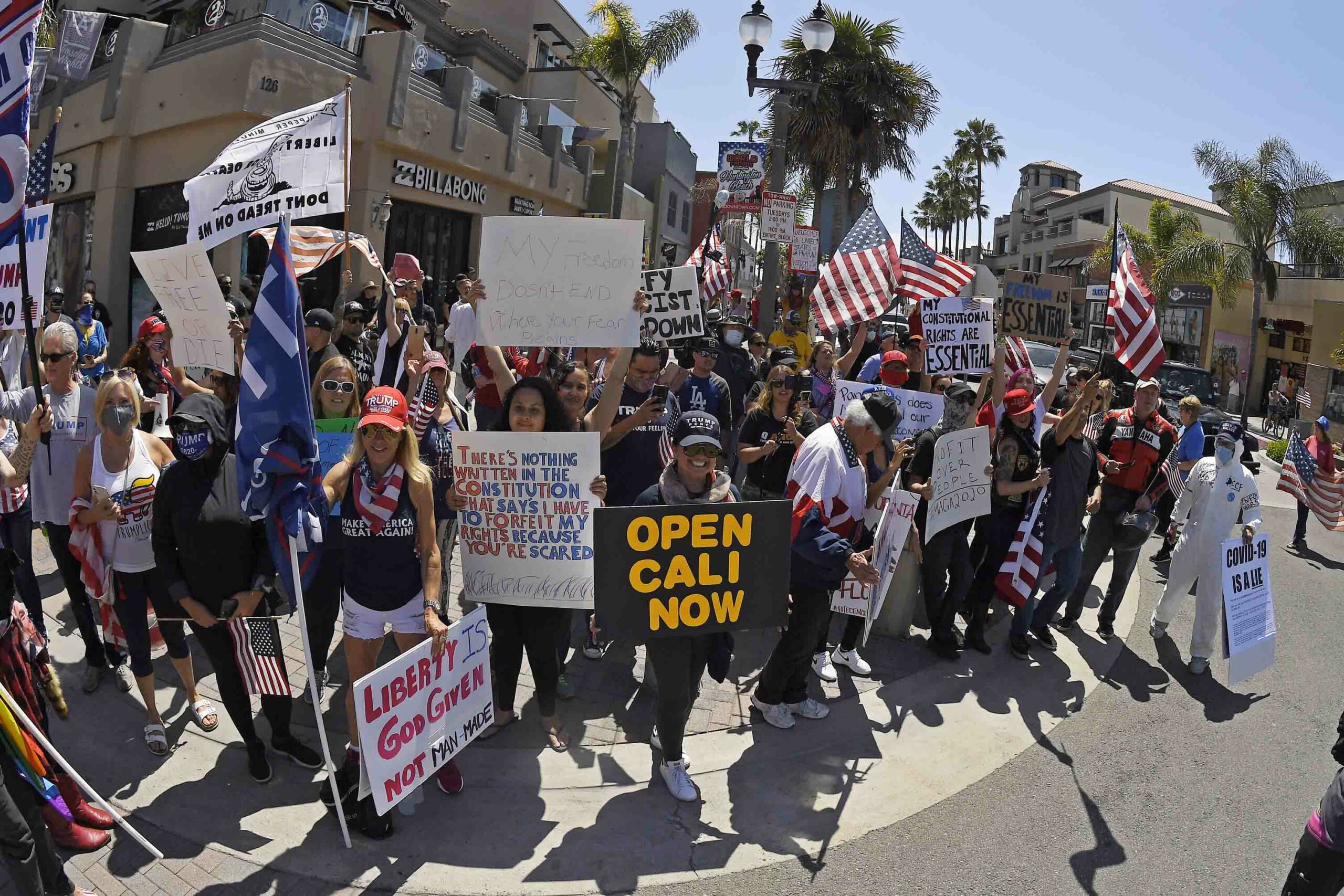
"What if quarantining the healthy doesn’t save lives?"
Publisher’s rating: Inaccurate
"Never in the history of this great republic have we quarantined the healthy."
Publisher’s rating: Inaccurate
"The fatality rate of this virus is in the ballpark of a bad seasonal influenza."
Publisher’s rating: Misleading

En cuanto al porcentaje de contagios [en Madrid] estamos por debajo de la mitad de la media española
Publisher’s rating: Engañoso

Hospital no Piauí cura pessoas da covid-19 e esvazia UTIs com uso de cloroquina
Publisher’s rating: Enganoso: Textos omitem que ainda há pacientes em tratamento domiciliar e também em leitos ambulatoriais no hospital e o próprio médico que aparece no vídeo diz que as informações foram distorcidas. Além disso, não existe nenhum registro científico ou comparativo de que a melhora clínica dos pacientes foi exclusivamente por conta das medicações

Bill Gates and Dr. Anthony Fauci created and are set to profit from the drug remdesivir
Publisher’s rating: False
The claim arose in a Facebook post that said Fauci and Gates invented remdesivir and tied its rising stock price to their supposed financial interests. USA TODAY’s review examined who developed and patented the drug, what role Fauci and Gates had in related research, and who could profit from its distribution. It reported that remdesivir was developed by Gilead Sciences, which had researched it since 2009, and that Gates and Fauci were not involved in its development or patenting.

網傳「比爾蓋茨基金會...遭黑客攻擊,大量電郵及文件外洩...2019年10月19日,石正麗博士...乘公交車去P4實驗室...途中她下車一次...把一塊污染的乾冰放在...海鮮市場通風口附近」?
Publisher’s rating: 錯誤
The post combined two claims: that the Bill & Melinda Gates Foundation had suffered a hacker attack and leaked emails and documents, and that Shi Zhengli had travelled to a P4 laboratory on October 19, 2019, stopping near Wuhan’s Huanan Seafood Market to leave contaminated dry ice by a ventilation opening. The review checked the foundation-breach allegation with the foundation’s public-relations team, which replied that it had no indication of a data breach. It therefore found no specific evidence supporting that part of the circulating story. For the claim that the market shared a building with a high-speed rail hub, the review says it examined Baidu Maps street-view imagery. It describes the market as a one- to two-storey building and says the nearest station, Hankou, was not in the same building; the walk between them was about 15 minutes. The review also says it examined video reports by the South China Morning Post and Agence France-Presse, which showed market premises consisting of shops, not a facility integrated with high-speed rail. These checks directly contradict the post’s assertions about a foundation data breach and the market’s alleged location in the same building as a rail hub. The excerpt does not describe independent verification of CCTV footage or a check of the alleged dry-ice placement itself. Its overall assessment treats the post’s key claims as inaccurate and says the further inference has no basis, but the specific methods described here chiefly address the breach and the market–station relationship.
A video claims the answer to COVID-19 is not a vaccine but salt.
Publisher’s rating: False

有朋友是護理師,她說台灣醫療用的(紗布)也快缺貨了!因為都是中國製,台灣各大醫院的庫存已經極限了...
Publisher’s rating: 部分錯誤
The claim combined two points: that Taiwanese medical gauze was nearly out of stock because it was made in China, and that hospitals’ supplies had reached their limit. The review found that most gauze came from China, but some came from Malaysia and other Southeast Asian countries. A supplier’s representative also said that most semi-finished gauze was imported from China, while the raw cotton was imported because Taiwan did not produce it. Thus, the claim overstated the extent to which supply came from China. The review describes a real disruption from late January through mid-April 2020, when China’s shutdowns and work stoppages sharply reduced gauze imports. According to a supplier serving major teaching hospitals, hospitals had increased their medical-supply inventories; during the disruption, patient visits also fell, and their existing gauze stocks remained sufficient. The supplier said shipments began recovering from late April to early May as Chinese production resumed, although its supply at that point was about half its prior-year level. The review checked the stock-shortage claim with suppliers, Taiwan’s Food and Drug Administration, and a nurse responsible for infection control at Mackay Memorial Hospital. The agency said there had been reduced incoming supply but no complete interruption and that gauze was not then in shortage; the nurse likewise reported no shortage at her hospital. The review therefore distinguishes an earlier import disruption from the claim that hospitals’ gauze reserves had reached their limit: it supports the former but reports that the latter did not match the evidence gathered.

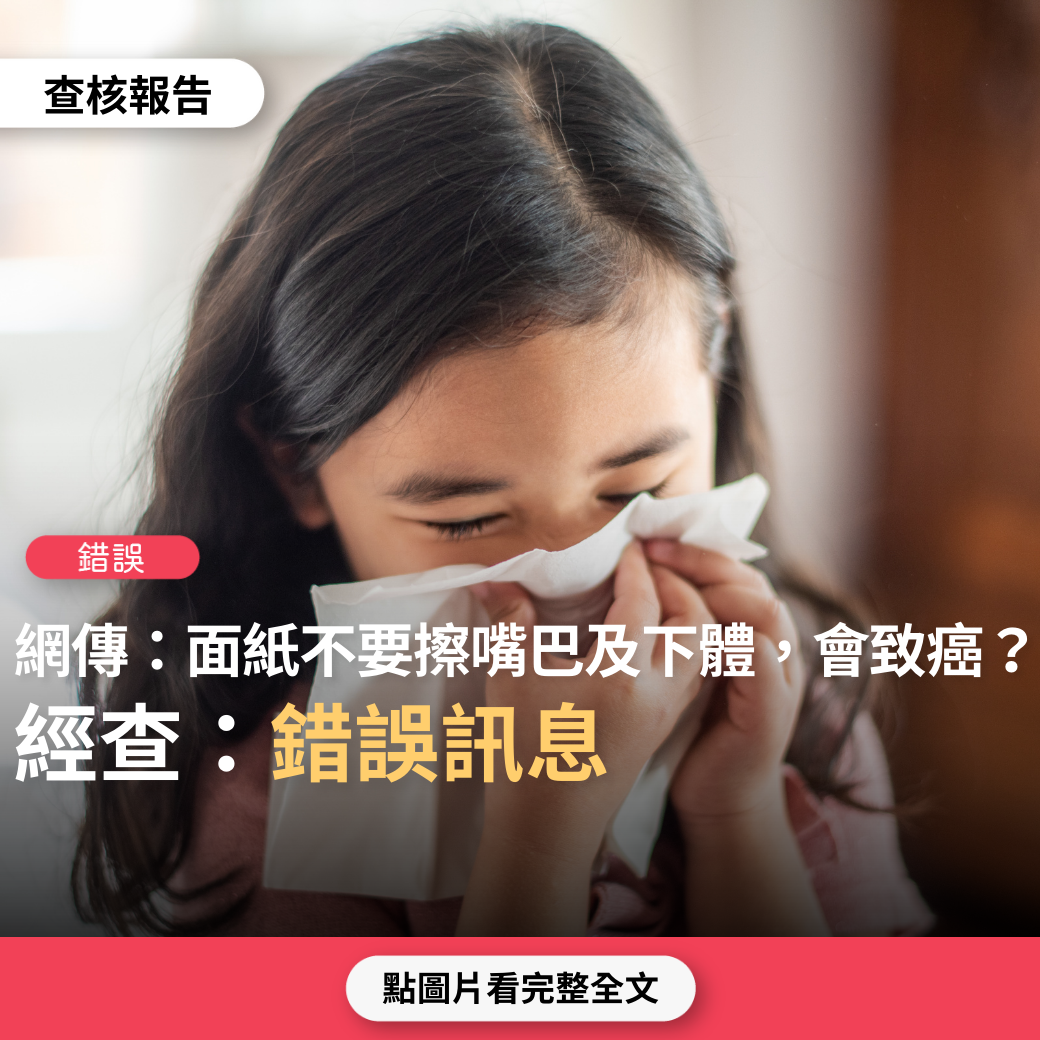
網傳「永豐餘公司造紙研發部陳經理陳述,面紙加工添加濕強劑,又添加柔軟劑及各種活性劑,所以粉塵多,尤其女孩子絕對不要用來擦拭下體,或嘴巴,以免致癌病...」?
Publisher’s rating: 錯誤
The claim attributes a warning about facial tissue to a manager in YFY’s papermaking research department. It alleges that facial tissue contains wet-strength agents, softeners and “active agents,” creates more dust, and could cause illness or cancer if used on intimate areas or the mouth. The review investigated both whether the quoted warning came from YFY and whether the claims about tissue composition and health effects were supported. It reports that YFY said no employee in the department had issued the message; the company had been responding to inquiries about the longstanding rumor since 2015. The review also notes that versions of the message could be traced online to at least 2006. (S1: “顏靜雯表示,該公司為負責永豐餘投資控股公司旗下的家庭用紙製造與銷售,公司內確實有設立研發部門,但經查沒有該部門員工對外發布此傳言。”; “該傳言在網路上流傳已久,查核中心往前追溯,至少在2006年就曾出現在網路上。”) For the product claims, the review describes inquiries to Taiwan’s Bureau of Standards, Metrology and Inspection and YFY. The standards official explained that facial tissue is made from virgin pulp and, because it is intended to remain stronger when wet, manufacturers add compliant wet-strength agents. YFY said facial tissue does not contain “active agents”; it may use a compliant softener for consumer needs, but does not generally do so. The review says the cited dust problem was not established. It also reports that cost differences reflect multiple factors, including facial tissue’s lower production volume—not simply additives. (S1: “面紙則依適用性質,在製作時,廠商會添加符合規定的濕強劑,主要作用在增強韌度,使其不易破裂。”; “但並沒有傳言指稱,因為添加物所以粉塵較多的問題。”; “但並不會添加「活性劑」等額外藥劑。”; “最主要是因面紙產量較衛生紙少,經濟規模小因而墊高了生產成本。”) On health, the review reports that a dermatologist considered it unreasonable to say tissue safe for the face could not be used on other skin solely because of body location, assuming the product passes national safety testing. A clinical toxicology specialist said the wet-strength agent discussed is mainly epichlorohydrin, but the amount entering the body in ordinary use is very low and would not increase cancer risk. The review therefore characterizes the attribution as false and the message’s exaggerated claims as misleading. (S1: “她認為,民眾使用符合國家安全檢測標準的面紙,不需過度擔心。”; “顏宗海說,民眾在日常生活中使用面紙產品時,真正會進入人體的環氧氯丙烷,劑量相當地低,並不會增加罹癌風險。”; “因此,該傳言為不實冠名,再以誇大內容誤導的「錯誤」訊息。”)
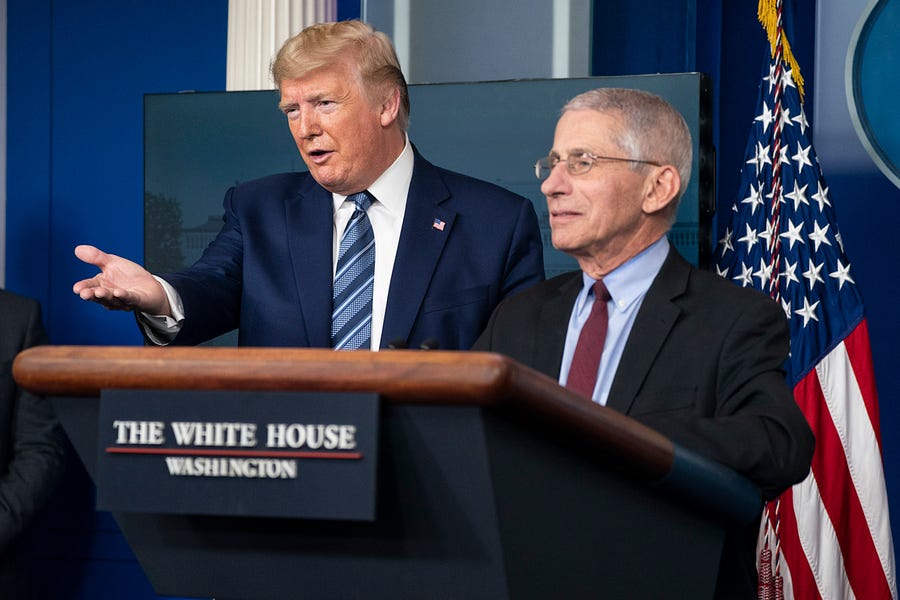
Dr. Fauci disagreed with President Trump's decision to curtail travel from China early in the pandemic.
Publisher’s rating: False

കോണ്ഗ്രസ്സ് നേതാക്കള് ചെക്ക് പോസ്റ്റില് കോവിഡ് രോഗിയോടൊപ്പം ഉണ്ടായിരുന്നു
Publisher’s rating: FALSE

In einer Reihe von Facebook-Postings wird behauptet, der japanische Immunologe Tasuku Honjo habe vor Journalisten erklärt, das Coronavirus sei nicht natürlicher Herkunft. Im Text wird behauptet, das Virus sei künstlich, und China habe das Virus hergestellt (http://dpaq.de/h84FC). Das Posting erweckt den Eindruck, als würden damit Honjos Worte wiedergegeben.
Publisher’s rating: Es gibt keinen Beleg dafür, dass Honjo sich tatsächlich in dieser Weise geäußert hat. Der Wissenschaftler spricht in einer Erklärung von falschen Anschuldigungen und Falschinformationen
Imunitas merupakan kata kunci untuk melawan pandemi, dalam hal ini pandemi Covid-19
Publisher’s rating: Sebagian benar
Fälle von Augenherpes würden durch das Tragen einer Mund-Nasen-Maske zunehmen: Diese Behauptung kursiert vor allem im Messenger Telegram und auf dem sozialen Netzwerk Facebook. Das mehrfache Ein- und Ausatmen der eigenen Atemluft führe angeblich dazu, dass Viren und Bakterien die Augen entzündeten
Publisher’s rating: Augenherpes ist nicht meldepflichtig, eine Zunahme nicht belegt. Augenärzten sind keine Fälle bekannt, in denen ein Mundschutz eine solche Infektion begünstigt haben soll. Aktiviert wird das Virus meist durch Stress oder Immunschwäche.
In einer Reihe von Facebook-Posts wird behauptet, der japanische Immunologe Tasuku Honjo habe vor Journalisten erklärt, das Coronavirus sei nicht natürlicher Herkunft. Im Text wird behauptet, das Virus sei künstlich, und China habe das Virus hergestellt (http://dpaq.de/pj7uc). Der Post erweckt den Eindruck, als würden damit Honjos Worte wiedergegeben.
Publisher’s rating: Es gibt keinen Beleg dafür, dass Honjo sich tatsächlich in dieser Weise geäußert hat. Der Wissenschaftler spricht in einer Erklärung von falschen Anschuldigungen und Falschinformationen
The posts attributed to Tasuku Honjo statements that the coronavirus was not natural, that it did not come from bats, and that China had made it. They also suggested he had worked for four years in a Wuhan laboratory. The dpa review says the posts presented these claims as Honjo’s own words, but reports that he disputed the attribution in a statement published by Kyoto University on April 27, 2020. In that statement, Honjo said his name and Kyoto University’s name were being used to spread false accusations and misinformation. He also said that unsubstantiated claims about the disease’s origin were dangerously disruptive while scientists were working to treat patients and limit the spread of suffering. This is direct evidence that he rejected the posts’ attribution; it does not, by itself, establish the virus’s origin. The review checked the claimed Wuhan connection against Honjo’s curriculum vitae on the Leopoldina National Academy of Sciences’ website and reports that he had never worked in Wuhan. It also compared the posts with an April 10 interview in the Nikkei Asian Review: there, Honjo said the disease originated in China and that China would play a major role in the world after the coronavirus, but the review says he did not claim China had manufactured the virus. These distinctions matter: the posts’ allegation of manufacturing is not supported by the interview cited in the review.

The Obama Administration left behind no pandemic game plan.
Publisher’s rating: False