PeakMetrics / Fact Checks
Health & medicine fact checks
Explore claims publishers have checked about health & medicine. Read their original ratings and follow the evidence.
Search fact checks
Search by text or image13,676 published reviews in this topic


Die Corona-Toten sind Menschen, die mit und nicht an Covid-19 gestorben seien. Die Mehrheit der Verstorbenen ist nicht ursächlich an Covid-19 gestorben. Es handelt sich vor allem um gebrechliche und mit erheblichen Vorerkrankungen belastete Personen, die eigentlich an ihrer Grunderkrankung gestorben seien.
Publisher’s rating: Überwiegend falsch. Zwar ist die Formulierung "gestorben mit Covid-19" bezogen auf die Zählweise des Robert-Koch-Institutes richtig. Doch daraus lässt sich nicht automatisch ableiten, die Patienten wären ohne Covid-19-Erkrankung ohnehin bald verstorben. Experten gehen davon uas, dass die offiziellen Todesfallzahlen die tatsächlichen eher unterschätzen statt überschätzen. Laut einer Untersuchung von Wissenschaftlern der Universität Palermo in Jama Internal Medicine zum Beispiel starben in Italien deutlich mehr Menschen durch Corona gestorben, als es die offiziellen Todeszahlen vermuten lassen.
Die Regierung von Tansania hat im Auftrag von John Magufuli, dem Präsidenten des Landes, bei Ziegen, Schafen, Vögeln, Papayas und Motoröl Sars-Cov-2-Abstriche gemacht. Diese hat man an medizinische Laboren zur Auswertung gegeben. Positiv auf Sars-Cov-2 getestet sind zum Beispiel die Probe einer Papaya, einer Ziege und eines Vogels. Den PCR-Tests kann man nicht trauen: Sie liefern zufällig falsche Ergebnisse oder die Tests selbst sind verunreinigt.
Publisher’s rating: Irreführend. Ein Beleg für eine mögliche Unzuverlässigkeit von PCR-Tests ist das Video nicht. Zu den tatsächlichen Umständen der angeblichen Tests gibt es nämlich keine Information. Die Afrika-Leiterin der Weltgesundheitsorganisation (WHO), Matshidiso Moeti, reagierte und sagte: "Wir sind überzeugt, dass die Tests, die gestellt wurden und die auf dem internationalen Markt sind, (...) nicht mit dem Virus kontaminiert sind." In Deutschland gibt es eigene Versuche zur Zuverlässigkeit von PCR-Tests, auf die Labormediziner hinweisen. "Da kann man sehen, dass die Testergebnisse für diesen Versuch außerordentlich gut sind", sagte zum Beispiel Michael Müller von den Akkreditierten Laboren in der Medizin e.V.. Zuständig für die Zulassung von Medizinprodukten in Deutschland ist das Paul-Ehrlich-Institut. Im Zusammenhang mit dem Video aus Tansania heißt es dort, dass falsch positive Ergebnisse vor allem durch Fehler oder unsauberes Arbeiten im Labor entstehen.
Covid-19 ist nicht gefährlicher als eine Grippe-Erkrankung
Publisher’s rating: Falsch - nach derzeitiger Einschätzung der Mehrheit der Virologen. Demnach ist Sars-Cov-2-Virus bedrohlicher als das Influenza-Virus, auch weil das Immunsystem der Menschen auf dieses neue Virus nicht vorbereitet ist und es noch keine Impfung gibt. Insgesamt: Schiffmann beantwortet seine Fragen nicht gemäß der verfügbaren Quellen. Damit gibt er fragwürdigen Spekulationen Raum.

Cloroquina é alvo de conspiração a favor do remdesivir
Publisher’s rating: Enganoso: Há estudos em andamento para verificar a eficiência de ambas as drogas no tratamento de pacientes com covid-19 e governantes que defendem abertamente o uso de cloroquina, caso de Donald Trump e Jair Bolsonaro. Além disso, não há registro de que o homem que aparece no vídeo verificado pelo Comprova esteja envolvido no tratamento de pacientes infectados pelo novo coronavírus
Den PCR-Tests kann man nicht trauen, entweder ergeben sie zufällig falsche Ergebnisse oder es sind verunreinigte Tests im Umlauf. Als Beleg dient das Video des Präsidenten von Tansania.
Publisher’s rating: Falsch. Die Afrika-Leiterin der WHO, Matshidiso Moeti, bekräftigte: "Wir sind überzeugt, dass die Tests, die gestellt wurden und die auf dem internationalen Markt sind, (...) nicht mit dem Virus kontaminiert sind." Das Paul-Ehrlich-Institut, in Deutschland zuständig für die Zulassung von Medizinprodukten, teilt im Zusammenhang mit dem Video aus Tansania mit, dass falsch positive Ergebnisse vor allem durch Fehler und unsauberes Arbeiten im Labor entstehen.

網傳「舌頭運動有助於控制和預防失智症(老年癡呆症)」、「腦不萎縮,80不痴呆,只要一個『小動作(動舌頭)』」?
Publisher’s rating: 錯誤
The claims under review circulated in messaging and social-media posts. One version said tongue exercises could control or prevent dementia; another promoted a “small movement” as a way to avoid brain shrinkage and dementia at age 80. The review examined whether moving the tongue alone prevents dementia, rather than whether exercise in general can benefit health. The Taiwan FactCheck Center interviewed neurologists Xu Ronglong of New Taipei City’s Tucheng Hospital and Xu Wenjun of Taoyuan Chang Gung Memorial Hospital. Both said there was no research evidence or data showing that moving the tongue prevents dementia. The review also explains that dementia involves impairment affecting cognition, emotions or behavior, and daily functioning; it is not simply a matter of the brain “shrinking.” The review distinguishes the unsupported tongue-exercise claim from broader evidence about physical activity: Xu Ronglong said exercise can lower dementia risk, but does not guarantee that someone will not develop dementia, and no particular activity was established as effective for prevention. On the evidence described, the viral promise that a tongue movement prevents dementia is unsupported.

The Covid-19 virus was man made and vaccines should not be taken
Publisher’s rating: False

Usar máscaras é destruir mais ainda com a sua imunidade
Publisher’s rating: Falso: Ao contrário do que diz um vídeo publicado no YouTube e verificado pelo Comprova, tanto máscaras cirúrgicas quanto artesanais, feitas de pano, dispõem de filtros que permitem a passagem do oxigênio e filtram partículas que possam estar infectadas pelo novo coronavírus. Usadas em acordo com as recomendações médicas, as máscaras são recomendadas para reduzir as taxas de transmissão do novo coronavírus

網傳「飲食清淡...長期缺少氯化鈉...在老年後無法思考,最後都成老人痴呆(失智症)」?
Publisher’s rating: 錯誤
The review examined a circulated message claiming that a “light diet” causes dementia because it leads to a long-term lack of salt, leaving people unable to think in old age. It distinguished eating lightly from consuming too little sodium: the dementia-center director interviewed by the center said those are not equivalent, and rejected the claim that eating too lightly causes dementia. The review also described dementia as arising from brain-cell damage and listed degenerative and vascular dementia among common causes, alongside other possible causes such as vitamin B12 deficiency and brain injury. To assess the proposed sodium link, the center interviewed two neurologists. One explained that sodium and potassium help nerve cells function, and that very low sodium can reduce brain function. The other said insufficient salt intake and low sodium in the blood can cause hyponatremia, which may produce delirium—including confusion, poor attention, or even coma—but said this differs from the causes of dementia. The review therefore distinguishes an acute or severe effect of low blood sodium from the claim that it causes dementia. The review also noted a risk in the opposite direction: one neurologist cautioned that too much salt can raise blood pressure and increase stroke risk, and that stroke can contribute to dementia. It cited Taiwan’s Health Promotion Administration guidance that daily total sodium intake should not exceed 2,400 milligrams, equivalent to 6 grams of salt. Taken together, the evidence in the review does not support treating a light diet, low sodium, delirium, and dementia as interchangeable claims.

A list of COVID-19 precautions issued by the Indian Council of Medical Research (ICMR - New Delhi)
Publisher’s rating: FALSE

La pandemia ha terminado según el departamento de epidemiología del Instituto de Salud Carlos III (ISCIII)
Publisher’s rating: Falso
Newtral’s review addresses a viral video titled “No era pandemia y ha terminado. Nos han engañado,” including its assertion that the pandemic had ended and that the ISCIII’s epidemiology department said so. The review reports that the ISCIII itself denied making that statement. It also says the institute explained that the WHO is responsible for declaring and suspending a pandemic; the ISCIII described the relevant COVID-19 characteristics as applying to the disease at the time. The video used a graph of COVID-19 cases reported to Spain’s RENAVE surveillance network, but Newtral says the graph covered data only through 27 April 2020 and was not the latest available. The review notes that the ISCIII had published newer documents, with the latest dated 11 May. It describes the graph as a curve of reported cases, not evidence that the pandemic had ended. The review also explains that the video compared figures from different dates and different reporting systems. It says the 13,229 deaths shown in the ISCIII document were from 27 April, while the 26,251 figure cited from the institute’s website was from 7 May. The ISCIII characterized the reports as different but complementary: one drew on regional totals supplied to the Health Ministry, while the other used more detailed case information recorded in SiViES for epidemiological study. The review further notes that the ISCIII warned its results were provisional and should be interpreted with caution. These points undermine the video’s inference that differing or incomplete surveillance figures demonstrated that the pandemic was over.

अमित शाह को बोन कैंसर है और इसकी जानकारी उन्होंने ट्वीट में दी
Publisher’s rating: FALSE
Selbst wenn PCR-Tests nur eine sehr geringe Fehlerquote haben, dann kommt bei Massenscreenings eine relevante Zahl falsch positiver Ergebnisse zustande, dann würden Gesunde fälschlicherweise als infiziert eingestuft.
Publisher’s rating: Falsch. Sogenannte falsch-positive Ergebnisse sind bei diesen Tests eher ein theoretisches Problem, sie könnten entstehen, wenn ein Mensch mit dem alten SARS-Virus infiziert ist – das aber kursiert seit 16 Jahren nicht mehr, wie Christian Drosten von der Berliner Charité in einem NDR-Podcast erläutert. Der Hinweis auf die statistischen Probleme belegt also nicht die Unzuverlässigkeit der Tests an sich.

The Government of India has released a five-phase road map to ease COVID-19 restrictions in the country
Publisher’s rating: FALSE

Coronavirus pandemic linked to 5G, RFID chips, digital currency, Satan’s plan
Publisher’s rating: FALSE: It's another conspiracy theory
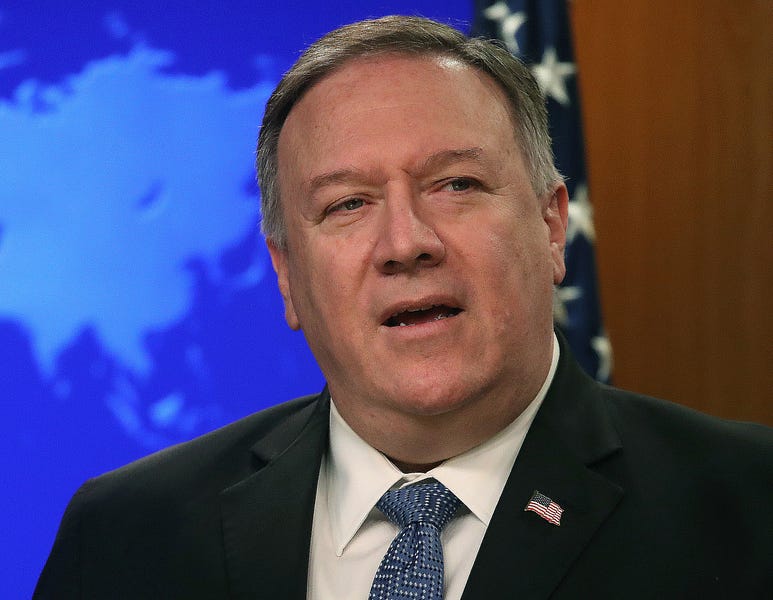
60 Minutes Falsely Accused Mike Pompeo of Reviving a Debunked Theory About Coronavirus
Publisher’s rating: Mixed.

A positive antibody test can prove that you are immune to SARS-CoV-2, the novel coronavirus that causes COVID-19.
Publisher’s rating: Uncertain. Antibodies in your blood show that your body has fought an infection caused by the novel coronavirus. But having a positive antibody test has not yet been proven to tell you with certainty that you are immune to being infected a second time.