PeakMetrics / Fact Checks
Health & medicine fact checks
Explore claims publishers have checked about health & medicine. Read their original ratings and follow the evidence.
Search fact checks
Search by text or image13,676 published reviews in this topic


A bill introduced into the US Congress will give authorities the power to forcibly remove infected individuals from their home and into quarantine.
Publisher’s rating: This claim is false. The bill is a request for funds to help contain the spread of the virus and boost testing, particularly in areas with poorer health services.

Schweden hat auf Corona besser reagiert, weil das Land die Freiheiten seiner Bürgerinnen und Bürger in Corona-Zeiten weniger beschneidet.
Publisher’s rating: Irreführend. Schweden hat pro 100.000 Einwohner beinahe viermal so viele Corona-Tote wie Deutschland zu verzeichnen. Zugleich wählte Schweden weniger strikte Maßnahmen als Deutschland, setzte mehr auf freiwilliges Einhalten von Regeln und hat erst später behördliche Maßnahmen verhängt. Schweden hatte bei der Bekämpfung der Pandemie mit einer wesentlich geringeren Bevölkerungsdichte andere Voraussetzungen als Deutschland. Der Weg Schwedens ist umstritten, auch im eigenen Land. Die einen stehen hinter dem freiheitlicheren Ansatz, andere beklagen das hohe Todes-Risiko.
Anyone who tests positive for Covid-19 at the time of their death - be it due to "cancer", "sky-diving accidents" or "shark attacks" - is being recorded as a death due to coronavirus.
Publisher’s rating: This claim is false. Covid-19 is only listed on the death certificate in the United States if the disease played a role in that person dying, so deaths by misadventure such as shark attacks and sky-diving falls would certainly not be included.

In Österreich werden die Maßnahmen gegen die Ausbreitung des Coronavirus langsam gelockert. Einige Menschen bezweifeln dies aber. So wird online gerade etwa ein Bild geteilt, das zeigen soll, dass in Klagenfurt-Viktring die Spielplätze heute (15. Mai 2020) eingezäunt und gesperrt werden
Publisher’s rating: Das ist falsch. In Klagenfurt sind mittlerweile alle städtischen Spielplätze mit Ausnahme des Europaparks wieder geöffnet. Auf dem Bild ist eine normale Baumaßnahme zu sehen.


Video of a person person infected with COVID-19 succumbing to the disease
Publisher’s rating: FALSE
Op het Nederlandse internet gaan ook half mei 2020 hevige discussies door over vermeende geheime plannen van de politiek voor de invoering van een vaccinatieplicht tegen COVID-19, die zou leiden tot het "einde van de democratie".
Publisher’s rating: Reeds eind april 2020 had een woordvoerder van het ministerie van Volksgezondheid, Welzijn en Sport (VWS) het bestaan van deze plannen, die gebaseerd zouden zijn op een nieuwe richtlijn van de Wereldgezondheidsorganisatie (WHO), naar het rijk der fabelen verwezen. Zegslieden van de Tweede Kamer bevestigden half mei 2020 opnieuw dat er geen politieke plannen in de richting van een plicht tot inenting zijn.
The review examined claims circulating online in the Netherlands in mid-May 2020 that politicians had secret plans to require COVID-19 vaccination, supposedly under a new World Health Organization guideline, and that such a measure would mark the “end of democracy.” Its account says a VWS spokesperson had already rejected the alleged plans in late April, and that people speaking for the House of Representatives again said in mid-May that there were no political plans for mandatory vaccination. [S1: “Op het Nederlandse internet gaan ook half mei 2020 hevige discussies door over vermeende geheime plannen van de politiek voor de invoering van een vaccinatieplicht tegen COVID-19, die zou leiden tot het \"einde van de democratie\".”; “Reeds eind april 2020 had een woordvoerder van het ministerie van Volksgezondheid, Welzijn en Sport (VWS) het bestaan van deze plannen, die gebaseerd zouden zijn op een nieuwe richtlijn van de Wereldgezondheidsorganisatie (WHO), naar het rijk der fabelen verwezen. Zegslieden van de Tweede Kamer bevestigden half mei 2020 opnieuw dat er geen politieke plannen in de richting van een plicht tot inenting zijn.”] The review describes checking both the vaccination rules and whether the alleged plans were being considered in parliament. It reports that vaccination in the Netherlands was voluntary; for minors, parents had to agree, and children aged 12 and older also had to consent. It further states that no new WHO guideline on mandatory vaccination existed. [S1: “Inentingen gebeuren in Nederland op vrijwillige basis, bij minderjarigen moeten de ouders ermee instemmen. Kinderen vanaf 12 jaar moeten zelf ook instemmen met de vaccinatie.”; “Een nieuwe WHO-richtlijn over vaccinatieplicht bestaat niet.”] On the parliamentary question, the review says measures from the health ministry are prepared in the House of Representatives. It reports that, after repeated email and telephone inquiries, no plans for a vaccination requirement were known in the House’s Health, Welfare and Sport committee; sources there said the idea did not come from parliament and was unfamiliar to them. [S1: “Maatregelen van het ministerie van VWS worden voorbereid in de Tweede Kamer. Ook in de commissie van Volkgezondheid, Welzijn en Sport van de volksvertegenwoordiging zijn half mei 2020 geen plannen voor een vaccinatieplicht bekend. Dit \"komt niet vanuit de Kamer\" en \"zegt mij niets\", aldus zegslieden van de Kamer na herhaaldelijke navraag via e-mail en telefoon.”]
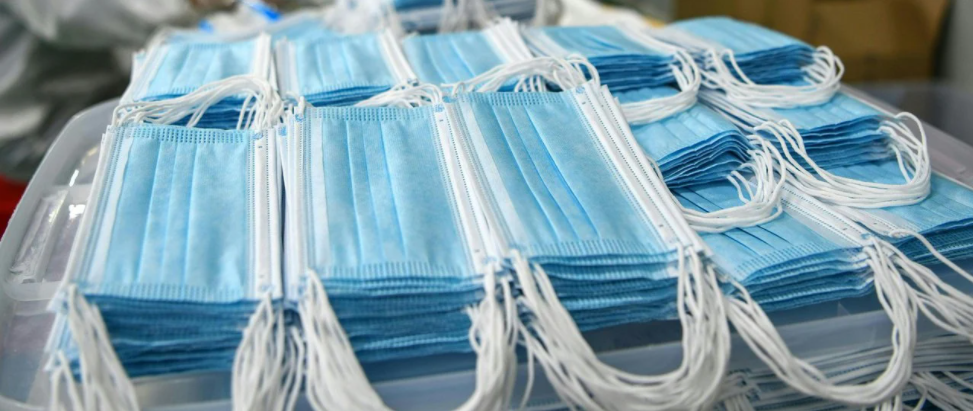
Ein Mundschutz ist für Kinder ungeeignet bzw. gefährlich.
Publisher’s rating: Das ist falsch. Masken sind für Kinder ungefährlich. In Österreich wird zum Tragen einer Maske bei Kindern ab sechs Jahren geraten.
The review examines social-media posts warning that masks are unsuitable for children under 12 and dangerous for children under six. The posts claimed that children might not notice inadequate airflow, that exhaled CO2 would collect beneath a mask, and that this could cause respiratory paralysis. The review addresses those claims by describing evidence and expert comments about gas exchange, children’s breathing, and age-related guidance. On the proposed CO2 mechanism, the review reports that CO2 molecules are too small to be stopped by masks and that the air volume beneath a mask is small and continually exchanged. It also cites a 2019 study that monitored health, breathing activity and CO2 concentration in 106 children aged seven to 14 wearing N95 masks in different situations. The researchers’ reassurance applied when children were healthy and mask-wearing time was limited. A pediatric specialist told APA that the study used masks comparable to FFP2; he said homemade masks have lower breathing resistance and are adequate if children can breathe through the fabric. The review also cites pediatric experts rejecting the claim that ordinary mask use causes CO2 to build up to a paralyzing level, and reports Austrian guidance recommending mouth-and-nose covering for children only if tolerated. It notes that Austria’s rules did not apply to children under six. These qualifications matter: the material does not establish that every mask is appropriate for every child or every duration. The review reports that precautions should be considered for children whose lung function is impaired by illness, and that masks are not considered sensible for infants by one quoted specialist.

網傳「美國衛生部負責人J. Anthony」、「美國CDC負責人 Anthony Fauci」表示,「美國有50%的(疫情)死亡發生在理髮室...」?
Publisher’s rating: 錯誤

Video of people on the roads in West Bengal during the lockdown
Publisher’s rating: FALSE

La COVID-19 est un plan de réduction des populations et le nombre de tests positifs est artificiellement élevé
Publisher’s rating: Faux

Foto de cadáveres apilados a causa del coronavirus en España
Publisher’s rating: Falso
The claim concerns a photograph of bodies wrapped in plastic and arranged on metal shelves, circulated as evidence of coronavirus deaths in Spain. Newtral reports that the post paired the image with a claim that the public had not seen images of more than 40,000 compatriots who had died. The review’s central finding is that the photograph is not current, was not taken in Spain, and is unrelated to coronavirus: it came from a 2013 Univisión report. To establish the image’s provenance, Newtral says the complete report was available on Univisión Noticias’ official YouTube channel and identifies it as a segment from the program “Primer Impacto.” The segment concerned a Los Angeles, California, forensic agency where bodies had accumulated because families had not claimed them. Newtral further says the image being circulated appears at minute 1:34 of that video. The review also gives context from the broadcast: forensic center worker José Hernández said that 70% of the bodies were Latino immigrants, and that families—possibly also in an irregular immigration situation—might not report the bodies to avoid being identified. Newtral notes that the same image was promoted as current by social-media users, including Hermann Tertsch. That circulation does not change the image’s documented 2013 origin or the Los Angeles setting described in the report.
African heads of state approve Madagascar's Covid-Organics
Publisher’s rating: False.
Video-video yang diklaim sebagai video serangan serangga beracun di India saat pandemi Covid-19
Publisher’s rating: Keliru

China owns the patent for the drug remdesivir
Publisher’s rating: False
The review addresses a Facebook post asserting that China held remdesivir’s patent through an arrangement involving Gilead and Unitaid. It distinguishes patent ownership from a Chinese research institution’s attempt to obtain a patent for a particular use of the drug. The review says Gilead developed remdesivir and that “No Chinese institution has a recognized patent for the drug.” It also states that Gilead retained the intellectual property rights for remdesivir as a COVID-19 treatment. The chronology in the review is important to the ownership claim. It says Gilead received a patent for remdesivir as an Ebola treatment in 2017 and that two applications filed in fall 2015—for coronavirus and filovirus uses—were approved in spring 2019. Separately, Chinese researchers at the Wuhan Institute of Virology filed in January for a patent to use remdesivir against COVID-19. The article says that filing did not mean China had an approved patent: it reports that “The Chinese government has not approved a patent for the drug.” The review also addresses the post’s proposed connection between Unitaid and Gilead. It describes Unitaid as a global health research initiative backed by the United Nations and World Health Organization, not a Gilead subsidiary. It notes that Unitaid supported discussion of voluntary pooling of intellectual property for COVID-19 countermeasures, but distinguishes that proposal from an existing transfer of remdesivir ownership. The article says Gilead had not licensed production of remdesivir to another firm. Taken together, its account separates a Chinese patent application and international discussions about sharing rights from an approved Chinese claim to ownership.
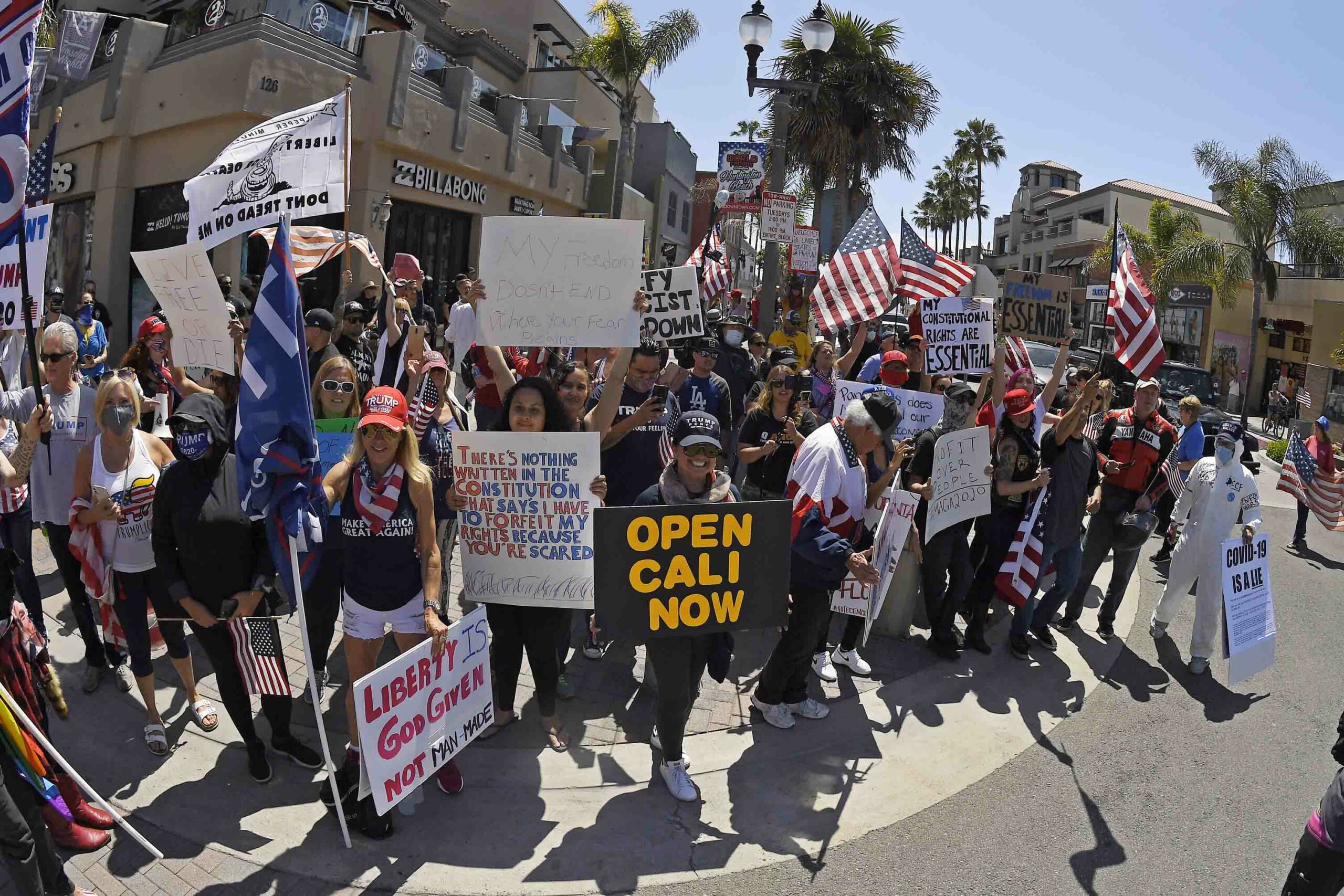
"What if wearing a mask in public is not effective?"
Publisher’s rating: Inaccurate