PeakMetrics / Fact Checks
Health & medicine fact checks
Explore claims publishers have checked about health & medicine. Read their original ratings and follow the evidence.
Search fact checks
Search by text or image13,676 published reviews in this topic

వైరస్ వ్యాప్తిని నివారించడానికి 20,000 మందికి పైగా కరోనా రోగులను చంపేందుకు చైనా.. కోర్టు అనుమతి కోరింది
Publisher’s rating: FALSE
In den sozialen Netzwerken wird immer wieder über die Zahl der Corona-Toten diskutiert. Dabei wird gerne behauptet (archiviertes Posting), die US-Seuchenbehörde CDC (Centers for Disease Control and Prevention) habe selbst eingeräumt, dass nur 6 Prozent der bisher angegebenen Sterbefälle «wirklich an Corona verstorben sind».
Publisher’s rating: Diese Behauptung ist falsch. Nach Angaben der CDC sind bisher (Datenstand 3.10., Update vom 7.10) knapp 200 000 Menschen in den USA als direkte Folge von Covid-19 gestorben. In 92 Prozent aller Fälle mit Covid-19 auf dem Totenschein war laut CDC die Krankheit die zugrundeliegende Todesursache.
Im Internet kursiert eine Grafik, wonach Masken zur Eindämmung der Corona-Pandemie die Atmung deutlich beeinträchtigen (hier archiviert). Demnach kann sich bei Kleinkindern die Frischluftzufuhr durch eine Mund-Nasen-Bedeckung um bis zu 61 Prozent reduzieren. Bei Kindern betrage der Wert bis zu 32 und bei Erwachsenen bis zu 16 Prozent. Grund sei, dass Masken den sogenannten Totraum künstlich erweitern, in dem kein Austausch mit frischer Luft stattfindet. Stattdessen sammele sich unter der Maske ausgeatmete Luft, die wieder eingeatmet wird.
Publisher’s rating: Die Rechnungen in der Grafik sind irreführend. Zum einen erzeugen Alltagsmasken keinen vollständigen Totraum. Da sie nicht luftdicht sind, vermischt sich unter ihnen die ausgeatmete Luft mit frischer von außen. Zum anderen lässt die Grafik außer Acht, dass der Körper die Atmung entsprechend anpasst, falls er zu wenig frische und sauerstoffreiche Luft erhält. Das Tragen einer Mund-Nasen-Bedeckung ist für gesunde Menschen grundsätzlich unbedenklich und führt nicht zu Sauerstoffmangel.
The review examined an online graphic alleging that masks substantially reduce fresh-air intake—by up to 61 percent for small children, 32 percent for children and 16 percent for adults—because a mask supposedly creates extra dead space where exhaled air collects and is breathed in again. The review reports that the graphic’s calculations used an assumed expanded dead-space volume of 80 milliliters for adults and children. A pediatrician quoted in the review, Michael Achenbach, said that figure was too high for air beneath an everyday mask. The review contrasts that assumption with the amount of air people breathe and the way ordinary masks allow air to move. It reports that a healthy adult’s resting breath volume ranges from just under 500 milliliters to just under a liter, and can rise to several liters with exertion, while the air beneath a mask is substantially less than 50 milliliters. It also explains that everyday masks are not airtight: air passes through the fabric and enters from the sides, so the air beneath them mixes with outside air rather than forming a completely sealed space. On the further suggestion that mask use could cause oxygen deficiency, the review cites Achenbach’s explanation that exhaled air still contains about 17 percent oxygen, compared with nearly 21 percent in fresh air. It also reports that the body responds to insufficient oxygen-rich air by breathing more deeply and quickly. These points address the graphic’s proposed mechanism and omitted physiological response; the review’s discussion concerns ordinary masks and distinguishes them from completely closed dust-protection masks, which the doctor advises against for children.
Immer wieder werden in sozialen Netzwerken Falschmeldungen über Kinder verbreitet, die angeblich durch das Tragen einer Schutzmaske gestorben sein sollten. Einer dieser Fälle soll sich am 28. September 2020 in der Nähe von Schweinfurt in Deutschland ereignet haben, heisst es in einem Facebook-Post.
Publisher’s rating: Ein derartiger Fall ist der Polizei in Unterfranken (Bayern) nicht bekannt.
The Facebook post described in the review claimed that a child had died after wearing a protective mask near Schweinfurt, Germany, on 28 September 2020. The review identifies the child as six years old and says the claim circulated as a report of a child becoming ill or dying because of a mask. This is the specific incident the review investigated, not a general assessment of mask-related claims. [S1]
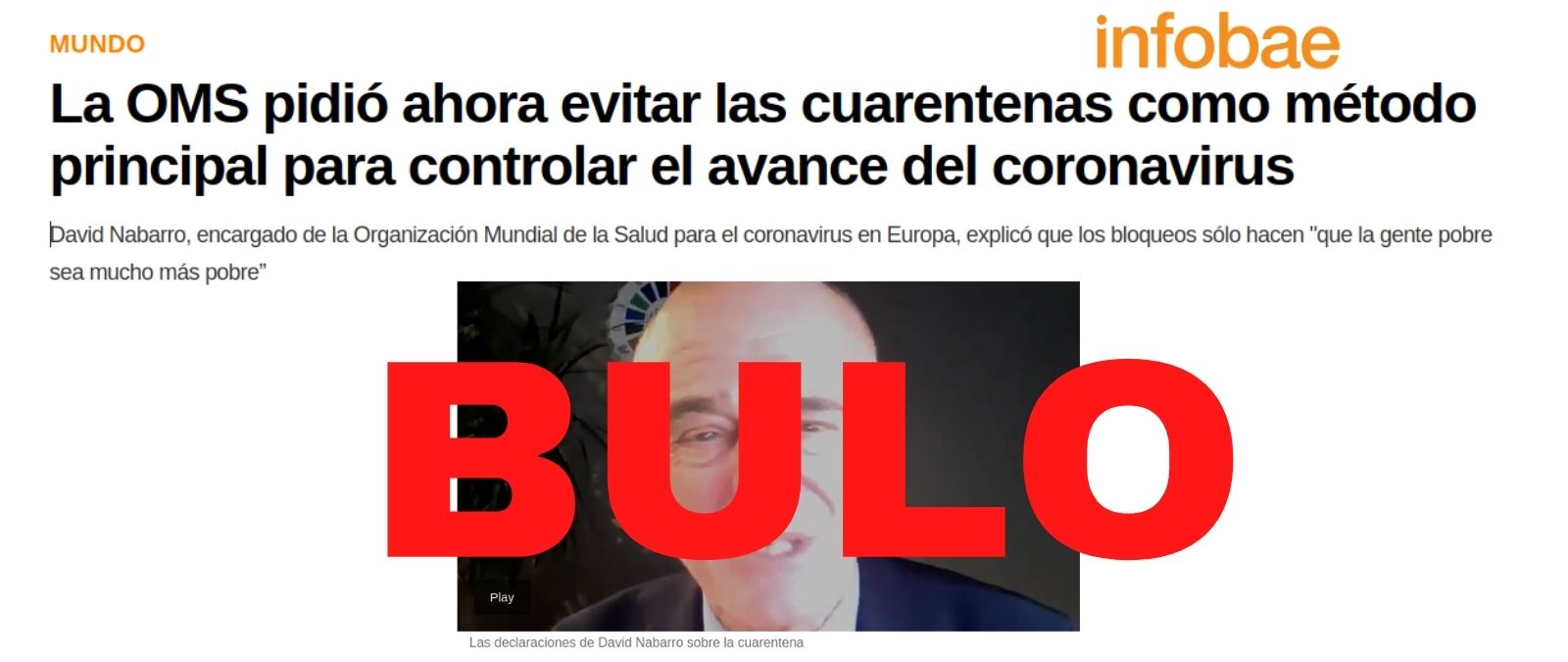
La OMS pidió ahora evitar las cuarentenas como método principal para controlar el avance del coronavirus
Publisher’s rating: Falso
Die Bilder sind unscharf, doch die Ansagen sind klar: «Dann nehmt jetzt eure Masken ab!», sagt ein Busfahrer zu Schülern auf einem Video, das in sozialen Netzwerken kursiert. In dem verschwommenen Video (hier archiviert) ist auch zu hören, wie der Busfahrer den Kindern und Jugendlichen von angeblichen Todesfällen aufgrund der Maskenpflicht berichtet: Zwei Kinder seien bereits deshalb gestorben, sagt er.
Publisher’s rating: Das Video ist echt und zeigt die Aussagen eines Busfahrers aus Thüringen in einem Schulbus. Anders als in dem Video behauptet, stellen luftdurchlässige Alltagsmasken keine Gefahr für Kinder dar. Die Behauptungen zu Todesfällen von Kindern sind falsch oder unbelegt.
The review examines a video in which a school-bus driver tells children to take off their masks and claims that children have died because of mask requirements. It places the recording on a bus travelling to Kölleda, Thuringia: the review reports that the Thüringer Allgemeine identified the trip, and that the Kölleda Gymnasium stop is visible in several scenes. The local public-transport administration also confirmed that there had been “irregularities” involving a driver, who had since been dismissed. The review distinguishes the authenticity of the recording and the driver’s statements from the truth of the death claims. It reports that experts considered death from an everyday mask alone impossible for a healthy child. It also describes qualifications in children’s mask guidance: the pediatric society’s recommendation for children below primary-school age was optional, infants should not wear masks, and children with certain heart or lung conditions should have the risks assessed individually with a doctor. The review checks several death stories circulating online rather than treating them as established evidence. In one case, police in Lower Franconia called the story of a six-year-old girl dying after wearing a mask an internet myth. For a child who died in Aurich, prosecutors confirmed the death was not caused by the mask requirement; the funeral business said another cause was responsible and that the child was not wearing a mask when they collapsed. The review also says prosecutors in Wiesbaden knew of no alleged case there, and notes that the cause of death of a 13-year-old in Rhineland-Palatinate remained unresolved, despite unsupported claims linking it to masks.
Im Internet kursiert die Behauptung, dass beim Tragen von Schutzmasken zur Eindämmung der Corona-Pandemie eine Kohlendioxid-Vergiftung droht. Als Beleg wird ein Arbeitsschutz-Poster (hier archiviert) einer Gaserzeugerfirma verbreitet, auf dem vor den Gefahren von CO2 in geschlossenen Räumen gewarnt wird. Unter einer Alltagsmaske seien schon Werte gemessen worden, die den Firmenangaben zufolge gefährlich sein können, heißt es im Text dazu.
Publisher’s rating: Der Bezug zur Gefahr von CO2-Vergiftungen in geschlossenen Räumen ist irreführend. Denn bei einer Alltagsmaske handelt es sich nicht um einen solchen Raum. Die Luft unter einer Mund-Nasen-Bedeckung macht vielmehr nur einen Bruchteil der Luft aus, die man einatmet.
The claim links mask use during the COVID-19 pandemic to the risk of CO2 poisoning, relying on a gas company’s workplace-safety poster about dangerous CO2 levels in enclosed spaces and on reports of high readings beneath everyday masks. The review explains why that comparison does not establish a comparable exposure: ordinary masks do not seal airtight, and the small amount of air beneath one is only part of the air a wearer breathes. The physician Michael Achenbach said a healthy adult’s breath volume at rest ranges from nearly 500 millilitres to just under a litre, and can rise to several litres with exertion; the air beneath a mask is under 50 millilitres. The review also addresses the measurement evidence. It says videos showing elevated readings from CO2 meters under masks can be misleading because the devices used are often not designed to analyse breathing air. Professor Uwe Pliquett explained that readings are difficult to interpret when CO2 levels change quickly between exhalation and inhalation. Even assuming elevated CO2 beneath a mask from residual exhaled air, he estimated the average CO2 level of inhaled air at about 0.1–0.2 percent, depending on the surrounding air. The investigation distinguishes the claim about enclosed spaces from exposure while wearing a mask, rather than disputing that high CO2 concentrations in ambient air can be dangerous. It also notes a qualification: the German Respiratory League said that for patients with chronic respiratory weakness, CO2 levels and the effort of breathing may increase, making face coverings feel uncomfortable or threatening. The review says dangerous rises in blood CO2 from professional FFP2 or FFP3 masks were considered unlikely.
In Corona-Zeiten ist die Schutzmaske für viele Schüler in Deutschland ein treuer Begleiter. Häufig wird behauptet, der Mund-Nasen-Schutz gefährde die Gesundheit der Kinder. Es wird sogar verbreitet, die Maskenpflicht habe bereits bei mehreren Kindern zum Tod geführt.
Publisher’s rating: Falsch. Wenn es sich um eine luftdurchlässige Schutzmaske handelt, besteht für Kinder keine Gefahr. Es gibt keinerlei Beweise für die vermeintlichen Todesfälle.
The investigation examined claims circulating on social media that several children in Germany had died because they were required to wear masks. It considered both the alleged deaths and whether wearing a breathable mask could cause a healthy child to die. The article reports that paediatrician Jakob Maske said it was impossible for a child to die from wearing a mask, and pulmonologist Dominic Dellweg explained that oxygen and carbon dioxide pass through a mask when air does. The experts also described a qualification: masks add resistance to breathing and can make it feel more strenuous, so Dellweg recommended a mask that is easy to breathe through. The article notes that children with heart or lung conditions should discuss the risks with a doctor.
Ist Sars-CoV-2 ein harmloses Virus? Ist die Angst vor einer Infektion übertrieben und die Lungenerkrankung Covid-19 nur für Vorerkrankte gefährlich? Noch immer gibt es dazu – vor allem in den sozialen Netzwerken – unterschiedliche Meinungen. So kursiert dieser Tage erneut ein Video auf Instagram, in dem der Hamburger Rechtsmediziner Klaus Püschel zu Wort kommt. Er behaupte angeblich, so heißt es im Post, dass «keiner direkt an Corona gestorben» sei (hier archiviert).
Publisher’s rating: Püschels Aussage wurde unangemessen verallgemeinert. Zudem ist sie veraltet. Der Rechtsmediziner hat sie unterdessen eingeordnet und sich von Verschwörungstheoretikern abgegrenzt.
The claim concerns an Instagram video in which Hamburg forensic pathologist Klaus Püschel is presented as saying that “nobody died directly from Corona.” The review distinguishes that post’s wording from what Püschel actually said in the Sat. 1 interview that began circulating again. In the interview, on 21 April 2020, he said that the more than one hundred people his team had examined in the region had serious pre-existing internal illnesses. The review says the statement referred to Hamburg, not Germany or the world, and that the categorical wording attributed to him did not come from the interview; his remarks were instead sharpened in the post. The review also sets the interview in the context of Püschel’s earlier statements. In an interview with Die Welt in early April, he said that no one in Hamburg who had not had a pre-existing condition had died of the virus by then, and described coronavirus as the “last drop” for those who died. The review reports that Püschel later gave Die Zeit an interview to clarify, and partly take back, his remarks. He said he had wanted to ease ordinary people’s fear, not downplay the virus, and rejected the way conspiracy theorists were using his position. The review further notes that Püschel’s later comments continued to focus on the pattern he observed among deaths, rather than supporting a universal claim that COVID-19 was harmless or that only people with prior conditions could become seriously ill. It quotes the Robert Koch Institute’s warning that severe and fatal outcomes become more likely with age and pre-existing conditions, while also noting that severe, potentially life-threatening illness can occur in young people and those without known conditions. The evidence described therefore narrows Püschel’s statements to his observations and their time and place; it does not substantiate the post’s broader wording.
Een PCR-test zou niet kunnen vaststellen met welk virus iemand besmet is, terwijl een bloedtest dat wel kan, dat zegt een facebookgebruiker (gearchiveerd). Wat volgt is een hele reeks uitspraken over de meest gebruikte coronatest. Verder zou een PCR-test een besmetting met rhinovirus of de griep verwarren met SARS-CoV-2. Het zou ook een dood virus aanduiden als een positieve uitslag. Tenslotte zou het RIVM het aantal cycli in de PCR-tests stilzwijgend verhoogd hebben, wat de kans op een vals positieve testuitslag zou verhogen. Wat klopt hier van?
Publisher’s rating: De beweringen zijn grotendeels fout. Een bloedtest kan geen actuele besmetting diagnoseren, maar enkel de aanwezigheid van antistoffen. Een PCR-test kan verschillende virussen van elkaar onderscheiden. Het aantal gebruikte cycli verhoogd de kans op een fout-positieve uitslag niet. Het is wel zo dat dode virusdeeltjes kunnen leiden tot een positieve testuitslag.
Das Thema Impfung hat schon vor der Coronavirus-Pandemie die Gemüter erhitzt. In einem Sharepic wird die Behauptung verbreitet, dass in Grippeimpfstoffen der Erreger H1N1 enthalten sei und dass es sich dabei um ein Coronavirus handele (hier archiviert). Aus diesem Grund würde durch die Grippeschutzimpfung die Zahl der Corona-Neuinfektionen künstlich in die Höhe getrieben, um einen Lockdown zu legitimieren.
Publisher’s rating: Bei dem Erreger H1N1 handelt es sich nicht um ein Coronavirus.
The claim combines two allegations: that H1N1 is a coronavirus found in flu vaccines, and that flu vaccination artificially raises reported COVID-19 infections to justify a lockdown. The review’s stated finding addresses the first point: it identifies H1N1 as an influenza virus, not a coronavirus, and says it caused the 2009 influenza pandemic and has circulated in the population since then. It distinguishes this from SARS-CoV-2, which it identifies as belonging to the coronavirus group and as capable of causing COVID-19. On vaccination, the review says a vaccine is developed for each flu season to protect against strains that experts consider dominant among circulating viruses. It describes these as inactivated vaccines given to prompt the body to develop antibodies, and notes that flu vaccination in Germany remains voluntary. These details do not support the claim’s equation of H1N1 with a coronavirus. The excerpt does not, however, give specific vaccine-composition data establishing whether H1N1 was included in a particular season’s vaccine. The review also notes similarities between influenza and coronavirus infections: both can cause respiratory illness and can spread through droplets. But it explains that these similarities do not make the viruses the same, and says coronavirus incubation is longer. The excerpt does not present evidence that flu vaccination artificially increases COVID-19 case numbers or that such an increase was used to justify a lockdown. Its stated finding is about the identity of H1N1, not an investigation of that broader causal allegation.
Einige Menschen stören sich an der Maskenpflicht als Massnahme gegen die Ausbreitung von Covid-19. Gegner der Masken argumentieren, dass diese schädlich für die Gesundheit seien. Derzeit seien etwa alleine in Wien zehn Kinder mit einer Lungenpilzinfektion im Spital, behauptet etwa ein Post auf Facebook (hier archiviert). Quelle soll eine nicht näher genannte Ärztin sein.
Publisher’s rating: Es gibt keine Hinweise darauf, dass derzeit Kinder mit einer durch Masken verursachten Lungenpilzinfektion in Wiener Krankenhäuser liegen. In sämtlichen Krankenhäusern mit Kinderambulanzen ist kein einziger derartiger Fall bekannt.
Auf Facebook werden derzeit Postings (hier archiviert) verbreitet, in denen ein Screenshot des Webportals des Europäischen Patentamts (EPA) geteilt wird. Hervorgehoben ist ein bestimmtes Patent von Richard A. Rothschild mit der Patentnummer «US2020279585A1». Es soll als Beleg für die Behauptung dienen, Rothschild habe das Patent für den Covid-19 Test bereits im Jahr 2015 eingereicht. Im Text heißt es darunter fragend «Stammt der Virus also aus dem Labor und es war alles geplant?»
Publisher’s rating: Die Behauptung, Rothschild hat das Patent für den Covid-19 Test bereits im Jahr 2015 eingereicht, ist falsch. 2015 sicherte sich der Erfinder das Patent auf ein Verfahren zur Erfassung biometrischer Daten. Die Werte können auf eine Virusinfektion hindeuten - etwa Covid-19. Im Mai dieses Jahres präzisierte der Patentinhaber darum seine Idee. Erst seither firmiert sie unter dem Titel «System and Method for Testing for COVID-19».
The Facebook posts cited European Patent Office (EPO) records for patent US2020279585A1, whose listed priority date was October 13, 2015, as evidence that Richard A. Rothschild had filed a COVID-19 test patent then. The review checked the patent’s original documents and an earlier related filing, rather than relying only on the current title or priority date. It reports that the 2015 application was provisional and that the earlier patent description concerned biometric data, not COVID-19. The 2019 document it located likewise did not mention COVID-19. The review traces the COVID-19-specific filing to May 17, 2020, and says it was published on September 3, 2020, as US2020279585A1. Its description concerns collecting and analyzing biometric information, such as pulse and oxygen levels, to assess whether a person might have a viral infection, including COVID-19. Thus, the 2015 date belongs to the earlier application in the patent’s history; it does not establish that the COVID-19 test was filed in 2015. The review also reports that an EPO spokesperson described sharpening or updating an idea as a usual practice for patent holders. The patent’s retained priority date and later COVID-19-specific title could therefore give a misleading impression when viewed without the earlier application’s description and the subsequent filing chronology.
In Berlin gilt seit Samstag eine Sperrstunde von 23.00 bis 06.00 Uhr für Gastronomie und Handel. Sie soll helfen, die Corona-Pandemie einzudämmen. Auf Twitter tauchten nun Bilder von vermeintlichen Flugblättern der Polizei Berlin auf (hier archiviert). Demnach rufe die Polizei die Bevölkerung auf, Gaststätten zu melden, die nach 23.00 Uhr geöffnet sind. «Die geltenden Regeln retten Leben. Ihre Missachtung ist eine Straftat, kein Kavaliersdelikt», steht unter anderem auf dem Schreiben. Auch gebe es eine Belohnung für die Melder und Melderinnen.
Publisher’s rating: Die Flugblätter sind eine Fälschung. Die Polizei bittet darum, diese Fehlinformation nicht weiterzuverbreiten.
The review concerns images circulating on Twitter of purported Berlin police flyers. The flyers claimed that people should report restaurants open after the 23:00 curfew and suggested that informants would be rewarded. The review says the Berlin police had neither distributed nor commissioned them, directly addressing whether the notices were genuine. (S1: “Die Berliner Polizei hat die Flugblätter, deren Bilder auf Twitter zu sehen sind, nicht verteilt oder in Auftrag gegeben.”) The review also points to a warning posted by the police on Twitter. In the quoted post, police said they were monitoring compliance with the curfew but were not asking the public for tips or offering a reward. That denial contradicts the central appeal attributed to police in the flyers. (S1: “Wir haben die Einhaltung der #Covid19-#Sperrstunde auch mit im Auge. Und wir rufen NICHT zu Hinweisen aus der Bevölkerung inkl. Belohnung auf.”) The excerpts identify the police tweet and the post showing the flyers as sources, but do not describe additional verification methods or establish who created the fake notices. The evidence provided supports distinguishing the police’s stated position from the purported flyers without attributing their production to a particular person or group. (S1: “Tweet der Polizei: https://twitter.com/polizeiberlin/status/1315958992003268611”; “Beitrag: https://twitter.com/DirkHeinrichHD/status/1315945073486573568”)
“When Joe Biden was vice president of the United States, not 7½ million people contracted the swine flu; 60 million Americans contracted the swine flu. If the swine flu had been as lethal as the coronavirus in 2009 when Joe Biden was vice president, we would have lost 2 million American lives.”
Publisher’s rating: Lacks context
“They [Obama] created within the White House an office that basically was responsible for monitoring pandemics… They [Trump] got rid of it.”
Publisher’s rating: Needs context
Der Berliner Virologe Christian Drosten soll angeblich bestätigt haben, dass die Wirkung von Masken gegen Corona nicht erwiesen sei. Ein Video mit einer Stellungnahme Drostens im Bundestag (hier archiviert) verbreitet sich derzeit in sozialen Medien. Nutzer teilen das Video mit Kommentaren wie: «Bestätigung von höchster Stelle: Wirkung von Masken ist NICHT erwiesen.» (hier archiviert)
Publisher’s rating: Drostens Aussagen werden falsch wiedergegeben. Dass Gesichtsmasken das Infektionsrisiko senken, stellt der Virologe nicht in Frage. Fraglich sei nur, ob sie den Verlauf der Krankheit mildern könnten, wenn es trotz Maske zu einer Infektion kommt.
The claim arose from a clip of Christian Drosten speaking at a Bundestag health committee hearing on 9 September 2020. In the excerpt, he was responding to CDU member Katrin Maag’s question about the pandemic’s threat to the public health system. The review says his remarks about masks addressed a specific possibility: whether wearing everyday masks might reduce the amount of virus received during an infection and, in turn, make illness less severe. Drosten described that possible effect on disease severity as speculation for which there was no scientific evidence at the time. That qualification was then presented online as if he had said masks’ general effectiveness was unproven. (S1: “Der Video-Ausschnitt stammt von einer Expertenanhörung im Gesundheitsausschuss des Bundestages am 9. September 2020.”; “In dem kursierenden Ausschnitt antwortet Drosten auf die Frage der CDU-Abgeordneten Katrin Maag, wie er die aktuelle Gefährdung des öffentlichen Gesundheitssystems durch die Coronavirus-Pandemie einschätze.”; “Aber das ist eine reine Spekulation, dazu gibt es keine wissenschaftlichen Belege.”) The review distinguishes that unconfirmed hypothesis from whether masks can reduce infection risk. It reports that, when asked by dpa, the Charité emphasized Drosten had been discussing the specific question of whether masks might lessen the severity of illness—not masks in general. The review also points to studies on mask use and infection risk, including Canadian research and an analysis of the early mask requirement in Jena, and says Drosten had discussed masks’ ability to reduce infection risk in NDR’s Coronavirus Update podcast. (S1: “Auf Anfrage der Deutschen Presse-Agentur unterstrich die Charité, dass Drosten im Bundestag über diese spezielle Frage und nicht allgemein über Masken sprach.”; “Eine Studie kanadischer Forscher hat etwa gezeigt: Ein Mund-Nasen-Schutz senkt das Infektionsrisiko.”; “Auch Christian Drosten hat im NDR-Podcast «Coronavirus-Update» mehrmals darüber gesprochen, wie Gesichtsmasken das Infektionsrisiko verringern können”) Thus, the clip’s statement about a possible reduction in disease severity did not establish that masks fail to reduce infection risk. The post’s broad conclusion conflated these two different questions and omitted the hearing’s specific context.
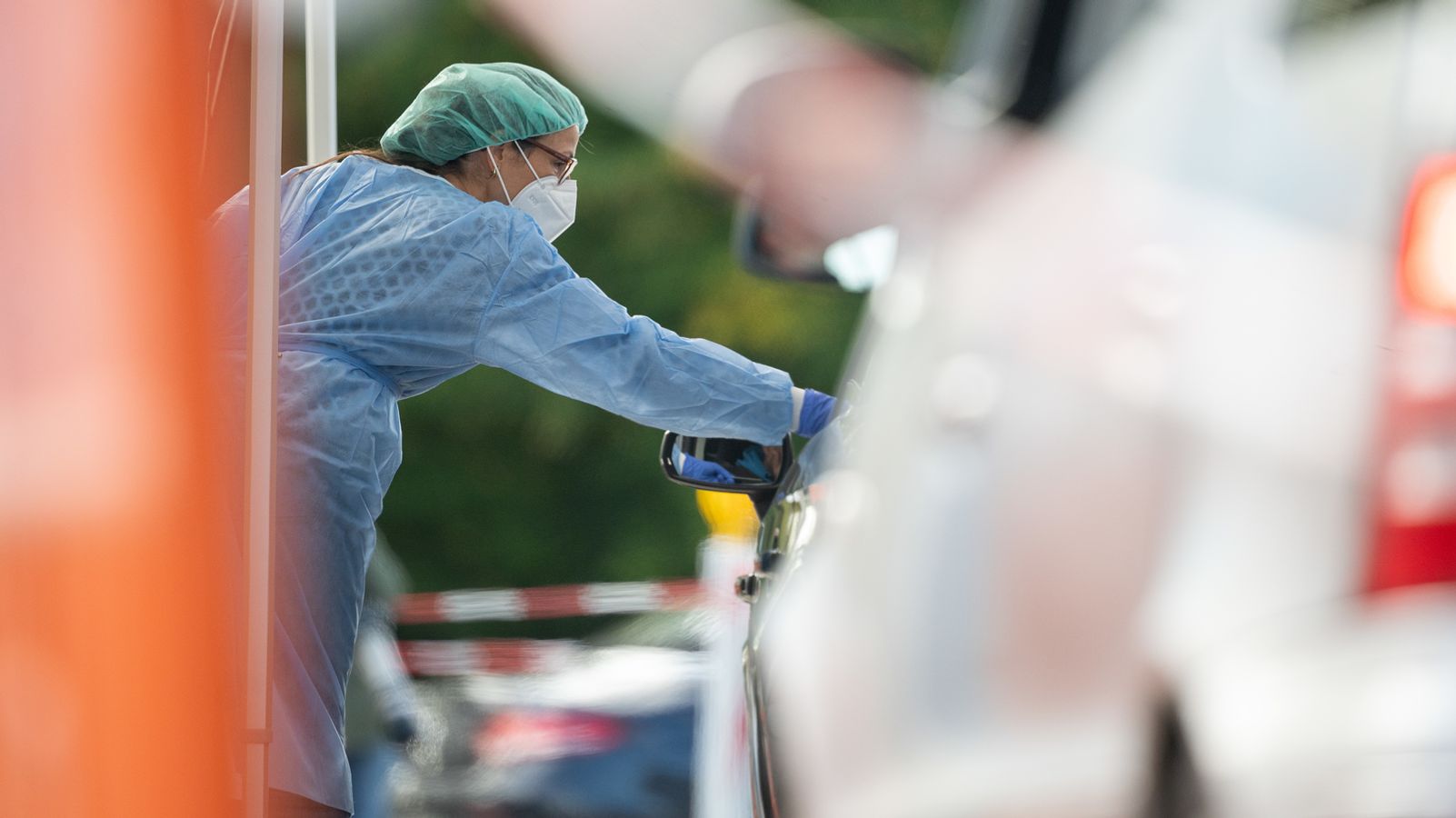
Der Corona-Inzidenzwert von 50 Neuerkrankten pro 100.000 Einwohner in einer Woche basiert nur auf positiven Testungen und keinen weiteren Parametern.
Publisher’s rating: Stimmt zu Teil: Es ist richtig, dass die Berechnung der Corona-Obergrenze auf der Anzahl der positiv Getesteten basiert. Allerdings werden laut bayerischem Gesundheitsministerium im Freistaaat zur Beurteilung der Lage weitere Faktoren hinzugezogen wie der Verlauf des Infektionsgeschehens oder die Anzahl freier Intensivbetten. Zudem gilt neben dem Inzidenzschwellenwert von 50 Neuinfektionen in einer Woche pro 100.000 Einwohnern noch ein Frühwarnwert von 35 Neuinfektionen pro 100.000 Einwohnern in einer Woche.
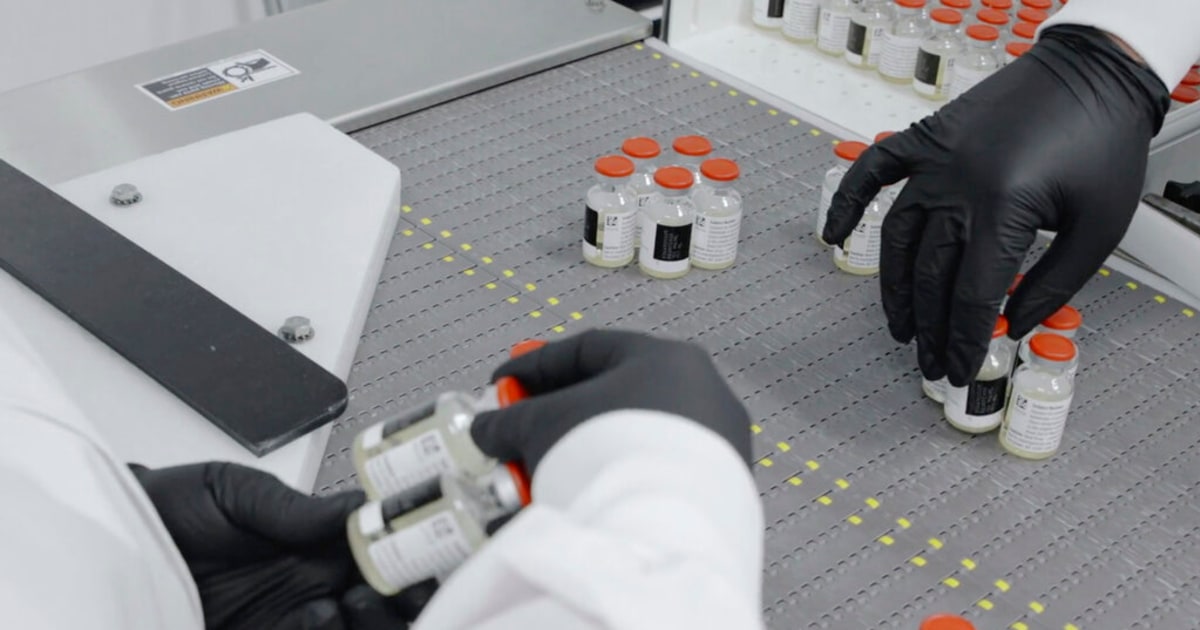
"Si estás en el hospital y te sientes muy mal, pienso que vamos a trabajar para que los recibas (cocteles de anticuerpos para el COVID-19) y que el tratamiento sea gratis".
Publisher’s rating: Falta contexto