PeakMetrics / Fact Checks
Health & medicine fact checks
Explore claims publishers have checked about health & medicine. Read their original ratings and follow the evidence.
Search fact checks
Search by text or image13,675 published reviews in this topic

WHO Doctors taking a U-turn on quarantine and social distancing norms during the COVID-19 pandemic
Publisher’s rating: FALSE
The review investigates a video presented as a panel of WHO doctors reversing their position on COVID-19 precautions. Its central identification finding is that the speakers were not WHO doctors: the article says they belonged to the World Doctor Alliance. That distinction matters because the video’s statements cannot establish that WHO changed its guidance. The review describes the panel as asserting, among other things, that COVID-19 was a normal flu and that patients need not isolate or quarantine. The article also checks the video’s claims against other evidence it identifies. It reports that WHO had declared a pandemic and that the CDC described SARS-CoV-2 as a novel coronavirus, not an influenza strain. On testing, it contrasts a speaker’s assertion of very high PCR false-positive rates with ranges the article attributes to The Lancet Respiratory Medicine and the New England Journal of Medicine. The review further says WHO had not advised against distancing, quarantine, or isolation, and describes the video’s “U-turn” framing as drawn from a June 8, 2020 press conference comment about asymptomatic transmission—not a WHO reversal on those precautions.
Ein Kurzfilm aus den 1950er-Jahren soll die derzeitige Corona-Pandemie vorhergesehen haben. «Diese Aufnahme ist von 1956, hört Euch die letzten 40 Sekunden an....in the year 2020...», heißt es unter einem knapp zwei Minuten langen Video, das auf Facebook geteilt wird (hier archiviert, hier archiviertes Video). Dabei soll es sich um einen öffentlichen Werbespot über Chancen und Gefahren der Zukunft handeln. Gezeigt werden Schwarz-Weiß-Aufnahmen von fliegenden Autos und Haushaltsrobotern. Der Sprecher warnt aber auch vor einer tödlichen Krankheit: «Experten sagen voraus, dass um das Jahr 2020 ein neues Virus entstehen wird und sich von irgendwo aus Asien in die restliche Welt verbreiten wird.»
Publisher’s rating: Das Video erschien nicht bereits 1956. Ein Youtuber veröffentlichte es im Frühjahr dieses Jahres. Einige Szenen lassen sich Filmen und Werbespots zuordnen, die aus den Jahren 1940, 1954 und 1956 stammen.
The claim concerned a short video shared on Facebook as a 1956 public-service film that supposedly foresaw a virus spreading from Asia around 2020. The investigation traced the video’s creation and examined whether scenes in it matched earlier film and advertising material. The review reports that, in late February 2020, the YouTuber “RamsesThePigeon” uploaded a roughly four-minute version and said in the video description that he had assembled the clip from archive footage and freely available material. The channel logo is visible at the beginning, and the review says searches found no older appearance of the video on other websites. The review also identifies source material for four scenes. The woman drinking coffee appears in the 1956 government film “Tornado”; the household robot comes from the 1940 short “Leave It To Roll-Oh”; and footage of a woman sneezing appears in 1940 Getty Images archive material. A Doeskin Napkins advertisement from 1954 appears in the longer YouTube version, not the Facebook edit. These matches show that the video combined older images, but do not establish that the assembled video itself was made in 1956. Taken together, the reported upload history and the identification of reused footage support the conclusion that the Facebook post misrepresented the video’s date and provenance. The excerpt does not independently establish when each scene was first incorporated into the edited video or provide further verification of the spoken prediction.

Mund-Nasen-Schutz in der Öffentlichkeit: Keine Hinweise für eine Wirksamkeit
Publisher’s rating: Zum Teil richtig. Die Fachwelt ist sich einig in der Empfehlung, während der Corona-Pandemie in bestimmten Situationen in der Öffentlichkeit Masken zu tragen. Auf die Wirksamkeit weisen zahlreiche Studien hin. Insofern ist die Behauptung falsch. Wahr ist, dass die bisherigen Beweise nicht höchsten wissenschaftlichen Standards genügen. Insofern ist die Behauptung richtig.
Die Mund-Nasen-Maske ist zu einem Symbol der Corona-Pandemie geworden. Die Pflicht, sie an manchen Orten zu tragen, ist immer wieder Thema von Debatten. In einem über soziale Medien verbreiteten Beitrag wird nun behauptet: «Alle Masken sind nutzlos» (hier archiviert). Als angeblicher Beleg dafür wird auf eine besonders dichte FFP3-Maske verwiesen. In einer Illustration wird der Eindruck erweckt, FFP3-Masken würden das Coronavirus nicht abhalten. Denn FFP3-Masken sollen für Partikel kleiner als 600 Nanometer durchlässig sein, wozu das Coronavirus mit einer Größe von 70 Nanometern zählen soll.
Publisher’s rating: Der Größenvergleich ist irreführend. Das Coronavirus verbreitet sich nicht als einzelnes winziges Partikel, sondern über etwas größere Tröpfchen. Diese haben eine Größe, die von FFP3-Masken abgehalten wird.
The post argued that all masks are useless, using an illustration about FFP3 masks to suggest they cannot stop coronavirus because the virus is about 70 nanometres across and the masks supposedly allow particles smaller than 600 nanometres through. The review distinguishes the size of an individual virus from the form in which it is generally carried in the air: it reports that individual coronaviruses are about 60–100 nanometres, but are usually enclosed in droplets. The review says those droplets range from 1,000 nanometres to more than 100,000 nanometres, and can be distributed when people speak, cough or sneeze. It also explains that the cited EU standard requires FFP3 masks to stop 99 percent of particles larger than 600 nanometres. Thus, the illustration’s comparison between the size of an individual virus and the mask’s particle threshold leaves out the larger droplets that commonly carry the virus. The review adds that filtration is not only a matter of particles being physically too large to pass through the mask material. It cites Elke Biesel of the German Social Accident Insurance, who said that several mechanisms—including inertia, diffusion and electrostatic effects—also capture particles around the size of a virus. The article qualifies its conclusion: no mask can completely prevent infection, while studies have also found that less dense masks can help limit the pandemic.

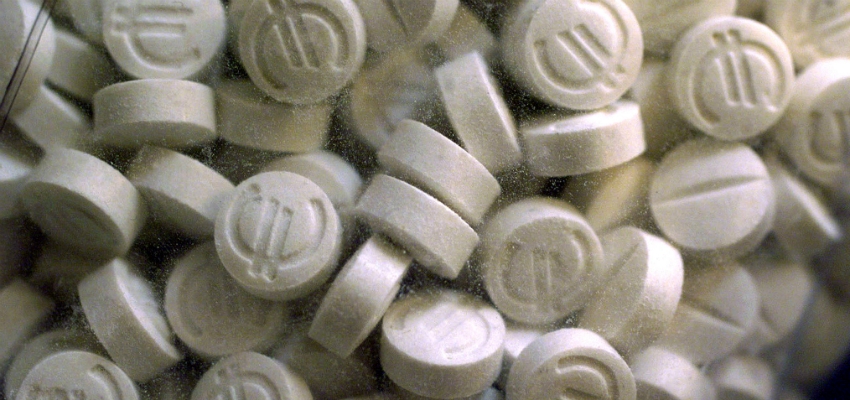
«In Italia il consumo di sostanze stupefacenti tra i giovani è costantemente in crescita»
Publisher’s rating: Nì
Ein früherer Professor stellt angeblich die Gefährlichkeit des neuen Coronavirus in Frage. «85 Prozent sind immun gegen das Virus», soll der Mikrobiologe Sucharit Bhakdi einem Zitat-Bild zufolge gesagt haben, das im Netz verbreitet wird (hier archiviert). Bhakdi habe außerdem dafür plädiert, die Zahl der Toten und schwer Erkrankten in den Blick zu nehmen - und nicht die Infektionszahlen. «Die Sterberate beträgt so lediglich 0,1 bis 0,2 Prozent der Erkrankten», heißt es.
Publisher’s rating: Bhakdis Zitat zum Thema Immunität wird hier verkürzt und damit verfälscht wiedergegeben. Die Rede war von 85 Prozent der Infizierten, nicht von 85 Prozent aller Menschen. Zur Immunität gibt es überdies noch keine gesicherten Erkenntnisse. Die von Bhakdi angegebene Sterberate deckt sich nicht mit bisherigen internationalen Studien, die von höheren Werten ausgehen.
The claim concerns a quote-image circulating online that attributes two points to microbiologist Sucharit Bhakdi: that 85 percent of people are immune to the coronavirus, and that the death rate is only 0.1–0.2 percent. The review traces the quotes to a newspaper interview and compares the image’s wording with Bhakdi’s statement in that interview. On immunity, Bhakdi said that 85 percent of infected people were not severely ill, and then described those people as immune. The image’s wording drops the qualification “infected,” making it sound as though the figure applied to everyone. The review also cautions that the interview did not establish that people who recover are protected from reinfection, or how long any immunity lasts. It cites a virologist describing the state of knowledge as disputed and notes that studies detecting antibodies do not, by themselves, establish immunity. Thus, the claim’s broad wording about immunity is not supported by the quoted interview or by the evidence described in the review. On mortality, the review explains that the quoted rate cannot be assessed as a universal figure without distinguishing reported cases from all infections. It describes estimates from different studies: 0.6 percent for Stockholm, 0.37 percent in the Heinsberg study, 0.8 percent in a US meta-analysis, and global meta-analysis estimates of 0.23 and 0.68 percent. The range of results underscores that estimates differed by place and method; the review says the available evidence did not support Bhakdi’s stated 0.1–0.2 percent as a general rate.

“His chief of staff last week said, ‘We’re going to do nothing about the virus. It’s here.’”
Publisher’s rating: Exaggerates
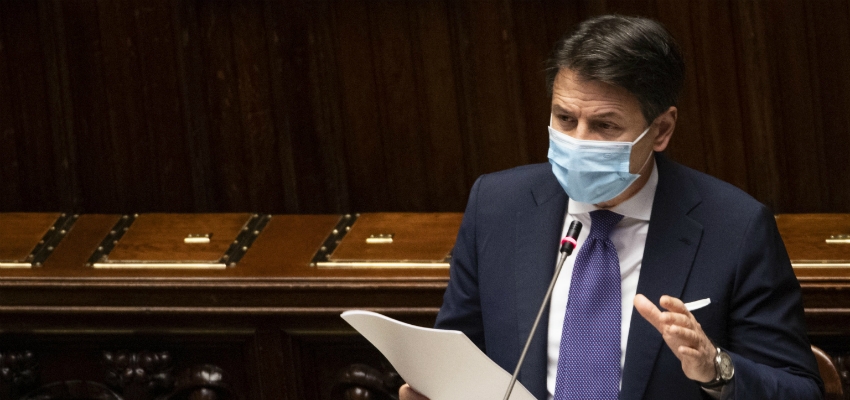
«L’aumento dei contagi è anche il risultato di una accresciuta capacità di screening. Negli ultimi giorni vengono effettuati in media 200 mila tamponi al giorno, abbiamo toccato anche punte di 215 mila, quando a marzo ne venivano somministrati 25 mila»
Publisher’s rating: Nì

Doctors are profiting by declaring "everybody dies of COVID"
Publisher’s rating: False

Após aglomeração comícios e carreatas o governador Paulo câmara afirma ter novos casos em Pernambuco da Covid 19
Publisher’s rating: Falso
Menusuk 10 jari dengan jarum adalah pertolongan pertama stroke
Publisher’s rating: Keliru

මෙම ඡායාරුප සියල්ලක්ම මීට වසර 101කට පෙර පැවතුනු වසංගතයක් ආශ්රිත ඒවාද?
Publisher’s rating: Partly False

INTERESSANTE: Muitos acreditam que o vírus da Covid-19 tem uma vibração de 5.5 hz e morre acima de 25.5 hz.
Publisher’s rating: Falso

vacina da China, vacina de Oxford e vacina da Pfizer americana patrocinada pelo Bill Gates são vacinas genéticas.
Publisher’s rating: Falso
Über die Maskenpflicht zur Eindämmung der Corona-Pandemie wird viel diskutiert. Ein Facebook-Post (hier archiviert) behauptet nun: Ein Maskenzwang in Geschäften sei «illegal, verboten und damit eine strafbare Nötigung» nach Paragraf 240 des Strafgesetzbuchs. Eine Maskenpflicht müsse formgerecht in den Hausordnungen und Allgemeinen Geschäftsbedingungen (AGB) geregelt werden. Es reiche nicht, wenn Geschäftsinhaber entsprechende Hinweisschilder aufhängen. Als Beleg wird auf Urteile des Bundesgerichtshofs (BGH) verwiesen.
Publisher’s rating: Die Maskenpflicht ist in Landesverordnungen geregelt. Deren Durchsetzung ist keine strafbare Nötigung. Die zitierten BGH-Urteile stützen die Behauptungen zudem nicht.
The post argued that requiring masks in shops was illegal coercion under section 240 of Germany’s Criminal Code unless the requirement was formally included in store rules or terms and conditions. It also claimed that signs alone were insufficient and cited two Federal Court of Justice (BGH) rulings. The review examined those legal claims and the decisions identified by the post. The review explains that section 240 concerns unlawfully forcing conduct through violence or threats, and reports that criminal-law professor Anne Schneider said the offence requires a human perpetrator and a victim. A mask rule established by a state regulation is not itself a perpetrator. A shopkeeper could, in principle, face an allegation of coercion for threatening a customer with a ban, but Schneider said that enforcing the mask requirement in this way was legally supported and therefore not unlawful—the unlawfulness needed for the offence. The two cited BGH cases concerned a shop’s rights to control access and when a ban from premises was permissible, not the legality of mask requirements. In one case, a retailer’s notice reserving the right to inspect bags at checkout was not enough to establish that right. The review says that ruling does not show that signs requiring masks are impermissible. It also reports that mask requirements were set out in state regulations, with their legal basis in the Infection Protection Act, so they did not depend on being separately written into each shop’s rules or terms.
CDC menyebut virus Corona Covid-19 tidak menyebar lewat udara sehingga pemakaian masker tidak berguna
Publisher’s rating: Keliru
Die Ergebnisse einer Studie der US-Gesundheitsbehörde über Covid-19-Erkrankte sind schon mehrfach falsch interpretiert worden. In einem Beitrag (hier archiviert) werden mehrere Zahlen daraus verbreitet: Bei 154 von 306 Erwachsenen sei ein PCR-Test auf SARS-CoV-2 positiv ausgefallen. 108 dieser 154 Fälle – «über 70 % aller Infizierten» - hätten ihre Masken immer getragen, so der «bemerkenswerte Befund». Personen, die selten oder nie eine Maske getragen hatten, seien hingegen kaum in der Infiziertengruppe gewesen.
Publisher’s rating: In dem Beitrag fehlen entscheidende Vergleichszahlen aus der Studie - nämlich die aus der negativ getesteten Gruppe. Dort war der Anteil der Personen, die immer Masken getragen haben, höher. Die Studie kommt zu dem Ergebnis, dass Masken die Ausbreitung des Coronavirus verlangsamen.
The claim draws on figures from a CDC study of adults, but presents the number of positive participants who said they always wore a mask as though it showed how mask use compared with infection status. The review explains that the study separated participants into positive-test “case-patients” and negative-test “control participants,” and reported characteristics for both groups in a table. Participants had been surveyed between July 1 and 29, 2020; the results were published on September 11.