PeakMetrics / Fact Checks
Health & medicine fact checks
Explore claims publishers have checked about health & medicine. Read their original ratings and follow the evidence.
Search fact checks
Search by text or image13,675 published reviews in this topic

கொரோனாவிற்கு மருந்து கண்டுபிடித்த புதுச்சேரி மாணவன் ராமு
Publisher’s rating: False
The review examines a post claiming that Ramu, described as an Indian student at Pondicherry University, had discovered a home remedy for COVID-19 and that the World Health Organization had approved it. The post specified a mixture of black pepper, honey and ginger juice, claimed it could remove the effects of coronavirus by up to 100% if taken for five days, and urged readers to share the message. The review says the post appeared on the Ceylon Muslim Talk Facebook page on 2 November 2020. [S1: “Ceylon Muslim Talk என்ற பேஸ்புக் பக்கத்தில் ” *மகிழ்ச்சியான செய்தி 😗 பாண்டிச்சேரி பல்கலைக்கழகத்தின் இந்திய மாணவர் ராமு, கோவிட் 19 க்கான வீட்டு வைத்தியங்களைக் கண்டுபிடித்தார்”] To check the remedy claim, the review consulted WHO guidance and reports that WHO had said ingredients such as pepper and honey were not a permanent solution to COVID-19. That addresses the post’s asserted treatment and its attribution of approval to WHO. [S1: “WHO ஏற்கனவே விளக்கம் அளித்திருக்கிறது. மிளகு, தேன் உள்ளிட்டவை கொரோனா வைரஸ்க்கு நிரந்தர தீர்வாகாது என அறிவித்துள்ளது.”] The review also reports that its Indian Tamil-language team checked with the Pondicherry University vice-chancellor through The Logical Indian. According to the review, the vice-chancellor said no student from the university had discovered a medicine of this kind. On those grounds, the review concludes that the claim about Ramu discovering a COVID-19 cure was false. [S1: “thelogicalindian என்ற இணையதளம் பாண்டிச்சேரி பல்கலைக்கழக துணை வேந்தரிடம் தொடர்புகொண்டு வினவியபோது இப்படி எந்த மாணவரும், தங்கள் தரப்பில் மருந்து கண்டுபிடிக்கவில்லை என்று அவர் கூறியுள்ளார்.”]

Premiera Mateusz Morawiecki stwierdził, że protesty wpływają na wzrost zakażeń COVID-19 o 5000 dziennie.
Publisher’s rating: Fałsz

ಕೊರೊನಾ ಸೋಂಕು ಹರಡುವಿಕೆಯನ್ನು ಯಶಸ್ವಿಯಾಗಿ ನಿಯಂತ್ರಿಸಿದ ಕೊಡಗು ಜಿಲ್ಲಾಧಿಕಾರಿಗೆ ಸನ್ಮಾನದ ವೀಡಿಯೊ.
Publisher’s rating: FALSE

Os médicos Nise Yamaguchi e Anthony Wong provaram cientificamente que uma vacina segura e eficaz precisa de ao menos de 10 anos de pesquisa
Publisher’s rating: FALSO: O Comprova não encontrou qualquer indício de que os médicos tenham feito tais provas. E tempo não é um fator considerado nos protocolos de avaliação de vacinas tanto na Anvisa quanto na FDA, autoridade sanitária dos Estados Unidos

वर्कआउट करने वाले या फिट लोगों पर कोरोना वायरस का असर नहीं होता।
Publisher’s rating: FALSE

ESTUDIOS CIENTÍFICOS DEMUESTRAN QUE LAS MASCARILLAS SON DAÑINAS E INÚTILES
Publisher’s rating: Engañoso
«Der Saft hat Covid», unkt ein polnisch sprechender Mann in einem Video (hier archiviert), das sich derweil mit rasanter Geschwindigkeit in den sozialen Medien verbreitet. In dem gut zwei Minuten langen Film hantiert der Mann mit Corona-Schnelltests, die er vor laufender Kamera mit einem Getränk beträufelt. Ein Test reagiert positiv. «Noch Fragen?», heißt es dazu in einem Facebook-Posting.
Publisher’s rating: Einige Indizien legen eine Täuschung nahe. So zeigt nur der Test ein positives Ergebnis, der schon zu Beginn des Videos ausgepackt auf dem Tisch liegt. Der anfangs verpackte Test reagiert hingegen nicht auf das Getränk.
The video showed a Polish-speaking man applying a drink to two coronavirus rapid-test kits, and only one produced a positive result. The review identifies the kits as Healgen coronavirus antibody rapid tests. It reports that the man took one kit from its packaging during filming, while another was already out of its packaging on the table before the demonstration began. He then applied a sample drawn from a bottle presented as containing fruit drink to both kits. (S1: “Zu Beginn des Films liegt ein Testkit bereits links vorn auf dem Tischchen, vor laufender Kamera löst er ein zweites aus der Verpackung. Anschließend beträufelt der Mann die beiden Kits mit einer Probe, die er zuvor aus einer vermeintlich mit einem Fruchtgetränk gefüllten Flasche gezogen hat.”) The key comparison was that, although the kits were treated with the sample nearly simultaneously, only the one already sitting out—the kit at the front left—showed a positive result. The review says it appeared after just over a minute, whereas the manufacturer’s stated wait for a result was about 15 minutes. The contrast and timing were presented as possible evidence that the exposed kit had been prepared in advance; they do not establish from the excerpt alone exactly how the video was staged. (S1: “Auffällig ist: Obwohl er die Kits nahezu gleichzeitig beträufelt, reagiert in dem Video nur das Testkit vorn links auf die Probe und zeigt bereits nach einer guten Minute einen positiven Befund. Laut Hersteller stellt sich das Ergebnis jedoch erst nach rund 15 Minuten ein. Es könnte ein Hinweis darauf sein, dass das Testkit vorn links vorab präpariert wurde.”) The review also notes three additional test strips in the background, with discoloration in different places, and treats them as a further possible sign that experiments were conducted until the apparent demonstration worked. It reports clues suggesting the man might have been a Polish emergency medical responder, including his clothing and a partially legible patch; the text presents that identification as a possibility, not a confirmed fact. Together, these details support suspicion about the demonstration, while the review’s wording does not claim definitive proof of how the positive result was produced. (S1: “Noch etwas bestärkt den Täuschungsverdacht: Im Hintergrund sind drei weitere Teststreifen zu sehen, die mal an der einen, mal an anderen Stellen verfärbt sind: Auch dies könnte ein Indiz dafür sein, dass solange experimentiert wurde, bis die Täuschung funktionierte.”)


VACINA CHINESA MATOU 48 PESSOAS EM SINGAPURA, MAS ISSO A MÍDIA BANDIDA NÃO VAI PUBLICAR!
Publisher’s rating: Falso

బీజేపీ తరఫున ఓటు వేస్తేనే ఉచిత కోవిడ్ వ్యాక్సిన్
Publisher’s rating: FALSE
Sebanyak 48 warga Korea Selawan tewas usai menerima vaksin Covid-19
Publisher’s rating: Keliru

සුවසැරිය ගිලන් රථ වල වෙන්ටිලේටර්ස් ගලවා රෝහල් වලට ලබා දීමේ සුදානමක් ?
Publisher’s rating: False
The claim concerned an alleged plan to remove ventilators from Suwasariya ambulances and give them to hospitals. The review traces the allegation to reports based on a charge by UNP deputy leader Ruwan Wijewardene, then checks whether the ambulances actually had ventilators to remove. It concludes the claim was unfounded because the Suwasariya vehicles were not equipped with ventilators. The investigation reports that Harsha de Silva, who had helped establish the service, said Suwasariya ambulances did not have ventilator machines. It also says the health ministry’s Additional Secretary for Medical Services, specialist doctor Sunil de Alwis, confirmed this when contacted: the ambulances carried basic equipment, including oxygen-delivery equipment, but not ventilators. This distinction addresses the central factual premise of the allegation: having oxygen equipment did not mean the vehicles had ventilators. As a further check, the review says it examined videos of Suwasariya ambulances and did not see ventilators inside. It contrasts these vehicles with ICU ambulances in Sri Lanka that did have ventilators, noting that the existence of such vehicles did not establish that Suwasariya ambulances were being stripped of equipment. The account does not describe a government removal plan; its cited checks instead concern the equipment fitted in Suwasariya ambulances.


1989 కి ముందు జన్మించిన వ్యక్తులకు మీజిల్స్ వ్యాక్సిన్ పనిచేయదు
Publisher’s rating: FALSE

MR వ్యాక్సిన్ వంధ్యత్వానికి కారణమవుతుంది
Publisher’s rating: FALSE
The review examined a social-media post alleging that Muslim schoolgirls in Kerala were being forcibly vaccinated and that the vaccine would make women infertile. It identifies the medicine shown in one of the post’s images as MR-VAC, a measles-rubella vaccine, and says a similar claim had been investigated previously. The article describes the post as having resurfaced after that earlier investigation. To check what the pictured product was, Vishvas News says it searched for information about MR-VAC and found that it was a measles-rubella vaccine manufactured by the Serum Institute of India. It also says it consulted the manufacturer’s website, which described the vaccine as recommended for infants, children, adolescents and adults, and as safe and well tolerated. The article additionally reports that it contacted Dr. Prafulla Bharadwaj of UNICEF about the viral post; he said its details were false. On that basis, the review rejects the post’s infertility allegation. The excerpt does not provide clinical-study results or further detail about the doctor’s reasoning, so it supports reporting what the review checked and concluded, not a more detailed account of the medical evidence.
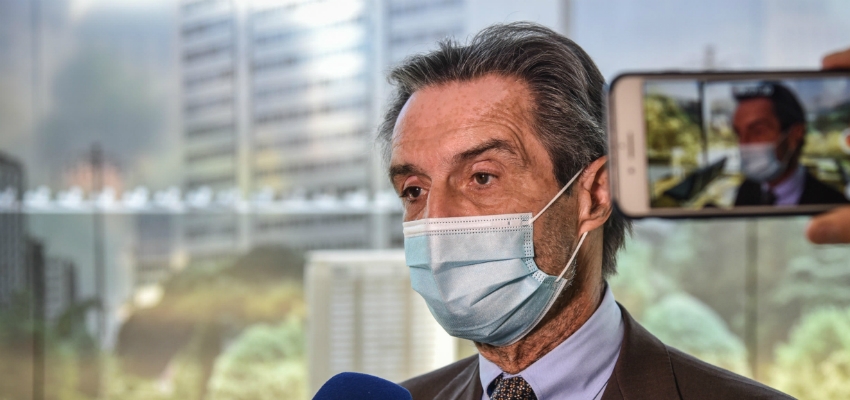
«Conte ha deciso di chiudere la Lombardia con i dati della settimana scorsa, che equivalgono alla situazione epidemiologica di due settimane fa»
Publisher’s rating: C'eri quasi
The claim concerns the decision to place Lombardy in Italy’s red zone in November 2020. The review says the government’s decision did rely on statistics updated to 25 October, so the data were not current to the date of the 3 November decree. But it says Fontana’s criticism was misleading insofar as it suggested the government could readily have used a fully up-to-date picture instead: the monitoring process and the data available to officials imposed delays. The review states that “la decisione del governo di mettere la Lombardia in ‘area rossa’ si basa su statistiche aggiornate al 25 ottobre” and that “è fuorviante lasciare intendere che si sarebbe potuto fare altrimenti.” The review describes the evidence base as the weekly monitoring report published by the Health Ministry on 30 October. Although that report appeared five days before the decree was signed, it covered 19–25 October. The decree’s assessment also drew on a system of 21 indicators, rather than just daily case counts; the review notes that these included measures such as the Rt index, new outbreaks and hospital occupancy. It explains that calculating and validating this information takes time, and that the data themselves reflect earlier stages of infection and reporting. In the review’s words, “L’ultimo monitoraggio settimanale pubblicato dal Ministero della Salute è uscito il 30 ottobre, quindi cinque giorni prima della firma del Dpcm del 3 novembre, ma contiene i dati relativi alla settimana dal 19 al 25 ottobre.” That lag did not mean the figures were a simple, immediate picture of conditions two weeks earlier. The review explains that infection, symptom onset, testing and case notification occur at different times, and that regional reporting delays can add to the gap. It also says the monitoring report warned that overloaded local health services were having increasing difficulty supplying complete data. The review’s conclusion is therefore qualified: the decision relied on older statistics, but even more recent figures would have offered a less detailed assessment or still represented an earlier point in the epidemic. It concludes that data collection, consolidation and validation take time and that the monitoring system was facing increasing reporting problems.