PeakMetrics / Fact Checks
Health & medicine fact checks
Explore claims publishers have checked about health & medicine. Read their original ratings and follow the evidence.
Search fact checks
Search by text or image13,675 published reviews in this topic

Klarsichtmasken sind genauso gut wie andere Communitymasken oder Mund-Nasen-Bedeckungen (MNB)
Publisher’s rating: Plastikmasken, die einen Spalt zwischen Haut und Maske frei lassen, sind umstritten. Ihre Wirksamkeit für den Bevölkerungsschutz in Corona-Pandemie-Zeiten ist nicht belegt. Während das Gesundheitsministerium in Bayern sie derzeit für den Arbeitsschutz-Bereich und den Alltag als Mund-Nasen-Bedeckung geeignet sieht, hält die Landeshauptstadt München sie für ungeeignet. Plastikmasken habe keine Filterfunktion und verhindern nicht, dass die Aerosoldosis in den Raum dringt.
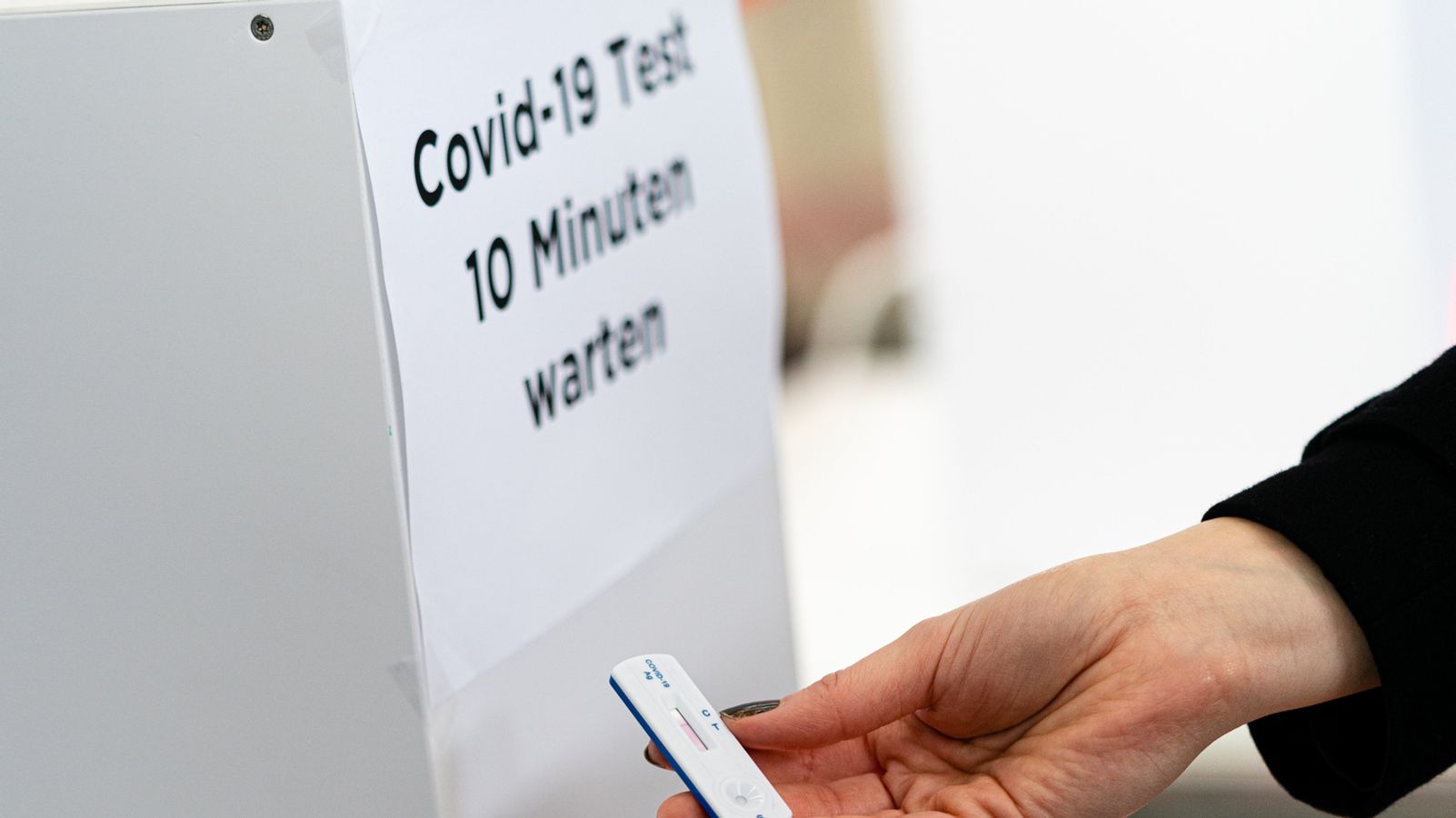
Manche Corona-Tests brauchen keine externe Qualitätskontrolle
Publisher’s rating: Richtig. Corona-Tests, die für medizinisches Fachpersonal gedacht sind, müssen nicht durch eine externe Prüforganisation (Benannte Stelle) kontrolliert werden. Corona-Test zur Selbstanwendung hingegen schon. Ab 2022 müssen alle In-Vitro-Diagnostika, zu denen auch Corona-Tests zählen, von einer Benannte Stelle überprüft werden.
Wurde US-Präsident Donald Trump zu Unrecht verspottet, weil er in der Corona-Pandemie empfahl, das Spritzen oder Einnehmen von Desinfektionsmittel zu prüfen? Und kann es sein, dass die Weltgesundheitsorganisation (WHO) die Trump-Therapie «still und leise als Heilmittel zugelassen» hat? Das jedenfalls wird in einem Facebook-Posting behauptet (hier archiviert).
Publisher’s rating: Es stimmt nicht, dass die Weltgesundheitsorganisation das von Trump zur Diskussion gestellte Vorgehen jetzt akzeptiert. Das gilt auch für das Malariamittel Hydroxychloroquin, das weiterhin umstritten bleibt.
The Facebook post conflated two different things: Trump’s remarks about injecting or drinking disinfectant, and hydroxychloroquine, an anti-malaria drug. The review says Trump’s disinfectant comments had “mit Hydroxychloroquin nicht das Geringste zu tun.” It traces the remarks to a press conference on April 23, 2020: after a government expert discussed disinfectants killing the virus on surfaces, Trump wondered aloud whether something similar could be tried by injection or “almost säubern,” while saying doctors would have to handle it. The review reports that manufacturers warned people not to inject or swallow disinfectants, and that Trump later qualified his comments. The post also claimed that the WHO had quietly approved hydroxychloroquine as a Covid-19 cure. The review describes the WHO’s coordinated Solidarity study, which tested several medicines, including chloroquine/hydroxychloroquine, in thousands of patients across nearly 500 hospitals in more than 30 countries. Its reported interim finding was that the medicines had no or little effect on mortality. The review further cites the WHO webpage, last updated November 23, which said hydroxychloroquine did not reduce deaths among hospitalized Covid-19 patients or help people with mild illness. This evidence does not support the post’s claim of WHO approval. The review also notes that the US drug regulator had granted hydroxychloroquine emergency authorization before withdrawing it on June 15, 2020, because of possible serious health harms. It distinguishes that regulatory history from the WHO’s assessment and from Trump’s unrelated disinfectant remarks.

Boulos está internado no Einstein, ele não foi morar na periferia? Deveria também se tratar no SUS. Mais vai nada heim!!!
Publisher’s rating: Falso
Hat der Leiter des Robert Koch-Instituts eingeräumt, dass es gar kein Coronavirus gebe? Ein Video mit Aussagen von Lothar Wieler wird als vermeintlicher Beleg in den sozialen Netzwerken verbreitet (hier archiviert). Darin sagt er tatsächlich einen entsprechenden Halbsatz. In der Überschrift des Internetbeitrags wird daraus: «Robert Koch Institut - Es gibt eigentlich keinen Corona Erreger» (sic!).
Publisher’s rating: Wieler hat nicht gesagt, dass es keinen Erreger für die derzeitige Pandemie gebe. Die Überschrift ist eine Verkürzung und Verfremdung der Aussage im angefügten Video, in dem Wieler vielmehr erläutert, dass es kaum einen Erreger gebe, der bei allen Infektionen auch Krankheitssymptome auslöse.
The post used a short clip of RKI president Lothar Wieler to imply that he had admitted there was no coronavirus pathogen. The review identifies the clip as an excerpt from an RKI press conference on 13 March 2020, where Wieler was discussing what was then known about the disease and the frequency of symptom-free or mild infections. The wording in the post’s headline, it says, distorts what the clip shows. [S1: “Das kurze Facebook-Video zeigt einen Ausschnitt einer Pressekonferenz des Robert Koch-Instituts (RKI) vom 13. März 2020. Darin stellt RKI-Präsident Lothar Wieler die damals aktuelle Einschätzung der Corona-Lage vor und schildert Erkenntnisse über die Krankheit, die zu diesem Zeitpunkt erst seit einigen Wochen bekannt ist.”] The review provides the surrounding passage from Wieler’s remarks. He begins, “Das liegt daran, dass es eigentlich gar keinen Erreger gibt...”, but immediately breaks off and clarifies that he knows of only one pathogen—the foot-and-mouth disease virus in ruminants—that causes clinical symptoms in every infected animal. He then explains that most pathogens do not produce symptoms in every infected person or animal. In context, the sentence fragment concerns whether infection always causes illness, not whether the coronavirus exists. [S1: “Wielers Aussage «Das liegt daran, dass es eigentlich gar keinen Erreger gibt» ist also klar erkennbar ein Satzanfang, den er abbricht und der sich auf Erreger allgemein bezieht - nämlich darauf, dass Wieler bis auf eine Ausnahme kein Erreger bekannt ist, der bei allen Infizierten Krankheitssymptome auslöst.”] The review also notes that the social-media post omitted when Wieler made the remarks. They date to March 2020, while the post was from early December. The review says that, by mid-November, an RKI and Federal Statistical Office analysis still described 80 percent of cases as mild, while also noting that severe outcomes were more common among older infected people. It further reports that knowledge about immunity had developed since Wieler’s briefing, and that the RKI did not then regard protection against reinfection as reliably established. [S1: “Darüber hinaus fehlt im Facebook-Beitrag von Anfang Dezember der Hinweis auf den Zeitpunkt von Wielers Aussagen.”]
“LOS PAÍSES CON UN CONFINAMIENTO MÁS LARGO HAN OBTENIDO LOS PEORES RESULTADOS”
Publisher’s rating: Impreciso

தயவுசெய்து வேறுபாடுகளைக் கவனியுங்கள்:(1) வறண்ட இருமல் + தும்மல் = காற்று மாசுபாடு(2) இருமல் + சளி + தும்மல் + மூக்கில் சளி வடிதல் = பொதுவான சளி (3) இருமல் + சளி + தும்மல் + மூக்கில் சளி வடிதல் + உடல் வலி + பலவீனமாக உணர்தல் + லேசான காய்ச்சல் = காய்ச்சல் (4) வறண்ட இருமல் + தும்மல் + உடல் வலி + பலவீனமாக உணர்தல் + அதிக காய்ச்சல் + சுவாசிப்பதில் சிரமம் = கொரோனா வைரஸ். இப்படிக்கு நோயியல் துறை, எய்ம்ஸ், டெல்லி. இந்த செய்தியை முடிந்தவரை பலருக்கு கிடைக்கச் செய்யுங்கள்
Publisher’s rating: FALSE
The viral post gives four symptom combinations and labels them as air pollution, a common cold, flu and coronavirus. It presents the list as a message from the Department of Pathology at AIIMS, Delhi, and urges readers to share it widely. The review says a Facebook user named Rajkumar Batti shared the post, and its central finding is that the attribution to AIIMS is false. [S1: “கூற்று ராஜ்குமார் பாட்டி என்ற பயனரால் பேஸ்புக்கில் பகிரப்பட்ட ஒரு இடுகை பின்வருமாறு”] [S1: “இப்படிக்கு நோயியல் துறை, எய்ம்ஸ், டெல்லி. இந்த செய்தியை முடிந்தவரை பலருக்கு கிடைக்கச் செய்யுங்கள்!”] To check the attribution, Vishvas News reports that it searched AIIMS’s social media accounts and website, and also looked at the AIIMS COVID portal. It says it found no statement matching the viral list in those places. The article also reports contacting PR. Mirtha, a doctor working in AIIMS’s microbiology department, by text message. According to the review, he rejected the claim and said the post was old and was being wrongly circulated in AIIMS’s name. [S1: “இந்த வைரல் இடுகையில் கூறப்பட்டுள்ளபடி எந்த எய்ம்ஸ் கணக்கிலும் இதுபோன்ற எந்த அறிக்கையையும் எங்களால் காண முடியவில்லை.”] [S1: “இந்த வைரல் இடுகையில் உள்ள அறிக்கையை எங்களால் காண முடியவில்லை.”] [S1: “நம்மிடத்தில் பேசிய அவர், இந்த வைரல் இடுகை தவறானது என்று மறுத்தார்.”] The article further cautions against treating the list as a definitive way to identify COVID-19: citing the CDC, it says people with COVID-19 can have a range of symptoms, from mild to severe, and that symptoms may appear 2–14 days after infection. It lists examples including fever or chills, cough, breathing difficulty, fatigue and body aches, while noting the list is not exhaustive. This supports the review’s conclusion that the symptom chart should not be presented as an AIIMS statement or as a complete account of COVID-19 symptoms. [S1: “கோவிட்-19 ஒவ்வொரு நபரையும் ஒவ்வொரு விதமாக பாதிக்கிறது.”] [S1: “இந்த பட்டியலில் கோவிட்-19ன் அனைத்து அறிகுறிகளும் பட்டியிலிடப்படவில்லை.”]
Die Berliner Senatsverwaltung für Gesundheit habe angeblich bestätigt, dass man mit einem PCR-Test keine Corona-Infektion nachweisen könne, wird in einem oft geteilten Facebook-Posting behauptet (hier archiviert). Der staatliche Corona-Betrug sei damit aufgedeckt.
Publisher’s rating: Das ist falsch. PCR-Tests stellen Infektionen im Sinne des Infektionsschutzgesetzes fest. Das schreibt auch die Berliner Senatsverwaltung.
ترکمنستان؛ کشوری که صفر بودن کرونا در آن تایید شد.
Publisher’s rating: نادرست
«ANAL»: Unter diesem Kürzel fasse das Bundesministerium für Gesundheit (BMG) angeblich die Corona-Verhaltensregeln zusammen. Etliche Fotos vermeintlich offizieller Plakate gehen gerade in den sozialen Medien um - etwa bei Facebook (hier archiviert)
Publisher’s rating: Die Kampagne ist frei erfunden, sie stammt nicht vom Bundesgesundheitsministerium.
The claim concerns posters circulating on Facebook that presented “ANAL” as a summary of coronavirus precautions and identified the Federal Ministry of Health (BMG) as the campaign’s sender. The review describes a poster with the slogan “Jetzt im Herbst und Winter besonders wichtig: ANAL”; its letters were said to stand for everyday masks, avoiding close contact, the app, and ventilation. Cartoon-style icons accompanied the lettering, and the poster carried the hashtag “#ZeigeVerantwortung.” The review checked the attribution rather than treating the poster’s appearance as proof of official origin. It reports that searches for the hashtag on Facebook and Twitter did not reveal official BMG posts, despite the ministry being named on the posters. More decisively, when asked by dpa, a ministry spokesperson said the campaign was not from the BMG. Those findings address the central claim that the posters were an official ministry campaign. The ministry’s spokesperson said the BMG continued to promote the “AHA” formula: keeping distance, observing hygiene measures, and wearing everyday masks. The spokesperson also noted that frequent ventilation was important in winter when people gathered indoors. The review directs readers to the ministry’s official campaign and guidance website. These points distinguish the alleged “ANAL” campaign from the measures the ministry said it was promoting; the review does not identify who created the posters.

Vírus da Covid-19 foi fabricado no Instituto Pasteur, na França, e as vacinas modificam o DNA para sempre.
Publisher’s rating: FALSO: O Instituto Pasteur nega as acusações feitas no vídeo verificado, especialistas dizem que são teorias conspiratórias sem fundamento e, procurados pelo Comprova, os homens que aparecem na gravação não ofereceram provas do que dizem.
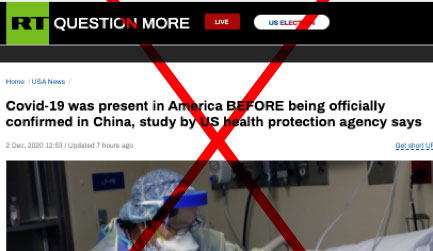
Covid-19 was present in America before being confirmed in China
Publisher’s rating: A December 2, 2020 report on Russian state-media platform RT includes a misleading claim that COVID-19 was present in the United States before China, based on a paper about serologic testing of US blood donations between December 2019 and January 2020 in the Oxford Academic medical journal. While the findings of the Oxford Academic “suggest that SARS-CoV-2 may have been introduced into the United States prior to January 19, 2020,” the date that the first cases in China, outside of Wuhan were reported. The RT headline suggests that COVID may have first infected people in the United States, which would support earlier Russian and Chinese disinformation about the origins of the COVID virus. The RT story falsely suggests that the COVID may have been circulating in the US “weeks before the Chinese authorities announced the infection in the city of Wuhan.” Although “patient zero” has not been identified, the first confirmed case of COVID was traced back to November 19, 2019 in China. The RT story has been shared on Twitter by a Russian diplomat as well as accounts that amplify far-left and far-right conspiracy theories. In March 2020, Chinese diplomats promoted a similar disinformation narrative which was spread by Canada’s Global Research, a platform that was recently identified by the US State Department’s Global Engagement Center as a part of the Russian disinformation ecosystem.
Ein Interview mit dem deutschen Politiker Peter Boehringer (AfD) im ARD-«Morgenmagazin» macht in den sozialen Medien die Runde. Ende November ist in einem Facebook-Post (hier archiviert) ein Ausschnitt zu sehen, in dem der Vorsitzende des Haushaltsausschusses im Bundestag unter anderem über Corona-Infektions- und Sterberaten spricht und den Nutzen von Gesichtsmasken anzweifelt. Der Facebook-User kommentiert das Video mit «Die Wahrheit im ARD zu COVID 19 - Arzt hat keine Lust mehr auf die ganzen Lügen».
Publisher’s rating: Das Interview im «Morgenmagazin» stammt vom September 2020 und führt daher nicht die aktuellen Fallzahlen von Ende November auf. AfD-Politiker Boehringer ist kein Arzt sondern Kaufmann und Informatiker.
The viral post presented an excerpt of AfD politician Peter Boehringer speaking about COVID-19 infection and death rates and questioning face masks, while its caption called him an “Arzt” (doctor). The review identifies the interview as an ARD-Morgenmagazin broadcast on 29 September 2020, and the Facebook post as published on 26 November. The dates matter: the figures Boehringer discussed in September did not describe the situation when the clip circulated in late November. To check the figures’ timing, the review compared Boehringer’s statement that three people had died “an und mit” coronavirus on one day with Robert Koch Institute statistics. It says the statement apparently referred to 28 September, the day before the interview; the RKI recorded 389 new deaths associated with SARS-CoV-2 in Germany on 26 November. Thus, the clip’s figures were not current for the post’s date. The review also checked Boehringer’s qualifications against his biography on the German parliament’s website: it reports that he completed commercial training and studied at the European Business School and in the United States and England, earning qualifications in business and computer science, but had not studied medicine. The review separately notes that the post included an excerpt of virologist Christian Drosten discussing masks. That excerpt came from a 29 January 2020 RBB programme, and the review says Drosten’s remark reflected knowledge at the time. It contrasts that with his support for public mask use in an NDR podcast on 23 March and the WHO’s updated guidance in early June. The post therefore combined material from different dates, while its caption misidentified Boehringer as a doctor.
Die Spanische Grippe mit Millionen Todesopfern vor rund 100 Jahren soll nicht durch Viren ausgelöst worden sein, heißt es in einem Video unter anderem auf Facebook (hier archiviert). Der Beitrag wirbt mit angeblichen «Fakten» und «historischen Quellen» und verbreitet darüber hinaus die Behauptung, die Spanische Grippe sei «nicht ansteckend» gewesen. Angedeutet wird, dass «Massenimpfungen» Auslöser der Pandemie waren. Als Beleg werden angebliche Medizinjournalisten und Zeitzeugenberichte genannt.
Publisher’s rating: Die vermeintlichen Fakten über die Spanische Grippe sind falsch. Über solche Massenimpfungen ist nichts bekannt, wie unter anderem die zuständige deutsche Bundesbehörde mitteilt. Unter Wissenschaftlern ist unstrittig, dass ein Influenzavirus die Pandemie verursacht hat. Die im Video genannten Quellen sind hingegen nicht wissenschaftlich.
The video claimed that the Spanish flu was not caused by a virus, was not contagious, and may instead have resulted from mass vaccinations. The review examined the video’s cited historical accounts and alleged sources, including claims about experiments with infected people and vaccinations. It reports that these accounts trace in part to Eleanor McBean, a US anti-vaccination activist, and says her retrospective accounts cannot be verified for accuracy or generalized as evidence. The review also states that the video’s sources do not meet scientific standards. [S1: “Die Behauptungen über ausbleibende Ansteckungen bei Experimenten mit Erkrankten sowie Behauptungen über Impfungen gehen, wie im Video angedeutet, unter anderem auf die damalige Impfgegnerin Eleanor McBean aus den USA zurück. Ihre Schilderungen werden in entsprechenden Kreisen bis heute als angebliche Belege aufgeführt, lassen sich allerdings rückblickend nicht auf ihren Wahrheitsgehalt hin überprüfen und somit nicht verallgemeinern.”] On vaccination, the review distinguishes vaccines that existed at the time from influenza vaccines. It notes that smallpox and typhus vaccinations were available, but reports that the Paul-Ehrlich-Institut knew of no influenza vaccines during the pandemic and that there was no structured development and production of such vaccines for mass use. The article says influenza vaccine development began after the pandemic and that the first influenza vaccine was licensed in the United States in the 1940s. [S1: “Im Video erwähnte Impfungen gegen Typhus und Pocken gab es zu diesem Zeitpunkt zwar, im Fall etwa der Pocken sogar bereits seit mehr als einem Jahrhundert.”] [S1: “Wie eine Sprecherin des für Impfstoffzulassung in Deutschland zuständigen Paul-Ehrlich-Instituts auf dpa-Anfrage mitteilte, ist über die Existenz solcher Impfstoffe während der Ausbreitung der Spanischen Grippe nichts bekannt: «Unseres Wissens gab es zur Zeit der Spanischen Grippe noch keine Influenza-Impfstoffe. Was nicht heißt, dass es vielleicht einzelne Versuche gab. Aber bestimmt keine strukturierte Impfstoffentwicklung und -produktion für 50 Millionen - die dann alle starben.»”] For the viral-cause claim, the review points to modern genetic analyses identifying the pathogen as influenza A, subtype H1N1, and says the Robert Koch Institute also identifies that virus. It describes transmission mainly through droplets. The article further cautions that the pandemic’s exact origin is unknown; it notes US soldier cases in March 1918 and the subsequent movement of many soldiers to Europe as a possible route of spread, not proof of where the pandemic began. [S1: “Moderne Genanalysen haben Jahrzehnte später ergeben, dass es sich beim Erreger um einen Influenza-Virus vom Typ A (Subtyp H1N1) handelte. Auch das für Infektionskrankheiten zuständige Robert Koch-Institut nennt diesen Virustyp als Erreger. Die Ansteckung erfolgt demnach vor allem über Tröpfcheninfektionen.”] [S1: “Der genaue Ursprungsort der Spanischen Grippe ist unbekannt.”]

WHO की रिपोर्ट के अनुसार, “विश्व का एक बी शाकाहारी व्यक्ति करोना से नहीं मरा
Publisher’s rating: False


Casi 20 millones de estadounidenses obtuvieron cobertura médica mediante la Ley del Cuidado de Salud a Bajo Precio (ACA), incluidos más de 4 millones de latinos, la comunidad que más incremento vio en cobertura de cualquier raza o grupo étnico.
Publisher’s rating: Falta contexto
