PeakMetrics / Fact Checks
Health & medicine fact checks
Explore claims publishers have checked about health & medicine. Read their original ratings and follow the evidence.
Search fact checks
Search by text or image13,675 published reviews in this topic
Viele Menschen sehen die vor kurzem gestartete Corona-Impfung kritisch. Manche glauben gar, dass dabei nicht alles mit rechten Dingen zugeht oder vermuten eine Verschwörung dahinter. Eine Userin teilte etwa in einem Facebook-Posting (hier archiviert) zwei Screenshots, auf denen zu sehen ist, wie dieselbe britische Frau gerade die Corona-Impfung verabreicht bekommt. Das Datum in den Beiträgen der britischen «BBC» und des US-amerikanischen Fernsehsenders «CNN» stimmen jedoch nicht überein - angeblich ein Beleg dafür, dass die Person an zwei unterschiedlichen Tagen geimpft wurde.
Publisher’s rating: Die Screenshots sind keine Belege dafür, dass die Frau an unterschiedlichen Tagen geimpft wurde. Das Bild- und Videomaterial entstand am 8. Dezember 2020 und nicht früher. Das zeigen ein Tweet des Fotografen und die in einem der Screenshots ersichtlichen Corona-Zahlen von dem Tag. Dass ein aktuelles Video unter einem alten Artikel auftaucht - wie es im zweiten Screenshot der Fall ist – liegt an der Darstellungsweise der «CNN»-Webseite.
The Facebook post used two screenshots showing the same woman receiving a COVID-19 vaccination, with different dates visible in BBC and CNN material, to suggest she was vaccinated on two different days. The review identifies the woman as Margaret Keenan, the first person vaccinated in the UK’s rollout, and concludes that the date discrepancy does not establish separate vaccinations. It reports that the images and video were made on 8 December 2020, when the UK began its vaccination campaign with the BioNTech vaccine and its US partner Pfizer. (The source says Keenan was 91 at the time of the review.) The review describes several checks on when the footage originated. Photographer Jacob King posted the photographs on Twitter on 8 December, saying he had been the photographer in Coventry that morning. The screenshot also shows US COVID figures that the review says correspond to that date: deaths were just over 285,000 on 8 December, and infections reached 15,067,000 on 8 or 9 December. The review adds that news agencies first carried the material on 8 December and that its Google search found no results for the video before then. The apparent CNN date mismatch has a separate explanation. The review says the October 22 CNN page remained online but displayed a different video beneath its headline; CNN’s video gallery cycles material while keeping the article page. A left-hand arrow in the screenshot indicated that viewers could navigate to another video, but the screenshot crop did not make the gallery context clear. Thus, the old page date was not evidence that the vaccination video itself was recorded earlier.
Aufgrund der Corona-Pandemie kommt der Grippeimpfung heuer eine besondere Bedeutung zu. In vielen Ländern riefen Politikerinnen und Politiker dazu auf. Auf Facebook wird derzeit ein Foto verbreitet, das Londons Bürgermeister Sadiq Khan zeigt, wie er gerade die Grippeschutzimpfung erhält. Einigen Usern fiel dabei auf, dass die Nadel der Spritze mit einer Kappe abgedeckt ist. Sie folgerten in Postings daraufhin, dass Khan die Injektion gar nicht wirklich erhalten habe und sprechen von einer «Fakeimpfung» (hier archiviert).
Publisher’s rating: Das Foto ist kein Beleg dafür, dass der Londoner Bürgermeister nicht geimpft wurde. Es zeigt nach Angaben eines Pressesprechers nicht den Moment der Impfung, sondern entstand davor. Khan und ein Apotheker posierten demnach in der Szene für ein Foto, bevor der Bürgermeister die Injektion erhielt.
The claim concerned a Facebook photo showing London Mayor Sadiq Khan with a capped needle during a flu-shot appointment. Some users interpreted the cap as evidence that he had not actually been vaccinated. The review reports that Khan’s press office confirmed to dpa that he received a flu vaccination from a local pharmacist on 28 September 2020. It said the circulated photo was taken shortly before the injection, while the cap was still on the needle. That timing explains what the image does and does not establish: it records Khan and the pharmacist posing for a photograph before the injection, not the injection itself. The review adds that Khan’s shirt was already rolled up, but says the vaccination had not yet been administered at the moment shown. A capped needle in that preparatory photo therefore does not demonstrate that the subsequent vaccination did not happen. The article also describes how the image reached the public: Khan posted it on his Twitter and Facebook channels as part of a campaign promoting free flu vaccinations. The review’s account thus distinguishes the staged photograph from the later act of vaccination and reports confirmation from Khan’s press office of the vaccination and its date.
In Europa haben die Impfungen gegen Covid-19 begonnen. Doch angeblich will sich der Vorstand der Firma Biontech, die den Corona-Impfstoff entwickelte, selbst nicht impfen lassen. «Nein ich und meine Mitarbeiter werden uns 2021 NICHT impfen lassen. Wir müssen 1,3 Milliarden Impfdosen herstellen. Da können wir uns keine (krankheitsbedingten) Ausfälle leisten», steht in einem Sharepic, das ein vermeintliches Zitat des Biontech-Chefs Ugur Sahin zeigen soll. Das Zitat wird in einem Posting (hier archiviert) etwa mit der Frage «Impfen oder nicht impfen?» kommentiert.
Publisher’s rating: Das Zitat ist nicht richtig. Biontech-Chef Ugur Sahin will sich selbst und seine Mitarbeiter möglichst schnell impfen lassen, um Ausfälle durch Corona-Infektionen zu vermeiden. Dies hat er in mehreren Interviews so geäußert.

US hospitals under lockdown after first COVID-19 vaccine patients start eating each other
Publisher’s rating: FALSE

සම්පුර්ණ යොදය සහිත ආනයනික කිරිපිටි වල සත්ව මේදය සහ පාම් තෙල් අන්තර්ගත බවට සමාජ මාධ්යයහි සැරිසරන නොමඟ යවන සුළු සටහන්! Misleading posts claiming that imported milk powder to Sri Lanka contains animal fat and palm oil
Publisher’s rating: Misleading
The review investigates social-media posts alleging that full-cream imported milk powder in Sri Lanka contains animal fat or palm oil, and contrasting imported brands with local products. Its central finding is that the checks described in the article did not establish that those fats were present in imported consignments. The review says that, from the previous year, every imported full-cream milk-powder consignment was subject to special sampling and testing; by December 18, 2020, none of those tests had confirmed animal fat, palm oil, or another substitute. The claim was therefore not supported by the test results reported in the review. The review describes a regulatory testing process rather than relying only on brand assurances. It says Sri Lanka’s 2003 regulations require the fat in imported milk powder to be natural milk fat, with a 26% composition, and that imported products must meet SLS 731:2008 before release to the market. Customs, the Health Ministry, and the Sri Lanka Standards Institution (SLSI) reportedly take random samples when consignments arrive. SLSI’s director general told the review that local laboratories could not test for these adulterants, so samples from every imported consignment were sent to Germany. The review also reports that Fonterra confirmed it made a fat-filled milk-powder product but said it had never imported that product into Sri Lanka. It further cites Fonterra’s statement that milk powder exported to Sri Lanka contained no non-natural fats or palm oil, and documents from New Zealand authorities, a testing institute, and Sri Lanka’s Health Department. These details distinguish the existence of a fat-filled product for other markets from evidence that it was present in Sri Lankan imports. The review’s conclusion is bounded by the testing and documents it describes; it does not establish that every product in every market was tested.
Mann wird mit leerer Spritze und ohne Nadel gegen das Coronavirus geimpft
Publisher’s rating: Falscher Kontext. Es handelt es sich beim Video nur um einen kurzen Ausschnitt. Die Originalversion dauert 1 Minute und 11 Minuten. Die verkürzte Version nur 29 Sekunden. Beim Original sieht man, wie der Mann zuvor samt Spritze und Impfstoff geimpft wurde.

Resumo oficial de 03 dias de vacinação nos Estados Unidos apontam que entre as 272 mil doses aplicadas, foram relatados quase 113 mil casos de efeitos colaterais
Publisher’s rating: ENGANOSO: Mensagem que circula no WhatsApp usa informações descontextualizadas de um aplicativo para monitoramento de sintomas adversos que registra dados dos próprios pacientes e que ainda não foram checados pelo Centro de Controle e Prevenção de Doenças (CDC) americano.
Video yang diklaim sebagai video ratusan pasien Covid-19 yang dirawat di Istora Senayan, Jakarta
Publisher’s rating: Keliru
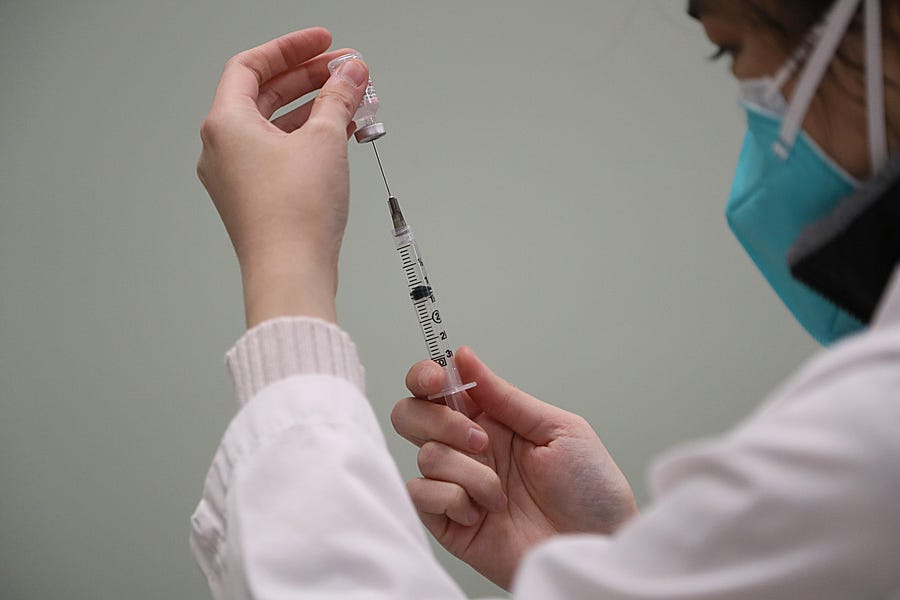
Those who are vaccinated against COVID-19 will be injected with a microchip
Publisher’s rating: False

DEBIDO AL USO DE MASCARILLAS, RESPIRAR EL PROPIO CO2 POR MÁS DE DOS HORAS PRODUCIRÍA ACIDEZ EN LA SANGRE
Publisher’s rating: Falso
Um den Rachenabstrich beim Corona-Test ranken sich verschiedene Verschwörungsmythen. Derzeit wird auf Facebook ein Sharepic verbreitet, das einen vermeintlichen historischen Beleg für das Einführen des Stäbchens sehr tief in die Nasenbahnen liefert. «In Ägypten war das eine Strafe für Slaves», wird dort in Verbindung mit einer ägyptischen Illustration behauptet (hier archiviert). Im Text wird eine «Drüse der Blutenzephalitis» erwähnt und auf die wichtige Funktion der «Blut-Gehirn-Barriere» zum Schutz des Hirns hingewiesen.
Publisher’s rating: Die Illustration zeigt eine Augenbehandlung im alten Ägypten, keine Strafe für Sklaven. Der Text enthält mehrere Fehler.
The DPA review examined a Facebook image that presented an Egyptian illustration as evidence that inserting a test swab deeply into the nose had once been a punishment for slaves. The accompanying text also invoked a supposed “Drüse der Blutenzephalitis” and the blood-brain barrier. The review found that the illustration did not depict punishment: it showed an eye treatment, while the sharepic’s medical-sounding text contained errors. [S1: “Derzeit wird auf Facebook ein Sharepic verbreitet, das einen vermeintlichen historischen Beleg für das Einführen des Stäbchens sehr tief in die Nasenbahnen liefert.”; “Die Illustration zeigt eine Augenbehandlung im alten Ägypten, keine Strafe für Sklaven. Der Text enthält mehrere Fehler.”] To assess the terminology, the review reports searching Google for “Drüse der Blutenzephalitis,” “Mondanta Hohl” and “Hematoenzephalitisdrüse”; it found no matching results and said the wording may have come from repeated automated translation. It also explains that encephalitis is an inflammation of the brain and that the blood-brain barrier normally wards off pathogens. [S1: “Google-Suchen zeigen, dass für die Begriffe «Drüse der Blutenzephalitis», «Mondanta Hohl» oder «Hematoenzephalitisdrüse» keine passenden Ergebnisse zu finden sind.”; “Bei einer Enzephalitis handelt es sich um eine Gehirnentzündung. Diese kann entstehen, wenn Erreger ins Hirn gelangen. Normalerweise wehrt die Blut-Hirn-Schranke diese Erreger aber ab.”] The illustration was not evidence about the blood-brain barrier or substances passing from blood into the brain. Egyptologist Friedhelm Hoffmann told the DPA that it likely showed treatment for an eye problem, possibly removal of a wood splinter. The review distinguishes the modern drawing used in the sharepic from the ancient scene underlying it: that original scene is in poor condition in the tomb of Ipi, and a specialist-book caption describes an eye treatment on a building site. [S1: “Der Vorstand des Instituts für Ägyptologie und Koptologie an der Ludwig-Maximilians-Universität München, Friedhelm Hoffmann, erklärte auf Anfrage der dpa, dass die Abbildung nichts mit der Blut-Hirn-Schranke oder dem Übertritt von Substanzen aus dem Blut in das Gehirn zu tun habe.”; “Allerdings handle es sich bei der Illustration um eine moderne Darstellung, «der allerdings eine originale ägyptische Darstellung aus dem sogenannten Neuen Reich zugrunde liegt, in der es freilich nicht um den Bau einer Pyramide geht».”; “Die Abbildung ist mit dem Bildtitel «Augenbehandlung auf einer Baustelle: Offenbar wird ein Fremdkörper aus dem Auge entfernt» versehen.”]

కిస్తాన్ కరోనా వ్యాక్సిన్ను అభివృద్ధి చేస్తే, అది ఇజ్రాయెల్కు లేదా భారతదేశానికి ఇవ్వదు – పాక్ ప్రధాని ఇమ్రాన్ ఖాన్.
Publisher’s rating: FALSE
Der Biontech-Gründer Ugur Sahin will sich angeblich aus Angst vor Erkrankung nicht mit dem von seiner Firma in Kooperation mit dem US-Unternehmen Pfizer hergestellten Impfstoff gegen Covid-19 impfen lassen. Das jedenfalls behaupten Facebook-Posts mit angeblichen Aussagen Sahins. «Nein ich und meine Mitarbeiter werden uns 2021 NICHT impfen lassen. Wir müssen 1,3 Milliarden Impfdosen herstellen. Da können wir uns keine (krankheitsbedingten) Ausfälle leisten», wird Sahin in einem Beitrag als Zitat zugeschrieben (hier archiviert).
Publisher’s rating: Die Zitate sind teils frei erfunden und teils aus dem Zusammenhang gerissen. Sahin hat mehrfach gesagt, er werde sich gerne impfen lassen, sobald er an der Reihe sei. Er bemühe sich zunächst um Klärung der Frage, wann die Biontech-Mitarbeiter wegen ihrer «systemrelevanten» Tätigkeit geimpft werden könnten.
The Facebook posts claimed that BioNTech founder Ugur Sahin would not get vaccinated in 2021 because he and his employees could not risk illness-related absences while making 1.3 billion doses. The review traced the wording to Sahin’s interview on ARD Extra on 21 December 2020, where he was asked whether his willingness to be vaccinated could reassure people hesitant about the vaccine. The review reports that he said he wanted to be vaccinated, while explaining that the company was considering how it could protect employees within the applicable legal rules. [S1: “Die vermeintlichen Zitate gehen auf ein Interview mit Sahin in der Sendung «ARD Extra» vom 21. Dezember 2020 zurück” and “Ich möchte mich natürlich liebend gerne impfen lassen.”] The surrounding remarks change the meaning of the production reference. Sahin said BioNTech would need to produce more than 1.3 billion vaccine doses over the coming twelve months and that employee absences mattered; the review says the company clarified to dpa that he meant staff being absent because of Covid-19, not because of vaccination effects. Thus the production concern in the post does not support its attributed claim that Sahin rejected vaccination. [S1: “Wir werden in den nächsten zwölf Monaten über 1,3 Milliarden Impfstoffdosen herstellen müssen.” and “Mit der Sorge vor Ausfällen ist gemeint, dass Mitarbeiter wegen Covid-19 ausfallen und die Produktion verlangsamt wird”] The review also reports that Sahin discussed vaccination for himself and his employees in interviews with RTL/ntv and Bild, and that he said he would follow recommendations about vaccination priority groups. It notes that BioNTech said authorization from the Federal Health Ministry would be needed to vaccinate employees on the basis of the company’s system-relevant work. These details provide the context for his remarks about protecting staff; they do not amount to a refusal to be vaccinated. [S1: “Gegenüber RTL/ntv (Minute 4:15) und der «Bild» betonte Sahin ebenfalls, sich und seine Mitarbeiter so bald wie möglich impfen lassen zu wollen.” and “Eine Sprecherin des Unternehmens teilte der dpa mit, dass eine Genehmigung des Bundesgesundheitsministeriums nötig sei, um als systemrelevantes Unternehmen Mitarbeiter impfen zu lassen.”]

කොරෝනා ආසාදනයෙන් මිය යන සියලු මුස්ලිම් අයවලුන්ගේ මෘත ශරීර මිහිදන් කිරීමට බැසිල් රාජපක්ෂ නියෝග කළාද?
Publisher’s rating: False
ਡਬਲਯੂ ਐਚ ਓ (WHO) ਨੇ ਲੋਕਾਂ ਨੂੰ ਮਾਸਕ ਨਾ ਪਾਉਣ ਅਤੇ ਸਮਾਜਿਕ ਦੂਰੀ ਨਾ ਬਣਾਉਣ ਲਈ ਕਿਹਾ
Publisher’s rating: False
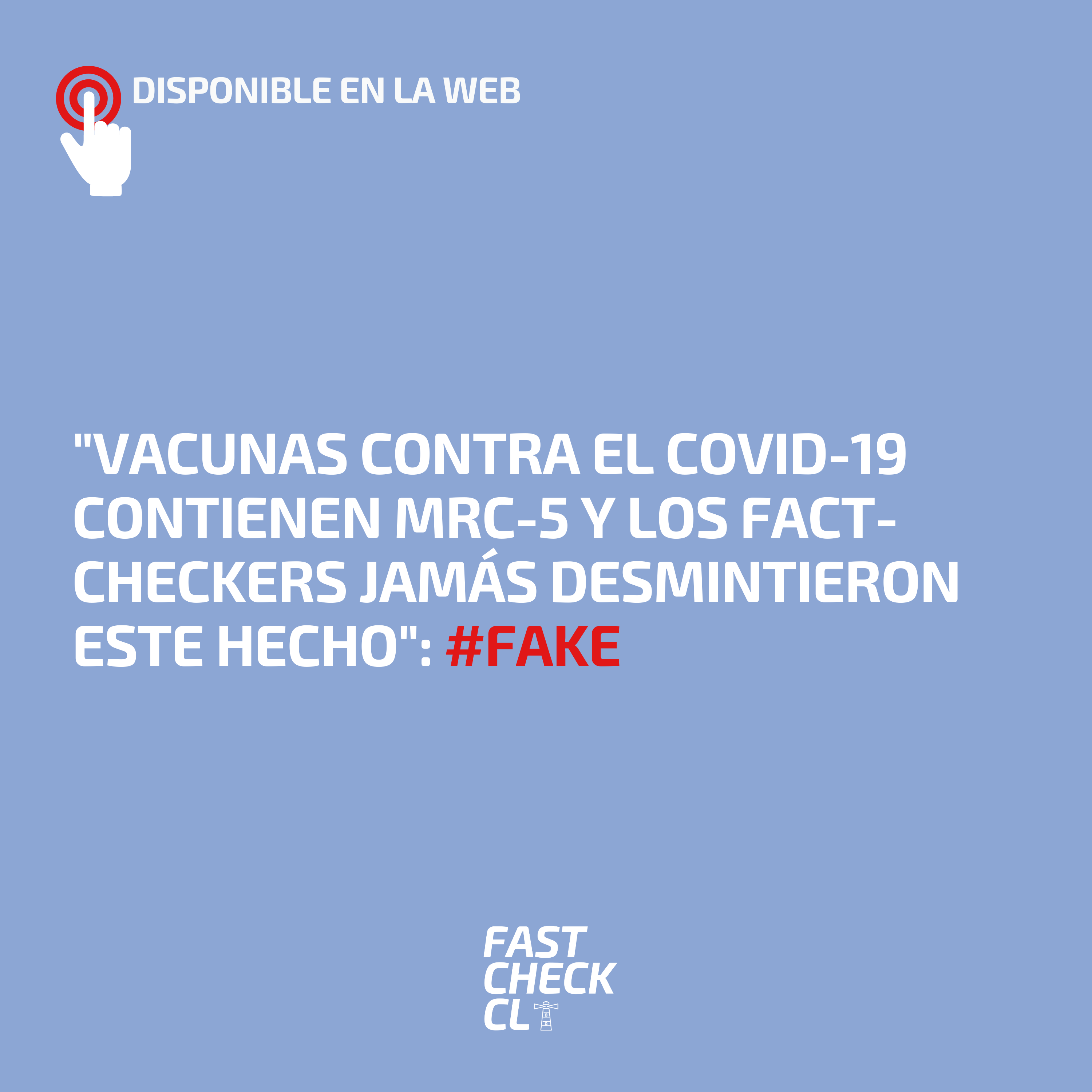
“VACUNAS CONTRA EL COVID-19 CONTIENEN MRC-5 Y LOS FACT-CHECKERS JAMÁS DESMINTIERON ESTE HECHO”
Publisher’s rating: Falso
ਅਲਕੋਹਲ ਵਾਲੀ ਪਦਾਰਤਾ ਦਾ ਸੇਵਨ ਕੋਵਿਡ-19 ਦੇ ਖਤਰੇ ਨੂੰ ਘਟਾਉਂਦਾ ਹੈ
Publisher’s rating: False
Instant noodles contain propylene glycol that can destroy the liver functions and invites other diseases that damage the kidney.
Publisher’s rating: Misleading
SARS-CoV-2 was not isolated by scientists. There is no COVID-19.
Publisher’s rating: False