PeakMetrics / Fact Checks
Health & medicine fact checks
Explore claims publishers have checked about health & medicine. Read their original ratings and follow the evidence.
Search fact checks
Search by text or image13,675 published reviews in this topic
Op Facebook gaat een afbeelding rond waarin een artikel van de NOS tegenover een tabel van het Amerikaanse Centers for Disease Control and Prevention (CDC) wordt geplaatst (hier gearchiveerd). De tabel geeft statistieken weer van de vaccinatiecampagne in de Verenigde Staten en maakt een onderscheid tussen drie groepen: gevaccineerden, mensen met gezondheidsproblemen en zwangere personen op het moment van vaccinatie. In een aparte blogpost wordt gesteld dat de genoemde gezondheidsproblemen het gevolg zijn van de vaccinatie, maar klopt dat wel?
Publisher’s rating: De tabel in de blogpost wordt selectief uitvergroot en mist context. De auteur wekt de indruk dat een hoop mensen ernstige gezondheidsproblemen opdoen door bijwerkingen van het vaccin en daardoor niet langer hun dagelijkse activiteiten kunnen doen. De categorie ‘Health Impact Events’ is echter breed en omvat alle mensen die het vaccin hebben gekregen en daarna minstens één dag medische hulp nodig hadden.
The review examines a Facebook comparison of a NOS article and a CDC table, alongside a blog post claiming that the table showed nearly 3% of vaccinated people could no longer perform daily tasks because of vaccination. It identifies the table’s “Health Impact Events” category as the key issue: the category covered people who needed medical attention for at least one day after vaccination, including for symptoms such as fever or muscle pain. It therefore did not, by itself, establish that those people had severe health problems or were unable to carry out daily activities. The CDC document cited in the review, “Anaphylaxis Following m-RNA COVID-19 Vaccine Receipt,” examined anaphylaxis among people who received the Pfizer/BioNTech vaccine. The review reports that, among 112,807 recipients, six anaphylaxis cases had been recorded by December 18, 2020. It distinguishes those serious allergic reactions from the broader “Health Impact Events” category; the review says the CDC document did not describe that broader category as severe health problems. The review also notes that the blog post’s comparison set the CDC table against a NOS article about expected vaccine side effects, including pain at the injection site, fatigue, headache, chills and fever. For the separate question about pregnancy, it reports that the NOS article said the small group of pregnant women monitored had no acute problems, while effects on babies could not yet be established with certainty. The review also corrects the blog post’s count: it says 112,807 people, not 112,897, had received a vaccine by December 18.

(IMAGEN) POSIBLES REACCIONES ADVERSAS DE LA VACUNA PFIZER RECONOCIDAS POR LA FDA
Publisher’s rating: Falso
WHO membandingkan efektivitas 10 vaksin Covid-19 dan menyebut vaksin Sinovac yang terendah
Publisher’s rating: Keliru

Claim: This family members not died in Nipah Virus
Publisher’s rating: False

Eine Verlängerung der derzeit im Kampf gegen die Coronavirus-Pandemie geltenden Einschränkungen «bis Ende April 2021 ist bereits beschlossene Sache» - so heißt es in der Überschrift von Texten, die einige Tage nach den jüngsten Verschärfungen veröffentlicht und auch auf Facebook verbreitet wurden (hier archiviert). Als Belege für die Behauptung zum Lockdown werden zum Beispiel Annahmen des Ifo-Instituts sowie angebliche Quellen in der bayerischen Landesregierung genannt.
Publisher’s rating: Zwar haben sich bereits mehrere Politiker für eine Verlängerung des Lockdowns über den 10. Januar 2021 hinaus ausgesprochen. Beschlüsse sind allerdings noch keine gefasst worden. Die als Quelle genannte bayerische Landesregierung widerspricht auf Anfrage der Behauptung, eine Verlängerung sei bereits beschlossene Sache. Für den behaupteten Zeitraum gibt es keinerlei Belege.
The claim concerned articles circulating after Germany’s December 2020 tightening of coronavirus restrictions. Their headlines asserted that an extension through the end of April 2021 was already decided, citing, among other things, Ifo Institute assumptions and purported sources in the Bavarian state government. The DPA review examined whether an extension had actually been agreed, and whether those cited materials supported the specific April date. The review traced the decision-making chronology: the federal and state leaders last met on December 13, 2020, and had scheduled their next meeting for January 5. It reported that no intervening decision to extend the measures was known. Asked by DPA, a spokesperson for the Bavarian State Chancellery said there had been no decisions beyond January 10 and pointed to the January 5 meeting; the spokesperson added: “Andere Beschlüsse gibt es nicht.” The review also noted that politicians had advocated extending measures, but that advocacy was not an adopted decision. The Ifo material did not substantiate the headline either. Its December 16 economic forecast assumed that restrictions in place since November would remain unchanged until March 2021 and then gradually ease. The review explains that this was a modeling assumption referring to the earlier restrictions, not a report of a decision about the stricter measures introduced on December 13. The DPA found no evidence for the asserted end-of-April date; it noted that the article text instead referred to other timeframes, including a separate prediction of a lockdown until Easter.
User warnen in sozialen Netzwerken regelmäßig vor angeblichen Gefahren der Corona-Impfung. Als Beleg dafür wurde zuletzt das Video einer US-amerikanischen Krankenschwester verbreitet, die die Impfung erhielt und kurz darauf zusammenbrach. Sie sei gestorben, wird nun in verschiedenen Versionen auf Facebook behauptet: «Die Krankenschwester die nach der Impfung umgekippt ist, ist tot, nachweislich!!!!!», heißt es etwa in einem oft geteilten Facebook-Posting (hier archiviert).
Publisher’s rating: Das ist falsch. Der Krankenschwester wurde schwindlig und sie dürfte offenbar kurz ohnmächtig geworden sein. Gestorben ist sie aber nicht.
The post claimed that Tiffany Dover, a nurse who collapsed shortly after receiving a Covid-19 vaccination, had died. The review identifies Dover as an intensive-care nurse at CHI Memorial Hospital in Chattanooga, Tennessee, and says she was among the hospital staff vaccinated on December 17, 2020. It traces the circulating video to unedited footage streamed by local station WRCB, which showed her vaccination and a later statement before she collapsed while speaking. The review reports that WRCB said the incident happened about ten minutes after the vaccination and described Dover as having briefly “passed out.” It also documents a distinction in accounts of the episode: the hospital said she had not lost consciousness during the incident and recovered quickly, while Dover later described feeling weak, dizzy and disoriented and said she had briefly fainted. The review notes that Dover said she had experienced similar fainting reactions before. The death claim, by contrast, was unsupported. The review cites a hospital statement posted on December 18 and a video the hospital published several days later, showing Dover with colleagues and identified by the hospital as being from December 21. In a WRCB interview after the incident, Dover said she was doing well and that the pain in her arm was minimal. These records and her subsequent appearance address the specific rumor that she had died; the collapse shown in the footage does not establish that claim.

PACIENTES CON RELLENOS FACIALES HAN PRESENTADO EFECTOS SECUNDARIOS A LA VACUNA DE MODERNA
Publisher’s rating: Real

CHILE COMPRÓ 84 MILLONES DE DOSIS DE VACUNAS
Publisher’s rating: Impreciso

“CHILE TERCER PAÍS DEL MUNDO, DESPUÉS DE EE.UU. Y UK, EN COMENZAR LA VACUNACIÓN MASIVA”
Publisher’s rating: Falso

"El doctor Fauci mintió sobre las mascarillas en marzo”
Publisher’s rating: Falso

Gegner der Corona-Maßnahmen behaupten immer wieder, es gebe die Pandemie gar nicht. Ähnlich hat sich auch der Kommentator Alan Jones auf dem australischen Sender von «Sky News» geäußert. Ein Videoausschnitt (hier archiviert) daraus wird in sozialen Netzwerken geteilt. Jones wird dabei im Posting mit dem Satz zitiert: «Es gibt und gab nie eine Pandemie!» (hier archiviert). Das wird als «Sensationsmeldung» bezeichnet.
Publisher’s rating: Im Posting wird unterschlagen, dass es sich um einen Meinungs- und nicht um einen Nachrichtenbeitrag handelt. Dessen Argumentation ist irreführend und liefert keine Belege dafür, dass es keine Corona-Pandemie gebe. Die Weltgesundheitsorganisation (WHO) hatte im Frühjahr 2020 die zunehmende Ausbreitung des Coronavirus zur Pandemie erklärt.
The post presented a clip of Australian commentator Alan Jones on Sky News as a “sensational” announcement that “there is and never was a pandemic.” The review identifies the clip as part of a Sky News segment from 20 October 2020, but says it was a commentary, not a news report: Jones was expressing his own view, rather than reporting a new finding. In the video, he defines a pandemic as a disease prevailing across an entire country, then says, “This is not a pandemic. It was never a pandemic.” The post’s framing therefore omitted the nature of the programme and made the clip sound like a news revelation. The review contrasts Jones’s assertion with the WHO’s actions: it says the organization classified the worldwide spread of the novel coronavirus as a pandemic on 11 March 2020. It also notes that the WHO had no official criteria for precisely when an outbreak should be classified as a pandemic, while describing the common understanding as a disease spreading across continents without control. That qualification does not support Jones’s claim that no pandemic existed; the review reports that the WHO had made the classification amid the virus’s worldwide spread. Jones also argued from comparisons of mortality rates in countries with different restrictions. The review says his figures were snapshots that could change quickly and were difficult to compare because the pandemic developed differently in different regions. It reports that deaths in the United States and United Kingdom rose substantially after the commentary first appeared, and that Sweden’s later experience also contradicted portraying the country as having come through the pandemic unscathed with fewer restrictions.

కోవిడ్-19 టీకాలో పోర్క్ (పంది) కొవ్వు ద్వారా చేసే జెలటిన్ వాడారు
Publisher’s rating: FALSE
Während der Corona-Impfstoff der Unternehmen Biontech und Pfizer in einigen Ländern bereits eingesetzt wird, werden immer wieder Behauptungen über dessen Nebenwirkungen aufgestellt. So spricht etwa der deutsche Mikrobiologe Sucharit Bhakdi von «Nebenwirkungen, die recht schwer sind. Das sind junge, gesunde Menschen gewesen, und die Hälfte hat Fieber, Schüttelfrost, Muskelschmerzen, Gliederschmerzen, Kopfschmerzen.» Bhakdis Aussagen in einer Talkshow werden auch auf Facebook verbreitet (hier archiviert). Aber stimmen sie auch?
Publisher’s rating: Die Aussagen Bhakdis zur Häufigkeit dieser Symptome sind ungenau und größenteils übertrieben.
The review traces the remarks to the Austrian broadcaster Servus TV’s “Corona-Quartett” programme on 6 December 2020. Bhakdi was referring to the BioNTech-Pfizer vaccine, and said that about half of recipients had fever, chills, muscle aches, joint aches and headaches. The review notes that vaccination in the UK began two days after the programme, and says it was unclear what evidence Bhakdi had relied on. The Facebook post mentioned in the claim circulated the same talk-show statements. [S1: “Die Aussagen stammen aus der Sendung «Corona-Quartett» im österreichischen Sender Servus TV vom 6. Dezember 2020.”; “Unklar ist, worauf Bhakdi seine Behauptungen stützt. Die Impfungen in Großbritannien begannen zwei Tage nach der Talkshow.”] To check the symptom figures, the review turns to the Phase 3 trial results published in the New England Journal of Medicine four days after the broadcast. After the second dose, fever was reported by 16% of younger participants and 11% of older participants; muscle pain by 37% and 29%, respectively; and chills by 35% and 23%. Headaches were reported by about half of younger participants (52%) and 39% of older participants. Thus, the figures did not support Bhakdi’s claim that about half experienced all the listed symptoms. [S1: “Vier Tage nach der Talkshow erschien ein Fachartikel mit detaillierteren Ergebnissen der Tests im «New England Journal of Medicine».”; “Fieber nach der zweiten von zwei Impfdosen tatsächlich nur bei 16 Prozent der jüngeren (zwischen 16 und 55 Jahren) und bei elf Prozent der älteren Studienteilnehmer auftrat.”; “Auch Muskelschmerzen traten nicht wie von Bhakdi behauptet bei der Hälfte, sondern bei 37 Prozent der Jüngeren und bei 29 Prozent der Älteren auf.”; “Lediglich Kopfschmerzen wurden bei rund der Hälfte der jüngeren Teilnehmer festgestellt, nämlich bei 52 Prozent.”] The review also distinguishes these reported reactions from severe adverse effects. The trial article listed four cases of severe reactions among 21,720 vaccinated participants, and the review says the symptoms Bhakdi cited were not classified as severe in the study. It further corrects his assertion that participants had no pre-existing conditions: the study allowed participants with such conditions, who also developed immunity to the virus. [S1: “Anders als bei Bhakdi werden sie auch nicht als schwere Nebenwirkungen bezeichnet.”; “Genannt werden von 21'720 geimpften Teilnehmern vier, bei denen «starke» («severe») Nebenwirkungen auftraten.”; “Falsch ist zudem Bhakdis Aussage, dass es keine Studienteilnehmer mit Vorerkrankungen gab.”]

BioNTech-Chef Ugur Sahin und seine Mitarbeiter werden sich nicht impfen lassen, da krankheitsbedingte Ausfälle befürchtet werden.
Publisher’s rating: Das ist falsch. Das mutmaßliche Zitat im Sharepic ist nicht richtig und verleitet gemeinsam mit tatsächlichen Zitaten zu falschen Interpretationen. Sahin will sich und seine Mitarbeiter so schnell wie möglich impfen lassen, um Ausfälle zu vermeiden.
Klagenfurts Bürgermeisterin Maria-Luise Mathiaschitz hat sich ausserhalb des Nasenflügels auf das Coronavirus testen lassen.
Publisher’s rating: Die Behauptung ist eine Falschmeldung. Der Ausschnitt in einer höheren Auflösung zeigt eindeutig, dass das Stäbchen in die Nase eingeführt wurde.
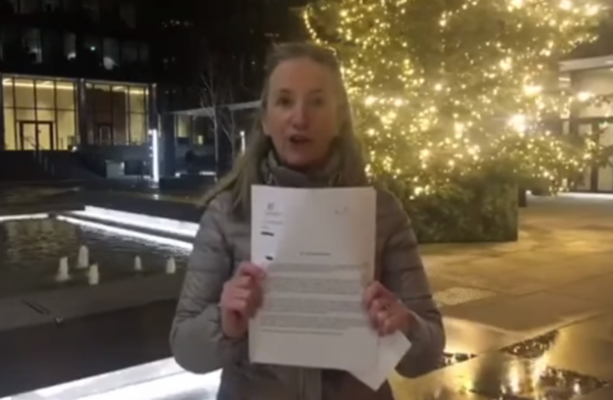
A FOI request to the HSE proved that Covid-19 does not exist
Publisher’s rating: False

Vídeo divulgado por Silas Malafaia mostra médico norte-americano defendendo o uso da ivermectina contra a covid-19
Publisher’s rating: ENGANOSO: Especialistas afirmam que as evidências apresentadas por um médico em vídeo compartilhado pelo pastor são insuficientes para promover o uso preventivo ou terapêutico da droga. Além disso, agências reguladoras dos Estados Unidos e do Brasil mantêm recomendações contrárias à aplicação do medicamento para tratar ou prevenir o novo coronavírus.
Eine Minderheit von Corona-Leugnern behauptet weiterhin fälschlicherweise, dass es das Virus Sars-CoV-2 nicht gebe. Nun verbreitet sich ein Video, in dem der Virologe Christian Drosten angeblich ebenfalls diesen Mythos geäußert haben soll. «Hört, hört «Die Krankheit existiert nicht»!», heißt es in einem Facebook-Beitrag, in dem ein Video-Podcast mit Drosten geteilt wird (hier archiviert, hier Video archiviert). «Warum die Lockdowns oder ist Drosten jetzt auch ein Verschwörungstheoretiker?», fragt der Facebook-Nutzer.
Publisher’s rating: Drostens Aussagen stammen aus einem Video-Podcast, der Anfang September 2020 entstand. Er bezog sich darauf, dass das Coronavirus damals in der Öffentlichkeit nicht so präsent war, da im Sommer in Deutschland kaum Menschen an Covid-19 starben. Das hat sich mittlerweile stark verändert. Es ist also irreführend, einen Bezug zum aktuellen Lockdown herzustellen, Drosten als Corona-Leugner darzustellen oder anzudeuten, er würde einen Betrug zugeben.
The Facebook post presents a clipped remark by virologist Christian Drosten—“the disease does not exist”—as if he were denying that SARS-CoV-2 exists or suggesting that lockdown measures were unjustified. The review traces the clip to Drosten’s appearance on the English-language video podcast *This Week in Virology* on 2 September 2020. It reports that the date is visible in the video’s subtitles, although the Facebook post omits that timing. In the discussion, the participants were talking about people underestimating the scale of the pandemic and losing confidence as case numbers rose without a comparable rise in deaths. The surrounding exchange clarifies what Drosten meant. A US virologist asked why the public in Germany was losing trust. Drosten replied that “the disease does not exist” and that there were no deaths, then described the contemporary pattern of rising incidence without a rise in deaths. The review says he was referring to the situation in Germany at that time, not denying the virus’s existence; it also notes that “no deaths” was an exaggerated formulation. Later in the discussion, Drosten warned that people who did not understand the details behind infection and disease figures might doubt the virus’s danger or existence. The review contrasts that early-September setting with the situation on 16 December 2020, when Germany’s reported seven-day incidence was 180 per 100,000, compared with 9.1 on 2 September. On 16 December, 27,728 new cases and 952 new deaths were reported, whereas on 2 September the figures were 1,256 new cases and 11 deaths. This chronology explains why using the old excerpt to characterize Drosten’s position on the later lockdown is misleading: the clip concerns a different point in the pandemic, and its edited presentation strips away the discussion that gives his words their meaning.