PeakMetrics / Fact Checks
Health & medicine fact checks
Explore claims publishers have checked about health & medicine. Read their original ratings and follow the evidence.
Search fact checks
Search by text or image13,674 published reviews in this topic

The WHO said a positive Covid-19 test result is more likely due to a cold
Publisher’s rating: False
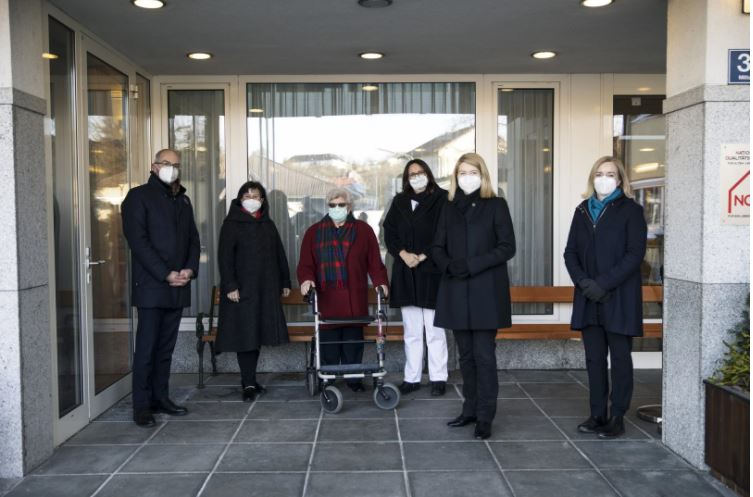
Nachdem das Personal des Alten- und Pflegeheims Sierning bei einer Versammlung gedroht hat, sich nicht impfen zu lassen, hat LH Thomas Stelzer mit Kündigungen gedroht.
Publisher’s rating: An dieser Geschichte ist nichts Wahres dran. Das teilten sowohl ein Pressesprecher von LH Stelzer als auch der Rechtsträger des Bezirksalten- und Pflegeheimes Sierning der APA auf Anfrage mit.
Seit Monaten ranken sich in den sozialen Medien zahlreiche Mythen und Falschbehauptungen um die in der Corona-Pandemie eingesetzten PCR-Tests. Derzeit wird etwa in einem oft geteilten Facebook-Posting (hier archiviert) behauptet, dass die Tests manipuliert seien. Bereits vor dem Test stünden die Ergebnisse fest. Als angebliches Beweisfoto wird ein Bild geteilt, das Verpackungen zeigt, auf denen teils «Negative Control» und teils «Positive Control» steht.
Publisher’s rating: Es handelt sich nicht um PCR-Tests, sondern um Kontrollabstriche von Antigentests. Mit diesen soll sichergestellt werden, dass der Test richtig funktioniert. Sie werden nicht bei Patiententests verwendet.
The post presented packaging marked “Negative Control” and “Positive Control” as evidence that PCR-test results were decided in advance. The investigation examined what the pictured items were, rather than treating the labels alone as proof of how patient testing worked. The packaging identified an Abbott “Covid-19 Ag Rapid Test Device”; the review notes that “Ag Rapid Test” means an antigen test, not a PCR test. Abbott identified the pictured product to the agency as its Panbio Covid-19 Ag rapid test. The review explains that the labelled wrappers held control swabs, not the test itself, and that a positive and a negative control swab came with each kit. Abbott said these controls were used to check that the test functioned properly and were not used as part of patient testing. That distinction undercuts the post’s inference: control materials supplied with a kit do not show that patients’ results were predetermined. The review also describes the purpose of the controls as set out in the instructions for use: checking that the reagents worked and the test was carried out correctly. The positive control was designed to produce a visible test line, while the negative control was expected to produce a negative result. Those expected outcomes concern quality control; the material provided does not show that the controls were patient samples or that patient results had been set in advance.
Zgłoszenie chęci szczepienia przeciw COVID-19 nie jest równoznaczne z rejestracją na szczepienie.
Publisher’s rating: Manipulacja
آنچه در برخی کشورهای همسایه در جریان است کارآزمایی بالینی است نه واکسیناسیون.
Publisher’s rating: نادرست

I don't know if members of the Presidential Security Group were, in fact, administered vaccines against COVID-19.
Publisher’s rating: Flip-flop
Siswi SD meninggal karena vaksin di tengah pandemi Covid-19
Publisher’s rating: Sesat
Am 6. Januar 2021 ist ein Feuerwehrmann aus Wasserburg am Inn während Aufräumarbeiten nach einem Verkehrsunfall zusammengebrochen und später im Krankenhaus verstorben. Nun werden in sozialen Medien Spekulationen über die Todesursache verbreitet. «Was nicht in dem Bericht erwähnt wird, ist, dass er aufgrund der Corona-Impfung verstorben sein soll», heißt es zum Beispiel in einem Post (hier archiviert). Dies gehe aus einem «Audio-Video» hervor. In einer im Post verlinkten Sprachnachricht behauptet eine unbekannte Frau: «Es ist jetzt so, dass sie das unter dem Tisch kehren wollen und nicht sagen wollen, dass er geimpft worden ist.»
Publisher’s rating: Eine Obduktion hat ergeben, dass der Mann an einem Herzinfarkt verstorben ist. Wegen der Sprachnachricht ermittelt die Polizei Oberbayern.
The post discussed in the review alleged that a firefighter who died after collapsing during work following a traffic accident had died because of a COVID-19 vaccination, and that this was being concealed. The specific case was a 59-year-old man who collapsed on 6 January 2021 and later died in hospital. The review reports that he had been vaccinated on 3 January because he worked at a clinic.
Hindi ko alam kung ang mga miyembro ng Presidential Security Group ay, sa katunayan, ay nag bakuna laban sa COVID-19.
Publisher’s rating: Flip-flop
Seit Beginn der weltweiten Impfkampagne gegen Sars-CoV-2 werden im Internet viele Behauptungen über die Impfstoffe verbreitet. In einem Video (hier archiviert) heißt es etwa, die Impfung könne bei Frauen zu Unfruchtbarkeit führen. Zudem könne der Impfstoff eine überspringende Immunreaktion auslösen - eine sogenannte vom Antikörper abhängende Verstärkung (ADE). Auch vor angeblichen Nebenwirkungen durch einen enthaltenen Wirkverstärker - Polyethylenglykol (PEG) - wird im Video gewarnt.
Publisher’s rating: Durch die Corona-Impfung angeregte Antikörper schädigen die Plazenta ebenso wenig wie eine durchlebte Infektion mit Covid-19, während der ebenfalls Antikörper gebildet werden. Diese führt laut Studien nicht zu einem erhöhten Anteil an Fehlgeburten oder anderen negativen Auswirkungen auf die Schwangerschaft. Eine ADE wurde für bei Menschen vorkommende Coronaviren bisher nicht nachgewiesen. Der Stoff PEG ist in vielen Medikamenten enthalten, bisher ist keine stark schädliche Wirkung bekannt.
The video makes three connected claims: that COVID-19 vaccination could cause infertility by prompting antibodies to attack a protein involved in placenta formation; that the vaccine could trigger antibody-dependent enhancement (ADE); and that PEG in the vaccine could cause harmful effects. The review examines the video’s argument about similarity between the coronavirus spike protein and Syncytin-1, which the video links to placenta formation. It reports that virologist and immunobiologist Lars Dölken found no special similarity between the proteins. The review explains that an antibody cross-reaction would require at least eight exactly matching amino acids on the proteins’ surfaces, in the same orientation and adjacent to one another; it says the matching section is too short to provoke that error in recognition. It also notes that the sequence-comparison method cited in the video is not suitable for predicting such a cross-reaction. The review also tests the infertility claim against evidence about infection, which also produces antibodies. It reports that studies of pregnant people with SARS-CoV-2 did not find an increased number of pregnancy terminations, whether infections were asymptomatic or symptomatic. Dölken’s stated reasoning is that if vaccination caused infertility, infection itself would be an especially relevant concern; the reported study findings did not show that outcome. On ADE, the review distinguishes reports involving other viruses from evidence about human coronaviruses: it says ADE had been documented for HIV and Ebola, but that a definitive demonstration for human coronaviruses had not been made. On PEG, it describes the substance as widely used in pharmaceutical and cosmetic products, while noting that possible reactions among people with PEG allergies were still being discussed and that PEG’s role in allergic reactions to the vaccine was not yet clear. Thus, the review does not treat every possible reaction as ruled out; it reports no established evidence for the video’s specific claims and flags the unresolved question about PEG.
Impfkritische Beiträge sind in den sozialen Medien keine Seltenheit. Oft verbreitet werden zum Beispiel Behauptungen, wonach Menschen mit Impfschäden oder Nebenwirkungen in Krankenhäusern behandelt werden würden. So heißt es etwa in einem Facebook-Posting (hier archiviert), dass in der Privatklinik Döbling bereits «die ersten Impfschäden bei Privatpatienten eingeliefert» worden seien. Ärzte hätten ihre Angestellten informiert, dass sie auf keine Impfung des Personals bestehen würden. «Zu viele Nebenwirkungen», heißt es. Auch im Spital in Tulln würde es Patienten mit «massiven Nebenwirkungen» geben.
Publisher’s rating: Das ist falsch. In der Privatklinik Döbling wurden keine Patientinnen und Patienten mit Impfschäden der Corona-Impfung oder einer anderen Impfung eingeliefert. Seitens der Klinik gibt es eine klare Empfehlung für die zugelassene Corona-Impfung. Auch im Universitätsklinikum Tulln gibt es keine Patientinnen und Patienten, die wegen Nebenwirkungen der Covid-19-Impfung behandelt werden.
Die Kontaktbeschränkungen und der Lockdown zur Eindämmung der Corona-Pandemie bedeuten für viele Menschen Einsamkeit und Existenzangst. Aber steigt auch die Zahl der Suizide? In einem Blogartikel (hier archiviert) wird behauptet, dass es dafür Belege gäbe. «Schlimmste Befürchtungen bestätigen sich: Immer mehr Selbstmorde unter Künstlern und Selbständigen», heißt es in der Überschrift des Textes. Angeblich habe eine Filmregisseur in der «Welt» von «reihenweise Selbstmorden» berichtet.
Publisher’s rating: Es gibt keine seriösen Belege für steigende Suizid-Zahlen. In dem genannten «Welt»-Artikel ist keine Rede von «reihenweise Selbstmorden».
The claim combines two assertions: that suicide deaths were increasing during the pandemic, and that a TV director’s Welt guest article documented “serial suicides” among artists. The review says neither assertion is established by the cited material. It reports that Germany’s National Suicide Prevention Program (Naspro) considered isolation, anxiety and financial losses potential risk factors, but its director, Barbara Schneider, said in June 2020 that the pandemic’s actual effect on the suicide rate could not then be reliably predicted. The review also describes Naspro’s March 2020 warning that predictions of a drastic increase lacked scientific basis. At the time of the review, the latest official figures available from Germany’s Federal Statistical Office were for 2019; 2020 figures were expected in September 2021. The review cautions that reports of individual apparent trends could not establish the overall picture. It notes that the blog itself acknowledged uncertainty about how many people the crisis had driven to suicide, but then speculated, without evidence, that the numbers “must exceed all dimensions.” To check the blog’s cited example, the review identifies the Welt article as a guest contribution by TV director Tom Bohn, published on January 8. Its account says Bohn described one acquaintance who reportedly died by suicide in late 2020 after mentioning financial anxiety related to a lack of work, and said five colleagues had told him about suicidal thoughts. The review characterizes this as Bohn’s account of distress in his personal circle—not documentation of numerous suicides or a claim that his account represented a wider trend.
In vielen Ländern lassen sich Politiker vor laufenden Kameras den Impfstoff gegen Sars-CoV-2 verabreichen - doch nicht jeder glaubt den Bildern. So wird zum Beispiel die Live-Impfung der gewählten US-Vizepräsidentin angezweifelt: «Kamala Harris hat sich "scheinimpfen" lassen», schreibt etwa ein User in einem Facebook-Posting mit dem Video der Impfung (hier archiviert). In einer Szene, die am Ende in Zeitlupe wiederholt wird, ist zu sehen, dass die Krankenschwester nach der Impfung die Spritze an der Armlehne des Sessels abstreift, woraufhin ein länglicher Aufsatz nach vorne klappt. Ein Beweis für eine «Scheinimpfung»?
Publisher’s rating: Der in dem Video zu sehende Aufsatz ist nichts Ungewöhnliches und schon gar kein Beweis für eine «Scheinimpfung». Es handelt sich dabei um eine Schutzvorrichtung, mit der verhindert werden soll, dass sich nach der Impfung jemand an der Spritze verletzt.
The claim concerns footage of Kamala Harris’s vaccination: a Facebook user argued that a syringe attachment seen folding forward after the nurse moved the syringe against the chair’s armrest showed Harris had been “fake vaccinated.” The review identifies the footage as Harris’s vaccination on December 29, 2020, at United Medical Center in Washington, and says US media documented the appointment. It also notes that Harris posted about the vaccination on her verified Twitter account. The review examined images of the syringe and the device’s function. It reports that the attachment is visible in a photo Harris posted, while a Getty Images press photo shows it folded away during the vaccination. The review also describes comparing the object with a safety needle shown on medical-device maker BD’s website, where the attachment is distinguishable from the needle itself. On that evidence, the visible attachment is a needle-safety mechanism, not evidence that no injection took place.
En Suisse, Belgique, ainsi qu'au Canada et en France, des affiches de prétendues institutions nommées « Considération Suisse » ou « Fédération Suisse de la Protection Vaccinale » sont propagées sur les réseaux sociaux. Sur ces affiches, des soi-disant médecins déconseillent la vaccination contre le coronavirus. (
Publisher’s rating: Ces affiches sont des détournements de la campagne de l'Office fédéral de la santé publique suisse (OFSP) pour encourager la vaccination contre le COVID-19. L'OFSP se distancie « avec force » du contenu du message. L'institution a saisi son service juridique pour évaluer les éventuelles suites à donner. Quant aux personnes représentées sur les posters, elles sont fictives.
The claim concerns posters circulated in Switzerland, Belgium, Canada and France that attributed anti-vaccination messages to supposed organizations including “Considération Suisse” and the “Fédération Suisse de la Protection Vaccinale.” The DPA investigation examined the posters’ design and the people shown on them, rather than treating them as authentic medical endorsements. It reports that the posters copied the format of Switzerland’s Federal Office of Public Health (OFSP) campaign, which encouraged vaccination. (S1: “Les affiches publiées sur Facebook reprennent le format de la campagne de l'OFSP.”) The investigation describes two posters featuring “Robert Findelman” and “Gisèle Werner,” with messages rejecting vaccination or the Pfizer vaccine. A small-print note on each identified the name as fictitious. The DPA says a reverse-image search matched the pictured people to Shutterstock stock-photo models, and reports that the two named organizations did not exist. Those checks support the conclusion that the posters were fabricated, not genuine materials from the named institutions or real doctors. (S1: “Un petit astérisque renvoie cependant au bas de l'affiche, à la mention « nom fictif ». Une recherche inversée d'image montre que les personnes apparaissant sur les affiches factices, sont des modèles pour des photos de la banque d'images Shutterstock.”; “De plus, les institutions « Fédération Suisse de la Protection Vaccinale » et « Considération Suisse » n'existent pas.”) The OFSP spokesperson said opponents of vaccination had appropriated the campaign’s subject to circulate a contrary message. The agency distanced itself from the content and referred the matter to its legal service to consider possible action. Thus, the posters’ imitation of an official campaign format should not be mistaken for OFSP approval or authorship. (S1: “Dans ce cas de figure, les opposants à la vaccination détournent le sujet actuel de la campagne de l'OFSP pour diffuser un point de vue contraire à celui de l’OFSP.”; “Celui-ci ajoute que l'OFSP aurait donc saisi son service juridique pour évaluer les éventuelles suites à donner.”)

சமூக வலைத்தளங்களில் வைரல் காணொலி ஒன்றில் தோன்றும் ஒரு நபர் “இது தான் உற்பத்தியில் உள்ள தடுப்பூசி... உங்கள் மூளையைக் கட்டுப்படுத்தக்கூடிய ஒரு விஷயத்தை இதில் வைக்க அவர்கள் விரும்புகிறார்கள். இது உங்கள் செயல்களைக் கட்டுப்படுத்தும். இதில் அவர்கள் ஒரு சின்னச் சிப்பை வைக்க விரும்புகிறார்கள்,
Publisher’s rating: FALSE
The viral video shows a man saying that a vaccine being produced would contain a small chip that could control people’s brains and actions. The post also presented him as Indian. Vishvas News’s investigation focused on that identification: it concluded that the man was Pakistani Islamic scholar Gauhar Nawaz, not an Indian. Its finding addresses who appears in the video; the excerpt does not report a scientific examination of whether vaccines contain chips. To identify the speaker, the investigators extracted screenshots from the video with the InVID tool and searched them using Google reverse image search. They say this led them to a report on the Pakistani site Urdu.siasat.pk that identified the man as Gauhar Nawaz and described him speaking at a mosque in Karachi. The review also reports finding a full version of the video uploaded to YouTube in May 2020, where the speaker was likewise identified as the Pakistani scholar. The review adds that Zakir Ahmad, identified as the general secretary of the All India Tanzim Ulama-e-Islam in Delhi, told Vishvas News that the man was Gauhar Nawaz and was not Indian. Taken together, the cited reporting, full-video identification and interview support the review’s conclusion about the speaker’s nationality. They do not, in the supplied excerpt, independently test the separate claim about vaccine contents.
Op Facebook gaat de claim rond dat je beter uit de buurt kan blijven van gevaccineerden. "Onderzoek toont aan dat juist gevaccineerden super spreaders zijn," zegt een Facebookgebruiker in zijn post. In de reacties onder het bericht deelt dezelfde man een artikel waarin het onderzoek staat beschreven dat deze bewering zou bewijzen.
Publisher’s rating: De bewering dat gevaccineerden superspreaders zijn klopt niet. Het onderzoek waar deze claim op is gebaseerd wordt verkeerd geïnterpreteerd, verklaart een van de auteurs van het onderzoek.
The Facebook post urged people to keep away from vaccinated people, claiming that research showed they were “super spreaders.” The article says the post relied on a January 2018 PNAS study of viral aerosols—small airborne droplets containing virus—from people who had flu. Some study participants had received a flu vaccine during that flu season or the previous one; the study reported an association between vaccination and emitting more small viral aerosols than average.
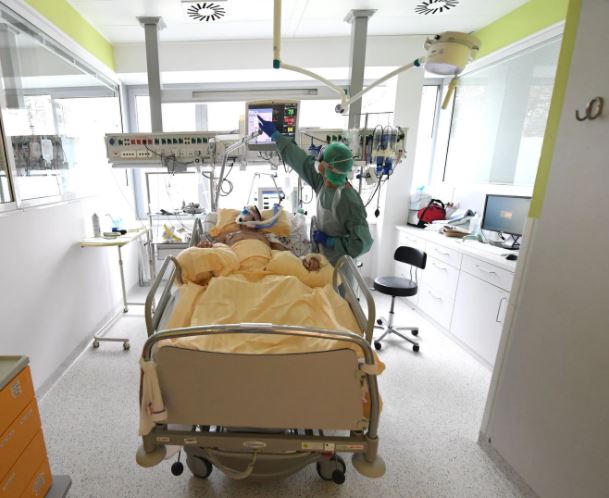
In die Privatklinik Döbling und ins Spital in Tulln wurden Menschen mit Impfschäden bzw. massiven Impf-Nebenwirkungen eingeliefert. In Döbling haben Ärzte ihre Angestellten informiert, dass sie aufgrund der vielen Nebenwirkungen auf keine Impfung des Personals bestehen.
Publisher’s rating: Das ist falsch. In der Privatklinik Döbling wurden keine Patientinnen und Patienten mit Impfschäden der Corona-Impfung oder einer anderen Impfung eingeliefert. Seitens der Klinik gibt es eine klare Empfehlung für die zugelassene Corona-Impfung. Auch im Universitätsklinikum Tulln gibt es keine Patientinnen und Patienten, die wegen Nebenwirkungen der Covid-19-Impfung behandelt werden.
بر اساس گزارش مرکز کنترل و پیشگیری بیماری آمریکا، ۳۱۵۰ پس از دریافت واکسن کووید۱۹ فلج شدهاند.
Publisher’s rating: شاخدار
Der Präsident des Robert Koch-Instituts, Lothar Wieler, soll sich angeblich über eine Verteilung von Impfdosen an verschiedene Gesellschaftsschichten geäußert haben. Auf Facebook verbreitet sich dazu derzeit ein Porträt von Lothar Wieler zusammen mit seiner Berufsbeschreibung und der Aussage: «Nach der Impfung der Unter- und Mittelschicht wird sich an den Nebenwirkungen und der Sterberate zeigen, ob der Impfstoff für die "obere" Gesellschaftsschicht geeignet ist oder nicht. Dies werden wir aber frühestens nach 5 bis 7 Jahren wissen.» (hier archiviert)
Publisher’s rating: Die Aussage stammt nicht von RKI-Präsident Wieler. Die Impfung gegen das Coronavirus wird anhand von Kriterien wie Alter, Vorerkrankungen oder Arbeit in einem medizinischen Beruf verteilt - nicht entlang bestimmter Gesellschaftsschichten.
The claim concerns a Facebook post showing Lothar Wieler’s portrait and job title alongside a statement that vaccination of lower- and middle-class people would reveal, after five to seven years, whether the vaccine was suitable for the “upper” class. The original investigation reports that the post supplied no source for the alleged quotation. The agency says it searched its own archive and Google but found no statement by Wieler that resembled it: “Der Facebook-Beitrag nennt keine Quelle für den angeblich zitierten Satz. Weder im Archiv der Meldungen der Deutschen Presse-Agentur (dpa), noch über eine Google-Suche ist eine Aussage von Lothar Wieler zu finden, die jener auf Facebook kursierenden auch nur ähnelt.” The investigation also sought a direct response from the Robert Koch Institute. The RKI told the agency that the quotation “nicht von Herrn Wieler” stammt. The review therefore says the sentence was likely fabricated, rather than reporting evidence that Wieler made it. It also distinguishes the alleged class-based allocation from the documented vaccination priorities: these were based on criteria including age, illness, and work in relevant occupations, with six priority groups. The review gives people over 80, care-home residents, and care staff as examples in the first group, and people aged 75–79 and residents and staff of certain facilities as examples in the second. As further context, the review recalls Wieler’s public comments at an information event in December 2020. It quotes him saying that control of the virus would depend on how quickly people took part in vaccination, and notes his emphasis on getting as many people vaccinated as possible. That account is consistent with the review’s description of prioritization by health and occupational criteria, not social class.