PeakMetrics / Fact Checks
Health & medicine fact checks
Explore claims publishers have checked about health & medicine. Read their original ratings and follow the evidence.
Search fact checks
Search by text or image13,674 published reviews in this topic
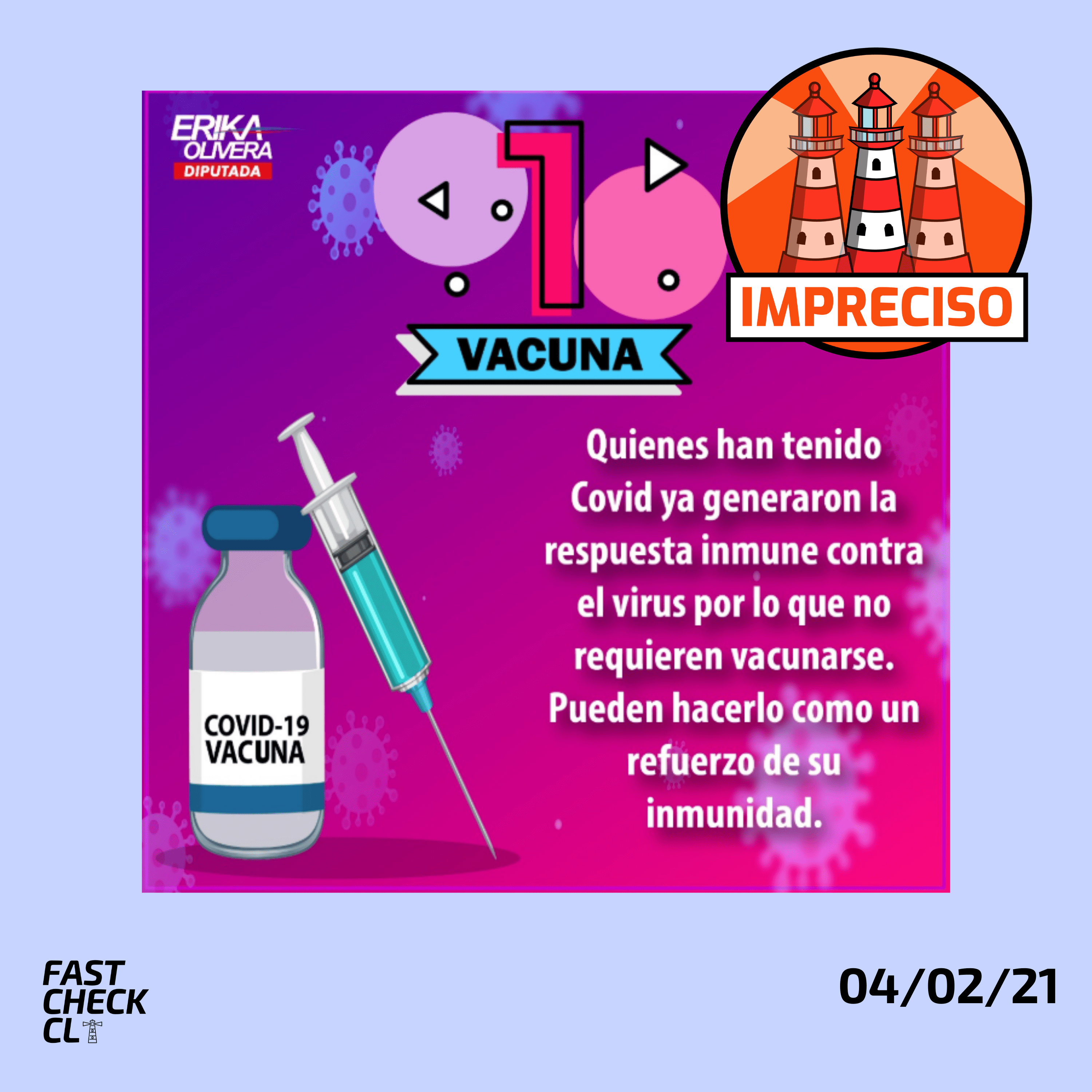
“QUIENES YA TUVIERON COVID YA GENERARON LA RESPUESTA INMUNE POR LO QUE NO REQUIEREN VACUNARSE”
Publisher’s rating: Impreciso
Rund um eine Veröffentlichung der Weltgesundheitsorganisation WHO zu den in der Corona-Pandemie eingesetzten PCR-Tests hat sich im Netz eine ganze Reihe von Behauptungen entsponnen. So schreibt ein Twitter-Nutzer, die WHO habe ihre Leitlinien für solche Tests geändert - ein positives Ergebnis soll demnach kein Hinweis mehr auf eine «COVID19-Infektion» sein. Auf einer Webseite heißt es, die WHO halte die Tests nun immer dann für nutzlos, wenn ein Getesteter keine Symptome zeigt. An anderer Stelle wird behauptet: «WHO warnt vor Unzuverlässigkeit von PCR-Test». Was ist an den Behauptungen dran?
Publisher’s rating: Wie die WHO auf Anfrage mitteilte, hält sie PCR-Tests nach wie vor für ein «hochverlässliches Instrument zur Diagnose von Covid-19». Dass die Veröffentlichung eine grundlegende Änderung der WHO-Einschätzung zu PCR-Tests darstellt, stimmt nicht. Hintergrund sind einer Sprecherin zufolge zehn Berichte über Probleme mit Tests, die die WHO seit Beginn der Pandemie erreicht haben.
Inilunsad din ng mga bansa sa ASEAN ang mga programa sa pagbabakuna.
Publisher’s rating: Kailangan ng Konteksto
Seit Beginn der weltweiten Impfkampagne gegen Sars-CoV-2 werden im Internet viele Behauptungen über Impfungen verbreitet. So heißt es in einem Facebook-Post (archiviert), bei Mitarbeitern der Kinderstation des Universitätsklinikum Mannheim habe es heftige Nebenwirkungen gegeben, nachdem sie geimpft wurden. Gemeint ist offenbar die Impfung gegen Covid-19. Von den insgesamt 80 Beschäftigten hätten diejenigen 75, die die erste Impfdosis erhielten, über Nebenwirkungen geklagt. Alle 30, die auch schon die zweite Dosis erhalten hätten, litten demnach unter teils heftigen Nebenwirkungen und seien krankgeschrieben. Auf der Station sei «Land unter». Die Informationen sollen auf eine «Bald-Schwägerin» zurückgehen.
Publisher’s rating: Das Universitätsklinikum hat die Behauptungen zurückgewiesen. Es habe keine schwerwiegenden Impfreaktionen gegeben. Der Betrieb laufe völlig normal.
The Facebook post alleged that vaccination had left staff at the University Hospital Mannheim children’s station with severe side effects and sick leave. It said 75 of 80 employees had received a first dose, and that all 30 who had also received a second dose were suffering sometimes severe effects. The post attributed its information to a “Bald-Schwägerin.” The review reports that the hospital rejected the claims in statements on Facebook and its website, and that more than 100 employees of the children’s centre had been vaccinated. (The review does not establish that the post’s specific staff counts are accurate.) The hospital’s website statement said that no unexpected effects, particularly no serious reactions, had occurred in vaccinations carried out there. A hospital spokesperson did report temporary reactions among a few employees who had received a second dose, including injection-site pain, headache, fatigue or fever. The review therefore distinguishes those limited, temporary reactions from the post’s account of widespread severe effects and sick leave. The hospital said the number of employees on sick leave, whether vaccinated or not, was at a normal level, and that the children’s centre was operating normally. It also clarified that the centre comprised three clinics, so there was no single “children’s station” matching the post’s description. The review states that only the BioNTech/Pfizer vaccine had been used at the hospital at that point.
Tomato virus is affecting humans. More deadly than Coronavirus
Publisher’s rating: False

People who recovered from COVID-19 "don’t seem to be at risk of reinfection and natural immunization is better than artificial immunization," meaning vaccination.
Publisher’s rating: Misleading
The review examines statements by conservative commentator Liz Wheeler in a video titled “Fauci lied to you AGAIN.” In the portion at issue, Wheeler questioned vaccinating people who had recovered from COVID-19, cited a study of health care workers, and argued that recovered people did not seem at risk of reinfection and that natural immunity was better than vaccination. The review explains that the study followed 12,541 health care workers for 31 weeks, but that figure did not represent 12,541 previously infected people: only 1,265 tested positive on an antibody test suggesting prior infection. Two of those 1,265 subsequently tested positive for the virus by PCR. The review accepts that reinfection appeared uncommon in the cited study, but distinguishes that finding from Wheeler’s broader conclusion. It says prior infection likely provides some immunity for a time and that people previously infected were not at high risk of becoming reinfected soon. However, it also notes that researchers had not established COVID-19 correlates of immunity or how long immunity would last. The excerpt says it was not yet known how vaccine-induced immunity compared with immunity from infection, while initial signs suggested vaccines produced higher levels of infection-blocking neutralizing antibodies in some comparisons. The review’s central qualification is that evidence of immunity after infection does not make infection the better route: contracting COVID-19 carries inherent risk, whereas vaccination is safer. It also reports that CDC guidance called for offering vaccination regardless of prior infection, while recognizing that people infected in the preceding three months could reasonably choose to delay vaccination when supply was limited. Thus, the review challenges both the certainty of the claim about reinfection and the inference that natural infection was preferable to vaccination.
"And now, nine months into COVID-19, zero empirical evidence that lockdowns work to stop the virus."
Publisher’s rating: False

Datas da vacinação em SP Entre 75 anos ou mais, 8/2 a 1/3 Entre 70 e 74 anos, 15/2 a 10/3 Entre 65 a 69 anos, 22/2 a 30/3
Publisher’s rating: Falso
Seit dem 25. Jänner 2021 müssen in Österreich statt einem einfachen Mund-Nasen-Schutz (MNS) verpflichtend FFP2-Masken im Handel oder in öffentlichen Verkehrsmitteln getragen werden. Das ruft in den sozialen Medien viele Kritiker auf den Plan. Einige verbreiten falsche oder irreführende Informationen. Derzeit wird etwa ein Facebook-Posting (hier archiviert) verbreitet, in dem behauptet wird, das Tragen von Mund- und Nasen-Bedeckungen habe auf das Infektionsgeschehen gar keinen Einfluss. FFP2-Masken machten zudem krank, heißt es. Masken-Hersteller und das Robert Koch-Institut (RKI) warnten «ausdrücklich vor Gesundheitsrisiken», heißt es im Posting.
Publisher’s rating: Zahlreiche Studien belegen die Wirksamkeit von Masken in der Corona-Pandemie. Laut Robert Koch-Institut (RKI) können beim Gebrauch von FFP2-Masken gesundheitliche Probleme bei bestimmten Gruppen derzeit nicht ausgeschlossen werden, da es noch keine ausreichende Datengrundlage gibt. Einer im deutschen Ärzteblatt publizierten Studie zufolge sind Gesundheitsrisiken durch das längerfristige Tragen von FFP2-Masken aber eher unwahrscheinlich. Untersuchungen außerhalb des Gesundheitswesens gibt es zu dem Thema noch nicht.

«In altri Paesi, in cui si è votato obbligatoriamente perché erano scadute le legislature dei Parlamenti o i mandati dei presidenti, si è verificato un grave aumento dei contagi»
Publisher’s rating: C'eri quasi
The claim concerns Sergio Mattarella’s February 2, 2021 statement that countries which held elections after parliamentary or presidential mandates expired had seen a serious increase in infections. Pagella Politica compared reported daily COVID-19 cases around elections in several countries, looking from two weeks before voting through one month after the polls closed. The review found increases in most of the countries it analyzed, but also a counterexample: Romania recorded a decline after its December 6, 2020 vote. The figures varied considerably. In the United States, daily cases rose from about 61,000 on October 20, 2020, to nearly 100,000 on Election Day, November 3, and more than 180,000 a month later. The review notes that the U.S. rise had begun by early September, before the election period. Across its country comparisons, it reports that cases tripled in the United States, nearly doubled in Poland, rose more than sixfold in Serbia and the Czech Republic, and increased more than twentyfold in Lithuania. Portugal had a more limited increase, though the full month after its vote had not yet elapsed. The evidence supports the observation that infections increased substantially after voting in many of the countries examined, but it does not establish that the elections caused those increases. The review says the trends could reflect other factors, points out that infection curves were already rising before some votes, and notes both differences in viral circulation and countries’ testing capacity. Its conclusion is therefore qualified: the post-election increases were real in many cases, but the causal link implied by the claim was not demonstrated, and Romania provides an exception.
Müssen staatliche Corona-Maßnahmen wie Quarantäneanordnungen, Kontaktbeschränkungen und andere Grundrechtseinschränkungen zurückgenommen werden? Ja, argumentiert ein Artikel auf dem Polit-Blog «Achgut.com» (hier archiviert) unter der Überschrift «WHO beendet Epidemische Lage von Nationaler Tragweite»: Die Weltgesundheitsorganisation WHO habe ihre Einschätzungen zu PCR-Tests verändert. Der staatliche Infektionsschutz habe damit keine Grundlage mehr. «Ein pflichtgemäß handelnder Deutscher Bundestag hat daher umgehend (...) das sofortige Ende einer epidemischen Lage von nationaler Tragweite festzustellen.»
Publisher’s rating: Bei der zitierten Veröffentlichung der WHO handelt es sich um eine Empfehlung für Laborpersonal zum Umgang mit PCR-Tests, welche die UN-Organisation weiterhin als «hochverlässliches Instrument» zur Covid-Diagnose betrachtet. Ihre Einschätzung zur «gesundheitlichen Notlage von internationaler Tragweite» in Bezug auf das Coronavirus hat die WHO nicht zurückgenommen. Zudem hat der Bundestag auch unabhängig davon die Möglichkeit, eine epidemische Lage von nationaler Tragweite festzustellen.

la gripe mató a 665,000 personas el año pasado en EEUU
Publisher’s rating: Falso
Nachdem die Zahlen der Corona-Infizierten in Deutschland in Winter anstiegen, wurden im Januar 2021 viele Maßnahmen verschärft. So ist in Bayern das Tragen von FFP2-Masken zur Pflicht im Einzelhandel und öffentlichen Nahverkehr geworden. Aber kann man daraus ableiten, dass die bis zu diesem Zeitpunkt geltenden Maßnahmen wirkungslos waren? In einem auf Facebook kursierenden Sharepic werden Angela Merkel und Markus Söder vermeintliche Aussagen in den Mund gelegt. So stellt die Bundeskanzlerin auf dem Bild zum Beispiel fest: «Du sagst ja damit implizit, dass alle Masken vorher sinnfrei waren ...?!» Auch wird behauptet, während der Corona-Pandemie habe es keine Übersterblichkeit gegeben. (hier archiviert)
Publisher’s rating: Das Tragen eines einfachen Mund-Nasen-Schutzes kann das Infektionsrisiko senken. Schon vorläufige Daten zeigen, dass es in Deutschland wegen der Corona-Pandemie Phasen von Übersterblichkeit gab.
The review concerns a Facebook image that attributed remarks to Angela Merkel and Markus Söder, including Merkel’s suggestion that requiring FFP2 masks implied earlier masks had been pointless. It also challenged the image’s assertion that there had been no excess mortality during the pandemic. The article describes these as claims circulating in a sharepic; the supplied text does not explain how the image or the attributed quotations were authenticated. On masks, the review distinguishes the higher protection associated with FFP2 masks from the potential protective effect of ordinary face coverings. It says Bavaria had required FFP2 masks in shops and public transport since mid-January 2021, citing the regulation’s stated rationale that they offer greater protection and better self-protection against virus-containing aerosols. But the review also points to a Canadian study reporting reduced infection risk when people who were infected wore ordinary masks, and notes that Germany’s Federal Institute for Drugs and Medical Devices had made a similar point in January 2021. Thus, the new FFP2 requirement alone does not establish that earlier masks were ineffective. For mortality, the review cites preliminary figures from Germany’s Federal Statistical Office showing periods when deaths exceeded the 2016–2019 comparison average. It reports elevated figures in October, November and December 2020, as well as periods in March and April 2020. Its example for calendar week 52 is approximately 31 percent above the average for the corresponding period in 2016–2019. That evidence directly contradicts the sharepic’s categorical assertion that there had been no excess mortality, while the article’s wording limits the conclusion to particular periods and preliminary data.
Eine Videobotschaft des deutschen Mikrobiologen Sucharit Bhakdi an Demonstrationsteilnehmer in der österreichischen Hauptstadt Wien wird auch auf Facebook viel geteilt (hier archiviert). Bhakdi stellt in dem Video diverse Behauptungen zum Coronavirus auf: Es sei zum Beispiel «unwahr, dass die Pandemie noch da ist». Die WHO habe ihre Definition von Corona-Infektionen geändert und es gebe keine Ansteckungen durch sogenannte asymptomatische Infizierte, die keine Symptome entwickeln. Durch Impfungen gegen Covid-19 seien Menschen gestorben.
Publisher’s rating: Die Aussagen sind falsch oder unbelegt: Die WHO setzt weiter auf PCR-Tests und nutzt die so ermittelten Fallzahlen. Studien betonen die Gefahr der Ansteckung durch asymptomatische Infizierte. Über Tote durch Impfungen gibt es keine glaubhaften Berichte.
The review examines a Facebook video message by German microbiologist Sucharit Bhakdi to demonstrators in Vienna. It says he claimed that the pandemic was no longer present, that the WHO had changed its definition of Covid-19 cases, that people without symptoms could not transmit the disease, and that people had died because of vaccination. The review assesses these claims separately, distinguishing what the WHO guidance said from Bhakdi’s interpretation of it. [S1: “Eine Videobotschaft des deutschen Mikrobiologen Sucharit Bhakdi an Demonstrationsteilnehmer in der österreichischen Hauptstadt Wien wird auch auf Facebook viel geteilt (hier archiviert). Bhakdi stellt in dem Video diverse Behauptungen zum Coronavirus auf: Es sei zum Beispiel «unwahr, dass die Pandemie noch da ist». Die WHO habe ihre Definition von Corona-Infektionen geändert und es gebe keine Ansteckungen durch sogenannte asymptomatische Infizierte, die keine Symptome entwickeln. Durch Impfungen gegen Covid-19 seien Menschen gestorben.”] On the WHO claim, the review describes a 20 January 2021 information notice for laboratory users. It says the notice advised following PCR-test instructions, interpreting cycle-threshold values in relation to viral load, and considering symptoms and other factors when diagnosing Covid-19. The review reports that the WHO affirmed properly used PCR tests were a highly reliable diagnostic tool. It also says the notice discussed reports of tests being used incorrectly, including with improperly applied cycle thresholds, but did not indicate widespread false results or reduced reliability. The WHO dashboard continued to publish infection figures largely identified by PCR testing. [S1: “An diesem Tag hatte die WHO eine Informationsnotiz veröffentlicht, die sich an Laborpersonal richtet und anmahnt, bei den in der Corona-Pandemie zur Diagnostik eingesetzten PCR-Tests genau die Gebrauchsanweisungen zu beachten.”] [S1: “Wir möchten bekräftigen, dass wir ordnungsgemäß verwendete PCR-Tests für ein hochverlässliches Instrument zur Diagnose von Covid-19 halten”] [S1: “Hinweise auf massenhaft falsche Testergebnisse oder eine verringerte Aussagekraft der PCR-Methode enthält die Notiz hingegen nicht.”] On transmission, the review notes that studies did not provide a single conclusive answer: it describes a Wuhan study that found no evidence of transmission from positive-tested people without symptoms to traceable close contacts, and a CDC study published in early January 2021 that estimated some people who never developed symptoms could still be infectious. The review also distinguishes these cases from people who transmit the virus before developing symptoms. On vaccination deaths, it reports that Bhakdi named no specific cases and that, among the cases the review team had investigated by 3 February 2021, no authority had confirmed a Covid-19 vaccination as the cause of death. [S1: “Denn es gibt dazu keinen abschließenden Stand, sondern sich widersprechende Studien.”] [S1: “Eine Anfang Januar 2021 veröffentlichte Studie der US-Seuchenschutzbehörde CDC hingegen kommt zu dem Ergebnis, dass 30 Prozent aller Infizierten zwar keinerlei Symptome entwickeln, aber dennoch ansteckend sein können.”] [S1: “Unter allen Fällen, denen dpa-Faktencheck bis zum 3. Februar 2021 nachgegangen ist, gibt es jedoch keinen, bei dem Behörden eine Corona-Impfung als Todesursache hätten bestätigen können”]
«La legge 194 stabilisce che la pratica dell’aborto deve necessariamente esser fatta in ospedale e non certo in consultorio»
Publisher’s rating: Pinocchio andante

The COVID-19 vaccine is an "experimental biological agent" that the government is pushing "heavily on Blacks and browns."
Publisher’s rating: Distorts the Facts
"If you take the [COVID-19] vaccine. ... It means you've enrolled yourself in a medical trial."
Publisher’s rating: False

Kasus Covid-19 terus meningkat karena urutan genetik virus Corona penyebabnya, SARS-CoV-2, sama dengan manusia
Publisher’s rating: Keliru