PeakMetrics / Fact Checks
Health & medicine fact checks
Explore claims publishers have checked about health & medicine. Read their original ratings and follow the evidence.
Search fact checks
Search by text or image13,674 published reviews in this topic
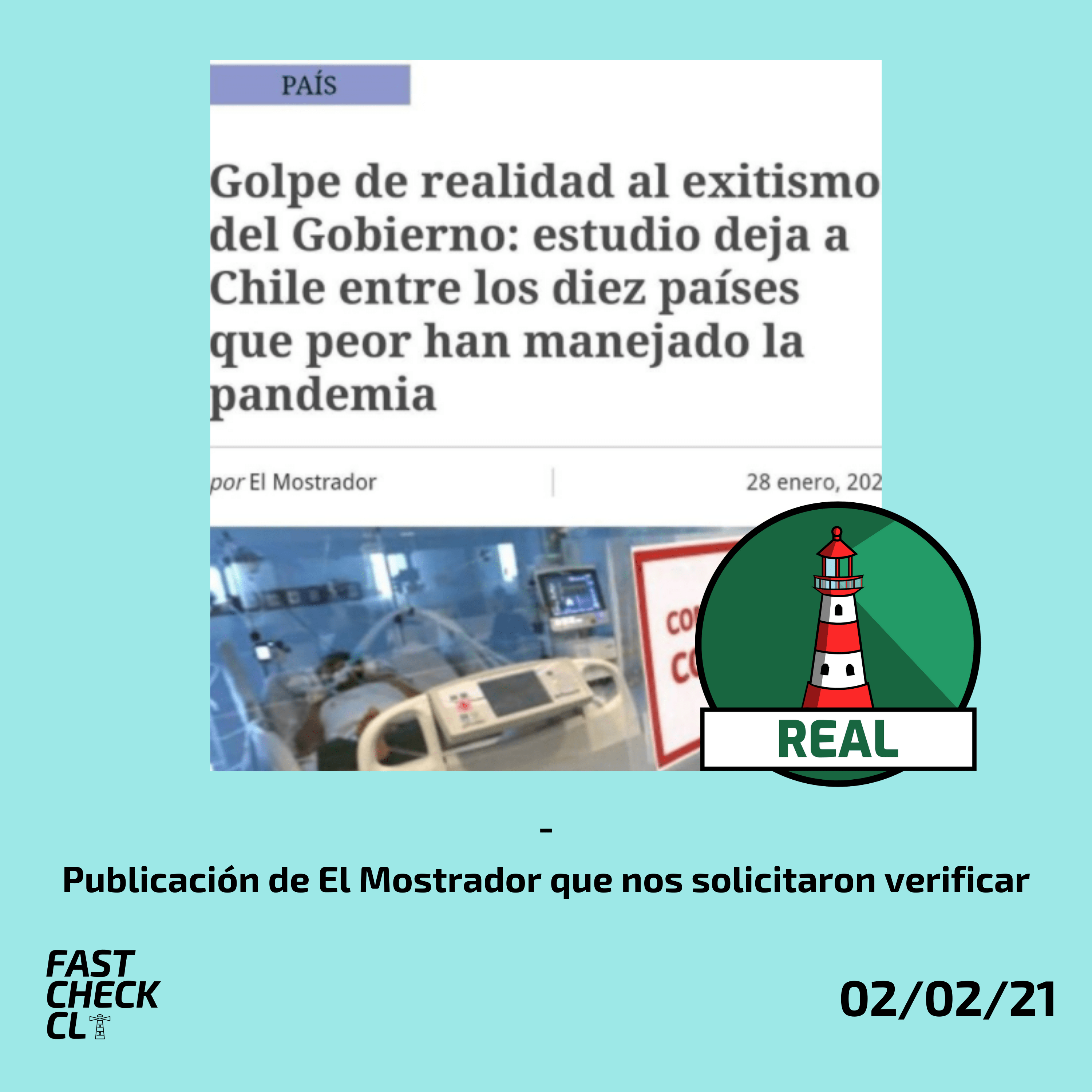
“ESTUDIO DEJA A CHILE ENTRE LOS DIEZ PAÍSES QUE PEOR HAN MANEJADO LA PANDEMIA”
Publisher’s rating: Real
Das Malaria-Medikament Hydroxychloroquin gilt als umstritten. Während der ehemalige US-Präsident Donald Trump es zur Behandlung von Covid-19-Patienten vorschlug, nahm die zuständige US-Behörde, ihre Notfallgenehmigung für einen solchen Einsatz wieder zurück. Nun behaupten Nutzer auf Facebook (hier archiviert): In den USA empfehle inzwischen ein angesehenes wissenschaftliches Fachmagazin das Medikament.
Publisher’s rating: Es gibt keine Empfehlung des «American Journal of Medicine» (AJM), wie der Chefredakteur betont. Einer der Fachartikel weist zwar tatsächlich auf positive Effekte von Hydroxychloroquin hin. Im «AJM» sind aber genauso auch schon gegenteilige Bewertungen erschienen, die etwa auf schwere Nebenwirkungen aufmerksam machen. Dem Magazin zufolge handelt es sich bei den Veröffentlichungen um eine Darstellung der wissenschaftlichen Auseinandersetzung.

థాయిలాండ్ ఆరోగ్య మంత్రి కోవిడ్-19 వాక్సిన్ తీసుకోవడానికి బయపడుతున్న దృశ్యాలు
Publisher’s rating: FALSE
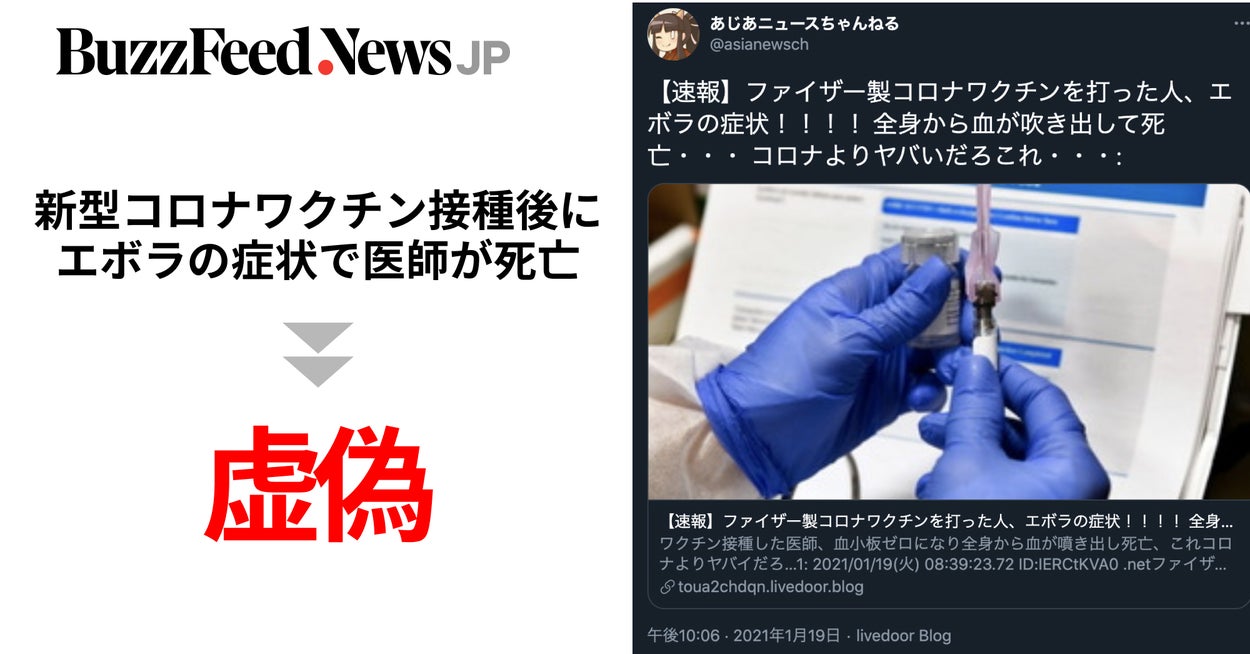
コロナワクチン接種の医師「全身から出血で死亡」
Publisher’s rating: 虚偽
The review examines a viral account that a 56-year-old Florida obstetrician died after receiving Pfizer’s COVID-19 vaccine, supposedly with Ebola-like symptoms and blood coming from his whole body. It reports that the physician’s wife posted about his death on Facebook, after which media coverage spread the story. The review traces the amplified wording to a Japanese aggregation site that cited South Korean newspaper reporting and added sensational claims. The review says the physician did not die of Ebola-like symptoms or whole-body bleeding. It identifies the reported cause of death as brain hemorrhage associated with immune thrombocytopenia (ITP), a condition involving low platelet counts. According to the account described in the review, he developed ITP three days after vaccination and died 16 days later. The review notes that the cited South Korean report did not mention “Ebola” or “bleeding throughout the body”; it says “Ebola” came from a 5channel comment and that the whole-body-bleeding claim was absent even from the comments compiled by the aggregation site. The review distinguishes the sequence of events from evidence of causation. It reports that Pfizer said it was investigating and did not consider a causal relationship established, and that a specialist interviewed by the outlet said the available data were insufficient to determine whether vaccination caused the death. Thus, the reported timing after vaccination was not, by itself, evidence that the vaccine caused the death or that the viral description of the symptoms was accurate.

¿Fauci dijo que la vacuna no protege contra el covid-19?
Publisher’s rating: Falso

Video of the Thailand Health Minister while taking COVID-19 vaccine
Publisher’s rating: FALSE
The claim concerns a video circulated as showing Thailand’s Health Minister, Anutin Charnvirakul, taking a COVID-19 vaccine. FACTLY reports that the person shown crying during an injection is not Charnvirakul, and that the video predates the COVID-19 vaccination claim. The review says the footage instead shows a Chinese man afraid of receiving an injection.

“CARVATIVIR NEUTRALIZA EL 100% DEL CORONAVIRUS”
Publisher’s rating: Engañoso

La vacuna contra el covid-19 te hace gay
Publisher’s rating: Falso

123 countries have ordered COVID-19 vaccine from the Bharath Biotech
Publisher’s rating: MISLEADING
The post claimed that 123 countries had ordered Bharat Biotech’s COVID-19 vaccine, COVAXIN. The review distinguishes that claim from the company’s broader statement about its vaccines: “We have been at the forefront in delivering >4 billion doses of vaccines to 123 countries”. The review says that figure concerns the reach of all Bharat Biotech vaccines, not orders for COVAXIN. To check the order claim, the review reports searching for credible data showing orders from 123 countries and finding none. It also examined what Bharat Biotech said about COVAXIN. According to the review, the company said it had been approached by several countries for procurement, which is not evidence that those countries had placed orders. The review points to the company’s “Global Acceptance of COVAXIN” information, which listed planned government-to-government supplies to Mongolia, Myanmar, Sri Lanka, the Philippines, Bahrain, Oman, Maldives and Mauritius. It also cites a company announcement of an agreement with Brazil’s Precisa Medicamentos for COVAXIN supply. These specific references do not establish orders from 123 countries; the review’s central distinction is between the worldwide reach of the company’s vaccine portfolio and procurement of this particular COVID-19 vaccine.
Die ARD soll angeblich ein Videointerview mit Ugur Sahin zum Impfstoff von Biontech aus der Mediathek entfernt haben. Das Interview wurde in der Tagesschau am 21. Dezember 2020 ausgestrahlt. «Tagesschau löscht das Interview mit Professor Ugur Shahin (Vorstandsvorsitzender von BioNTec)», steht auf einem Bild, das sich auf Facebook verbreitet (hier archiviert). In dem angeblich gelöschten Video soll Sahin gesagt haben, dass er seine Mitarbeiter nicht impfen lasse, damit sie nicht ausfielen.
Publisher’s rating: Das Video des Interviews mit Biontech-Chef Ugur Sahin ist weiter online auf der «Tagesschau»-Seite und beim Südwestrundfunk (SWR) verfügbar. Sahin hat in dem Interview das Gegenteil des Behaupteten gesagt: Er würde sich und seine Mitarbeiter gerne so bald wie möglich impfen lassen.
The claim concerned a Facebook image alleging that Tagesschau had deleted an interview with BioNTech CEO Ugur Sahin and that he said he would not vaccinate his employees for fear they would be absent. The interview was conducted by SWR on 21 December 2020 and was also broadcast in ARD-extra. The review reports that the image referred to a Tagesschau item titled “Ugur Sahin, Vorstandsvorsitzender Biontech, zum Impfstart in Deutschland.” The review checked the linked Tagesschau page against an archived version from 21 December, which showed Sahin’s interview at that URL. Although the link later displayed an error, the review explains that this was due to time limits on the online availability of some public-broadcaster content under broadcasting rules—not evidence that the interview had been removed everywhere. A shorter version remained on another Tagesschau page, while the full interview and transcript were available on SWR’s site. On the vaccination allegation, the review says Sahin stated in the SWR interview that he himself would gladly be vaccinated. It also reports that he considered employee protection relevant because BioNTech was expected to produce 1.3 billion vaccine doses over the coming 12 months, while the legal basis for vaccinating employees had not yet been clarified. BioNTech told dpa that the concern about staff absences referred to employees missing work because of Covid-19 and slowing production—not to avoiding vaccination.
Impf-Gegner werden nicht müde, auf vermeintliche Todesfälle zu verweisen, die im Zusammenhang mit einer Corona-Impfung gestorben sein sollen. Dieses Mal jemand im burgenländischen Oberpullendorf nach der Impfung gestorben sein, behauptet ein User. In seinem Posting (hier archiviert) heißt es: «Oberpullendorf. Rettungssanitäter 37j. nach Impfung tot! 2 kleine Kinder und Frau trauern»
Publisher’s rating: Ende Jänner verstarb zwar ein junger Rettungssanitäter in Oberpullendorf, allerdings war er laut Rotem Kreuz nicht geimpft worden.
The post claimed that a 37-year-old rescue worker in Oberpullendorf had died after a COVID-19 vaccination, leaving two young children and a wife. The review found that a rescue worker had indeed died in the district, but that the post misstated key details about him and the circumstances. The death was in Landsee, in the Oberpullendorf district, and the man was 33—not 37. He left a three-year-old daughter and a pregnant wife, rather than two young children. To investigate, the review searched for articles using the terms “Rettungssanitäter” and “Oberpullendorf” and found reports about the death in the Kronen Zeitung, BVZ and meinbezirk.at. It then asked a spokesperson for the Burgenland branch of the Austrian Red Cross about the vaccination allegation. According to the review, the spokesperson said the deceased had not been vaccinated against coronavirus, based on information from his local service and his wife. That account directly contradicts the post’s assertion that he died after a vaccination. The Red Cross spokesperson also said the post was already known to the organisation and the family when asked about it, and described it as false and disrespectful. The evidence reported in the review therefore distinguishes a real death from the post’s inaccurate age, family details and alleged connection to vaccination.
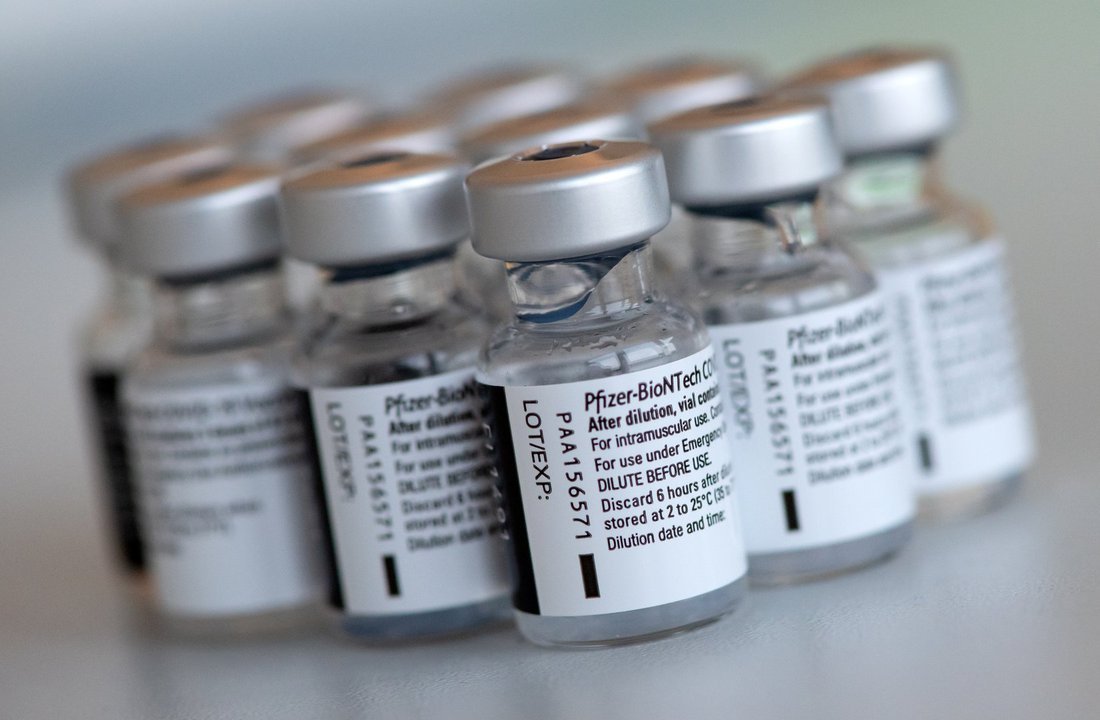
Ein 37-jähriger Rettungssanitäter ist in Oberpullendorf nach einer Impfung gestorben.
Publisher’s rating: Es gibt keine Hinweise, dass der Todesfall eines jungen Rettungssanitäters in Oberpullendorf etwas mit einer Impfung zu tun hat. Laut Rotem Kreuz war der Mann gar nicht gegen das Coronavirus geimpft worden.
The claim concerned a Facebook post alleging that a 37-year-old rescue worker from Oberpullendorf, in Burgenland, died after receiving a coronavirus vaccine. The investigation traced the post’s apparent subject to news reports about the death of a rescue worker in Landsee, within the Oberpullendorf district. It found that the man had not been vaccinated, so the central claim that his death followed a vaccination did not fit the reported facts. The decisive evidence came from a spokesperson for the Burgenland branch of the Austrian Red Cross, who told APA that the man had not received a coronavirus vaccination. The spokesperson said both the man’s service station and his wife would confirm this. The review also compared details in the post with the news reports: those reports identified the deceased as 33, not 37, and said he left a three-year-old daughter and a pregnant wife, rather than two young children. The review therefore found that key details of the post were inaccurate as well as its implication of a vaccination-related death.
Auch Monate nach Ausbruch des Coronavirus bezweifeln einige Internet-Nutzer, dass es überhaupt eine Pandemie gibt bzw. relativieren sie. Derzeit wird etwa in einem Facebook-Beitrag (hier archiviert) behauptet, dass es in Deutschland im Jahr 2020 eine Untersterblichkeit gab. 2020 sollen 904 270 Menschen gestorben sein und damit weniger als jeweils in den fünf Jahren davor. «Wie kann es sein das bei einer Pandemie in Deutschland gesamt weniger Menschen sterben als vorher?», heißt es in dem Beitrag. Als Quelle führt der User das Statistische Bundesamt an. Der angegebene Link führt aber ins Leere.
Publisher’s rating: Einige der Zahlen und die genannten Behauptungen sind falsch. Vorläufige Daten deuten auf eine Übersterblichkeit hin - vor allem wegen der Corona-Pandemie.
The review examined a Facebook post claiming that 904,270 people died in Germany in 2020—fewer than in each of the preceding five years—and asking how that could happen during a pandemic. The post attributed the figure to Germany’s Federal Statistical Office, but its linked source did not work. The review compared the post’s claim with the office’s then-available provisional figures and said no definitive full-year 2020 total had yet been published as of January 14, 2021. The figures available by then did not support the post’s total. By January 8, the office’s count showed 921,989 deaths through calendar week 50, even though roughly two and a half weeks remained in the year. On January 12, the office estimated at least 980,000 deaths for 2020, compared with nearly 940,000 in 2019, and said deaths had risen noticeably. The review reported that this estimate was above the levels for 2015–2019, rather than below them as the post suggested. It also noted that the post gave incorrect figures for 2016 and 2017, referring readers to the office’s data table. The review further examined weekly death figures, comparing them with previous years. It reported elevated deaths during the first wave and again from mid-October as the second wave grew. For example, deaths in calendar week 15 were 14 percent above the four-year average; in week 50, they were about 23 percent above the 2016–2019 average. These weekly comparisons, alongside the provisional annual estimate, contradict the post’s claim that the cited 904,270 deaths demonstrated lower mortality in 2020.
In Gibraltar zouden sinds het begin van de vaccinaties tegen COVID-19 op 10 januari 2021 al 53 mensen overleden zijn. Dat terwijl er voor men begon te vaccineren in totaal slechts 10 mensen zijn overleden aan COVID-19 in het Britse overzees gebied. Dat wordt beweerd op sociale media, eerst in het Verenigd Koninkrijk en nu ook in de Europese Unie, waaronder
Publisher’s rating: De beweringen zijn fout. Het klopt niet dat er 53 mensen overleden zijn sinds de vaccinaties van start gingen op 10 januari. Er zijn 6 van de ruim 11.000 gevaccineerden overleden in Gibraltar, maar er is geen bewijs dat de vaccinatie hun dood veroorzaakte.
Een Facebookgebruiker deelt twee afbeeldingen: een ingrediëntenlijst van het Moderna-vaccin tegen COVID-19 en een productbeschrijving van de stof ‘sn-glycero-3-phosphocholine’. De tekst "Waarschuwing: dit product is niet voor menselijk of dierlijk gebruik" is omcirkeld. De man deelt ook een link naar een beoordeling van de stof '1,3-dimyristoyl-rac-glycerol'. Ook hierin staat dat het product alleen voor research is bedoeld, niet voor menselijk of veterinair gebruik. De man legt een link naar de stof 'dimyristoyl glycerol', die in het Moderna-vaccin zit
Publisher’s rating: De vergelijking met de ingrediënten van het Moderna vaccin is ongegrond. De stoffen die de Facebookgebruiker in zijn post benoemt, 'sn-glycero-3-phosphocholine' en '1,3-Dimyristoyl-rac-glycerol', zijn niet dezelfde stoffen die in het Moderna-vaccin zitten.
Bilder einer vermeintlichen Impfung eines bayerischen Landrats sorgen in den sozialen Netzwerken für Wirbel. Unter anderem auf Facebook (hier archiviert) wird ein Video verbreitet, in dem zu sehen ist, wie dem Mann eine Spritze auf den Arm gedrückt wird, auf deren Kanüle offensichtlich eine Schutzkappe angebracht ist. Auch wird die Spritze nicht heruntergedrückt. Ein Beleg für eine Inszenierung?
Publisher’s rating: Die Aufnahme wurde aus dem Kontext gerissen: Zu sehen ist ein Probelauf, der vor Beginn der Corona-Impfungen in Deutschland Mitte Dezember 2020 in einem Impfzentrum im Landkreis Tirschenreuth stattfand und an dem der Politiker teilnahm. Diese Informationen werden im Facebook-Beitrag jedoch unterschlagen.

Die Existenz des Coronavirus Sars-CoV-2 wird von einigen Menschen noch immer in Abrede gestellt. Ein Video soll nun beweisen, dass dies auch der deutsche Virologe Christian Drosten getan hat. «Drosten leugnet das Virus», heißt es in einem Facebook-Beitrag (hier archiviert), in dem ein Video-Podcast mit Drosten geteilt wird.
Publisher’s rating: Die Behauptung, Drosten leugne das Virus, ist falsch. In dem Video von Anfang September 2020 nimmt er dazu Stellung, dass das Coronavirus damals angesichts geringer Todeszahlen kein sehr präsentes Thema war. Ein Vergleich zur aktuellen Situation, in der sich viel drastischere Zahlen abzeichnen, irreführend.
The claim concerns a Facebook video excerpt presented as proof that virologist Christian Drosten denied the existence of SARS-CoV-2. The review identifies the footage as part of an English-language episode of the video podcast “This Week in Virology,” recorded on September 2, 2020, and says that date is visible in the subtitles. The conversation concerned the risk that people might underestimate the virus and allow it to spread. (S1: “Die Aussagen Drostens stammen aus dem englischsprachigen Video-Podcast «This Week in Virology»” and “vom 2. September 2020.”) In the excerpt, Drosten says, in effect, that people were losing public trust because the disease did not seem to be present: infections were rising, but deaths were not. The review interprets this as concern about waning public attention and participation in safety efforts—not as a denial that the virus existed. Its account therefore distinguishes his observation about the disease’s apparent public presence at that time from the claim that the virus itself was nonexistent. (S1: “Das Gesprächsthema in dem Videoausschnitt ist das Risiko, dass sich das Coronavirus stark ausbreiten könnte, wenn die Menschen die Gefahr unterschätzen.”; “Drostens Antwort hinterfragt also nicht grundsätzlich die Existenz des Virus.”) The review also places the remark in its 2020 context: it reports 1,256 newly reported cases and 11 deaths in Germany on September 2, and a seven-day incidence of 9.1 per 100,000. It contrasts these figures with substantially higher figures reported in December, when the Facebook post underlying the claim appeared. That comparison explains why a remark made amid lower death counts could mislead when presented without its timing and context. (S1: “Zum Zeitpunkt der Aufzeichnung am 2. September (Mittwoch) wurden dem Robert Koch-Institut 1 256 tagesaktuelle Corona-Fälle und 11 Todesfälle gemeldet.”; “Die Inzidenz der vergangenen sieben Tage pro 100 000 Einwohner lag bei 9,1.”; “Am 17. Dezember, also zur Zeit des zugrundeliegenden Facebook-Postings lag sie bei 179 Fällen.”)
Auch Monate nach Ausbruch des Coronavirus bezweifeln einige Internet-Nutzer, ob es überhaupt eine Pandemie gibt bzw. relativieren sie. Derzeit wird etwa in einem Facebook-Posting (hier archiviert) behauptet, dass es in Deutschland im Jahr 2020 eine Untersterblichkeit gab. 2020 sollen 904 270 Menschen gestorben sein und damit weniger als in den fünf Jahren davor. «Wie kann es sein das bei einer Pandemie in Deutschland gesamt weniger Menschen sterben als vorher?», heißt es in dem Beitrag. Als Quelle führt der User das Statistische Bundesamt an. Der angegebene Link führt aber ins Leere.
Publisher’s rating: Einige der Zahlen und die genannten Behauptungen sind falsch. Vorläufige Daten deuten auf eine Übersterblichkeit hin - vor allem wegen der Corona-Pandemie.
The post cited in the review claimed that 904,270 people died in Germany in 2020—fewer than in each of the previous five years—and asked how that could happen during a pandemic. When the review was published, Germany’s 2020 death total was not yet final. The review compared the post’s figure with provisional figures from Germany’s Federal Statistical Office, rather than treating the post’s unsupported total as an established annual count. By 8 January 2021, the provisional count through calendar week 50 was already 921,989 deaths, despite the year still having roughly two and a half weeks to go. On 12 January, the office estimated at least 980,000 deaths for 2020. That estimate exceeded the previous year’s figure of nearly 940,000 and the levels for 2015–2019. The review also says the post gave incorrect numbers for 2016 and 2017. These figures directly contradict its claim that the 2020 total was lower than in each of the five preceding years. The weekly data described in the review also showed elevated deaths during both pandemic waves: during calendar weeks 13–18, deaths were consistently above the comparison levels from previous years; in week 15, they were 14% above the four-year average. From mid-October, deaths again rose above previous-year levels, reaching about 23% above the 2016–2019 average in week 50. These were provisional comparisons, not a final annual count; the review states that definitive full-year conclusions had not yet been made.