PeakMetrics / Fact Checks
Health & medicine fact checks
Explore claims publishers have checked about health & medicine. Read their original ratings and follow the evidence.
Search fact checks
Search by text or image13,674 published reviews in this topic

¿El beisbolista Hank Aaron murió por vacunarse contra el covid-19?
Publisher’s rating: No hay evidencias

In einem Grazer Seniorenheim starben nach einer Impfung mehr als 60 Personen.
Publisher’s rating: Es gibt keine Hinweise auf einen derartigen Vorfall. Weder die Stadt Graz noch kontaktierte Seniorenheime bestätigten die vorliegende Behauptung. Zudem sei es zu keinen vermehrten Todesfällen nach der Impfung gekommen.
The claim concerned a Facebook post alleging that, in a Graz senior home, 75 people were vaccinated and only nine were still alive. The review says the City of Graz’s health authority reported no facility in the city with a cluster of deaths in the preceding six weeks, and no evidence of increased deaths after vaccinations. It also reported that deaths in public and private senior-care homes had been comparatively unremarkable and that average daily deaths in Graz facilities had fallen since the end of December. The review describes checks with the city, the Styrian provincial government and several care-home operators. The city cited the health authority responsible for death investigations and mortality statistics; the provincial care-management official said the Facebook claim was false. Operators including Graz’s largest senior-home provider, GGZ, and the Caritas homes named in the article denied an increase in deaths after vaccination. The review says some other facilities had not yet replied, so its findings do not establish that every home had been contacted. Nevertheless, neither the official sources nor the facilities that responded confirmed the alleged event. As additional context, the review cited a national safety-agency report covering 27 December 2020 to 5 February 2021. It recorded 18 reported deaths in temporal proximity to COVID-19 vaccination across Austria—not a count of deaths shown to have been caused by vaccination. The review noted that some cases had other explanations and that seven were still under investigation at the time described.

Em post no Facebook, homem desabafa: "Coronavac acaba de matar meu pai. Estava bem até ser vacinado, depois veio a óbito".
Publisher’s rating: ENGANOSO: A pessoa que morreu tinha covid-19, havia sido hospitalizada e, como a vacina é de vírus inativado, ela não poderia ter desencadeado a doença
Weiterhin wird die Falschinformation verbreitet, dass Wissenschaftler das Coronavirus Sars-CoV-2 nicht isoliert haben sollen - ein Vorgang, der zur grundlegenden Analyse eines Virus nötig ist. Dies soll nun eine Aussage von Zunyou Wu vermeintlich belegen, dem Chef-Epidemiologen des chinesischen Zentrums für Seuchenkontrolle. Ein Video eines Interviews mit Wu verbreitet sich auf Facebook (Video archiviert). In der Beschreibung heißt es: «Dr. Wu Zunyou vom chinesischen Zentrum für Seuchenkontrolle gibt gegenüber NBC vor laufender Kamera zu, dass sie das SARS-COV-2-Virus nicht isoliert haben und dass der PCR Test alleine nichts aussagt und es kommt NICHT daher, woher wir ursprünglich dachten.»
Publisher’s rating: Das Interview wurde aus dem Original-Beitrag herausgeschnitten und wirkt dadurch irreführend. Die gezeigte Stelle handelt von der Frage, ob der Huanan-Markt in der chinesischen Stadt Wuhan der Ursprung des Coronavirus ist. Der Epidemiologe Wu spricht offenbar von der fehlenden Isolierung von Proben, die vor mehr als einem Jahr in Wuhan genommen wurden - nicht von der generellen Isolierung von Sars-CoV-2, welche gut dokumentiert ist.

La vacuna contra el COVID-19 es un “agente de experimentación biológica” y el gobierno está "haciendo un esfuerzo evidente y encubierto de impulsar esto en gran medida en negros y personas de color”.
Publisher’s rating: Distorsiona los hechos
“Si usted acepta la vacuna [contra el COVID-19]. ... Significa que usted se ha registrado en un ensayo médico".
Publisher’s rating: Falso
Erneut kursiert in sozialen Medien die Meldung vom vermeintlichen Tod der US-Krankenschwester Tiffany Dover nach ihrer Corona-Impfung im Dezember. «Die Krankenschwester die sich Live im Tv impfen ließ und danach in Ohnmacht ,später dann ins Koma fiel ist Tot . Dies bestätigte die Familie und widmete ihr dieses Video» (sic!), heißt es in einem Facebook-Beitrag. In dem angefügten Video sind in schwarz-weiß Fotos und Videos einer dunkelhaarigen Frau, die offenbar Tiffany Dover sein soll, und ihrer Familie zu sehen
Publisher’s rating: Die Krankenschwester Tiffany Dover lebt und wurde Mitte Januar noch in einer Lokalzeitung gezeigt. Das bestätigte ihr Arbeitgeber der Deutschen Presse-Agentur (dpa).
The Facebook post claimed that Tiffany Dover, a US nurse who fainted briefly after receiving a COVID-19 vaccination, had died, and said her family had made the attached memorial video. The review identifies Dover as a nurse at CHI Memorial Hospital in Chattanooga, Tennessee, and says she was vaccinated on December 17, 2020. A local television station broadcast her vaccination and a statement from her live; footage of her fainting briefly afterward was subsequently circulated as supposed evidence that the vaccine was dangerous. To assess whether Dover was alive, the fact-checkers say they contacted her employer. CHI Memorial told dpa that she was still working there, and also confirmed that she had recently appeared in a regional newspaper. The review identifies the occasion: she was pictured with a local police chief who was leaving the hospital after recovering from COVID-19. The article links to that newspaper report, dated January 19, 2021. The review also examined details of the purported memorial video. It says the text shown in the video is in Portuguese, although Dover’s family is from the United States, and that the images and clips came from her Facebook account, where anyone could download them. These points cast doubt on the post’s claim that her family created the video. The review notes that Dover and her family were being harassed on social media, and says dpa did not link directly to the video or related media for that reason.
Seit Monaten kursieren rund um die in der Corona-Pandemie eingesetzten Masken Falschbehauptungen im Internet. Derzeit wird in Facebook-Postings (hier archiviert) etwa behauptet, dass Leute auf «Initiative der lokalen Behörden» von Tür zu Tür gehen und Masken verteilen würden, die man probieren müsse. Die Masken seien aber mit Betäubungsmittel getränkt, danach würden sie einen ausrauben. Unter dem Text ist das Logo der Polizei abgebildet, zudem steht «L.P.D. Wien».
Publisher’s rating: Für diese Behauptung gibt es keine Belege. Laut der Polizei Wien handelt es sich um eine Falschbehauptung.
The claim concerns a Facebook post warning that people were going door to door on the supposed initiative of local authorities, handing out masks to try on that were allegedly treated with an anesthetic so they could rob recipients. The post displayed a police logo and the wording “L.P.D. Wien.” The review reports that Vienna police had no knowledge of such incidents and described the circulating reports as false claims. The review says a Vienna police spokesperson told dpa in response to an inquiry that such reports were false and that the police did not know of any actual incidents of this kind. It also cites a Vienna police Facebook post dated 27 January 2021: the police said cases like those in the circulating post had not become known to them. The review notes a qualification: criminals may try to exploit public anxiety, but that does not establish that the described mask-distribution robberies occurred. The review further reports that the police’s press releases contained no report suggesting an incident like the one described. It says police warnings are distributed only through official state police directorate platforms and that unauthorized use of protected police logos is punishable. Taken together, the evidence presented addresses the specific Vienna allegation: police reported no known cases, and the review found no corresponding police press release. It does not establish that crime or attempts to exploit people’s uncertainty never occur.
ما شاهد یک انقلاب در بخش سلامت بودیم. در آغاز انقلاب ۵۶ هزار تخت بیمارستانی داشتیم و حالا بیش از ۱۵۰ هزار تخت.
Publisher’s rating: گمراهکننده
علنا اعلام شده که واکسن اسپوتنیک بیش از ۲۰نوع عارضه خطرناک دارد.
Publisher’s rating: نادرست
Seit Ende Dezember 2020 wird in Deutschland gegen das Corona-Virus geimpft. Da der Impfstoff knapp ist, werden zunächst nur bestimmte Gruppen geimpft - dazu gehört vor allem auch medizinisches Personal, das in Einrichtungen mit hohen Ansteckungsrisiko arbeitet. In einem Facebookpost wird behauptet, infolge der Nebenwirkungen der Impfung könnten viele MedizinerInnen nicht mehr arbeiten, konkret in der Stadt München: «In den Münchner Kliniken fällt reihenweise das Personal nach der Impfung aus», heißt es in einem Sharepic eines Tweets (hier archiviert). Ist das so?
Publisher’s rating: Die «Münchner Kliniken» haben die Behauptungen zurückgewiesen. Im Rahmen der Impfungen habe es keine auffällige Entwicklung im Bereich der Krankheitstage gegeben.
The post claimed that staff were dropping out “in droves” after vaccination at Munich hospitals. The review checked this claim with the Munich hospital association, which rejected it: its spokesperson said there was no unusual pattern in staff sick days during the vaccination programme and that the hospitals could not confirm a mass absence. The review also reports that hospitals in Nuremberg and Erlangen told the agency they had not experienced a major loss of doctors or nursing staff after vaccinations. The account does not suggest that vaccination causes no short-term reactions. The Munich spokesperson said the observations after vaccination matched available study data: reactions were more frequent among younger people and somewhat more common and stronger after a second dose. The review describes temporary fatigue, fever, headaches, muscle and joint pain, or pain at the injection site as usual accompanying effects, including with the BioNTech/Pfizer vaccine. These reactions do not, by themselves, establish the post’s specific claim of widespread staff absence in Munich. For broader safety context, the review cites the Paul Ehrlich Institute’s report covering the first five weeks of vaccination, from 27 December 2020 through 31 January 2021. It says that, relative to the total number of vaccinations, serious adverse effects remained below one per thousand. That nationwide figure is distinct from the Munich hospitals’ staff-sickness data; the review’s direct evidence about the local claim is the hospital association’s response and the reports from the other named hospital locations.
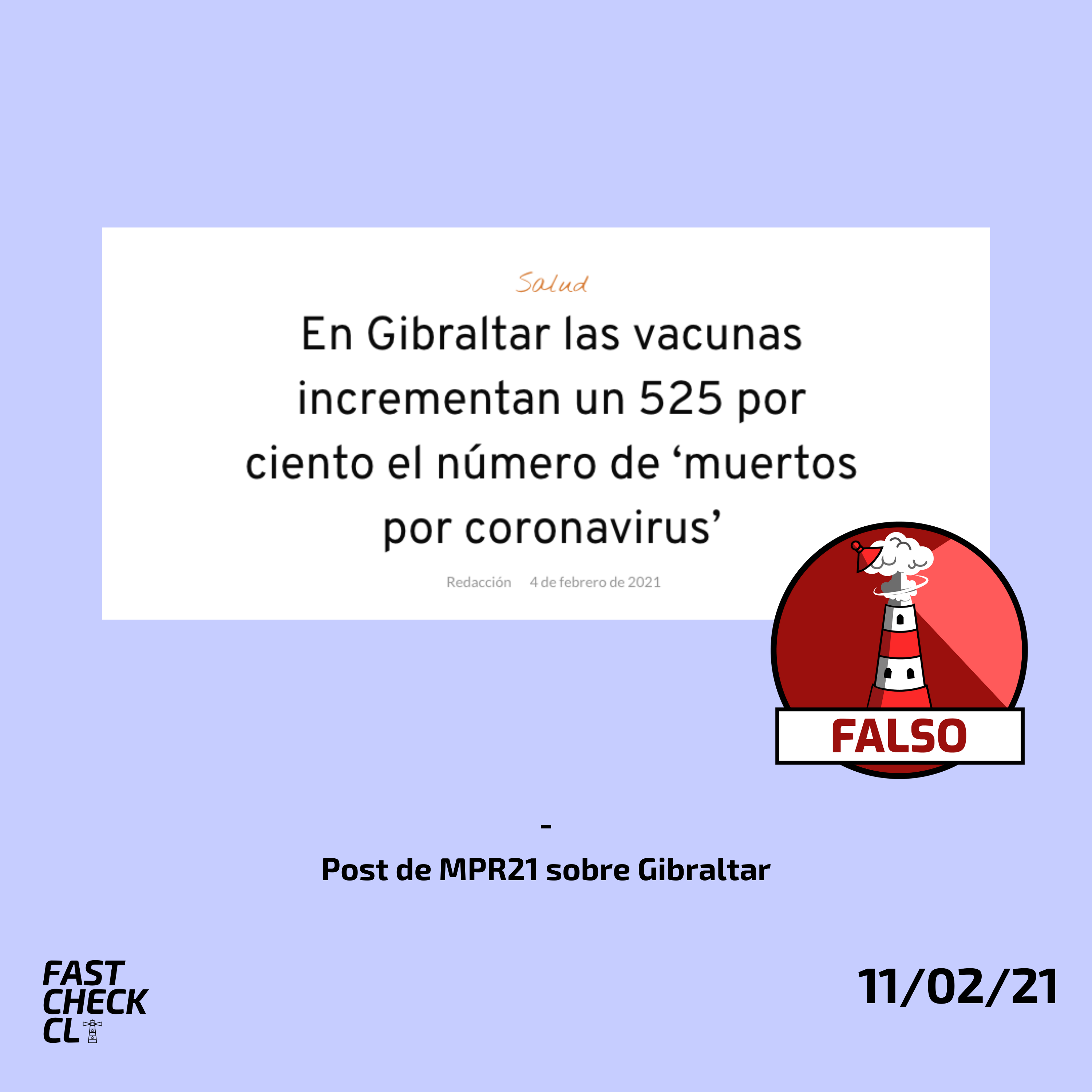
“EN GIBRALTAR LAS VACUNAS INCREMENTAN UN 525% EL NÚMERO DE MUERTOS POR CORONAVIRUS"
Publisher’s rating: Falso
Der Berliner Virologe Christian Drosten ist über viele Monate hinweg zu einem «Erklärer» der Corona-Pandemie geworden. Kritiker jedoch werfen ihm immer wieder Panikmache vor. Zudem wechsele er dauernd seine Meinung: Noch vor einigen Jahren, heißt es etwa in einem aktuell kursierenden Facebook-Posting (hier archiviert), habe Drosten beim Thema Coronaviren «beruhigende Worte» gefunden und etwa erklärt, dass als Präventionsmaßnahme Händewaschen mit Wasser und Seife ausreichend sei. Womöglich, so wird behauptet, habe der Virologe auch ein monetäres Interesse daran, die Pandemie am Laufen zu halten.
Publisher’s rating: Drostens Ausführungen sind aus dem Jahr 2014 und ihrem Kontext entrissen. Der Virologe äußerte sich zu dem damals vor allem auf der arabischen Halbinsel grassierenden Mers-Virus. Dessen Übertragungswege und Infektiosität unterscheiden sich deutlich von Sars-CoV-2. Die aktuelle Pandemie beschert dem Virologen dessen Angaben zufolge keinen Zusatzverdienst. Belege für gegenteilige Behauptungen gibt es nicht.
The Facebook post uses Drosten’s earlier comments about handwashing to suggest he changed his position on coronavirus precautions. The review identifies the remarks as coming from a 16 May 2014 Wirtschaftswoche interview about Mers, not Sars-CoV-2. In that interview, Drosten explained that Mers infections were usually acquired from animals rather than passed between people, making transmission chains shorter and easier to interrupt. His specific precautionary advice was to avoid contact with camels, which were suspected of transmitting the virus; he also said handwashing was helpful, as it is for colds. The post, the review says, omitted that Mers context and the differences between the viruses. The review contrasts that advice with the later pandemic setting: it says Sars-CoV-2 is transmitted mainly through droplets and aerosols, while transmission through contaminated hands or surfaces is possible but less significant. It notes that pandemic prevention guidance included distancing, hygiene and masks, and that handwashing alone is not sufficient protection. Thus, the 2014 comment that handwashing helps does not establish that Drosten considered it sufficient protection against Sars-CoV-2. The review also addresses the allegation of financial motivation. It reports that Drosten’s Charité institute primarily conducts basic research and develops detection methods, while mass testing is mainly done by commercial laboratories. Drosten said that private-patient income recorded under his name would be passed in full to laboratory staff. The review says it found no concrete evidence that he financially profited from the pandemic.
Seit PCR-Tests in der Bekämpfung der Corona-Pandemie eingesetzt werden, wird deren Aussagekraft infrage gestellt. Derzeit kursieren etwa auf Facebook zahlreiche Postings (hier archiviert), in denen behauptet wird, die Weltgesundheitsorganisation (WHO) habe ihre Leitlinien zur Verwendung von PCR-Tests geändert. Ein positives Ergebnis sei kein Hinweis mehr auf eine «COVID19-Infektion». Die Behauptung gibt es in verschiedenen Versionen. In einem anderen Facebook-Posting (hier archiviert) heißt es, dass die WHO PCR-Tests für unzuverlässig erklärt habe. Laut WHO würde ein solcher Test allein nicht ausreichen, um eine Infektion festzustellen.
Publisher’s rating: Wie die Weltgesundheitsorganisation (WHO) auf Anfrage mitteilte, hält sie PCR-Tests nach wie vor für ein «hochverlässliches Instrument zur Diagnose von Covid-19». Dass eine Veröffentlichung aus dem Jänner 2021 eine Änderung der WHO-Einschätzung zu PCR-Tests darstellt, stimmt nicht. Hintergrund sind einer Sprecherin zufolge zehn Berichte über Probleme mit Tests, die die WHO seit Beginn der Pandemie erreicht haben.
Mit der Verlängerung des Lockdowns bis zum 14. Februar 2021 beschlossen Bund und Länder auch eine Verschärfung der Maskenpflicht. Statt Stoffmasken müssen demnach im öffentlichen Nahverkehr oder in Geschäften OP- oder FFP2-Masken getragen werden. Letztere würden jedoch nicht vor Viren wie Sars-CoV-2 schützen, heißt es bei einem Facebook-Post (hier archiviert). Dort wird auch behauptet, dass die Masken nicht wiederverwendet werden könnten.
Publisher’s rating: FFP2-Masken bieten nachweislich Schutz vor Viren wie Sars-CoV-2. Es gibt Möglichkeiten, wie diese Masken wiederverwendet werden können.
The Facebook post was tied to a specific policy change: after extending the lockdown to 14 February 2021, federal and state governments required surgical or FFP2 masks rather than cloth masks on public transport and in shops. The post challenged FFP2 masks on two points: that they would not protect against SARS-CoV-2 and that they could not be reused. The review addresses both claims, rather than merely discussing masks in general. (S1: “Mit der Verlängerung des Lockdowns bis zum 14. Februar 2021 beschlossen Bund und Länder auch eine Verschärfung der Maskenpflicht.”; “Dort wird auch behauptet, dass die Masken nicht wiederverwendet werden könnten.”) On protection, the review explains that FFP2 masks are tested under the European standard EN 149:2001+A1:2009 and must filter at least 94 percent of test aerosol particles. It compares the test particles with the reported diameter of SARS-CoV-2, but notes that the virus is transported from the body in larger particles in aerosols. Citing a FH Münster explanation, the review says virus-containing aerosols are therefore bound by FFP2 filter material; it also explicitly cautions that no mask gives complete protection. (S1: “Dieser entsprechend müssen FFP2-Masken bei einer Prüfung mit sogenannten Testaerosolen mindestens 94 Prozent, FFP3-Masken sogar mindestens 99 Prozent der Partikel filtern.”; “Diese Partikel sind allerdings wesentlich größer als das Virus selbst.”; “Trotzdem: Einen 100-prozentigen Schutz kann keine Maske bieten.”) On reuse, the review describes two options reported in a FH Münster study: heating masks in an oven at 80°C for 60 minutes, or leaving them to dry in air for seven days. It says the first method inactivated SARS-CoV-2 while retaining filtration performance, though heat could weaken the elastic straps; the second substantially reduced coronavirus contamination. Thus the post’s categorical assertion that masks could not be reused omitted these qualified options and their limitations. (S1: “Demnach werden im Backofen bei 80 Grad Celsius nach 60 Minuten Sars-CoV-2-Viren vollständig inaktiviert und andere Erreger deutlich reduziert.”; “Durch die hohen Temperaturen können jedoch die elastischen Haltebänder an Zugkraft verlieren.”; “Auch das reduziert laut Untersuchung die Belastung mit dem Coronavirus deutlich.”)
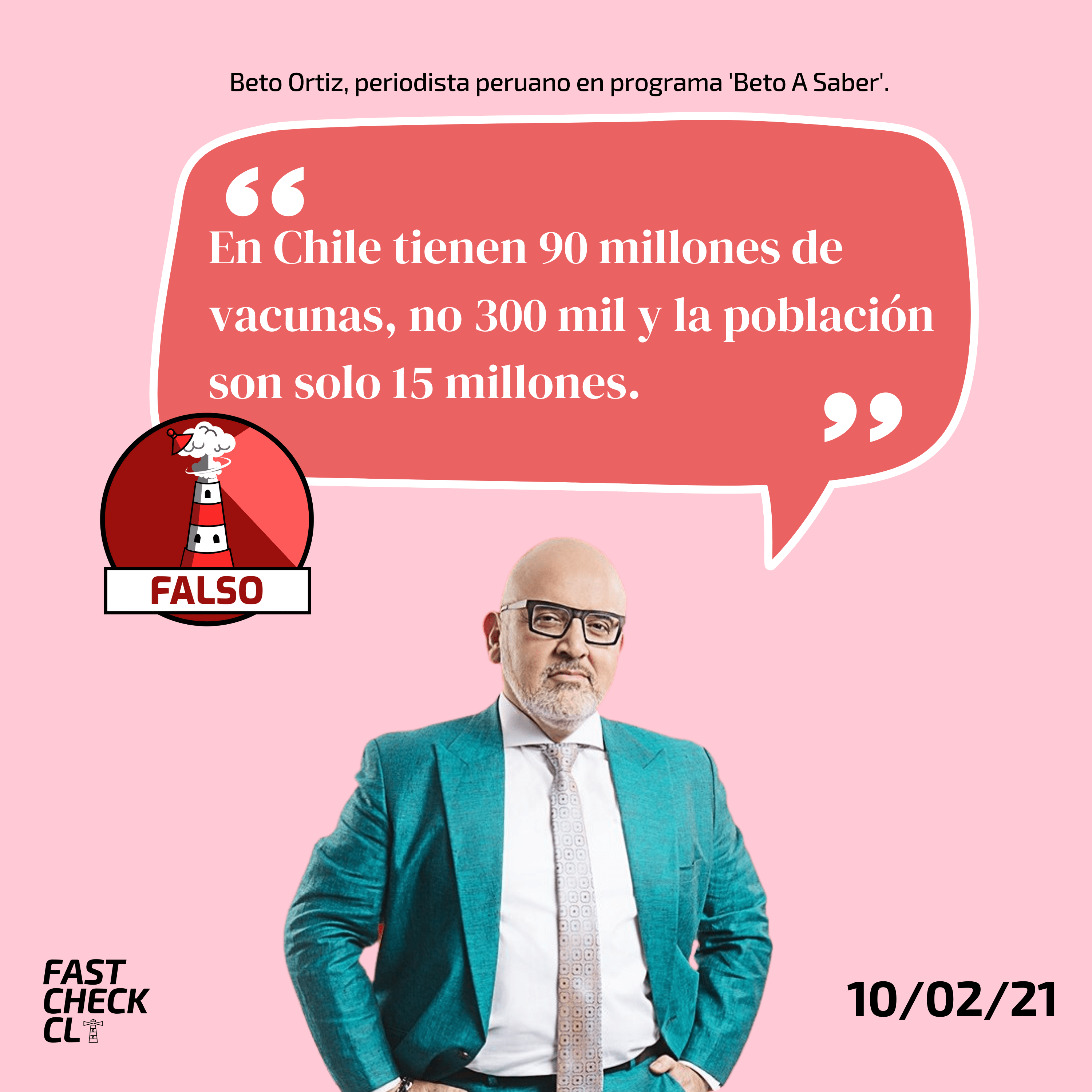
“EN CHILE TIENEN 90 MILLONES DE VACUNAS, NO 300 MIL Y LA POBLACIÓN SON SOLO 15 MILLONES”
Publisher’s rating: Falso

WHO telah mengubah kebijakannya, bahwa masker tidak perlu lagi dipakai kecuali sakit
Publisher’s rating: Keliru
"PCR-testen mogen per direct niet meer worden uitgevoerd," schrijft een vrouw op Facebook. Hierbij plaatst zij een afbeelding met een bevel voor PCRtestNederland van 9 februari 2021. De woorden ‘mag per direct geen PCR-testen meer uitvoeren’ zijn hierin onderstreept. (hier gearchiveerd)
Publisher’s rating: De facebookpost mist context. Het bedrijf PCRtestNederland mag momenteel geen PCR-testen meer uitvoeren. Andere instanties mogen de test nog wel gebruiken om te beoordelen of iemand besmet is met Covid-19. De tekst "PCR testen mogen per direct niet meer worden uitgevoerd" is daarom misleidend.
The post used an image of an order directed at PCRtestNederland and presented it as evidence that PCR tests could no longer be performed at all. The review traces the image to an announcement by the Dutch Health and Youth Care Inspectorate (IGJ), which oversees the quality and safety of healthcare and youth services. The order applied to this particular company, not to every organization using PCR tests. [S1: “De afbeelding bij de Facebookpost komt uit een nieuwsbericht van de Inspectie Gezondheidszorg en Jeugd (IGJ). Deze instantie houdt toezicht op de kwaliteit en veiligheid van zorg en jeugdhulp in Nederland.”] The IGJ had visited the laboratory on 1 February 2021, where it found acute and serious risks to the quality and safety of the tests. The review says the inspectorate considered tests from that lab unreliable and ordered PCRtestNederland to stop performing them. The order was not permanent: it applied for a week, with the possibility of an extension by the health minister. [S1: “De inspectie bracht op 1 februari 2021 een bezoek aan het laboratorium waar PCR-testen voor Covid-19 worden uitgevoerd. Hier zagen zij ‘acute en ernstige risico’s voor de kwaliteit en veiligheid van de testen’. Daarom zijn de testen uit dit lab niet betrouwbaar, zegt de inspectie.”] [S1: “Het bevel van de IGJ aan PCRtestNederland om te stoppen met het uitvoeren van de PCR-testen is niet voor altijd. Als het lab kan aantonen dat ze voldoen aan de eisen van de inspectie, mogen de testen weer worden opgestart. Het bevel van de IGJ geldt voor een week. Daarna mag de minister van Volksgezondheid het bevel nog wel verlengen.”] The review also describes testing that continued elsewhere: the GGD, working with the RIVM, still performed PCR tests, and commercial testing locations offered them, including for travel-related non-Covid declarations. Thus, the image reflected a real restriction on one company’s laboratory, but the post’s broad wording omitted the restriction’s limited scope and duration. [S1: “De GGD voert, in samenwerking met het RIVM, nog altijd PCR-testen uit. Ook zijn er meerdere commerciële teststraten.”] [S1: “Het bevel van de IGJ geldt voor een week.”]
ਅੰਡਾ ਅਤੇ ਕੇਲਾ ਮਿਲ ਕੇ ਤੁਹਾਡੇ ਪੇਟ ਵਿਚ ਜ਼ਹਿਰ ਬਣ ਜਾਂਦੇ ਹਨ
Publisher’s rating: False