PeakMetrics / Fact Checks
Health & medicine fact checks
Explore claims publishers have checked about health & medicine. Read their original ratings and follow the evidence.
Search fact checks
Search by text or image13,674 published reviews in this topic
Der PCR-Test kann keine Infektion und der Drosten keinen Doktortitel nachweisen.
Publisher’s rating: Der PCR-Test ist weltweit die wissenschaftlich anerkannteste Methode, um eine Corona-Infektion nachzuweisen. Der Virologe Christian Drosten erhielt seinen Doktortitel im Jahr 2003. Die Doktorarbeit ist an der Universität Frankfurt einsehbar.
In Israel verbiedt men supermarkten voor niet-gevaccineerden.
Publisher’s rating: Hoewel Sigrid Kaag inderdaad tijdens het partijcongres naar Israël verwees, is haar citaat licht vervormd. Het klopt echter langs geen kanten dat niet-gevaccineerden in Israël niet naar de winkel mogen. Het bericht is daarom onwaar.

Trinta por cento dos vacinados morrerão dentro de três meses
Publisher’s rating: Falso
Les enfants ne sont pas concernés par le coronavirus.
Publisher’s rating: Le message est trompeur. Bien que moins gravement touchés que les adultes, les enfants sont bel et bien « concernés » par le Covid-19, qui peut les rendre malades. Ils jouent également un rôle dans la transmission du virus.

ఆంధ్రప్రదేశ్ లోని అనంతపూర్ లో మళ్ళీ లాక్ డౌన్ విధిస్తున్నారు
Publisher’s rating: FALSE

आंध्र प्रदेश के विजयवाड़ा शहर में फिर से लॉकडाउन का ऐलान किया गया है
Publisher’s rating: FALSE
Le médecin-chef de Moderna admet que l’ARNm modifie l’ADN.
Publisher’s rating: Le message est faux. Le responsable médical n’a pas affirmé que l’ARNm modifiait l’ADN. Dans un TedTalk de 2017, il a expliqué le fonctionnement de cette découverte médicale. À l’époque, il a fait part des domaines dans lesquels cette technologie était prometteuse : la vaccination contre la grippe et le cancer, notamment. Par ailleurs, il a largement été démontré que l’ARNm contenu dans les vaccins ne modifiait pas l’ADN.
The claim arose from a Facebook image of Moderna chief medical officer Tal Zaks, paired with the headline that he had admitted mRNA alters DNA. The dpa review traces the image to an article on The Washington Standard, written under the pseudonym Suzanne Hamner, and investigates what Zaks said in a 2017 TEDxBeaconStreet talk. The review reports that the talk described using mRNA instructions to prompt cells to make a protein, and discussed possible vaccines for flu and personalized cancer treatment—not altering DNA. The review also checks the talk’s cancer-related wording against Moderna’s description of its personalized cancer vaccines. In the account quoted by dpa, researchers identify mutations in cancer cells and create an mRNA vaccine encoding selected mutations, intended to help the immune system recognize cancer cells. The review says this is not a claim that mRNA changes a person’s DNA. It further cites Zaks’s explanation of the coronavirus vaccine as providing cells with temporary instructions, and quotes two UCLouvain researchers who said introducing messenger RNA into a cell does not modify DNA. On the evidence presented, the headline misrepresents the talk and conflates the use of genetic instructions with changing DNA.

NHS data shows only 3,000 people have died of Covid-19
Publisher’s rating: False. Official statistics show more than 125,000 Covid deaths have been recorded in the UK so far.
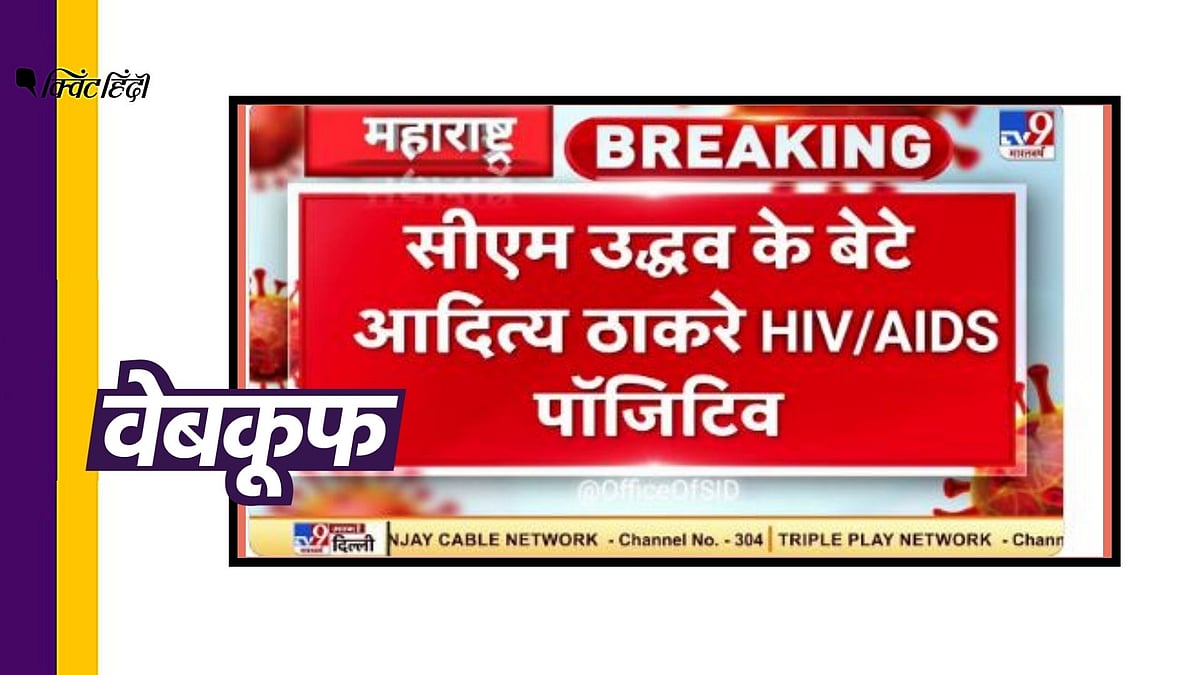
महाराष्ट्र सीएम के बेटे आदित्य ठाकरे HIV/AIDS पॉजिटिव
Publisher’s rating: FALSE
We don't lock down for flu, so why now?
Publisher’s rating: This is misleading. Flu is a serious respiratory virus that can be deadly - but there are vaccines and treatments available. Only very recently have vaccines for Covid-19 started to be rolled out, and only now are more effective treatments available.
Tekst op website provincie laat zien dat mRNA-vaccins potentieel DNA aanpassen.
Publisher’s rating: De tekst is niet geschreven door iemand van de provincie Utrecht, maar komt uit een brief over mRNA-vaccins die eind 2020 door het 'Regenboogteam' naar de provincie werd gestuurd. De afbeelding misleidt de lezer. De algemene consensus bij wetenschappers is dat mRNA-vaccins het DNA niet kunnen veranderen, of dat deze kans in ieder geval extreem klein is. De studies die in de tekst worden aangehaald als referenties zijn nog niet 'peer-reviewed'. Hier kunnen dus nog geen conclusies uit worden getrokken.

「日本の高校生全員にワクチン、確率的に50人が死亡か半身不随などの副作用に」
Publisher’s rating: 誤り
The claim originated in a February 12 episode of the online program “武田邦彦のホントの話.” In it, Chubu University special appointment professor Kunihiko Takeda said that if all 3.2 million Japanese high-school students were vaccinated, 50 would die or suffer an equivalent serious effect, and described such effects as including paralysis. The review notes that Takeda’s expertise is in resource materials engineering, not vaccines or medicine. It says the video’s precise source for its “7.3 million” figure was unclear, but identifies a UK medicines regulator report published February 5 as a possible source: it covered 7.4 million doses of Pfizer and AstraZeneca vaccines through January 24. The review compared Takeda’s interpretation with the reported data. The UK report recorded 101 cases of anaphylaxis following Pfizer vaccination and 13 following AstraZeneca vaccination; it said all Pfizer cases had recovered. The review’s calculation from those reports produced an anaphylaxis rate of 0.15 per 10,000 doses, the same figure underlying the claim’s scaling to 3.2 million people. But the report did not establish that these cases were deaths or injuries equivalent to paralysis: the review says no vaccine-related deaths or comparably severe reactions were reported, and that most anaphylaxis patients recovered. It therefore rejects the inference from the anaphylaxis rate to 50 deaths or equivalent severe outcomes. The review also describes later UK data through March 7: reported anaphylaxis rates were 0.2 per 10,000 Pfizer doses and 0.19 per 10,000 AstraZeneca doses, with no change in the reported absence of related deaths. It further reports that, among 181,184 Japanese vaccinations through March 11, 37 suspected anaphylaxis cases had been reported and all were treated and had improved or recovered. The review distinguishes reports of events after vaccination from evidence that vaccination caused them; it notes that Japan’s reports can include events with no established connection to vaccination.
"Here we are a year later - the world shut down for a 99.97% survival rate"
Publisher’s rating: This figure and similar figures being widely shared, are incorrect.
The BBC Reality Check article examines the specific claim that “the world shut down for a 99.97% survival rate.” It says that figure is incorrect and compares it with an estimate based on statistics analysed by the University of Cambridge: on average, about 99.3% of people who catch coronavirus survived. The article explains why the difference matters: its estimate corresponds to about 70 deaths per 10,000 people who catch the virus, rather than three per 10,000 implied by a 99.97% survival rate. The article also notes that an overall average does not describe every person’s risk: the death rate is higher for older and more vulnerable people. It adds that people in all age groups can suffer serious long-term effects, and reports that an ONS study found about 10% still had symptoms 12 weeks or more after a positive test. The article qualifies that symptom estimate: the study was still in progress, some participants may have dropped out, and people with symptoms may have been more likely to report them.
Suicides increased "200%" during lockdown
Publisher’s rating: False. The only reliable recent data available on suicides in England - from the University of Manchester - found that rates have not risen during lockdown.

"There was no pressure on the NHS all winter"
Publisher’s rating: False. Hospitals were very busy, particularly over the winter months, but the NHS has been able to cope, largely because of restructuring and lockdown restrictions.
"No-lockdown Sweden fared better than the UK"
Publisher’s rating: This requires context. It's true that Sweden has had a lower Covid death rate than the UK, but it has fared significantly worse than its neighbours, all of which had tighter initial lockdown restrictions.

