PeakMetrics / Fact Checks
Health & medicine fact checks
Explore claims publishers have checked about health & medicine. Read their original ratings and follow the evidence.
Search fact checks
Search by text or image13,674 published reviews in this topic
The Philippines was 133rd in the global ranking of cases per million (population).
Publisher’s rating: False
Pemerintah mewajibkan nama yang tercantum dalam sertifikat vaksinasi Covid-19 sesuai dengan paspor
Publisher’s rating: Keliru
Hoofd van de medische afdeling van Moderna heeft toegegeven dat hun coronavaccin DNA aanpast.
Publisher’s rating: Het bericht is fout. Het hoofd van de medische afdeling bij Moderna, Tal Zaks, heeft niet toegegeven dat een mRNA-vaccin DNA wijzigt. In een TedTalk in 2017 legde Zaks uit hoe de mRNA-technologie werkt en op welke medische gebieden het veelbelovend is. Het is hoogst onwaarschijnlijk dat het mRNA in de coronavaccins DNA kan aanpassen.
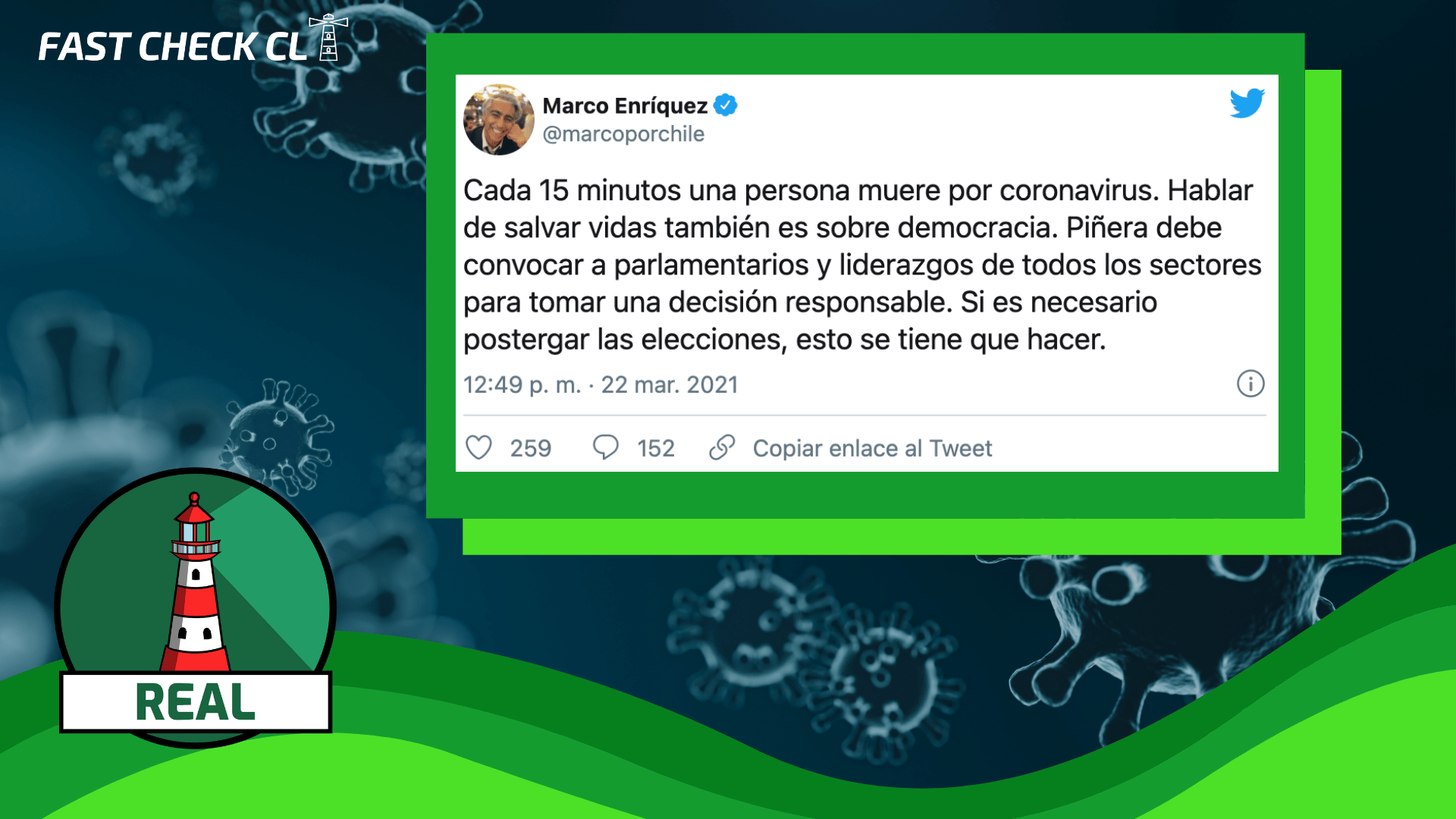
«CADA 15 MINUTOS UNA PERSONA MUERE POR CORONAVIRUS»
Publisher’s rating: Real

هل ثمّة علاج لكوفيد-19 قيمته نحو 1200 دولار؟
Publisher’s rating: غير صحيح
The review addresses a claim by Lebanese economist Roy Badaro that an effective COVID-19 treatment exists for about $1,200 but cannot be imported by the state. The review reports that his tweet said the social security fund and ministry could not afford the treatment and that private import was not allowed. It also notes that some readers responded by naming ivermectin and azithromycin as possible treatments. The review’s conclusion is that the claim of an established, fully effective treatment was not supported. [S1: “أشار الاقتصادي روي بدارو في تغريدة على تويتر إلى وجود علاج فعال لكوفيد-19، لكنّ الدولة اللبنانية غير قادرة على استيراده.”; “ودفعت التغريدة بعض متابعيه إلى مشاركة أسماء أدوية يعتقدون أنّها العلاج الأمثل لكوفيد-19 بينها افرمكتين وأزيثروميسين.”] The article distinguishes those claims from the evidence it describes about Pfizer. It says Pfizer announced on the 23rd of that month that it had begun early-stage clinical trials in the United States for an oral antiviral candidate, PF-07321332. The article reports that the candidate showed antiviral activity in laboratory studies, but was still under investigation; it does not describe a proven, available cure. [S1: “أعلنت شركة فايزر عبر بيانٍ أصدرته في 23 من الشهر الحالي، أنها بدأت مرحلة التجارب السريرية المبكرة في الولايات المتحدة، على علاج مضاد للفيروسات يؤخذ عن طريق الفم ضد فيروس كورونا.”; “وأظهر العلاج المرشح المضاد للفيروسات واسمه الطبي (PF-07321332)، نشاطًا قويًا مضادًا لفيروس \"سارس-كوف-2\" في الدراسات المخبرية.”] The review also says Pfizer was studying a second antiviral candidate, PF-07304814, given intravenously to hospitalized patients in clinical trials. It presents both candidates as potential treatments whose effectiveness would need to be established in the future, not as a treatment already shown to cure COVID-19 or available at the stated price. It separately cites the U.S. Food and Drug Administration’s warning against using ivermectin for COVID-19 because sufficient supporting data were lacking. [S1: “وتدرس الشركة مضاداً آخر للفيروسات، يتم أخذه عن طريق الوريد، ويُعرف طبياً بـ PF-07304814، وهو حاليًا قيد الاختبار على عدد من المشاركين في التجارب السريرية من المصابين بكوفيد-19 والمتواجدين في المستشفى.”; “أشارت إدارة الغذاء والدواء الأميركية إلى عدم وجوب استخدام افرمكتين كعلاج لكوفيد-19، بسبب عدم توفر أي بيانات كافية لاعتماده للوقاية.”]
mRNA-Impfstoffe verändern das menschliche Erbgut, das hat auch der Hersteller Moderna zugegeben.
Publisher’s rating: Eine mRNA-Impfung gegen das Coronavirus kann das menschliche Erbgut nicht verändern.
The claim was attributed to a Facebook post about Moderna’s then medical officer, Tal Zaks, and alleged that he had admitted that mRNA changes DNA. The review traces the post to a report about a talk Zaks gave on using mRNA technology for vaccines against influenza and cancer. It quotes his explanation as describing giving the body instructions to make a protein—not as saying that vaccine mRNA alters a person’s genetic material. The review explains that the vaccines discussed contain mRNA instructions for making a component of the coronavirus. Cells use those instructions to make the viral spike protein, which prompts an immune response. It says the mRNA’s information is not incorporated into human DNA: the two molecules have different chemical structures, and vaccine mRNA does not reach the cell nucleus, where DNA is stored. Instead, the review says, the mRNA is in the cell plasma, where it is read and then rapidly broken down. The review also cites Germany’s Paul-Ehrlich-Institut, which says RNA integration into DNA is not possible in part because of their different chemical structures. It distinguishes genetic engineering used in producing the vaccine from what happens after vaccination: the review quotes Germany’s Standing Committee on Vaccination chair Thomas Mertens saying the introduced messenger RNA has nothing to do with DNA in the cell nucleus. Taken together, the cited talk and scientific explanations do not support the post’s characterization of Zaks’s remarks as an admission that vaccination changes human DNA.

「米国CDCが新型コロナウィルスは存在しないと認めた」
Publisher’s rating: 虚偽
The review examines a claim circulated in a March 14, 2021 tweet: that the U.S. Centers for Disease Control and Prevention (CDC) had acknowledged that coronavirus does not exist. The tweet included an image apparently taken from an English-language newspaper article and spread alongside claims that the virus was unconfirmed or scientifically nonexistent. The review traces the image to The Light, a privately published UK newspaper that, it reports, presented the pandemic as a hoax and opposed measures including lockdowns and mask-wearing. The article at issue cited a genuine CDC document concerning PCR testing. The review explains that the document’s reference to no “quantified” coronavirus isolate at the CDC described the situation when the testing method was first prepared, before the U.S. outbreak had fully begun; it did not establish that the virus itself did not exist. The review also notes that The Light’s August 2020 article used that wording to claim that no one had isolated or proved the virus existed. The review points to evidence that contradicts that interpretation: Japan’s National Institute of Infectious Diseases had isolated the virus by late January 2020; the CDC published images of virus isolated from the first U.S. case by February 14; and by May 20, CDC’s website said the virus had been isolated in a laboratory and was available for scientific and medical research. It adds that a December 2020 update to the cited CDC document clarified that the wording applied to the time when the test was developed and research conducted. Thus, the document’s limited historical statement was presented misleadingly as an admission that the virus did not exist.
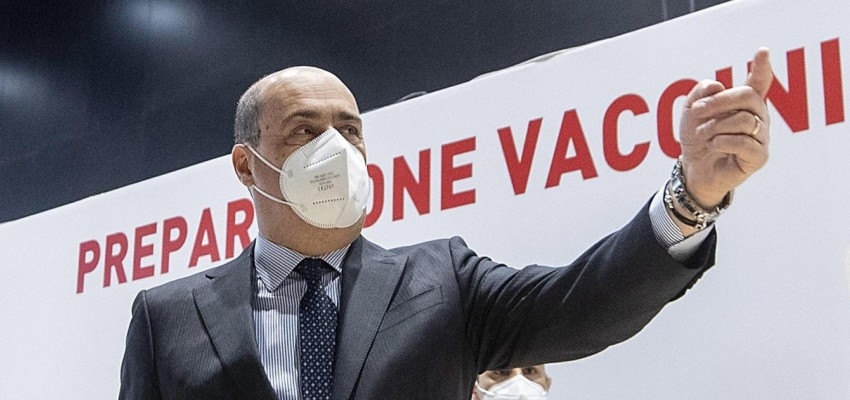
«Stiamo mettendo in sicurezza i nostri anziani e i primi risultati già si vedono. Il Lazio pesava per il 10% nella conta dei decessi a livello nazionale, ma da qualche tempo la percentuale si è dimezzata ed è scesa al 5%»
Publisher’s rating: C'eri quasi
Nicola Zingaretti, then president of the Lazio region, said on Facebook on March 24 that elderly residents were being protected and that the region’s share of national deaths had fallen from 10% to 5%. The review checked both the vaccination claim and whether the death figures showed that the vaccination effort was already producing results. For vaccination coverage, the review used government open data and calculations by its contributor Lorenzo Ruffino. It reported that Lazio had vaccinated 56.1% of over-80s with at least one dose, the highest share among regions with large populations. For two doses, calculations by YouTrend put Lazio at 28.4%, again first among those large regions. The review therefore found that Lazio was doing comparatively well at vaccinating older people. The death-share comparison was less conclusive. In the ten days before the statement, March 14–23, Lazio accounted for 227 of 3,998 national deaths, or 5.7%. For the same dates in February, the share was 10.5% (315 of 2,992), which appears to support the comparison Zingaretti made. But for January 14–23 it was already lower than February’s, at 8.4% (407 of 4,836), when few vaccines had been given to older people. The review said these data could not establish that vaccination caused the change: death counts were sometimes updated weeks later, could be affected by testing capacity, and were too uncertain for firm conclusions about vaccine effects on over-80s in Lazio.

We will vaccinate "200 million in my first 100 days"
Publisher’s rating: To be determined.The US has so far delivered over 130 million doses of the vaccine at a rate of 2.5 million doses each day.
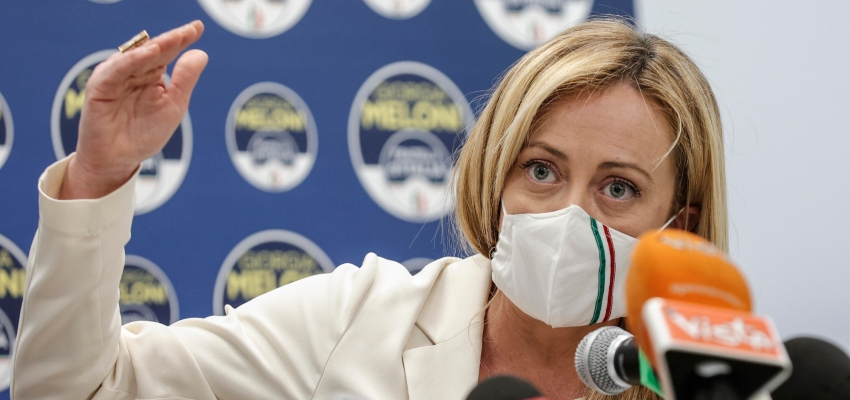
«Se è vero che oltre l’82% dei morti da Covid hanno più di 70 anni, non si capisce perché meno della metà degli over 80 sia stato vaccinato finora»
Publisher’s rating: Vero
The claim came from Giorgia Meloni’s March 23 interview with TG5, in which she criticized the priorities of Italy’s Covid-19 vaccination campaign. Pagella Politica checked both parts of her comparison: the age distribution of Covid-19 deaths and how many people over 80 had been vaccinated. Its review found the figures she cited were correct, while its underlying numbers describe different measures and cut-off dates for the two parts of the comparison. For deaths, the review reports that, according to the Italian National Institute of Health’s most up-to-date statistics, nearly 88,000 of more than 102,000 recorded Covid-19 deaths by March 17, 2021, were among people over 70—about 86 percent. That supports the claim’s assertion that the share exceeded 82 percent. The article also notes that almost 62 percent of recorded deaths were among people aged 80 or older. For vaccination, the review used open data made available by the emergency commissioner and calculations by its contributor Lorenzo Ruffino. It says almost 21 percent of the over-80 population had completed vaccination, while just over 27 percent had received a first dose and were awaiting the second. Thus, just under half had received at least one dose, supporting Meloni’s comparison. The review’s verdict concerns the accuracy of these figures; it also documents substantial differences in vaccination progress between regions.


Die Weltgesundheitsorganisation verbietet die Obduktion von Corona-Toten. Die Krankheit wird durch ein Bakterium ausgelöst.
Publisher’s rating: Die WHO hat Obduktionen von Corona-Toten nicht verboten, auch in Deutschland wurden bereits viele Sektionen vorgenommen. Covid-19 wird durch das Virus Sars-CoV-2 ausgelöst, gegen das Antibiotika unwirksam sind.
The post discussed in the review alleged that Russia had established through an autopsy that COVID-19 was caused by a bacterium, and that the WHO had prohibited such examinations. The review addresses both parts of that claim: the alleged WHO prohibition and the assertion that the disease is bacterial rather than viral. It says the WHO had not prohibited autopsies and identifies SARS-CoV-2 as the virus that causes COVID-19. For the autopsy claim, the review points to WHO guidance issued in March 2020. Rather than banning autopsies, the guidance set out precautions for conducting them, including adequate room ventilation and mask use. It also reports that German pathology organizations advocated autopsies in April 2020 to learn more about the disease and its course. The review further notes that a register at RWTH Aachen University Hospital collected results from autopsies of people who died from COVID-19. For the bacterial claim, the review distinguishes the virus itself from possible bacterial infections during the illness. Virologist Steven Van Gucht told dpa that a bacterial infection could occur in someone with coronavirus disease, but described it as a reaction to the virus. The review reports that antibiotics do not act against the virus itself, so the possibility of a bacterial complication does not support the post’s claim that a bacterium causes COVID-19.

An Corona starben innerhalb von zwei Monaten nur 361 Menschen. Medien berichten nicht über Hunger.
Publisher’s rating: Die im Sharepic angeführten Todeszahlen im Zusammenhang mit einer Corona-Infektion sind vom 2. Februar 2020 und somit veraltet. Die Behauptung, über die Hungertoten würde nicht berichtet, ist falsch. Humanitäre Organisationen wiesen während der Corona-Pandemie mehrfach auf die sich ausbreitende Hungersnot hin.
A Facebook sharepic compared 361 coronavirus deaths over two months with 24,000 hunger deaths each day, alleging that the latter were kept out of the media. The review traces the coronavirus figure to February 2, 2020: the WHO and Johns Hopkins Institute counted 362 deaths worldwide in connection with the virus that day. The sharepic’s figure was therefore a snapshot from early in the outbreak, not a current comparison. By March 24, 2021, the WHO count of deaths associated with the virus had exceeded 2.7 million. The review notes that the exact annual toll from undernutrition is difficult to establish: it says neither the cited World Food Programme Global Report on Food Crises nor the FAO’s SOFI report supplied an exact figure. It also reports that FAO chief David Beasley put hunger deaths in 2020 at 7 million in comments cited by Reuters—an average of 19,000 a day. That estimate does not support the sharepic’s specific figure of 24,000 daily deaths. The assertion that media did not report on hunger is contradicted by the examples documented in the review. It points to reporting on UN warnings by the Associated Press in early March 2021 and to coverage by German and international outlets during 2020, alongside reporting on warnings from humanitarian organizations. The evidence supports the conclusion that hunger was publicly reported, while the precise death toll remained difficult to quantify.


আইচিএমআৰএ ২১টা নিয়মসহ কোভিড পৰামৰ্শাৱলী জাৰি কৰিছে
Publisher’s rating: মিছা

The medication ivermectin is an alternative to Covid-19 vaccines
Publisher’s rating: Unproven
News about Chinese vaccine drive from Siem Reap province 3rd March, 2021. Cambodians inside the country please do not inject with Chinese vaccines. Doctor Seang Tola, 39, residing at Phumi Thmey, Svay Dangkum commune, Siem Reap province, died at 3 a.m. after getting the vaccine yesterday 2nd March.
Publisher’s rating: Misleading