PeakMetrics / Fact Checks
Health & medicine fact checks
Explore claims publishers have checked about health & medicine. Read their original ratings and follow the evidence.
Search fact checks
Search by text or image13,674 published reviews in this topic

At 40 degrees, if you drink ice water in an instant, the micro blood vessels could explode.
Publisher’s rating: False
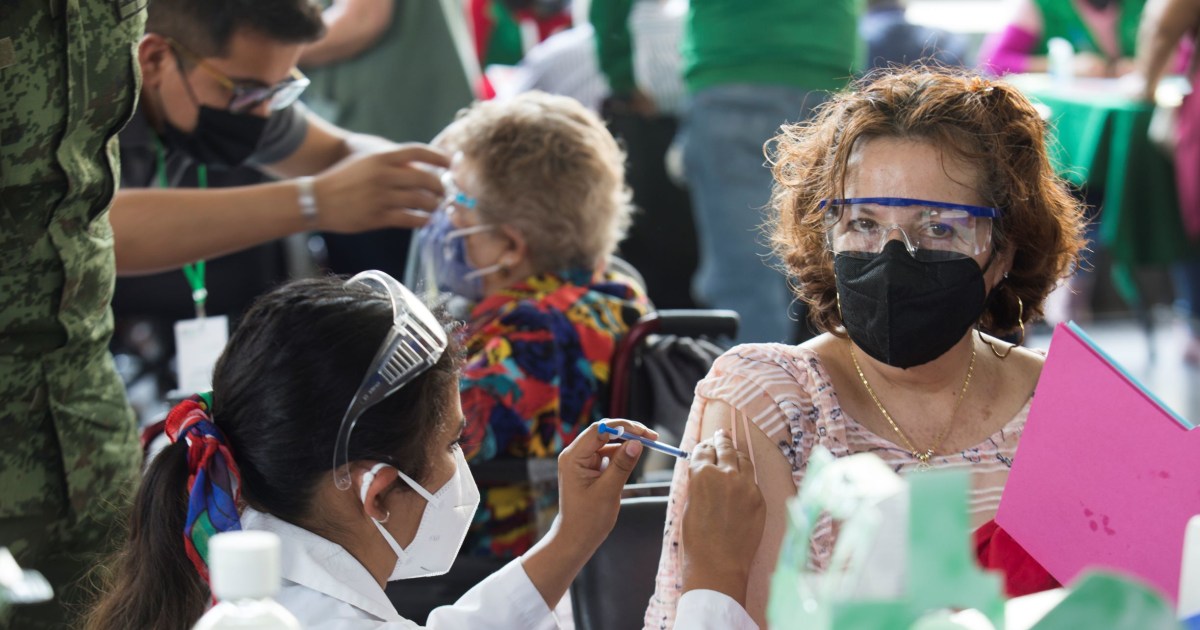
El cuerpo de un hombre se ha estado conectando a dispositivos por bluetooth desde que recibió la vacuna del COVID-19 de AstraZeneca
Publisher’s rating: Falso
The claim concerns a TikTok video in which a man says that, after receiving the AstraZeneca COVID-19 vaccine, his body began connecting to Bluetooth-enabled devices. The review describes the video’s on-screen evidence: a phone displays a purported pairing request from a device named “AstraZeneca_ChAdOx1-S,” and a television later shows a connection message with the same name. The review notes, however, that the video itself does not establish that the man’s body caused those notifications. The investigation offers an alternative explanation for the displayed device name: Bluetooth-enabled devices can be renamed by their users, so the name shown on the phone does not demonstrate that it came from a vaccine or from the man’s body. The review also reports that the vaccine’s ingredients are publicly available and says they do not include Bluetooth technology. It cites CDC guidance distinguishing tracking devices used on vaccine shipping boxes from the vaccine itself, and quotes vaccine specialist Paul Offit on why a microchip would not pass through an injection needle. The review’s conclusion rests on the gap between what the video shows and what it claims to prove, alongside the reported ingredient information. AstraZeneca did not respond to the review’s request for comment, as the article states; the supplied text does not report a response from the company.
Astrazeneca ist in mehr als 20 europäischen Ländern suspendiert.
Publisher’s rating: Einige der Aussagen sind ungenau oder aber es fehlt wichtiger Kontext. Zum Beispiel wird in den meisten europäischen Ländern mit dem Corona-Impfstoff von Astrazeneca geimpft.
The claim concerns a social-media warning that AstraZeneca’s vaccine had been suspended in more than 20 European countries because of severe and fatal side effects. The review says many countries did temporarily suspend use in March, but that temporary pauses do not mean those countries permanently stopped using the vaccine. The review identifies Denmark and Norway as the only countries that had permanently stopped using it. It reports that most other European countries had resumed use, generally with restrictions. It gives Germany and Italy as examples: authorities there recommended the vaccine for people over 60. This evidence contradicts the claim’s implication that more than 20 European countries remained suspending the vaccine. The qualification matters: the review does not say that no suspensions occurred. It distinguishes the temporary suspensions many countries imposed from the smaller number of countries that continued to forgo the vaccine. Its account therefore supports a more limited description of the situation than the claim suggests.


Covid vaccines are causing magnets to stick to people's arms
Publisher’s rating: They are not. The US Centers for Disease Control says "receiving a COVID-19 vaccine will not make you magnetic, including at the site of vaccination which is usually your arm."

Vaksin Covid-19 buatan Pfizer mengandung chip sehingga magnet menempel di lengan yang disuntik
Publisher’s rating: Keliru

మోదీ వీరభక్తుడు తిండి అక్కర్లేదు మందిర్ మాత్రమే కావాలని అన్న వ్యక్తి ఆక్సిజన్ దొరకక లక్నోలో చనిపోయాడు
Publisher’s rating: FALSE

Covid-19 ist für Kinder nicht gefährlich. Es gibt eine Impfpflicht. Die Impfung macht krank.
Publisher’s rating: Kinder und Jugendliche haben ein geringeres Risiko von schweren Verläufen von Covid-19. Langzeitfolgen können bei ihnen aber eher auftreten. Es gibt keine Impfpflicht in Deutschland. Außerdem gibt es keine Belege dafür, dass die Corona-Impfung Kinder krank mache - auch weil noch keine Zulassung erteilt wurde.
The claims were made in a video circulated by opponents of vaccination: that Covid-19 was not dangerous for children, that vaccination was compulsory, and that vaccination made children ill. The review examined those claims in the German context, when no Covid-19 vaccine had yet been authorised in Germany for children under 16. It distinguished the comparatively rare occurrence of severe illness in children from the possibility of serious outcomes and longer-term effects after infection. To assess risks to children, the review cited information from the German Society for Pediatric Infectious Diseases (DGPI). It reported 314 children and adolescents with PIMS recorded by the DGPI as of 16 May 2021, and said most reported PIMS cases required intensive care. The review also gave DGPI figures of 1,256 hospital treatments for children and adolescents with Covid-19 in Germany as of 11 April 2021, and 17 deaths among people aged 0–19 in connection with infection. These figures do not mean that severe outcomes were common, but they contradict the video’s absolute assertion that Covid-19 was not dangerous for children. The review separately checked the claim of compulsory vaccination against the German government’s statement that vaccination was voluntary, and found no general Covid-19 vaccination requirement in Germany. On the claim that vaccination made children ill, it said there was no supporting evidence. It noted that BioNTech/Pfizer had conducted trials in 12–15-year-olds and that, according to media reports, had applied to the European Medicines Agency for authorisation; the review also reported US authorisation for that age group from 10 May. The excerpt therefore supports rejecting the video’s categorical claims while preserving the distinction between infection risks and the evidence then available about vaccination.

Bolsonaro recusou um contrato de 70 milhões de doses de vacina até dezembro/21 em prol de um contrato de 100 milhões de doses até SETEMBRO/21. O que a mídia faz? Divulga só a primeira metade da notícia.
Publisher’s rating: ENGANOSO: Não há evidências da adoção de uma ação do tipo. Para epidemiologistas, o mais importante era iniciar a imunização o mais cedo possível
Volgens de CDC zijn er de laatste 20 jaar bijna evenveel mensen overleden aan alle vaccins als nu in een jaar aan de COVID-19 prik.
Publisher’s rating: Hoeveel mensen er daadwerkelijk door een COVID-vaccin of welk ander vaccin dan ook zijn overleden in de Verenigde Staten, is niet duidelijk vast te stellen. Een vergelijking tussen de twee is dus niet te maken. De bewering op de Nederlandse website werd niet gedaan door de CDC. Meldingen van doden in het Amerikaanse rapportagesysteem VAERS betekenen daarnaast niet per se dat het vaccin de dood veroorzaakte.
The claim was that the CDC had said deaths associated with COVID-19 vaccines in a year were almost equal to deaths associated with all vaccines over the preceding 20 years. The review says the CDC did not make that claim and that the agency does not publish a total count of VAERS death reports for other vaccines that would establish the comparison. It also cautions that a report made after vaccination does not, by itself, show that the vaccine caused the death. The review reports 4,647 VAERS death reports following COVID-19 vaccination between December 14, 2020, and May 17, 2021. It says that figure is a count of reports, not confirmed vaccine-caused deaths. The CDC and FDA reviewed reported deaths; the CDC stated that its review of available medical information, including death certificates and autopsies, had found no causal link to COVID-19 vaccines. The article notes an exception in the form of a very rare Janssen-vaccine side effect involving blood clots and low platelets, which had caused some deaths. For comparison, the review cites a 2015 study of VAERS reports from 1997 to 2013 that recorded 1,544 death reports for 2001–2013. It says there was no scientifically confirmed count available for 2013–2020, so a precise 20-year comparison could not be made. The review also explains that reporting rules and monitoring differed: death reports after COVID-19 vaccination were subject to mandatory reporting, and the COVID-19 vaccines were being monitored especially closely. Thus, the available figures do not establish either the claimed comparison or that the reported deaths were caused by vaccination.
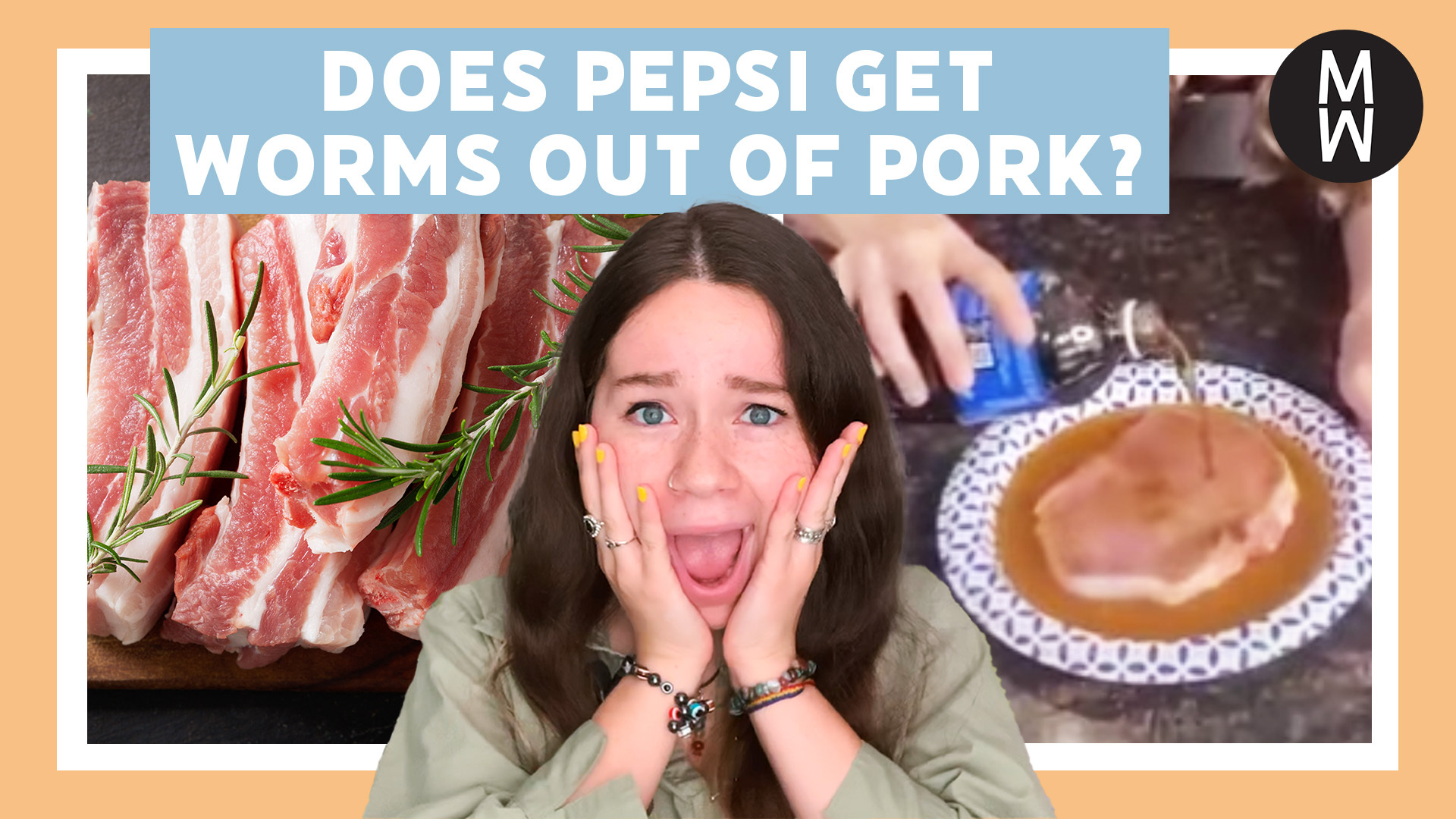
Pouring Coca-Cola or Pepsi on uncooked pork will rid it of worms or other parasites.
Publisher’s rating: Not Legit
The review investigates a viral YouTube video in which someone pours Coca-Cola or Pepsi on uncooked pork and claims that worms or parasites emerge. It notes that the footage shows what look like small white worms, but says the video is low quality, making the specks hard to identify. It also points out that the clip does not show what happened to the meat before filming began, so its condition and handling cannot be assessed from the video alone. The review describes searches for “pork pepsi parasites” that found earlier fact-checks from USA Today and Snopes. It reports that trichinosis is caused by a roundworm and can result from eating raw or undercooked meat from an infected animal, but that the worms are microscopic and would not be visible simply because soda was poured on the meat. The review also says Snopes tried the Coke challenge and reported finding no worms. The review concludes that pouring Coke or Pepsi on pork does not make parasites leave the meat. It distinguishes that claim from the real food-safety concern it discusses: preventing trichinosis involves cooking meat to a safe temperature, not applying soda. The review prints its rating as “Not Legit.”
Die Effizienzwerte der zugelassenen Impfstoffe betragen nur um die 1 Prozent.
Publisher’s rating: Die Behauptung, die Impfstoffe böten einen «schlechten Schutz», ist falsch. Sowohl die einen als auch die anderen Zahlen sind richtig - weil sie jeweils etwas völlig anderes aussagen.
The review examines a social-media post that presents vaccine “efficiency” figures of about 1% as evidence of poor protection. The post attributes values of 1.3% to AstraZeneca, 1.2% each to Moderna and Johnson & Johnson, and 0.84% to BioNTech/Pfizer, but, according to the review, does not say what kind of efficiency those numbers represent. The review distinguishes absolute risk reduction (ARR) from relative risk reduction (RRR), noting that the two measures can be calculated from the same underlying trial results but express different things. (S1: “In den sozialen Medien wird ein Post (hier archiviert) über «die wissenschaftlich belegten Effizienzwerte der Impfstoffe» geteilt. Unter Hinweis auf die renommierte Wissenschaftspublikation «The Lancet» (hier archiviert) heißt es dort, die Effizienz liege bei 1,3 Prozent für Astrazeneca, bei jeweils 1,2 Prozent für Moderna und Johnson and Johnson sowie bei nur 0,84 Prozent für Biontech/Pfizer. Der Leser wird gefragt, ob er «für diesen schlechten Schutz vor Corona» sein Leben riskieren wolle. Um welche «Effizienzwerte» es sich handelt, bleibt in dem Post unerwähnt.”) The article explains that ARR measures the change in risk across all people studied, while RRR compares the risk in a treated group with the risk in a comparison group. Its example uses 100 people in each group: two infections among the unvaccinated and one among the vaccinated. That is a 1 percentage-point ARR, but a 50% RRR. Thus, a figure around 1% can describe an absolute reduction without meaning that the vaccine’s relative reduction in risk is only around 1%. (S1: “Die Absolute Risikoreduktion (ARR) gibt in Prozentpunkten an, um wieviel das Risiko in Bezug auf alle Untersuchten geringer wird.”; “Die Absolute Risikoreduzierung (ARR) beträgt also genau 1 Prozent (2 Prozent minus 1 Prozent). Ganz anders sieht die Relative Risikoreduzierung (RRR) aus: Die Verringerung von zwei Personen auf eine Person bedeutet nämlich eine Reduzierung um 50 Prozent.”) The review says the cited Lancet item was a commentary, not new research revising manufacturers’ vaccine-effectiveness estimates. It describes that commentary and a Medicina article as criticizing how vaccine benefits are presented when relative figures are emphasized without also explaining absolute figures. The review’s conclusion is therefore not that the two numbers conflict: it is that the approximately 1% figures and larger relative-effect figures refer to different measures, and the post’s presentation omits that distinction. (S1: “Auch bei dem Artikel in der Zeitschrift «The Lancet» geht es nicht um neue wissenschaftliche Erkenntnisse hinsichtlich der Wirksamkeitsangaben der Impfstoff-Hersteller. Vielmehr handelt es sich um einen ausdrücklich als «Kommentar» bezeichneten Meinungsbeitrag von Wissenschaftlern.”; “In diesem Beispielfall ist sowohl die Wirksamkeitsangabe von 1 Prozent als auch von 50 Prozent korrekt - sofern klargemacht wird, worum es geht.”)


Insurance policies are 'null and void' if you receive a Covid-19 vaccine
Publisher’s rating: False
Die Studienergebnisse über den Anteil an Fehl- und Frühgeburten bei Frauen, die einen mRNA-Impfstoff erhalten haben, "lesen sich fatal" bzw. sind besorgniserregend.
Publisher’s rating: Die Prozentzahlen stimmen. Der Anteil der Frauen, die nach einer Corona-Impfung eine Fehl- und Frühgeburt hatte, liegt aber im Durchschnitt. Die vorläufigen Ergebnisse der Studie deuten nicht auf Sicherheitsbedenken hin.
Het is ongezond om de navelstreng van een baby direct na de geboorte door te knippen, ontneemt zuur- en voedingstoffen. Heeft een negatieve impact op het immuunsysteem. Om goed te zijn mag de navelstreng pas na 1 uur na geboorte doorgeknipt worden.
Publisher’s rating: De beweringen zijn grotendeels fout. Enige minuten wachten met het doorknippen van de navelstreng kan voordelig zijn om bloedarmoede tegen te gaan. Langer dan een uur na de geboorte wachten heeft geen enkele zin. Er is ook geen bewijs dat wachten met het afknijpen van de navelstreng enige impact heeft op het immuunsysteem van de baby.
The review addresses a Facebook post warning that immediate cord cutting harms a baby’s developing immune system and saying the cord should remain uncut for at least an hour. It reports that guidance supports waiting briefly, not for an hour: the World Health Organization recommends cutting the cord one to three minutes after birth, while an American study and the American College of Obstetricians and Gynecologists advise waiting at least 30 to 60 seconds. The review quotes Dutch obstetrics and gynaecology spokesperson Ank Louwes explaining that this pause allows extra blood to pass from the placenta to the infant, increasing red blood cells and helping against anaemia. The review notes that this benefit is particularly relevant for premature babies and babies in developing countries, and that long-term benefits remain unclear. The review also says gynaecologist Annick Corremans reported no evidence that immediate cord cutting affects a baby’s immune system. Waiting has a practical limit: Corremans says placental blood flow stops on its own after five to ten minutes, so waiting an hour offers no value. The post’s hour-long recommendation therefore goes beyond the brief delay described in the cited guidance and does not follow from the proposed blood-transfer benefit.