PeakMetrics / Fact Checks
Health & medicine fact checks
Explore claims publishers have checked about health & medicine. Read their original ratings and follow the evidence.
Search fact checks
Search by text or image13,674 published reviews in this topic

Recent photo of Pragya Singh Thakur getting admitted to a hospital after drinking cow urine
Publisher’s rating: FALSE
The claim paired a hospital photo of Pragya Singh Thakur with the allegation that she had recently been admitted after drinking cow urine. FACTLY reports that the image was not recent: it showed Thakur being taken for a medical examination in Bhopal in January 2013. The review says it identified the image through a reverse image search and found a similar photo in a 2013 article by The Hindu, whose caption identified the hospital visit and location. The review distinguishes that old photograph from a separate hospitalization in Mumbai in March 2021. It reports that Thakur was admitted to Kokilaben hospital after complaining of breathing problems, but says this admission occurred before her statement about drinking cow urine. The evidence therefore does not support the post’s implication that the pictured admission followed that statement or that cow urine caused her illness.
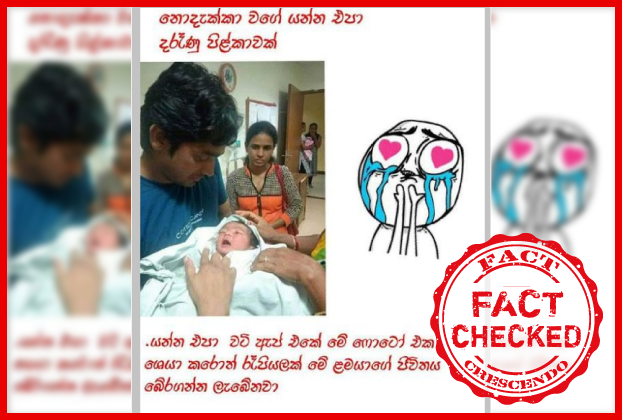
FACT CHECK: මෙම බිලිඳාට සත්ය වශයෙන්ම පිළිකාවක්ද? WhatsApp ඔස්සේ හුවමාරු කර ගැනීම තුළින් ආධාර ලැබෙනවාද?
Publisher’s rating: False
Coronagolf in India startte kort na begin van de vaccinaties, en is ondertussen weer aan het dalen.
Publisher’s rating: Er is geen bewijs voor de beweringen. Een resem aan factoren beïnvloeden de huidige coronagolf, maar er is geen oorzakelijk verband te trekken met de vaccinatiecampagne. Daarnaast is er op bepaalde (metropole) plaatsen in India een lichte daling in het aantal coronagevallen, maar weeral is er geen causaal verband met de medicijnen ivermectine en hydroxychloroquine.
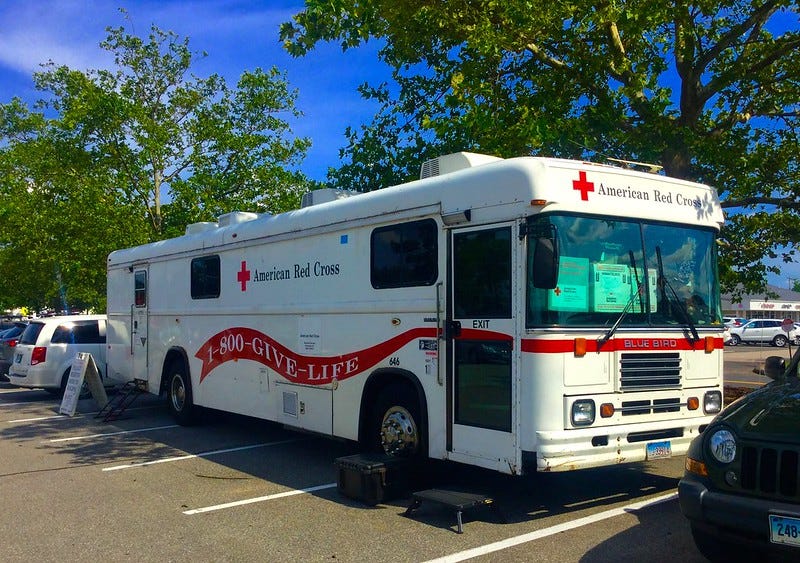
The Red Cross said that people who’ve been vaccinated cannot donate blood plasma.
Publisher’s rating: False
Rode Kruis in verschillende landen, waaronder Japan en België, weigerd bloeddonaties van mensen die gevaccineerd zijn tegen COVID-19.
Publisher’s rating: De berichten zijn fout. In Japan kan men 48 uur na inenting met een coronavaccin opnieuw bloed doneren bij het Rode Kruis. Ook in België geldt een wachtperiode van 48 uur, of een week indien men klachten had na vaccinatie.
The claim concerns COVID-19 vaccine recipients being refused blood donations by Red Cross organizations, particularly in Japan and Belgium. The review says posts on Belgian and Dutch websites presented the Japanese Red Cross policy as a refusal to accept donations from vaccinated people. It examined the donation rules in both countries and found that vaccination did not result in a permanent bar: each organization imposed a temporary waiting period after vaccination. For Japan, the review describes a Japanese Red Cross guideline published on 28 April 2021. It says donors were asked to wait 48 hours after either their first or second COVID-19 vaccination before donating. The review explains that the interval was intended to allow time for possible side effects to resolve, not because of a stated safety concern about the vaccines. It notes that Pfizer was the only COVID-19 vaccine then authorized for use in Japan and describes possible reactions including injection-site pain, fatigue and headache. The Belgian rule was also a temporary deferral, not a refusal based on vaccination status: the review reports a 48-hour wait after vaccination, extended to one week if the person experienced symptoms. It gives a separate four-week wait for people vaccinated abroad with a vaccine other than Moderna, Pfizer or AstraZeneca. For comparison, the review says the Dutch blood supplier Sanquin asked donors to wait seven days after vaccination. These differing waiting periods help explain how the claim could misrepresent a temporary donation restriction as a blanket rejection of vaccinated donors.

Cruz Vermelha Americana: vacinados não podem doar sangue, porque a vacina destrói completamente seus anticorpos naturais,
Publisher’s rating: Falso

Hidroxicloroquina é eficiente no combate à covid-19. Remédio pra piolho e remédio pra verme também são eficazes.
Publisher’s rating: ENGANOSO: Segundo a bula do remédio, os fabricantes, a OMS e especialistas ouvidos pelo Comprova, o remédio não tem eficácia nenhuma no combate ao vírus.
Übertragung von Impfstoff von Geimpften an Ungeimpfte durch Hautkontakt oder Aerosole möglich
Publisher’s rating: Geimpfte können den Impfstoff nicht an Ungeimpfte übertragen. In einer oft zitierten Pfizer-Studie wird das nicht behaupte
The claim concerned whether someone vaccinated against COVID-19 could pass the vaccine to an unvaccinated person through shared air or skin contact. The review traces the allegation to interpretations of a Pfizer vaccine safety study, whose reporting instructions included possible exposures involving pregnant women and their partners. It says social-media posts and some blogs presented those instructions as evidence of person-to-person transfer. The review explains that the study’s exposure definitions were being misread. They asked for reports of situations where a pregnant person, or that person’s partner, might come into contact with the study intervention through inhalation or skin contact. Pfizer’s Austria medical director, Sylvia Nanz, told the agency that this did not mean a vaccinated person could transmit the vaccine: the vaccine enters the body through a correctly administered injection, not through secondary or environmental exposure. The study language instead covered possible contact with the vaccine during handling, such as thawing or diluting it. The review also notes that the vaccine does not produce virus in the body, and that the cited study wording did not establish transfer of vaccine or spike proteins from a vaccinated person to another person. Thus, the exposure reporting provisions described in the study were not evidence for the alleged transmission route.

ভাৰতক কৰ’নামুক্ত দেশ হিচাপে গঢ়ি তুলিবলৈ নিজৰ সমগ্ৰ সৌভাগ্য ব্যয় কৰিব বুলি ৰতন টাটাই কয়।
Publisher’s rating: FALSE

FACT CHECK: අම්පාර කලු දිලීර රෝගය වැළඳුනු පුද්ගලයකුගේ ඡායාරූපයක්ද?
Publisher’s rating: Misleading
The claim concerned a photo shared as showing the person said to have died at Ampara Hospital after contracting black fungus. The review examined both whether the pictured person was that patient and whether the patient had mucormycosis. It reports that the hospital director said the patient had a different fungal infection, not black fungus, and that the patient died while receiving treatment for COVID-19. The review therefore identifies two distinct problems with the post’s presentation: the image did not show the Ampara patient, and the patient’s illness was not black fungus. To check the photo’s identity, the investigators say they asked Ampara General Hospital director Dr. Upul Wijenayake whether the person pictured was the patient. The director confirmed that the person in the image was not the Ampara patient. The article also notes that the image had been shared by several people in India, but says it could not establish exactly where the person pictured was from. This supports rejecting the photo’s claimed identification, without establishing the pictured person’s identity. The review places the claim in the context of reports that a person at Ampara Hospital had died, which it says prompted the photo’s circulation. It distinguishes those reports from the claim that the death was caused by black fungus: according to the hospital director’s account as reported in the review, the patient had another fungal disease. The investigation’s conclusion is thus specific to the photo and the reported Ampara case; it does not identify the person shown in the photo or specify the other fungal disease.
Armen zijn magnetisch na coronavaccin.
Publisher’s rating: De claims zijn onjuist. Er zit niets in de coronavaccins wat ervoor zou kunnen zorgen dat magneten op de huid blijven plakken. Dit is een breedverspreide hoax.
The review addresses videos in which people demonstrate a magnet sticking to the spot on their arm where they say they were recently vaccinated. It describes the demonstrations as part of a social-media trend, including the #magnetchallenge, and says the videos show magnets failing to stick on most parts of an arm but sticking at the vaccination site. The review’s conclusion is that the claim is false: vaccine ingredients do not explain magnets sticking to skin. To assess the proposed explanation, the review refers to the ingredient lists for the Moderna, Pfizer, AstraZeneca and Janssen vaccines, which it says contain no metals. It also reports comments from immunologist Ger Rijkers of University College Utrecht: even a trace of iron in a vaccine would be far too little to make a magnet adhere to skin. The review distinguishes this from aluminum compounds in some other vaccines, noting that aluminum is not magnetic. The review also cites magnet researcher Eric Palm, in a BBC video, explaining that even an extremely magnetic particle injected through a very small vaccination needle would be too small to hold a magnet on the skin. For the demonstrations themselves, the review offers possible surface-level explanations—including residue from a bandage, a small adhesive on the magnet, or skin oils and moisture—and compares these to other tricks in which objects appear to stick to skin. These are presented as possible explanations, not as a finding about how any particular video was made.

Texas has reported no COVID deaths since March 2
Publisher’s rating: false
cruz vermelha japonesa rejeita doação de sangue de pessoas foram injetadas com "vacinas" contra coronavirus
Publisher’s rating: Falso

ಬಾಬಾ ರಾಮ್ದೇವ್ರವರು ಸ್ವತಃ ಆಸ್ಪತ್ರೆಗೆ ದಾಖಲಾಗಿ ವೆಂಟಿಲೇಟರ್ ಬೆಂಬಲದಿಂದ ಚಿಕಿತ್ಸೆ ಪಡೆಯುತ್ತಿದ್ದಾರೆ.
Publisher’s rating: MISLEADING
Das «Diskussionspapier zu Maßnahmen gegen Erziehungsberechtigte die bzgl. der Covid-19-Impfung ihrer Schutzbefohlenen eine ablehnende Verweigerungshaltung einnehmen» stammt vom Bundesgesundheitsministerium
Publisher’s rating: Das Diskussionspapier ist eine Fälschung, bestätigte das Bundesgesundheitsministerium. Wenn eine Impfung für Kinder und Jugendliche kommt, wird sie nach derzeitigem Stand freiwillig sein. Gesundheitsminister Jens Spahn (CDU) hatte zuvor eine Verpflichtung zur Impfung ausgeschlossen.
The claim concerns a document circulated on Facebook under the title “Discussion paper on measures against guardians who take a rejecting stance toward Covid-19 vaccination of those in their care.” It purported to bear the Federal Ministry of Health’s logo and listed measures including a warning to a guardian, detention, or taking a child into care. The review investigated whether this specific document came from the ministry. [S1: “Auf Facebook verbreitet sich das Foto eines Dokuments, das aus dem Bundesgesundheitsministerium (BMG) stammen soll” and “Unter dem offiziellen Logo des BMG werden vermeintlich zur Diskussion stehende Maßnahmen aufgelistet”] The review reports two checks on the document’s contents. It notes grammatical errors and missing commas, and says the paper referred to a discussion in the Bundestag’s health committee on June 1, 2021, even though the committee’s official website showed no meeting scheduled for that day. Those inconsistencies undermine the document’s claimed official provenance. [S1: “Es fallen Grammatikfehler oder fehlende Kommas auf.” and “An diesem Tag ist aber laut der offiziellen Internetseite des Ausschusses kein Termin angesetzt.”] The ministry also responded directly to the agency’s inquiry that the paper was not an official document. The review adds that planning for vaccination of children and adolescents was assigned to the federal states, not the federal ministry, and that the relevant federal-state decision referred to a vaccination offer. It reports that Jens Spahn had ruled out making vaccination mandatory. Together, the ministry’s response, the document’s irregularities, and the stated division of responsibility address the claim’s central question of authorship. [S1: “Das Bundesgesundheitsministerium bestätigte auf Anfrage der Deutschen Presse-Agentur, dass es sich nicht um ein offizielles Dokument handele” and “Die Entwicklung von Konzepten für die Impfung von Kindern und Jugendlichen ist nach Angaben des Ministeriumssprechers Aufgabe der Bundesländer - nicht des Bundesgesundheitsministeriums.”]

La vacuna contra el covid-19 para adolescentes es más riesgosa que la enfermedad grave
Publisher’s rating: Falso
Pentru copii, eficacitatea vaccinului e mai mare ca la adulți și nu există efecte adverse.
Publisher’s rating: Parțial adevărat

