PeakMetrics / Fact Checks
Health & medicine fact checks
Explore claims publishers have checked about health & medicine. Read their original ratings and follow the evidence.
Search fact checks
Search by text or image13,674 published reviews in this topic

FACT CHECK: කුරුණෑගල ප්රධාන බස් නැවතුම්පළේ කෝවිඩ් ආසාදිත පුද්ගලයෙකු බිම ඇද වැටුණා ද?
Publisher’s rating: False
The claim concerned photographs said to show a COVID-19-infected person collapsing at Kurunegala’s main bus stand. The review describes a social-media post that attributed the incident to coronavirus infection and urged people to stay home. It says the photographs showed a person on the ground at the bus stand, with police nearby. The investigation then asked whether the person had fallen because of COVID-19 infection. [S1: “කෝව්ඩ් වෛරසය ආසාදනය වීමෙන් පුද්ගලයෙකු කුරුණෑගල ප්රධාන බස් නැවතුමේ වැටී ඇති බව බව පවසමින් පසුගිය දිනවල සමාජ මාධ්ය ඔස්සේ ඡායාරූප කිහිපයක් සහිත සටහනක් සංසරණය වුනා.”] [S1: “එම ඡායාරූපවල දැක්වුණේ, යම්කිසි පුද්ගලයෙකු කුරුණෑගල ප්රධාන බස් නැවතුම්පළේ වැටී සිටින අයුරුයි. එමෙන්ම පොලිස් භටයින් පිරිසක්ද එම අවස්ථාවේ ඔහු අසළ සිටින අයුරුද එහි සඳහන් වුණා.”] To check the cause, the review reports that it contacted the Kurunegala police station OIC and a public health inspector in Kurunegala. According to the account of the OIC’s response, the man had come from Puttalam and fell while getting off a bus because he was heavily intoxicated, not because he had COVID-19. The OIC also said an ambulance from the 1990 service took him to Kurunegala Hospital. [S1: “ඒ මහතා සඳහන් කළේ, කෝවිඩ් ආසාදනය වීමෙන් නොව මෙම පුද්ගලයා පුත්තලමේ සිට පැමිණ ඇති බවත් අධික බීමත්කම හේතුවෙන් බස් රථයෙන් බහින විටදී මෙසේ බිම ඇද වැටී ඇති බවයි.”] [S1: “ඉන් අනතුරුව 1990 ගිලන් රථ සේවාවට කතා කර ඔහුව කුරුණෑගල රෝහලට යවා ඇති බව ද පවසා සිටියා.”] The public health inspector reportedly confirmed that account and added that hospital staff gave the man an injection used for intoxicated people; he then regained awareness and went home. The review’s conclusion is therefore that the photographs showed a real fall at the stated location, but the post’s explanation of the cause was wrong: the sources it contacted attributed the fall to intoxication, not COVID-19. [S1: “ඒ මහතා ද අපට සනාථ කළේ, කෝවිඩ් රෝගියෙකු නොව පුත්තලමේ සිට බීමත්ම පැමිණි පුද්ගලයෙකු කුරුණෑගල ප්රධාන බස් නැවතුම්පළෙදී බස් රථයෙන් බිමට බැසීමට යාමේදී වැටී ඇති බවත්”] [S1: “පසුව බීමත්ව සිටින පුද්ගලයින්ට ලබා දෙන එන්නත රෝහල මගින් ඔහුට ලබා දීමෙන් අනතුරුව පියවි සිහියට පැමිණි ඔහු සිය නිවස බලා පිටත් වූ බවයි.”]
Covid-19 hanya tipuan dari Yahudi untuk mengatur ibadah umat Islam
Publisher’s rating: Keliru

Contact details Dr. Reddy Labs for procuring 2DG drug
Publisher’s rating: FALSE
The claim concerned a viral social-media message advising people seeking 2DG to contact Dr. Deepak Sapra and Dr. Mallikarjun Rao. FACTLY reports that Dr. Reddy’s Laboratories directly rejected those details in response to a user asking whether the message was genuine. The company described the WhatsApp forward as incorrect and directed people to its stated contact for 2DG queries instead. The company’s response also warned people about agents selling spurious or illegal products as 2DG. FACTLY’s conclusion follows from that direct response: the named contacts in the circulating message were not the company’s correct procurement information. The article does not establish that the named individuals themselves were involved in selling such products. The review adds context that 2DG had received emergency-use approval as an adjunct treatment for hospitalized patients with moderate to severe COVID-19, but had not yet been launched commercially. It reported that supply to major government and private hospitals was expected to begin in mid-June 2021 and that the price had not yet been announced. Thus, at the time described, the message was not just giving incorrect contact details; it also invited people to seek a drug that had not yet entered the market.
Ernst Kuipers noemt de vaccinatie een ongecontroleerd experiment
Publisher’s rating: Hoewel Prof. Dr. Kuipers die uitspraak inderdaad heeft gedaan, reageerde hij vooral op de avondklok. Hij liet zich ook uit over vaccinatie, maar daar gaf hij een logische verklaring voor: het was nog te vroeg. Ook zegt Kuipers dat er zonder vaccinatie véél meer ziekenhuisopnames zouden zijn. Kuipers ontving uiteindelijk kritiek voor zijn opmerkingen. Het bericht is misleidend en uit zijn context getrokken.
The review examines a social-media post claiming that Ernst Kuipers acknowledged vaccination was an “uncontrolled experiment.” It finds that Kuipers did use those words while discussing vaccination, but says the post removes them from the surrounding exchange and blurs them with a separate remark about the evening curfew. The review says Kuipers mainly called the curfew an uncontrolled experiment on 28 April, while the vaccination comment came during a NU.nl livestream on 19 April. (S1: “Uit verschillende media blijkt dat Kuipers op 28 april vooral de avondklok een ongecontroleerd experiment noemt”; “Op de livestream van NU.nl op 19 april spreekt Kuipers echter over het vaccineren op zich”) In the livestream, Kuipers was asked whether vaccination’s effect could already be seen in intensive-care admissions. He said it was difficult to tell, then explained that people of the relevant age group who were seriously ill had largely not been vaccinated five to eight weeks earlier. The review presents that timing as the reason an effect was not yet apparent in those hospital figures—not as evidence that vaccination was an uncontrolled experiment. (S1: “Het is heel moeilijk zeggen, nee, want het is een ongecontroleerd experiment. Het is verstandig om te begrijpen, en dat deed ik zo net al even aan de getallen van de IC-opnames, dan zien we dat gewoon nog niet.”; “Maar dat heeft ermee te maken dat voor de mensen die nu zo ziek zijn dat ze op een IC liggen, van die leeftijdscategorie waren 5 tot 8 weken gewoon nog heel weinig mensen gevaccineerd.”) The review also distinguishes the vaccination question from Kuipers’s comments about ordinary hospital admissions and the curfew. It quotes him saying that hospital admissions were still high, and that without vaccination they would undoubtedly have been higher; it also notes that he said the precise effect should be calculated by the RIVM. Its conclusion is that the viral post omits the explanation and context, while the vaccination remarks themselves do not support the broader portrayal in the post. (S1: “Wat het geweest zou zijn met deze maatregelen zonder te vaccineren, dan zouden ze ongetwijfeld nog hoger liggen.”; “Kuipers nuanceert ook door te stellen dat het exacte effect door het RIVM berekend moet worden” )

Niños y adolescentes son 'conejillos de indias' en experimentos de vacunas contra el covid-19
Publisher’s rating: Falso
The claim concerned adolescents aged 12–15 receiving Pfizer-BioNTech’s COVID-19 vaccine after the FDA authorized emergency use for that age group on May 10, 2021. The review says the “guinea pigs” characterization appeared in comments on Univision Noticias’ Instagram post about the authorization. It argues that the adolescents were not being used as untested subjects: a clinical trial involving people in that age range had already taken place before the authorization. As supporting evidence, the review reports that Pfizer-BioNTech’s phase 3 trial included 2,260 adolescents aged 12–15. It says the trial found strong antibody responses and 100% efficacy against severe COVID-19 and hospitalization. The review also reports that a Pfizer spokesperson said the FDA’s decision to expand emergency use authorization was based on available phase 3 trial data. These details address whether the vaccine had been tested in adolescents before the decision, rather than merely whether the vaccine would continue to be monitored afterward. The review distinguishes ongoing follow-up from an untested or unauthorized product. It says trial participants would continue to be monitored for two years after their second dose, with the study’s estimated completion date listed as April 6, 2023. It also cites a virologist’s explanation that an experimental product is one that has not completed its experiments and has not been authorized for human use by regulators, and notes that the FDA had authorized this vaccine for the age group. Its conclusion rests on the prior adolescent trial and the authorization, while acknowledging continued safety and protection monitoring.

Ratan Tata said that he is willing to spend his entire wealth to make India a Coronavirus-free country
Publisher’s rating: FALSE
The post attributed a specific pledge to industrialist Ratan Tata: that he was willing to spend his entire wealth to make India a “Coronavirus-free country.” FACTLY reports that it looked for the alleged statement on his official social-media handles and found no such statement. It also says it could not find a news article reporting the alleged pledge, although it reasoned that mainstream outlets would likely have reported a statement of that kind. The review distinguishes the alleged pledge from documented Tata Group actions during the COVID-19 crisis. It reports that in March 2020 Ratan Tata announced a ₹1,500-crore donation by Tata Trusts to the Government of India to fight the virus. It also describes a separate effort to help increase medical-oxygen production and supply, citing a Tata Group post dated April 20, 2021. The review says neither action amounted to the claimed promise to spend his entire wealth. FACTLY’s conclusion is that the post misattributed a statement to Tata. Its reasoning rests on the reported absence of the quote from his official social-media accounts and news coverage, together with the contrast between the claim and the specific COVID-related contributions it identifies. The excerpt does not provide the circulated post’s archived content, so it does not allow an independent assessment of the post’s provenance.

Cidade do México diz que ivermectina reduziu internações por covid-19 em até 76%
Publisher’s rating: ENGANOSO: Material preliminar divulgado pelo governo local é uma análise de dados que não foi revisada por pares, nem publicada em revistas científicas.

網傳「印度的河流有因新冠肺炎死亡的屍體,河水被汙染後再汙染魚類。人們喝污染的水和污染的魚類會感染病毒」的訊息。
Publisher’s rating: 不實

The World Bank exported COVID-19 Medical test kits to all the countries in 2018
Publisher’s rating: MISLEADING
The claim arose from social-media screenshots of World Integrated Trade Solutions (WITS) pages that described trade data as “COVID-19 Test kits” and listed exports in 2018. The post’s author interpreted those labels as proof that countries were buying COVID-19 tests before the pandemic. FACTLY’s review says the underlying trade data did record medical test kits, but the label was applied later, after changes to the product classification system. The review explains that the World Customs Organization revised and relabelled the relevant Harmonized System codes in April 2020, classifying these medical kits as critical to tackling COVID-19. Before that change, the products had been listed since 2017 without a connection to the pandemic. The World Bank, according to the review, clarified that the 2018 exports had nothing to do with COVID-19 and that COVID-19 tests did not exist before 2020. Thus, the 2018 date refers to trade in medical test kits under classifications later associated with COVID-19; it does not show that those shipments were COVID-19 tests. FACTLY also notes that the later classification was intended to facilitate monitoring the kits’ movements during the crisis, not to establish that countries had anticipated it.
Der Ärztetag hat eine Impfpflicht für Kinder und Kleinkinder verlangt
Publisher’s rating: Der Ärztetag hat keine Impfpflicht beschlossen - dies könnte nur der Bundestag per Gesetz. Die Ärzte haben die Bundesregierung lediglich aufgefordert, eine Impfstrategie für Kinder zu erarbeiten. Bisher sind keine Impfungen für Kinder in Deutschland zugelassen und keine Planungen für eine Impfpflicht bekannt.
Los datos sobre la seguridad de las vacunas del COVID-19 para las mujeres embarazadas son tranquilizadores
Publisher’s rating: Verdadero

Fact Check: කොවිඩ් පොසිටිව් වී සුනිල් හඳුන්නෙත්ති මහතා IDH රෝහලේ ප්රතිකාර ලබාගත්තා ද?
Publisher’s rating: False
The claim concerned a Facebook post presented as a statement from Sunil Handunnetti saying he had tested positive for COVID-19 and been admitted to IDH. The review says the post was circulated alongside a hospital image and a message wishing the former MP a speedy recovery. Handunnetti, however, said on his official Facebook page that the report of his COVID infection and IDH treatment was false.

El coronavirus “es menos letal en personas menores de 70 años que la influenza”
Publisher’s rating: Falso / engañoso

Laut einer Studie erlitten 13,9 Prozent der geimpften Schwangeren eine Fehlgeburt und 9,4 Prozent eine Frühgeburt. Dies ist bedenklich hoch.
Publisher’s rating: Die Prozentzahlen stimmen prinzipiell. Der Anteil der Frauen, die nach einer Corona-Impfung eine Fehl- und Frühgeburt hatte, liegt aber im Durchschnitt. Die vorläufigen Ergebnisse der Studie deuten nicht auf Sicherheitsbedenken hin.
Si le coronavirus était réel, l'employée sur la photo devait porter des vêtements de protection.
Publisher’s rating: L'image est réelle et provient bien d'une émission de RTL Nieuws, mais la conclusion qui s’y rapporte est erronée. Un porte-parole de l'hôpital Elisabeth-TweeSteden de Tilburg, où l'admission a été faite, explique les raisons pour lesquelles cet employé n'a pas porté de vêtements de protection et pourquoi ses collègues le devaient.
Warga Malaysia antri menginap di Stadion Shah Alam karena positif Covid-19
Publisher’s rating: Sesat

Mega Bomba na Covid! Prêmio Nobel de Medicina, japonês Dr. Satoshi Ômura, sugere colocar na bula da Ivermectina, que evita Covid-19.
Publisher’s rating: ENGANOSO: O político se baseia em um estudo de Satoshi Omura, vencedor do Nobel de medicina, que não comprova a eficácia do medicamento.
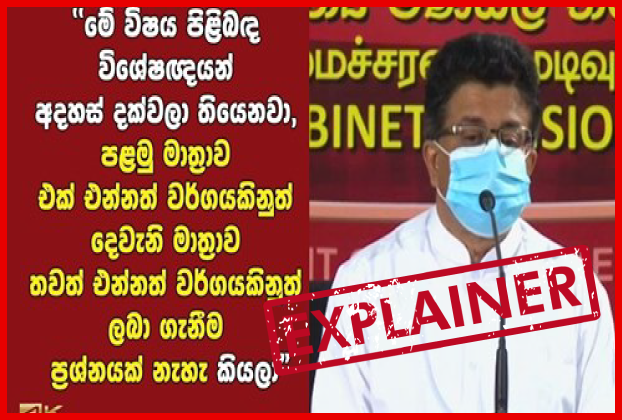
Explainer: කෝවිඩ් සඳහා මිශ්ර එන්නත් ලබා ගැනීම සුදුසු ද? | Explainer on COVID19 vaccine mixing
Publisher’s rating: Explainer
The review examines whether a second COVID-19 vaccine dose could be a different vaccine from the first, in the setting of a shortage of AstraZeneca doses in Sri Lanka. It focuses on Udaya Gammanpila’s remarks at a cabinet decision briefing: he described obtaining more AstraZeneca as one option, said experts had suggested another vaccine could be used for the second dose, and left the final decision to Sri Lankan health authorities. The article presents its work as an examination of those remarks, not as a finding that mixed doses were already established as standard practice. (S1: “ඇස්ට්රාසෙනකා පළමු මාත්රාව ලබා ගත් පුද්ගලයන්ට දෙවන මාත්රාව ලබා දිය යුත්තේ කෙසේද යන්න පිළිබඳ කැබිනට් තීරණ දැනුම්දීමේදී අමාත්ය උදය ගම්මන්පිළ මහතා ප්රකාශ කළේ මෙලෙසිනි.”; “අවසාන තීරණය ලංකාවේ සෞඛ්ය බලධාරීන් විසින් ලබාගනු ඇති බවත් තමා එම විෂයෙහි ප්රවීණයෙක් නොවන බවත් අමාත්යවරයා එහිදී පවසා සිටියා.”) To assess the scientific basis, the review reports consulting the WHO’s Sri Lankan office and Professor Neelika Malavige, and discusses statements by WHO chief scientist Soumya Swaminathan and epidemiologist Sudath Samaraweera. Its account says clinical trials of mixing vaccine types were under way, but that WHO guidance at the time was to use the same vaccine for both doses because evidence was not yet sufficient to recommend mixing. It also says WHO-listed vaccines had been assessed as individual products, rather than as mixed-dose regimens. (S1: “එනම් මාත්රා දෙකේදීම එකම එන්නත ලබාගැනීමයි.”; “වර්තමානයේ, මෙසේ කොවිඩ් එන්නත් මිශ්ර කිරීමේ (Mixing and Marching) කාර්යක්ෂමතාව පිළිබඳ අවශ්ය තරම් විද්යාත්මක දත්ත නොමැති බවයි.”; “හදිසි භාවිත ලැයිස්තු (EUL) සහිත COVID-19 එන්නත් තක්සේරු කර ඇත්තේ තනි තනි වශයෙන් ලබාදෙන නිෂ්පාදන රෙගුලාසි යටතේ පමණක් බවත් පවසා සිටියා.”) The review’s July 6 update adds later information: WHO’s vaccine-unit director Kate O’Brien said limited trial data indicated that Pfizer as a second dose after AstraZeneca appeared safe and effective, while emphasizing the lack of extensive data. The article also reports that Sri Lanka planned to offer Pfizer from July 7 to people over 55 who had received AstraZeneca first. This update documents subsequent evidence and a planned local measure; it should not be read as evidence that the original comments themselves established a general recommendation to mix vaccines. (S1: “Update: (July 06th 2021)”; “තවමත් මෙම විෂය සම්බන්ධයෙන් බොහෝ දත්ත නොමැති බැවින් එන්නත් දෙකම එකම මාත්රාවකින් ලබා ගැනීම නිර්දේශ කළද මෙතෙක් ලැබී ඇති සීමිත දත්ත වලට අනුව ඇස්ට්රාසෙනෙකා එන්නත පළමු මාත්රාව ලෙස ලබා ගැනීමෙන් පසුව ෆයිසර් එන්නත දෙවන එන්නත ලෙස ලබා දීම ආරක්ෂිත හා ඵලදායී බවට පරීක්ෂණ මඟින් පෙනී ගොස් තිබෙන බවයි.”; “හෙට (ජූලි 07) සිට මෙරටදී ඇස්ට්රාසෙනෙකා එන්නතේ පළමු මාත්රාව ලබා ගත් වයස අවුරුදු 55 ට වැඩි පුද්ගලයන් සඳහා ෆයිසර් එන්නත ලබා දීමට පියවර ගෙන තිබෙනවා.”)
No hay que vacunarse a menos que sea muy vulnerable al virus
Publisher’s rating: Falso
Hay razón maligna detrás de la vacunación para lograr pasaporte obligatorio
Publisher’s rating: Falso