PeakMetrics / Fact Checks
Health & medicine fact checks
Explore claims publishers have checked about health & medicine. Read their original ratings and follow the evidence.
Search fact checks
Search by text or image13,674 published reviews in this topic

A OMS está dizendo que quem tomou Coronavac vai ter de se revacinar.
Publisher’s rating: FALSO: A OMS não fez tal afirmação e, por ora, está avaliando a eficiência da vacina. O Instituto Butantan, que produz o imunizante no Brasil, também nega a informação.
Taking a hot five-minute bath at 41°C four or more times a week lessens the chance of infection with COVID-19 by 60%.
Publisher’s rating: False

All vaccinated people will die in 2 years; Vaccines create more variants; Vaccination leads to more deaths – Luc Montagnier’
Publisher’s rating: FALSE
FACTLY checked a social-media post attributing three assertions to Nobel laureate Luc Montagnier: that all vaccinated people would die within two years, vaccines create new variants, and vaccination leads to more deaths. The review reports that it examined Montagnier’s interview, published by the U.S.-based RAIR Foundation, and that RAIR clarified in a tweet that he had not said all vaccinated people would die in two years. The review distinguishes that false attribution from Montagnier’s other expressed concerns about vaccination. On variants, the review says Montagnier argued that vaccination creates them and invoked antibody-dependent enhancement (ADE). It explains that ADE had been reported in other diseases, but that its relevance to coronaviruses remained unclear and evidence was insufficient to establish its effect for coronavirus. The review also cites WHO’s description of mutations as changes that arise as viruses replicate, and reports that viral spread increases opportunities for mutation. It says WHO considered vaccination an important way to protect people and limit the risk of new variants—not a cause established by the review’s evidence. On deaths, FACTLY acknowledges reports of deaths after vaccination but puts them in context: it cites 4,863 death reports received by VAERS among people who had received COVID-19 vaccines, out of more than 285 million doses administered in the United States from December 14, 2020, through May 24, 2021. The review says those reports represented 0.0017% of doses and concludes that there was not enough scientific evidence to link vaccination with more deaths. These figures describe reports after vaccination; the excerpt does not establish that the reports were confirmed as caused by vaccines.

Ator e embaixador da saúde da Índia recebe picada ao vivo na televisão para mostrar a todos a segurança! M0rre dois dias depois e entra pra a estatística.
Publisher’s rating: ENGANOSO: O artista sofreu um infarto e a equipe médica que o atendeu descartou ligação entre os fatos.
La Croix-Rouge n'accepte pas les dons de sang de personnes vaccinées contre le Covid-19, aux Etats-Unis et au Japon.
Publisher’s rating: Les deux messages sont trompeurs. L’auteure du premier d’entre eux, qui n’identifie aucune source d’information – sauf, vaguement, les Etats-Unis, dans un fil de discussion -, déforme la réalité. L’auteur du second message est complètement dépassé par les événements.
The claim combines two distinct allegations: that the American Red Cross bars people vaccinated against Covid-19 from donating blood, and that the Japanese Red Cross has asked vaccinated people not to donate. The review finds both misleading, while distinguishing ordinary blood donation from a particular use of donated plasma. It says the US news clip at issue had a subtitle stating that vaccinated people could not donate plasma, but explains that the segment did not report that the Red Cross opposed blood and plasma donations because vaccinated people were “contaminated.” [S1: “Le sous-titre est trompeur, car à aucun moment il n’est question dans cette émission d’une prétendue opposition de la Croix-Rouge américaine aux dons de sang et de plasma de personnes ayant été vaccinées contre le Covid-19, car elles seraient « contaminées ».”] For the United States, the review reports that the American Red Cross allowed eligible people to give blood after most Covid-19 vaccines without a waiting period, provided they felt well and had no symptoms. It notes an exception: people who received a live attenuated vaccine, or did not know which type they received, were to wait two weeks. The separate restriction concerned convalescent plasma: vaccinated people could not donate plasma for that specific treatment use. The review links this policy to FDA guidance issued in February 2021, which limited collection of Covid-19 convalescent plasma from vaccinated people unless they had recently recovered from Covid-19 and were vaccinated after diagnosis. [S1: “Dans la plupart des cas, il n'y a pas de période d'exclusion pour les personnes ayant reçu un vaccin COVID-19, tant qu'elles ne présentent pas de symptômes et se sentent bien au moment du don.”] [S1: “La Croix-Rouge américaine précise que « pour l’instant », les personnes qui ont reçu un vaccin contre le Covid-19 « ne peuvent pas donner de plasma de convalescent à la Croix-Rouge ».”] [S1: “La Croix-Rouge suit ainsi une recommandation de la Food and drug administration (FDA) américaine, qui date de février 2021.”] For Japan, the review says the Japanese Red Cross announced on April 28 that, from May 14, vaccinated people could donate blood after waiting 48 hours. That interval applied after each of the two doses. The Facebook message, it explains, relied on an earlier February 22 announcement temporarily suspending donations while health guidance was pending; the later policy replaced that suspension. Thus the evidence does not support a continuing blanket ban in either country, though the US plasma restriction and the Japanese post-vaccination waiting period are important qualifications. [S1: “Le 28 avril, la Croix-Rouge japonaise a publié un communiqué précisant qu’à partir du 14 mai, les dons de sang des personnes vaccinées dans le pays (toutes à l’aide du produit développé par Pfizer et BioNTech) ne sera possible qu’à l’issue d’une période de 48 heures après la vaccination.”] [S1: “Le 22 février, elle avait annoncé une suspension temporaire des dons de sang effectués par des personnes vaccinées, en attendant de recevoir des consignes sanitaires précises.”]

"We were told categorically in March that people would be tested before they went back to care homes. We only subsequently found out that that hadn't happened."
Publisher’s rating: He is correct that this did not happen until well into April, but we can't verify what Matt Hancock said to Mr Cummings and Boris Johnson at the time.

La Suède arrête le test PCR.
Publisher’s rating: Ceci est faux. Comme l’a confirmé l’Agence suédoise de Santé publique à la dpa, les tests PCR sont toujours utilisés en Suède et sont considérés comme fiables.
The claim was that Sweden had stopped using PCR tests, alongside an assertion that PCR could not establish whether a patient was healthy. The review reports that Sweden’s Public Health Agency still listed PCR among the available COVID-19 tests and described them as being used on a large scale. Jon Pelling, the agency’s press officer, told dpa that tests were considered reliable when conducted under the quality-assessment rules set by health-care law. The review also reports that Sweden performed about 350,000 PCR tests per week in April and May, with 9.7 million tests conducted by then, and that PCR was generally the preferred test for diagnosing COVID-19. These details directly contradict the claim that Sweden had stopped using PCR.
Indirecte vaccinatieplicht op komst voor overheidsmedewerkers.
Publisher’s rating: Het bericht is onjuist. Er is geen enkel bewijs te vinden dat overheidsmedewerkers de toegang tot hun werkplek zal worden ontzegd als zij zich niet laten vaccineren. Een woordvoerder van het Ministerie van Volksgezondheid, Welzijn en Sport (VWS) laat weten dat hier geen plannen voor zijn. Daarnaast zal de nieuwe CoronaCheck-app alleen worden ingezet voor niet-essentiële locaties.
The Facebook post claimed that the Netherlands was preparing an indirect vaccination requirement for government employees by denying unvaccinated staff access to government buildings. The review checked whether such a policy was planned and whether the upcoming CoronaCheck app would impose that restriction. It reports that a spokesperson for the Ministry of Health, Welfare and Sport told dpa that the government had no plans to require its employees to be vaccinated or to exclude unvaccinated people from government buildings. The review also distinguishes the app’s intended use from the claim: CoronaCheck would be used for certain non-essential venues, where people could gain access by showing proof of vaccination or a negative test. It says public transport and government buildings would remain accessible. Thus the account does not support the asserted workplace-access rule; it describes a separate system for entry to specified venues. As context for how the claim arose, the review points to a parliamentary debate in November 2020. The VVD said it was seriously considering an indirect vaccination requirement and cited access to government buildings as an example, while then-minister Hugo de Jonge opposed that idea. The review says the proposal did not become reality and reports that, apart from coverage of that debate, it found no sources supporting the claim that such a policy was coming.
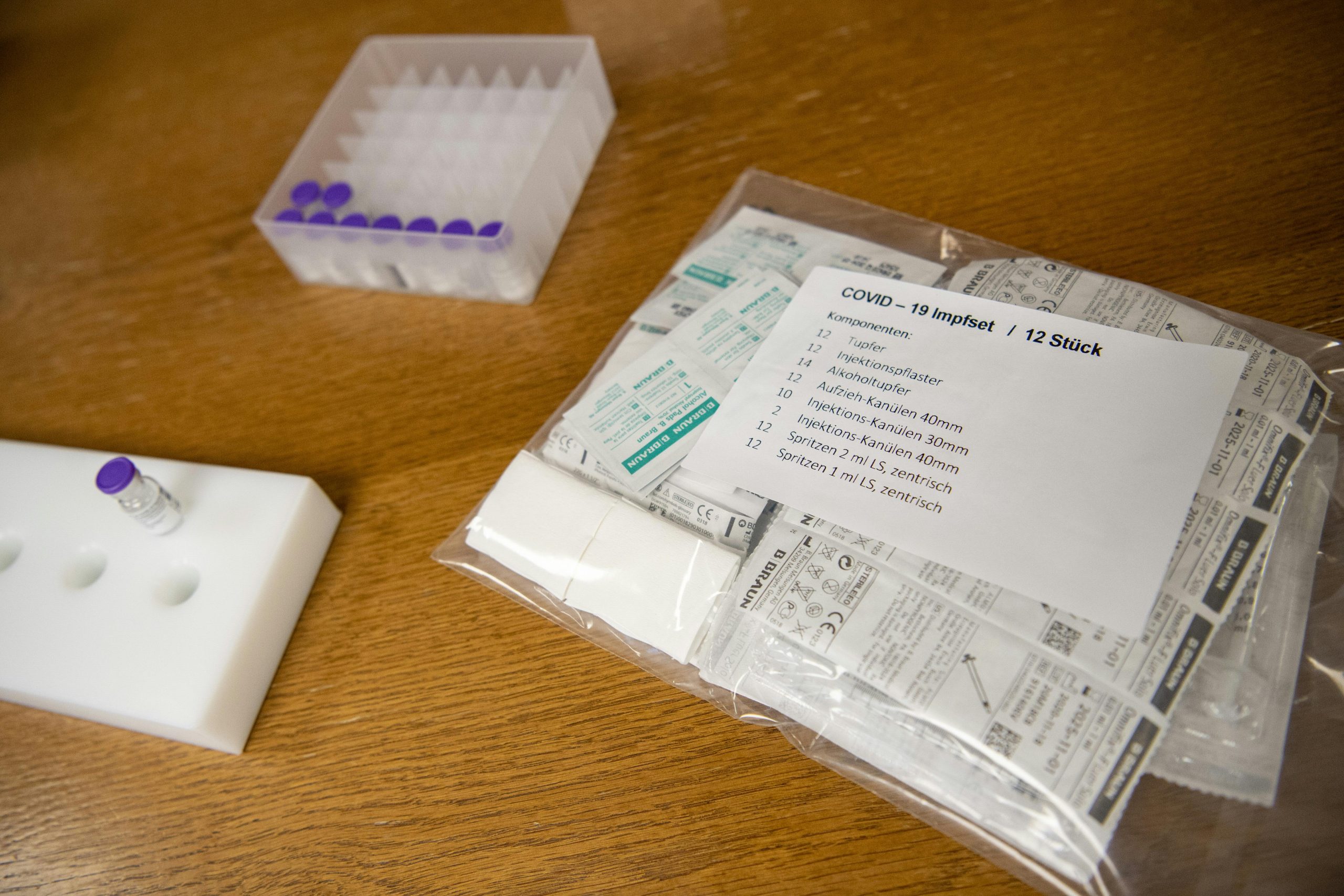
Die Covid-Impfung ist nicht sicher. 80 vollständig Geimpfte sind an Corona erkrankt, 20 davon schwer.
Publisher’s rating: Tatsächlich ist laut dem BASG bis 14. Mai 2021 bei 80 vollimmunisierten Menschen die Schutzwirkung ausgeblieben. Allerdings sind 80 Menschen gemessen an den bis dahin vollständig gegen Corona Geimpften eine sehr niedrige Zahl und liegt, was die Wirksamkeit der Impfstoffe betrifft, vollkommen im Rahmen.
Zweden stopt met het gebruik van PCR-tests omdat ze te onbetrouwbaar zijn.
Publisher’s rating: De beweringen zijn fout. De PCR-tests worden nog steeds gebruikt in Zweden en worden als betrouwbaar gezien, zo bevestigde het Zweedse Agentschap voor Volksgezondheid.
The claim concerned Sweden’s use of PCR tests: posts said the country would stop using them because they were unreliable and could detect viral RNA for months after infection. The review traced the claim to a Frontnieuws article; screenshots of that article were also circulating on Facebook. The article relied on a Swedish Public Health Agency publication from July 2020, last updated in November 2020. To check whether Sweden was stopping testing, the review points to the Agency’s website, which continued to list PCR tests as part of its testing policy, and reports comments from Agency spokesperson Jon Pelling. He said Sweden had conducted about 350,000 PCR tests in April and May and 9.7 million in total, and that the plan was to keep testing at that level. He also said the Agency considered PCR tests reliable when performed according to the standards set out in health legislation. The claim’s reference to viral RNA being detectable after infection omits a distinction the Agency publication made: detection does not by itself establish that someone remains contagious. The review says the publication noted that RNA can be detected weeks after infection, while citing the Agency’s explanation that this does not mean a person is still infectious. Thus, the cited limitation was about what a PCR result can establish regarding contagiousness—not evidence that Sweden was ending PCR testing or that the tests were considered unreliable.
"One of the critical things that was completely wrong in the whole official thinking... in February-March was: First of all, the British public will not accept a lockdown. Secondly, the British public will not accept what was thought of as an east Asian-style track and trace-type system"
Publisher’s rating: We checked and the minutes from a meeting of the behavioural science advisers (SPI-B) on 12 March suggest they thought people would accept restrictions.
Schweden stoppt PCR-Tests.
Publisher’s rating: Die Behauptung ist falsch. In Schweden werden weiterhin Menschen per PCR-Test auf das Coronavirus getestet.
The claim concerned whether Sweden had stopped using PCR tests to identify coronavirus cases. The fact-check reports that the Swedish Public Health Agency said PCR testing was continuing at high volume: in April and May, Sweden conducted around 350,000 tests per week and had carried out 9.7 million PCR tests in total. The agency also said it planned to maintain high testing capacity and that PCR was the test of choice for most indications for diagnosing Covid-19. [S1: “Im April und Mai wurden in Schweden wöchentlich rund 350 000 und bisher insgesamt 9,7 Millionen PCR-Tests durchgeführt, schreibt die schwedische Gesundheitsbehörde (Folkhälsomyndigheten) auf Anfrage der Deutschen Presse-Agentur (dpa). «Es ist geplant, mit einer hohen Testkapazität fortzufahren, und PCR-Tests sind für die meisten Indikationen zur Diagnose von Covid-19 der Test der Wahl», heißt es weiter.”] The review also cites the agency’s website, which said PCR tests were being used on a large scale. It distinguishes that ongoing use from a separate question: whether a PCR result alone can establish that someone is infectious. The agency said it could not determine infectiousness from a PCR test alone, and that decisions about when someone is no longer infectious also take clinical criteria and time since symptom onset into account. [S1: “Auch auf ihrer Webseite schreibt die Folkhälsomyndigheten, dass PCR-Tests derzeit in großem Umfang eingesetzt würden (Stand: 24. Mai 2021).”] [S1: “Die Folkhälsomyndigheten antwortete der dpa: «Es ist nicht möglich, die Infektiosität allein mit einem PCR-Test zu bestimmen». Daher würden die Kriterien für die Einstufung einer Person als nicht infektiös neben Tests auf klinischen Kriterien und der Zeit ab den ersten Symptomen basieren.”] The fact-check says social-media posts quoted a passage explaining that PCR can detect viral RNA for weeks, sometimes months, after illness and cannot distinguish infectious viruses from those neutralized by the immune system. It characterizes the posts’ conclusion that Sweden had therefore abandoned PCR testing as a misreading: the quoted passage concerned what a test can establish about infectiousness, not whether Sweden continued testing. [S1: “Die Sharepics im Internet zitieren einen anderen Text auf der Webseite der Behörde: «Die in Tests zum Nachweis von Viren verwendete PCR-Technologie kann nicht zwischen Viren, die Zellen infizieren können, und Viren, die vom Immunsystem neutralisiert wurden, unterscheiden. Daher können diese Tests nicht verwendet werden, um festzustellen, ob jemand ansteckend ist oder nicht. RNA von Viren kann oft Wochen (manchmal Monate) nach der Krankheit nachgewiesen werden, bedeutet jedoch nicht, dass Sie immer noch ansteckend sind.»”] [S1: “Dieser Abschnitt ist zwar korrekt wiedergegeben, in den sozialen Medien wird daraus aber die falsche Schlussfolgerung gezogen.”]
De mondkapjesplicht geldt wettelijk niet meer vanaf 1 juni.
Publisher’s rating: Dit klopt niet. De Tijdelijke wet maatregelen COVID-19, waar ook de mondkapjesplicht onder valt, kan telkens met drie maanden worden verlengd. De wet is inmiddels verlengd tot 1 september 2021. Dat geen enkele wet nog geldig is, is daarnaast onzin.
AIIMS, Delhi released a symptom list for COVID-19
Publisher’s rating: False

Dr. Vladimir Zelenko receberá o Prêmio Nobel pelo sucesso no tratamento da Covid com Hidroxicloroquin@ e Zinco
Publisher’s rating: Falso
La Suède cesse d’utiliser les tests PCR : ils ne sont pas assez fiables.
Publisher’s rating: Cette affirmation est fausse. Les tests PCR sont toujours utilisés en Suède et sont considérés comme fiables, a confirmé à la dpa l’Agence suédoise de Santé publique.
The claim circulated in a Facebook group alongside an alleged news article. The investigation checked whether Sweden had stopped using PCR tests and whether the Swedish Public Health Agency had warned against relying on them. It reports that the agency’s website still listed PCR among the Covid-19 tests available in Sweden, described as “currently used on a large scale.” The agency also told dpa that PCR remained its preferred test for most Covid-19 diagnoses and that it considered tests reliable when conducted under the applicable quality-assessment rules. The figures cited by the agency indicate continued use: about 350,000 PCR tests were performed per week in Sweden in April and May, and 9.7 million had been performed in total by the time of the agency’s statement. The agency said it planned to maintain high testing capacity. These details contradict the claim that Sweden had ceased using PCR tests because they were unreliable. The review also examined the Swedish agency publication linked by the shared article, dated July 21, 2020. It found that the publication did not warn against using PCR tests to detect infection. Instead, it explained that a PCR result cannot establish with absolute certainty whether someone is contagious: a test may remain positive for weeks after the contagious period. The agency said that decisions about whether someone is no longer contagious also consider clinical criteria and time since symptoms began.
Peepal leaves can be kept in bottle and smelled to increase Oxygen saturation in body
Publisher’s rating: Mostly False
WHO hat Definition von Herdenimmunität geändert, dass Infektionen nicht mehr dazu betragen.
Publisher’s rating: Die Behauptung ist falsch. Es hat zwar Änderungen gegeben - aber anders als in sozialen Medien behauptet wird.
The Facebook post examined in the review claimed that the WHO had quietly changed its definition of herd immunity so that it could be achieved only through vaccination, not through immunity developed after infection. The review confirms that the WHO’s wording did change during 2020, but explains that the post left out a subsequent change back to the earlier definition. The review compares archived versions of the WHO website. It says the version dated June 9, 2020, described herd immunity as indirect protection that could arise either through vaccination or through immunity developed after a previous infection. The version dated October 15 instead described it as a concept for vaccination and referred to reaching a vaccination threshold. That October wording supports the post’s observation that the definition had changed at that point, but not its broader implication that natural immunity was no longer recognized by the WHO. The decisive chronology is that, according to the review, the WHO returned to the earlier definition on December 31, 2020, and had maintained that definition since. Because the post did not mention this reversal, it presented an incomplete account of the WHO’s published definition.