PeakMetrics / Fact Checks
Health & medicine fact checks
Explore claims publishers have checked about health & medicine. Read their original ratings and follow the evidence.
Search fact checks
Search by text or image13,672 published reviews in this topic
Dokters raden aan om coronavaccin in penis te injecteren.
Publisher’s rating: Dit is geen artikel van CNN en ook de studie waar naar verwezen wordt bestaat niet. De beste plek om een vaccin te zetten is in een spier. De penis is geen spier.
The post presented an image resembling a CNN article and claimed that doctors, citing a University of California study, recommended injecting a COVID-19 vaccine into the penis. The investigation found that the image was fabricated: searching CNN’s website for the headline produced no result, and the image lacked the author and publication date that the review says appear on genuine CNN articles. It also noted that the headline ended with a period, unlike a news headline as described in the review. (S1: “Een zoektocht naar de titel op de website van CNN levert echter geen resultaat op.”; “Ook is onder de titel geen auteur of datum van publicatie zichtbaar, zoals bij echte CNN-artikels.”; “In de Facebookpost eindigt de titel ook met een punt.”) The review also checked the study cited in the post. It reports that multiple fact-checking organisations had previously investigated the image and could not find the purported study; an AAP-reported University of California spokesperson said the university had never conducted such a study. The doctor whose photograph appeared in the image, Mohitkumar Ardeshana, told Fact Crescendo that he had no connection to any study on injecting COVID-19 vaccines into the penis. (S1: “Geen van deze organisaties kon de studie vinden waar naar verwezen wordt en een woordvoerder van de Universiteit van Californië bevestigde aan AAP dat zo'n studie nooit aan de univeristeit is uitgevoerd.”; “Hij bevestigde aan de Indische factchecksite Fact Crescendo dat hij niets te maken heeft met enige studie naar de injectie van coronavaccins in de penis.”) The review distinguishes the fake vaccine claim from the separate treatment shown in the image: an injection into the penis may be used for erectile dysfunction. It says COVID-19 vaccines are generally administered into a muscle, while the penis is not a muscle. Thus, the image’s medical setting does not substantiate the post’s claim about vaccine recommendations. (S1: “Coronavaccins worden over het algemeen ingebracht in een spier”; “De penis is geen spier.”; “De afbeelding van de injectie in een penis lijkt afkomstig van een artikel over een behandeling voor erectiestoornissen.”)

Comparison of respiratory symptoms of COVID-19 with other infections shared by pathology department of AIIMS, Delhi
Publisher’s rating: FALSE
The claim concerns a social-media list comparing COVID-19 symptoms with those of other infections and attributing the comparison to the pathology department of AIIMS Delhi. FACTLY examined whether AIIMS had issued that list. Its review reports that “AIIMS Delhi has not issued any such comparison of symptoms of COVID-19, flu, and common cold.” It also checked AIIMS’s dedicated COVID-19 portal: the portal listed COVID-19 symptoms similar to those in the post, but did not compare them with symptoms of other diseases. The review distinguishes between some accurate symptom information and the list’s completeness and provenance. It says the symptoms shown for COVID-19 were true but incomplete, and reports that AIIMS listed fever, tiredness and dry cough as common symptoms, with aches and pains, nasal congestion, runny nose, sore throat or diarrhea also possible. The existence of some correct symptom descriptions therefore does not establish that AIIMS issued the comparison. A further omission was asymptomatic infection. The review says the post left out people who become infected but develop no symptoms or feel unwell, and notes that WHO, CDC and AIIMS had mentioned this condition. Taken together, the review’s account of the AIIMS portal and the missing qualification supports its conclusion that the list was not released by AIIMS and was incomplete.

*_Viram isso_* *'NÃO SEREMOS MAIS VACINADOS', DISSE O PRESIDENTE CROATA ZORAN MILANOVIC. O mundo começa a reagir.*
Publisher’s rating: Falso
95% van de omikronbesmettingen in Duitsland waren bij gevaccineerden, aldus het RKI.
Publisher’s rating: Het percentage is berekend op basis van absolute cijfers uit een rapport van het Robert Koch Instituut (RKI) van 30 december 2021. Bij deze berekening is echter buiten beschouwing gelaten dat voor het grootste deel van de mensen met een omikronbesmetting, de vaccinatiestatus niet bekend is. Het is dus niet zo zwart-wit als online wordt voorgedaan en het percentage besmette mensen met een bekende vaccinatie valt in werkelijkheid een stuk lager uit. Ook stond er een fout in het RKI-rapport, die een paar dagen later is gecorrigeerd. Het aantal besmettingen bij bekend niet-gevaccineerden is flink naar boven bijgesteld.
Ouders geven impliciete toestemming tot coronavaccinatie van hun kinderen tenzij ze expliciet weigeren.
Publisher’s rating: Dit klopt niet. Dit is enkel nodig wanneer beide ouders het onderling oneens zijn over de vaccinatie van hun kind. Kinderen kunnen alleen gevaccineerd worden als de ouders zelf aanwezig zijn of schriftelijk toestemming geven. De wetgever gaat er echter vanuit dat als één ouder toestemming geeft, dit voor beide ouders geldt, tenzij anders aangegeven. Daarom moet in dat geval de ouder die de vaccinatie niet wil, deze expliciet weigeren.
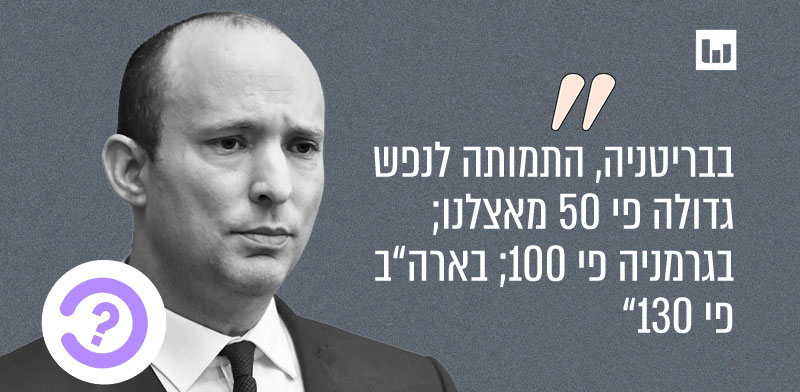
בזמן האחרון התמותה בבריטניה הייתה גבוהה פי 50 מבישראל, בגרמניה פי 100 ובארה"ב פי 130
Publisher’s rating: דרוש הקשר
KEINE STAATSHAFTUNG für Impfschäden bei gesunden Kindern zwischen 5 und 11 Jahren!
Publisher’s rating: Der Staat haftet für etwaige gesundheitliche Schäden nach einer Corona-Impfung, solange diese gemäß der Zulassung erfolgte. Das gilt unabhängig von einer Empfehlung der Ständigen Impfkommission (Stiko).
Bestandteile des Pfizer-Impfstoffs sind nicht für den menschlichen Gebrauch bestimmt.
Publisher’s rating: Sämtliche Inhaltsstoffe des Covid-19-Impfstoffs Comirnaty inklusive der Lipide ALC-0315 und ALC-0159 wurden dem Paul-Ehrlich-Institut (PEI) zufolge bei der Zulassung auf Anwendbarkeit beim Menschen geprüft. Die Lipide werden jedoch auch als Laborchemikalien vertrieben. In diesem Fall wird vor einer Anwendung am Menschen gewarnt. Eine derartige Warnung ist im Facebook-Post zu sehen.
The claim concerns whether two named lipids in the BioNTech/Pfizer Comirnaty vaccine—ALC-0315 and ALC-0159—are not approved for human use. The original review says the Paul-Ehrlich-Institut (PEI) had assessed all Comirnaty ingredients, including those lipids, for suitability for human use as part of the authorization process. It distinguishes that medicine-authorization assessment from the separate sale of the same substances as laboratory chemicals. To check the claim’s basis, the review refers to the European Medicines Agency’s product information for the vaccine and to information from the PEI, which is responsible for the safety of vaccines used in Germany. It reports that the EMA product information lists the lipids as ingredients, and that the PEI describes their function as helping transport the vaccine’s mRNA into cells. The review also cites the PEI’s explanation that substances used in medicines are assessed by manufacturers and during the authorization process for their suitability for human use. The apparent warning has a different setting: the review says the Facebook post linked to Echelon Biosciences, which sells the lipids as research or laboratory chemicals. In those product data sheets, the company labels the substances “for research use only.” The review explains that laboratory chemicals are subject to different production and storage standards from medicines, so vendors warn against human use in that context. It says the PEI cautions that such warnings can wrongly suggest the substances cannot be used in humans at all. Thus the laboratory-product warning does not establish that the vaccine ingredients were not assessed for human use during Comirnaty’s authorization.
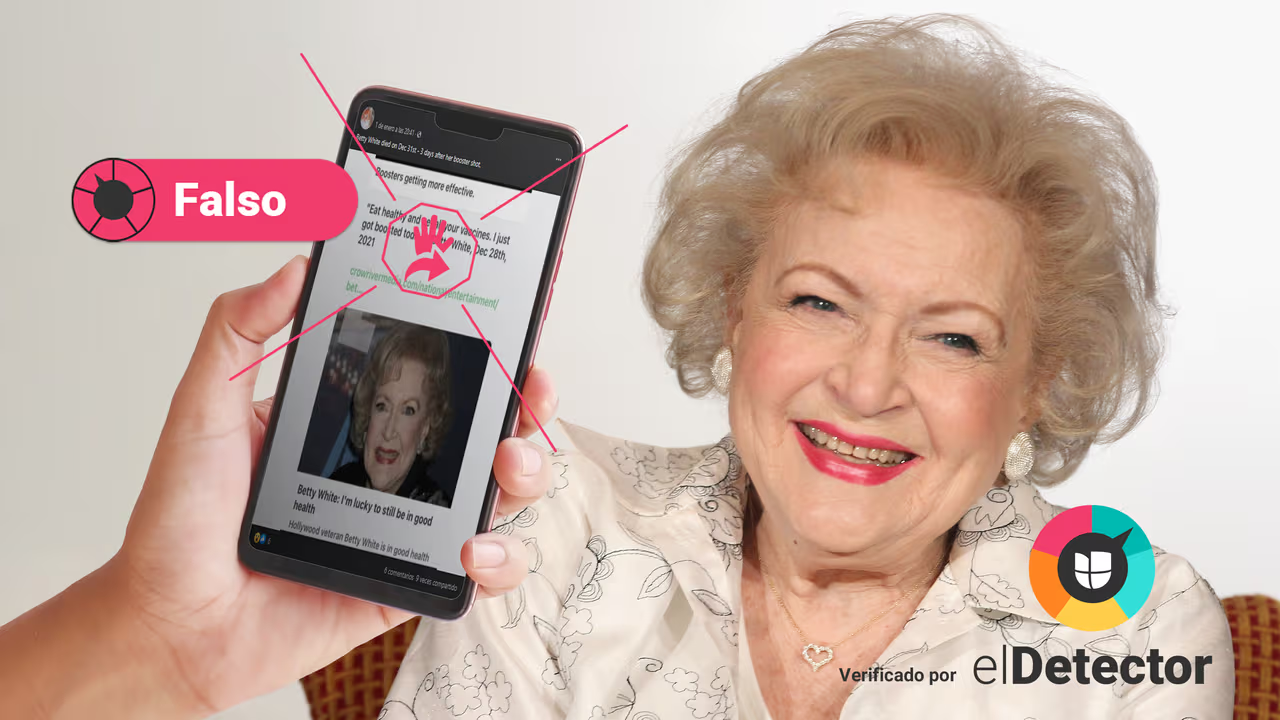
La actriz Betty White falleció a causa del refuerzo de la vacuna contra el covid-19
Publisher’s rating: Falso


Fauci dijo que hay que vacunarse contra el covid-19 cuatro veces al año
Publisher’s rating: Falso
The claim was that Anthony Fauci, then a White House pandemic adviser and director of the National Institute of Allergy and Infectious Diseases (NIAID), advocated that Americans receive four COVID-19 vaccine doses each year. The review says the allegation circulated in Facebook posts and traces it to a November 26, 2021 article by Real Raw News. It reports that NIAID denied the claim when asked directly: “No, eso no es cierto,” a spokesperson replied to the question about whether Fauci had advocated four annual doses. The review also describes searches for evidence of the alleged statement. Its reporters searched Google for the claim and checked Fauci’s public statements available on NIAID’s website; they say they found no record of him advocating four vaccinations a year. They also examined statements about vaccination and boosters that did exist. Those statements discussed protection against severe disease and the effectiveness of boosters, but, according to the review, did not call for four doses annually. The article distinguishes the four-doses-a-year allegation from discussion of a possible fourth dose. It says a December 26 Univision News clip quoted Fauci saying it was too early to discuss a fourth coronavirus dose—not four doses each year. It also describes his December 12 appearance on ABC’s “This Week”: he said it was difficult to say whether annual booster doses would be needed and discussed the potential durability of protection from boosters. These discussions do not substantiate the specific annual four-dose claim. Finally, the review identifies Real Raw News as the allegation’s reported origin and notes that the site’s own disclaimer says its content may contain humor, parody, and satire. The combination of NIAID’s direct denial, the reported absence of supporting statements in the searches, and the distinction between discussing a possible fourth dose and recommending four doses every year addresses the claim directly.
বড় মাত্র চার মাস বয়সি শিশু মোঃ আজমাইন হোসেন। ডক্টর পরিক্ষা নিরিক্ষা করে জানায় মোঃ আজমাইন হোসেন ফুসফুস ছিদ্র ও কিডনি তে সমস্যা
Publisher’s rating: False
Das Paul-Ehrlich-Institut hat angeblich 200 000 Fälle von Nebenwirkungen und 1919 Todesfälle durch Corona-Impfungen registriert.
Publisher’s rating: Bei den vom Paul-Ehrlich-Institut (PEI) genannten Zahlen handelt es sich lediglich um sogenannte Verdachtsfälle - also Symptome und Vorfällen, die in zeitlicher Nähe zu einer Covid-19-Impfung auftraten. Das sind aber keine bestätigten Impfnebenwirkungen, -komplikationen oder kausal damit zusammenhängende Todesfälle. Das PEI hält bei einer deutlich geringeren Zahl der Todesfälle einen ursächlichen Zusammenhang überhaupt für möglich oder wahrscheinlich.


ఇజ్రాయిల్లో ఫ్లోరోనా పేరుతో కొత్తరకం కరోనా వేరియంట్ వెలుగులోకి వచ్చింది
Publisher’s rating: MISLEADING


देश में ओमिक्रॉन वैरिएंट के प्रसार के बावजूद पीएम मोदी कर रहे हैं रोड शो
Publisher’s rating: FALSE
Aux États-Unis, les CDC ne reconnaissent plus les tests PCR comme une méthode valide pour détecter le Covid-19.
Publisher’s rating: C'est faux. Les CDC ont retiré leur demande d'autorisation pour un test PCR spécifique. Toutefois, ils ne mettent pas en doute l'efficacité de ce test, ni des tests PCR en général, dans le dépistage du Covid-19.
Les CDC américains admettent que la pandémie de Covid-19 est le produit d’un test PCR inapproprié.
Publisher’s rating: Il s’agit d’une fake news qui circule depuis plusieurs mois. Les CDC, compétents en matière de protection de la santé publique aux États-Unis, ont annoncé en juillet 2021 qu’ils retireraient un test PCR spécifique à partir de 2022. Cela ne concerne pas l’ensemble des tests PCR, et les CDC ne remettent pas en cause l’efficacité de ces tests.
The claim arose from a Facebook-shared article in Switzerland. It said the CDC had admitted that the Covid-19 pandemic was “the product of an inappropriate test” and that the United States had withdrawn Covid PCR tests because they could not distinguish Covid from flu. The review traces those allegations to a CDC announcement about one specific test, rather than an admission that PCR testing was invalid or that the pandemic was caused by a test. S1 states that the agency announced in July 2021 that it would withdraw “un test PCR spécifique à partir de 2022.” The test was the CDC 2019-nCoV Real-Time RT-PCR Diagnostic Panel, introduced in the United States in February 2020 to detect SARS-CoV-2. The review says the CDC planned to stop seeking emergency-use authorization for that test after December 31, 2021, and encouraged laboratories to adopt alternatives, including multiplex tests that can detect and distinguish SARS-CoV-2 and influenza. Thus, the announcement concerned a particular assay and a transition to other testing options—not the withdrawal of PCR tests generally. The review also reports that the CDC clarified its decision on August 2, 2021. It said the decision was not prompted by an effectiveness problem, described results from the specific test as reliable, and explained that the assay no longer met an unmet need as other tests had become available. On the flu question, the review says the specific assay was designed to detect SARS-CoV-2 and that influenza viral genetic material in a sample would not cause a false-positive result. These details directly contradict the claim’s asserted CDC admission and its portrayal of the announcement as evidence that PCR testing could not distinguish the viruses.