PeakMetrics / Fact Checks
Health & medicine fact checks
Explore claims publishers have checked about health & medicine. Read their original ratings and follow the evidence.
Search fact checks
Search by text or image13,673 published reviews in this topic
Les CDC américains admettent que la pandémie de Covid-19 est le produit d’un test PCR inapproprié.
Publisher’s rating: Il s’agit d’une fake news qui circule depuis plusieurs mois. Les CDC, compétents en matière de protection de la santé publique aux États-Unis, ont annoncé en juillet 2021 qu’ils retireraient un test PCR spécifique à partir de 2022. Cela ne concerne pas l’ensemble des tests PCR, et les CDC ne remettent pas en cause l’efficacité de ces tests.
The claim arose from a Facebook-shared article in Switzerland. It said the CDC had admitted that the Covid-19 pandemic was “the product of an inappropriate test” and that the United States had withdrawn Covid PCR tests because they could not distinguish Covid from flu. The review traces those allegations to a CDC announcement about one specific test, rather than an admission that PCR testing was invalid or that the pandemic was caused by a test. S1 states that the agency announced in July 2021 that it would withdraw “un test PCR spécifique à partir de 2022.” The test was the CDC 2019-nCoV Real-Time RT-PCR Diagnostic Panel, introduced in the United States in February 2020 to detect SARS-CoV-2. The review says the CDC planned to stop seeking emergency-use authorization for that test after December 31, 2021, and encouraged laboratories to adopt alternatives, including multiplex tests that can detect and distinguish SARS-CoV-2 and influenza. Thus, the announcement concerned a particular assay and a transition to other testing options—not the withdrawal of PCR tests generally. The review also reports that the CDC clarified its decision on August 2, 2021. It said the decision was not prompted by an effectiveness problem, described results from the specific test as reliable, and explained that the assay no longer met an unmet need as other tests had become available. On the flu question, the review says the specific assay was designed to detect SARS-CoV-2 and that influenza viral genetic material in a sample would not cause a false-positive result. These details directly contradict the claim’s asserted CDC admission and its portrayal of the announcement as evidence that PCR testing could not distinguish the viruses.

קרוב לשליש מהוצאות קופות החולים מופנה לטיפול בסוכרת
Publisher’s rating: לא נכון ברובו
The claim was made by Knesset Finance Committee chair Alex Kushnir after approval of a tax on sweetened drinks. In a Ynet interview, he said that nearly a third of health-fund spending went toward combating diabetes; MK Vladimir Beliak also made the same claim during committee discussions. The review traced the figure to a 2018 study led by Professor Ran Balicer, which Kushnir, the Health Ministry and other experts cited in response to the review’s inquiries. That study examined 150,000 members of Clalit who had diabetes in 2013 and compared the additional cost of their care with that of 150,000 Clalit members without diabetes. It found that 33% of Clalit’s 2013 spending on health services was allocated to members with diabetes. But that measure included all the health services those members used, not only costs caused by diabetes or its complications. The study separately estimated that diabetes itself accounted for 14% of Clalit’s spending that year—a materially different measure from the 33% figure. The review also reported that Israel’s Health Ministry said it could not determine what share of all Israeli health-fund spending was attributable to diabetes, because it lacked expenditure data by diagnosis and other characteristics. The ministry cautioned that the 2013 study might not accurately reflect current costs: newer technologies could reduce complications and related hospital costs while increasing medicine costs, and Clalit’s members were not a representative sample of the population. As a comparison, the ministry cited a US estimate that diabetes-related costs were about 12.5% of health spending in 2017. The evidence therefore supports neither treating the 33% allocation to diabetic members as diabetes-caused expenditure nor applying the Clalit finding to all Israeli health funds.

La vacuna contra el covid-19 aumenta el riesgo de ataque al corazón
Publisher’s rating: No hay evidencias
Die Corona-Impfung hat tödlichere Folgen als bekannt und im Impfstoff befinden sich unbekannte metallhaltige Stoffe.
Publisher’s rating: Für die im Video geäußerten Behauptungen gibt es keine Belege. Die Deutsche Fachgesellschaft für Pathologie bezeichnete sie als «Meinungsäußerungen» und «nicht wissenschaftlich fundiert». In Deutschland erhält und analysiert das Paul-Ehrlich-Institut Meldungen über mögliche Nebenwirkungen von Impfungen; dem Institut ist keine auffällig hohe Zahl von Todesfällen nach Covid-Impfungen bekannt.
The claim concerns a video titled “Pathologie-Konferenz,” in which two retired pathologists warned of allegedly fatal consequences of Covid vaccination and said they had found metal-containing material in vaccine samples. The review identifies the associated press conference as having taken place in Reutlingen on September 20, 2021. It reports that the speakers said they had analyzed eight autopsy results, drawn from ten cases they had been given, but that other doctors—not the speakers—had performed the autopsies. Some case details, including exact vaccination status or the interval between vaccination and death, were missing. The claimed results had not been published in scientific journals; they appeared in the video and on a website. The review describes the German Society for Pathology’s response: it said the presented data were not scientifically grounded and that the claims were personal opinions, not the position of the professional society. It also explains that the Paul-Ehrlich-Institut (PEI) monitors reports of suspected adverse reactions and compares statistically expected deaths with reported deaths in its regular vaccine-safety reports. The review cites the PEI report of December 23, 2021, which found no safety signal for any of the four Covid-19 vaccines then used in Germany. The review says the PEI knew of no unusually high number of deaths after Covid vaccination. For the alleged foreign material, the review reports that a pathology specialist at the Bundeswehr Hospital in Ulm identified the pictured objects as likely slide contaminants, including a possible textile fiber. It also quotes virologist Christian Drosten describing such material as typical contamination that can arise during drying or filtration, for example when a fiber comes loose from a cellulose filter. Thus, the video’s images and the small, incompletely documented set of cases do not establish the asserted vaccine-caused deaths or unknown metal-containing ingredients.

Ces deux titres du SUN prouvent que les complotistes avaient raison sur les puces dans les vaccins en 2020
Publisher’s rating: Faux
Usar enjuague bucal ayuda contra el coronavirus
Publisher’s rating: No hay evidencias
Tromethamin im Pfizer-Impfstoff ist gefährlich.
Publisher’s rating: Trometamol ist nicht nur in dem Comirnaty-Impfstoff für Fünf- bis Elfjährige enthalten, sondern in vielen Medikamenten und Kosmetika. Die pro Dosis enthaltene Menge ist nach Einschätzung von Fachleuten völlig ungefährlich.
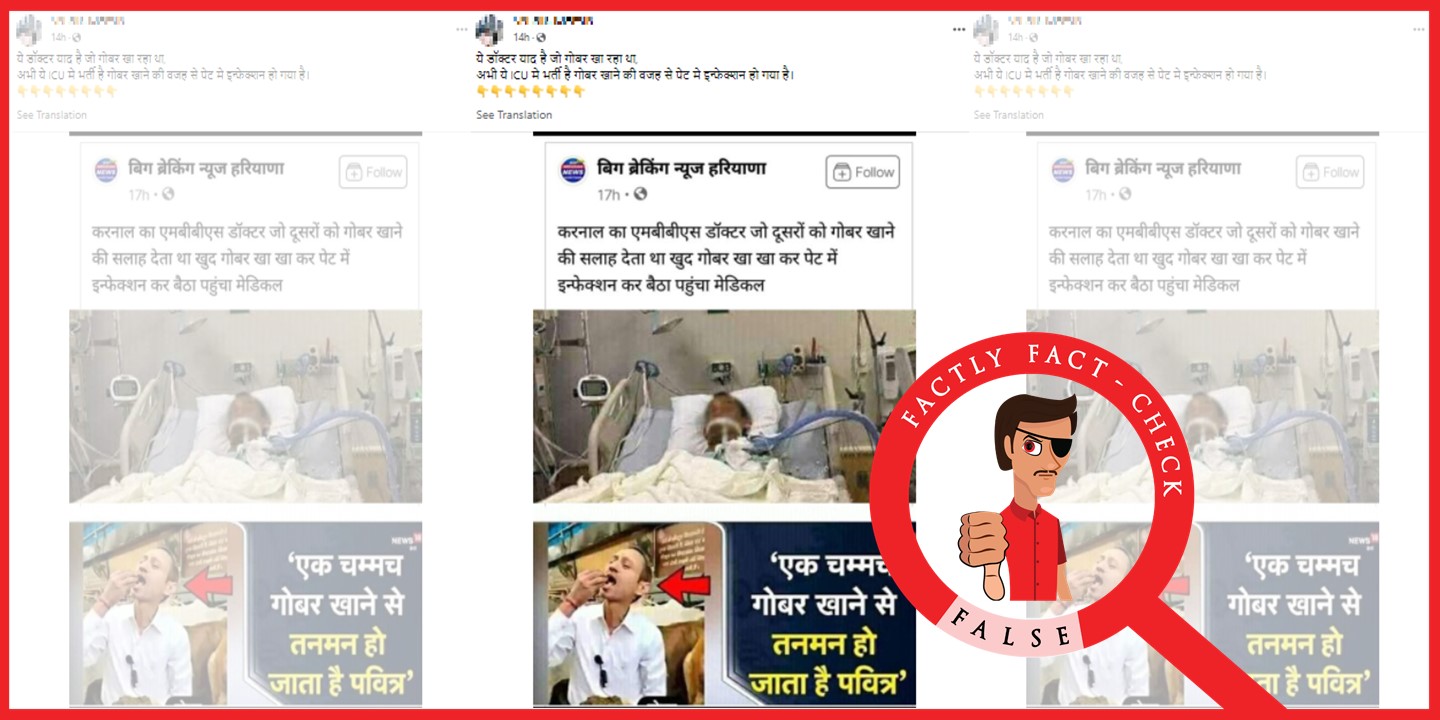
ಸಗಣಿ ತಿಂದ ಕರ್ನಾಲ್ನ ವೈದ್ಯರೊಬ್ಬರು ಆಸ್ಪತ್ರೆಗೆ ದಾಖಲಾಗಿ ಮಲಗಿರುವ ಚಿತ್ರ.
Publisher’s rating: FALSE
Die WHO hat durch die Impf-Nebenwirkungen in ihrer Datenbank offiziell bestätigt, dass die Corona-Impfung so gefährlich ist wie keine andere.
Publisher’s rating: Die gemeldeten vermuteten Impf-Nebenwirkungen in der WHO-Datenbank VigiBase belegen keineswegs, dass die Corona-Impfung gefährlicher wäre als alle anderen Impfungen. Die Datenbank führt nämlich keine bestätigten Fälle von Nebenwirkungen an. Es sind nur Vermutungen, dass eine Arznei oder eine Impfung eine Nebenwirkung gehabt haben könnte. Kausale Zusammenhänge können daraus genauso wenig abgeleitet werden wie ein Sicherheitsprofil. Auch Vergleiche zwischen verschiedenen Medizinprodukten können nicht gezogen werden.
The claim arose from a social-media-circulated article that treated the number of reported vaccine side effects in the WHO’s VigiBase database as evidence that the WHO had officially confirmed COVID-19 vaccination was as dangerous as any other vaccination. The dpa review identifies the figures as reports of suspected effects, not confirmed cases, and says the database does not establish that a medicine or vaccine caused a symptom. Its counts therefore cannot substantiate the claim of an official WHO safety finding. The review explains that VigiBase collects suspected adverse-effect reports submitted by medicines regulators or national authorities, and that VigiAccess makes database information available to the public. It quotes the database website’s warning that its information says nothing about a confirmed causal connection; establishing causation requires scientific assessment of all available data. The review also notes that the database lacks information needed to estimate how likely an effect is, including how many people took a product and for how long. Although the review says the reported counts for individual vaccines were broadly consistent with the figures in the circulated article, it explains why that does not validate the article’s conclusion: reports are not confirmed adverse effects, and the database is not suitable for comparing the safety profiles of different medical products. The review adds that the number of reports can be affected by the unusually large volume of COVID-19 vaccinations in a short period, heightened public attention, and calls from public institutions for people to report suspected effects.
Ursula von der Leyen a décidé que le pass vaccinal ne sera valable que pendant trois mois.
Publisher’s rating: Ursula von der Leyen a annoncé qu’une dose de rappel de vaccin contre le Covid-19 est recommandée au plus tard six mois après une vaccination complète. Le certificat de vaccination Covid de l’Union européenne restera valide encore trois mois après cette période, c’est-à-dire neuf mois au total. La durée de validité du certificat après la dose de rappel n'a pas encore été établie.
Eine Zeitungsseite zeigt, dass Bill Gates 2011 eine Entvölkerung durch Zwangsimpfungen plante.
Publisher’s rating: Die Seite stammt selbst aus einem verschwörungsideologischen Medium und gibt Aussagen von Gates über das Anwachsen der Weltbevölkerung sinnentstellend wieder. Er hatte 2010 gesagt, dass Impfungen und eine bessere Gesundheitsversorgung dazu beitragen könnten, ein starkes Anwachsen der Weltbevölkerung zu verhindern. Um eine «Reduktion» der Bevölkerung ging es nicht.
The claim concerns an old newspaper page circulated as evidence that Bill Gates planned to reduce the population through forced vaccinations. The review identifies the page as a front page from an Irish newspaper, whose wording referred to forced vaccination and “depopulation,” and compares that framing with Gates’s 2010 TED Talk. It reports that he discussed CO2 emissions and population growth, and argued for reducing the rate of growth rather than reducing the population itself. [S1: “Auf der nun erneut kursierenden Titelseite ist in englischer Sprache unter anderem von einem Zwang zu Impfungen («Forced Vaccination») und «Bevölkerungsreduktion» beziehungsweise «Entvölkerung» («Depopulation») die Rede.”; “Gates setzte sich dafür ein, das weltweite Bevölkerungswachstum zu verringern, um den Ausstoß des klimaschädlichen Treibhausgases zu reduzieren.”; “Gates' Vorschlag lautete also nicht, die Bevölkerung zu reduzieren, sondern das Bevölkerungswachstum zu verringern.”] The review explains the mechanism Gates described: he projected that the global population would grow from 6.8 billion in 2009 to about 9 billion, and said that vaccinations and good healthcare could help curb that growth. Its account is that better child survival means parents need not have as many children to ensure support in old age, and that lower child mortality is associated with women having fewer children. That is a population-growth argument, not a proposal for compulsory vaccination or population reduction. [S1: “Gates sagte, die Weltbevölkerung werde laut Prognose von 6,8 Milliarden (Stand 2009) auf etwa 9 Milliarden Menschen anwachsen.”; “Diese Zahl könne man jedoch unter anderem durch neue Impfungen und eine gute Gesundheitsversorgung verringern.”; “Wenn mehr Kinder überleben, müssen Eltern weniger Kinder in die Welt setzen, um von ihnen später, wenn sie alt werden, Unterstützung zu bekommen.”] The review also places the newspaper page in context: it says Gates’s arguments were picked up and distorted by the Irish paper in 2011, and describes the paper as having few issues and a focus on conspiracy-ideological topics. It notes that neither “forced vaccination” nor “depopulation” appeared in his 2010 talk. [S1: “Die Forderungen von Gates wurden jedoch bereits im Jahr 2011 in einer irischen Zeitung aufgegriffen und sinnentstellend verbreitet.”; “Von der Zeitung erschienen nur wenige Ausgaben, die sich bereits damals vor allem verschwörungsideologischen Themen widmeten.”; “Beide Begriffe nutzte Gates in seinem Vortrag im Jahr 2010 aber gar nicht.”]

El director de la OMS, Tedros Adhanom, dijo que la dosis de refuerzo de la vacuna se está usando para "matar a niños".
Publisher’s rating: Falso/ Engañoso

আমার 11 বছর বয়সী ছেলে একটি মারাত্মক রোগের সাথে লড়াই করছে এবং তার জীবন একটি সুতোয় ঝুলছে।
Publisher’s rating: False
Geimpfte und Ungeimpfte reagieren auf das Virus gleich, aber nur Geimpfte können an der Impfung sterben.
Publisher’s rating: Geimpfte Menschen infizieren sich deutlich seltener mit Sars-CoV-2 als ungeimpfte. Die Viruslast bei geimpften Infizierten nimmt schneller ab. Mit einer Corona-Impfung sinkt das Risiko eines schweren Krankheitsverlaufs wegen Covid-19 deutlich - und damit das Risiko, daran zu sterben. Es gibt keinen Hinweis auf eine generell erhöhte Sterblichkeit nach der Covid-19-Impfung.
The review examines a Facebook post that portrays coronavirus as an equal danger to vaccinated and unvaccinated people, claiming that both groups can become infected, transmit the virus and die, while also claiming that people can die from vaccination. The evidence in the review does not support treating the groups’ risks as equal: it reports that vaccinated people were infected less often and had a lower risk of severe disease and death from Covid-19. The review distinguishes infection from infectiousness. Studies based on PCR tests found that viral loads could initially be similar in vaccinated and unvaccinated infected people. But the investigations it cites also indicated that viral material declined more quickly in vaccinated people; one study found a decline during the first three days after infection. The review cautions that PCR measurements have limits as a way to determine how infectious a person is, and that protection against infection wanes over time. On deaths following vaccination, the review reports Austrian safety-monitoring figures rather than evidence that vaccination caused every death recorded after a dose. By 19 November 2021, the agency had recorded 184 deaths occurring in temporal proximity to vaccination and considered a connection with vaccination in two cases. Those figures do not establish a general increase in mortality after Covid-19 vaccination, the review says.

שיעור התמותה מקורונה בישראל, למרות שלא הוטלו מגבלות בגל הרביעי, הם מהנמוכים בעולם
Publisher’s rating: לא נכון ברובו
Aan de coronavaccins voor kinderen is tromethamine toegevoegd, een gevaarlijke bloedzuurremmer.
Publisher’s rating: De bewering is enkel alarmerend als ze uit context wordt gehaald, wat hier het geval is. Tromethamine wordt gebruikt in verschillende medicijnen, vaccins en zelfs cosmetica. Het stabiliseert pH-waarden en is volledig onschadelijk in de dosissen zoals die aanwezig zijn in de (kinder)coronavaccins.
Le patron de l'OMS admet que les personnes vaccinées sont plus susceptibles d'attraper le variant Omicron.
Publisher’s rating: Le directeur général de l’OMS a fait savoir que le variant Omicron, qui se propage plus rapidement que le Delta, entraînerait une probabilité plus élevée que des personnes vaccinées ou qui ont déjà été contaminées par le Covid-19 soient infectées ou réinfectées. Il n’a pas évoqué de risque particulier qui concernerait uniquement les vaccinés.
The claim came from a social-media caption describing Tedros Adhanom Ghebreyesus as having “admitted” that vaccinated people were more likely to catch Omicron. The review identifies the remarks behind that claim: Tedros spoke at an OMS press briefing in Geneva on 20 December 2021, discussing Omicron. The review reports that he said there was consistent evidence Omicron spread much faster than Delta and that vaccinated people, as well as people who had recovered from Covid-19, could be infected or reinfected. That wording does not establish that vaccinated people face a greater risk than unvaccinated people. The review explains that the point was about Omicron’s transmissibility and its ability to evade immunity from vaccination or prior infection. It says the social-media interpretation could also suggest that vaccination itself made people more vulnerable, but that this was not what Tedros said. The source therefore distinguishes increased infection or reinfection despite prior immunity from a claim comparing vaccinated people with unvaccinated people. The review adds that, at another OMS briefing on 22 December, Tedros said available vaccines remained effective against Delta and Omicron. It concludes that the OMS did not describe a higher Omicron infection risk specifically for vaccinated people compared with unvaccinated people. The excerpt supports that distinction; it does not provide comparative infection-rate data.