PeakMetrics / Fact Checks
Health & medicine fact checks
Explore claims publishers have checked about health & medicine. Read their original ratings and follow the evidence.
Search fact checks
Search by text or image13,669 published reviews in this topic

هل من الممكن أن يتسبّب جدري القردة بفقدان البصر؟
Publisher’s rating: صحيح
The review assesses the specific claim that monkeypox infection can cause loss of sight. It says the claim originated in reporting by the Lebanese outlet South Lebanon, which cited Natalia Bashinichnaya, identified as deputy director of clinical work at Russia’s Central Research Institute of Epidemiology. The review relays her warning that the infection can cause lasting vision problems and that a patient could become completely blind if the virus affects the eyes. The excerpt does not describe an independent interview or other original investigation by the fact-check publisher. To support the claim, the review invokes guidance attributed to the US Centers for Disease Control and Prevention: corneal scarring and vision loss are described as severe possible consequences when the eye is infected, with bacterial infection potentially leading to corneal ulcers and serious visual complications. It also cites the World Health Organization as listing corneal infection with vision loss among possible complications. These points make the claim specifically about a possible complication of eye involvement, rather than an assertion that vision loss is inevitable for people with monkeypox. The review additionally reports findings attributed to a study discussed in Nature: acute corneal inflammation was observed in 7.5% of participating patients, while complete loss of vision and impaired vision were reported for 10% of primary cases and 5% of secondary cases. The excerpt does not provide the study’s title, sample size, or methods, so those figures cannot be assessed further from the supplied text. Overall, the cited material supports vision loss as a possible, uncommon complication; the review itself emphasizes that it occurs in rare cases.
Bio Stomach Curcumin is an FDA-approved product in the Philippines
Publisher’s rating: False

Chiropractic therapy solves gastrointestinal problems
Publisher’s rating: there is no supportive evidence to show that chiropractic treatments are effective for gastrointestinal problems
A Filipino doctor is advertising cereals and mixed nuts that aid weight loss
Publisher’s rating: Fake

Aumento de los coágulos sanguíneos anunciado en seminario de los CDC está relacionado con las vacunas contra el covid-19.
Publisher’s rating: Falso
Post afirma que marido da candidata eleita governadora de Pernambuco, Raquel Lyra (PSDB), morreu por conta da vacina contra covid-19. A publicação ainda liga o apendicite do filho de Raquel Lyra à vacina contra o novo coronavírus.
Publisher’s rating: As informações da postagem são falsas. Não há estudos que provem que o mal súbito e a apendicite sejam causados por vacinas contra covid-19.

هل يلحق كوفيد-19 أضراراً بالأجزاء المتحكمة بالعاطفة والذاكرة والشمّ في الدماغ؟
Publisher’s rating: صحيح
The review examines a report that COVID-19 can affect brain areas associated with emotion, memory, and smell. It describes an Oxford study of 758 UK Biobank participants aged 51–81, who had two brain scans over 38 months and cognitive tests. The review says the study identified brain changes after infection, assessed 141 days after diagnosis; the reported changes included greater thinning of grey matter in areas linked to smell, more tissue damage in a part of the cortex involved in smell, and a decrease in total brain volume. The differences were reported as 0.2% to 2% relative to participants who had not been infected. [S1] The evidence supports a narrower conclusion than a general claim of damage to all three named functions. The review describes findings in smell-related areas and cognitive decline associated with shrinkage in a cerebellar region linked to cognition. It does not specify findings in brain areas controlling emotion or memory, so those parts of the claim are not independently substantiated in the excerpt. [S1] The review also notes that the study proposed several possible pathways—including smell-related processes, inflammation, immune response, or reduced sensory input after loss of smell—and says further investigation is needed to determine whether affected areas lead to future impairment. Thus, the reported brain changes are evidence of an association following infection, not a settled explanation of mechanism or proof of lasting functional effects. [S1]
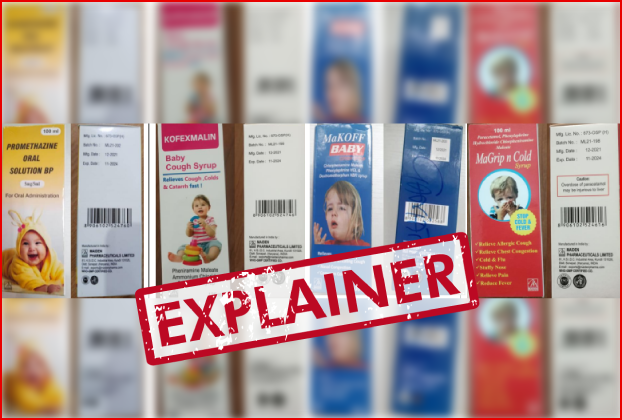
ගැම්බියාවේ දරුවන් 66කට මරු කැඳවූ ළමා සිරප් ලංකාවට?
Publisher’s rating: Explainer
The review examined whether four cough syrups associated with deaths of children in The Gambia had been imported into Sri Lanka. It describes the World Health Organization’s warning after 66 children died and identifies the products as Promethazine Oral Solution, Kofexmalin Baby Cough Syrup, Makoff Baby Cough Syrup and Magrip N Cold Syrup, made by India’s Maiden Pharmaceuticals. The article also reports that testing found unacceptable amounts of diethylene glycol and ethylene glycol in samples of the products. The key distinction in the review is between the company exporting products to Sri Lanka generally and these four particular syrups being brought into the country. It says Maiden’s website listed Sri Lanka among countries receiving its products, but did not specifically say that the four implicated syrups were imported there. The article further reports that BBC coverage said Indian authorities and the company stated the syrups had been exported only to The Gambia. For Sri Lanka, the review cites a statement by Health Minister Keheliya Rambukwella that the implicated products had not been imported. It also says the Health Ministry checked with the National Medicines Regulatory Authority, the State Pharmaceuticals Corporation and the Medical Supplies Division, and reviewed recent donations; those checks likewise indicated the products had not entered Sri Lanka. Thus, the article’s evidence does not support the claim that these four syrups were imported into Sri Lanka, while noting that wider concern about other distribution remained.

Documenten van Pfizer tonen aan dat de vruchtbaarheid van mannen afneemt na toediening van covid-19 vaccins.
Publisher’s rating: De bewering is misleidend. Context bij geciteerde onderzoeksresultaten ontbreekt. Er is geen bewijs dat COVID-19 vaccins de vruchtbaarheid van mannen negatief beïnvloeden. Er zijn wel studies die juist het tegendeel suggereren.
The claim circulated through a Facebook post that relied on an article by De Andere Krant, which attributed conclusions about declining male fertility to Amy Kelly, a participant in Daily Clout’s Pfizer Document Analysis project. The review says volunteers in that project read Pfizer documents and published reports about them. It identifies the underlying evidence as documents from Pfizer’s vaccine research period, released in large batches after a legal case involving the US Food and Drug Administration. The review examines the specific claim that vaccination causes antibodies to attach to sperm and reduce its movement. Kelly’s article reportedly based this on one Pfizer document dated February 28, 2021. In an appendix, the document lists “anti-sperm antibody positive” once among “complications of special interest.” The review found that the document gives no further context: it does not say how often the complication occurred or whether it was caused by vaccination. The entry therefore does not establish that vaccination reduced sperm movement or male fertility. The review also addresses a separate argument about sperm movement. It says the cited scientific paper concerned potential risks of nanoparticles generally, not nanoparticles in COVID-19 vaccines; the paper was from 2018, before Pfizer and other pharmaceutical companies were developing COVID-19 vaccines. It further reports that reduced fertility was not listed as a recognized vaccine side effect by the cited regulators and monitoring bodies, while other research suggested no negative effect on male fertility. Finally, the review notes that a study in Andrology reported a temporary reduction of up to 22 percent in male fertility after Pfizer vaccination, but says the study’s authors considered an immune response to vaccination a likely explanation. It also reports the authors noted evidence that COVID-19 infection can cause longer-term reproductive-organ damage. The review’s conclusion is that the cited Pfizer entry and selectively presented studies do not demonstrate that COVID-19 vaccines impair male fertility.
Pfizer "admitió" que no habían estudiado la capacidad de su vacuna para prevenir la transmisión de coronavirus
Publisher’s rating: Engañoso
The review examines a viral clip from a European Parliament hearing in which Rob Roos asked Pfizer executive Janine Small whether the vaccine had been tested to stop transmission before entering the market. Small answered no. The review’s distinction is that this answer does not show Pfizer had previously claimed that the vaccine’s clinical trials tested transmission: it says the trials’ stated aims were safety and protection against serious disease, not transmission. The hearing took place on October 10, 2022, and the review says the viral clip was cut off after Small explained that transmission had not been known before the vaccine entered the market. (S1: “Esto coincide con la respuesta que dio Janine Small al eurodiputado Roos durante la audiencia del Comité Especial sobre la pandemia por covid-19 del Parlamento Europeo, el 10 de octubre de 2022, y que fue cortada en el video viralizado, tras decir que antes de que entrara al mercado la vacuna no se sabía si detendría la transmisión del coronavirus.”) To check what the trials had assessed, the review cites FDA material about the emergency authorization and Pfizer’s trial documents, as well as statements from a Pfizer spokesperson and an independent immunologist. It reports that the FDA’s December 11, 2020 authorization notice described an efficacy analysis of 36,523 participants and 95% efficacy against COVID-19 disease, while saying there was then no evidence that the vaccine prevented person-to-person transmission. The review also quotes Pfizer’s explanation that stopping transmission was not a trial validation criterion. (S1: “En el comunicado de prensa en que la FDA informó, el 11 de diciembre de 2020, que la vacuna de Pfizer fue autorizada, se menciona que la revisión de los ‘datos sobre la eficacia en apoyo de la EUA incluyen un análisis de 36,523 participantes en el estudio internacional en curso, aleatorio y controlado por placebo’ y se indica que la inyección ‘tuvo una eficacia del 95% en la prevención de la enfermedad del covid-19 entre estos participantes del ensayo clínico’.”; “Detener la transmisión no fue un criterio de validación del estudio”) The review’s conclusion is that the answer in the clip was consistent with the trials’ stated scope, rather than an admission that Pfizer had represented transmission prevention as something the trials had studied. It notes that the company and health authorities had made that scope clear from the beginning. (S1: “Si bien en respuesta a una pregunta del eurodiputado Rob Roos, Janine Small, presidenta de Mercados Internacionales de Pfizer, dijo que antes de ser introducida en el mercado la vacuna no fue probada para detener la transmisión del coronavirus, desde la compañía farmacéutica nunca se había dicho lo contrario.”)

The World Health Organization gave the Government of India an advisory warning, stating that without adequate tracking of milk adulteration, 87 per cent of citizens could be at risk of developing serious diseases, such as cancer, by the year 2025. The state of adulteration in milk and milk products in the country is such that 68.7 per cent of milk and milk products sold is not as per the standards laid down by the FSSAI. Fact about India Milk production & Milk products
Publisher’s rating: Fake

People of Uttar Pradesh threw away milk as a mark of protest against the government’s inaction against cow disease (lumpy skin disease)
Publisher’s rating: MISLEADING
The claim attaches a specific meaning and location to videos of people throwing away milk: that people in Uttar Pradesh did so to protest the government’s response to lumpy skin disease. FACTLY’s review says it could not find relevant reports of such a protest in Uttar Pradesh. It instead traced visuals from the circulating post to protests in Gujarat concerning a proposed cattle-control bill, not the disease response. The review describes searching online for reports of protests in Uttar Pradesh, then finding a YouTube video showing milk packets being thrown into a water body. That video’s title, “milk throwing in Tapi river,” supplied a location clue. A TV9 report dated 21 September 2022 contained the same video, according to the review. FACTLY says the report described cattle owners in Gujarat protesting the proposed Cattle Control Act and not selling milk, with protests spreading across the state. The distinction matters: the visuals may show milk being discarded as part of a protest, but the review identifies that protest as a Gujarat response to proposed restrictions on stray cattle in urban areas. It further reports that the Gujarat government later withdrew the bill following protests. The review therefore concludes that the video does not establish the claimed Uttar Pradesh protest over lumpy skin disease.

Die Pufferlösung von Antigen-Schnelltest für die Eigenanwendung ist schwer gesundheitsschädlich.
Publisher’s rating: Die Konzentrationen der beiden angesprochenen Stoffe in der Pufferlösung von Antigentests sind so gering, dass davon keine Gesundheitsgefahr ausgeht. Selbst bei unsachgemäßer Anwendung sind keine gesundheitlichen Schäden zu befürchten. Deshalb müssen die Stoffe auf Beipackzetteln für Privatanwender nicht gesondert ausgewiesen werden.
The dpa investigation examined allegations made at a press conference by the group Wir-EMUs that toxic ingredients in consumer antigen rapid tests posed a health danger. Its focus was the buffer liquid in home-use tests, especially sodium azide and octoxinol-9, also known as Triton X-100. The review reports that both substances are classified as toxic, but that their presence alone did not establish the alleged risk from the tests as used: the buffer is held in a closed container, and the Austrian Federal Office for Safety in Health Care (BASG) said contact between the user and the liquid is not intended under the product’s instructions. The review describes several checks on the claims and their supporting material. It says the four test kits shown on the group’s website bore CE markings and identification numbers; the BASG told dpa that an independent body had been involved in conformity assessment. The group said its testing followed a biocompatibility standard, but the BASG explained that this standard concerns medical devices intended to contact the body, making it an inappropriate basis for evaluating sealed buffer liquid in home tests. The named laboratory, the Austrian Research Institute for Chemistry and Technology (OFI), told the review team it had not analyzed liquids from antigen tests for Wir-EMUs or another customer. The review also gives concentration and regulatory context. A German statutory accident-insurance information sheet gave manufacturer figures of 0.01–0.1% for sodium azide in buffer liquid; it reported one manufacturer’s Triton X-100 figure as 1.5%. The BASG said the concentrations were below thresholds requiring disclosure on consumer instructions. It reported that manufacturers had not identified a declaration obligation for the substances and that no serious incidents involving the buffer had been recorded to that point. These findings address the alleged danger while distinguishing toxic classification from the risk posed by the low concentrations and intended use described in the review.
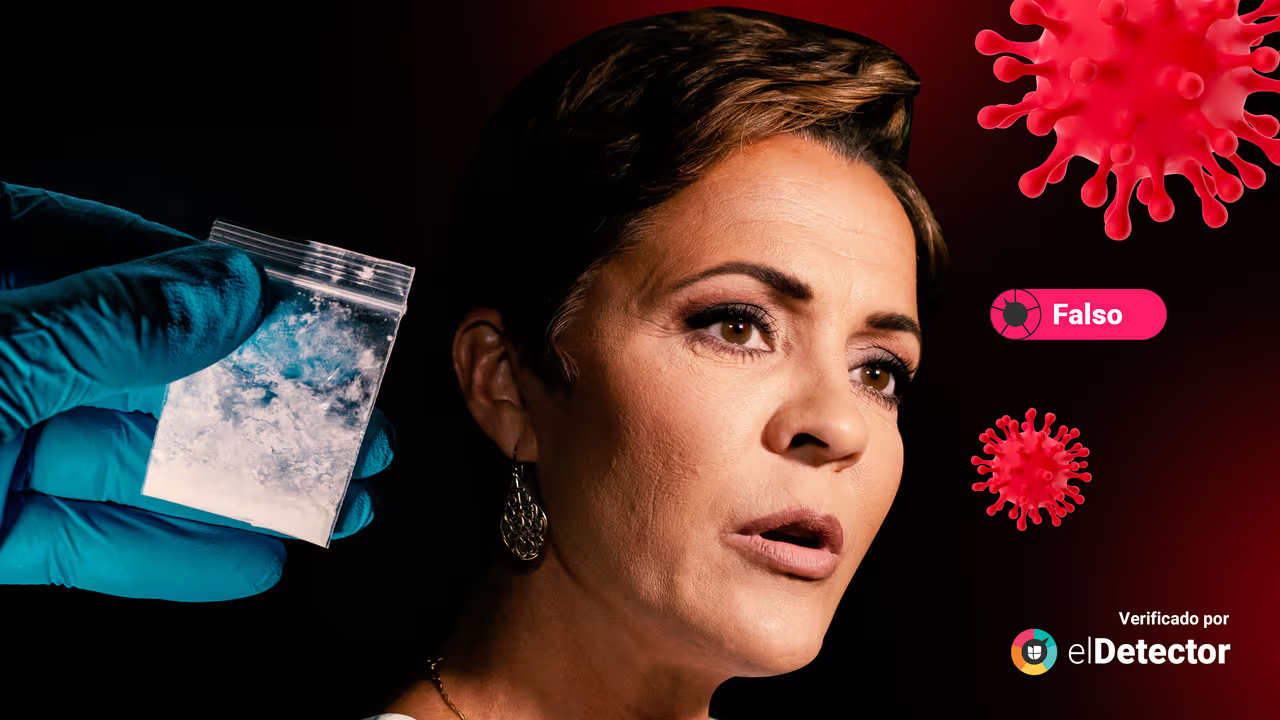
Las muertes por fentanilo en Arizona desde que Joe Biden asumió la presidencia superan el registro de decesos por covid-19 o el de los fallecidos en los atentados del 11 de septiembre de 2001
Publisher’s rating: Falso
The review examined a statement by Arizona gubernatorial candidate Kari Lake, made in a CBS interview on October 9, 2022: that fentanyl deaths in Arizona since Joe Biden became president exceeded either COVID-19 deaths or the fatalities in the September 11 attacks. It compared state opioid-overdose data with reported COVID-19 deaths in Arizona and the 9/11 memorial’s death toll. The review notes that the available opioid figures cover overdoses involving opioids, including fentanyl, rather than a count exclusively of fentanyl deaths. According to the review, Arizona recorded 2,378 opioid-overdose deaths from January 2021 through April 2022. The same article reports 31,455 COVID-19 deaths in the state from March 2020, using data updated through October 12, 2022, and says the opioid total was 7.56% of that COVID-19 figure. It also gives the 9/11 death toll as 2,977, so the reported Arizona opioid-overdose total was lower than that comparison as well. The article further cautions against attributing the rise in opioid deaths solely to the period after Biden took office: it says Arizona’s fatal opioid overdoses increased 117% from 923 in 2017 to 2,002 in 2021, and identifies July 2020—before Biden’s presidency—as the month with the most deaths. These figures support the review’s conclusion that the stated comparisons were inaccurate, while the broader historical trend began earlier.

Ratan Tata said he is dedicating the last year of his life towards health during the inaugural ceremony of the Assam cancer care foundation
Publisher’s rating: MISLEADING
The claim concerns a social-media post attributing to Ratan Tata the words, “I am dedicating the last year of my life towards health,” at an inauguration ceremony for cancer hospitals in Assam. The review places the event on 28 April 2022 and says that Prime Minister Narendra Modi inaugurated the hospitals under the Assam Cancer Care Foundation, with Tata also attending. It concludes that the post misleadingly changes the meaning of Tata’s remarks. To check the attribution, FACTLY says it searched for Tata’s full speech and found recordings of the address. It reports that, near the end of a speech lasting almost six and a half minutes, Tata said he dedicated his “last years” to helping make Assam a state that recognises and is recognised by all. The review says the same words can be heard in a video uploaded to Doordarshan’s YouTube channel at 6:19. The distinction is between dedicating his remaining years to helping Assam and dedicating the last year of his life to health. According to the review, the viral post altered Tata’s wording and recast its purpose as healthcare. The review also says his speech was reported in the media, but the excerpt does not provide those reports’ details.

Pfizer-Vertreterin hat gestanden, dass der Corona-Impfstoff vor der Zulassung nicht auf das Übertragungsrisiko untersucht wurde.
Publisher’s rating: Nein. Es war nie ein Geheimnis, dass das Übertragungsrisiko kein Bestandteil der Impfstofftests war. Es ging vielmehr darum, Infizierte vor einer schweren Erkrankung zu schützen. Die Behauptung, Pfizer habe jetzt ein «Geständnis» abgelegt, ist deshalb falsch.
The claim arose after Dutch MEP Rob Roos circulated a video excerpt from a European Parliament hearing. In it, Pfizer representative Janine Small answered “No” when asked whether the vaccine had been tested before authorization to determine whether it could stop transmission. Roos presented that answer as an admission that a prior public claim about protecting others was false. The review confirms the narrow point that transmission had not been tested before authorization, but explains that this was not newly disclosed: the relevant regulatory documents had already stated that the effect on transmission was unknown. The review cites the European Medicines Agency’s December 21, 2020 notice, which said that the vaccine’s effect on spread in the population was not yet known, including whether vaccinated people might still carry and transmit the virus. It also cites a December 11, 2020 U.S. Food and Drug Administration notice stating that there was no evidence then showing the vaccine prevented person-to-person transmission. These earlier notices contradict the framing of Small’s answer as a newly revealed secret or a newly admitted deception. The review adds that neither the EMA nor the FDA had required manufacturers to demonstrate reduced transmission for authorization. It says the key criteria were safety and at least 50 percent protection against disease. That qualification matters: the absence of pre-authorization transmission testing did not itself establish that vaccination could not reduce transmission. The review points to a February 2022 study reporting reduced transmission for early variants, with a smaller effect for later variants.
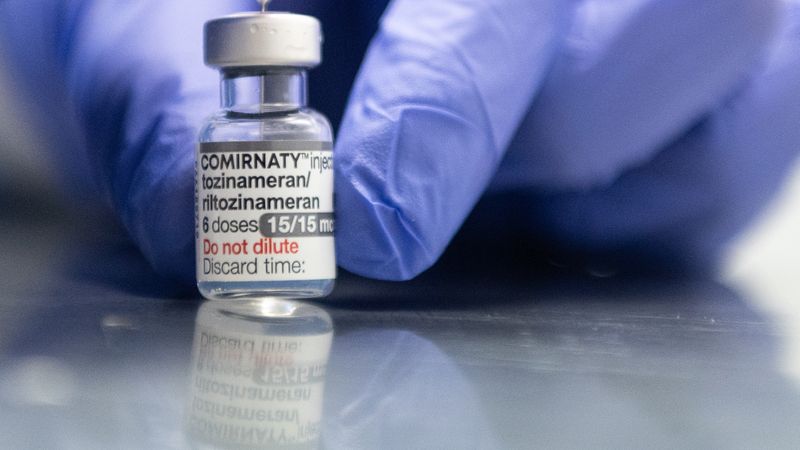
Un document interne de Pfizer prouve que les vaccins contre le Covid-19 contiennent de l'oxyde de graphène.
Publisher’s rating: Ce qui est prétenu dans la vidéo, vieille de plus d'un an, est faux. Les vaccins actuellement approuvés contre le Covid-19 ne contiennent pas d’oxyde de graphène - cela vaut aussi pour le vaccin de Pfizer/BioNTech.
The claim concerns a TikTok video in which a man alleges that Pfizer/BioNTech’s Covid-19 vaccine contains graphene oxide, citing purported internal company documents. The review identifies the claim as false: it says no document proves graphene oxide is present in Covid-19 vaccines, including Pfizer/BioNTech’s. The assertion that documents establish the ingredient is therefore not supported by the evidence described in the review. To check the claim, the review points to the ingredient lists published for vaccines approved in the European Union. It says the European Medicines Agency lists the components of the Pfizer/BioNTech, Moderna, AstraZeneca, Janssen, Novavax and Valneva vaccines, and that neither graphene oxide nor graphene appears in any of those lists. It also notes that Belgium’s medicines agency provides a more detailed explanation of vaccine composition and that vaccines are examined by competent health authorities before being marketed. The review adds two further lines of evidence: Pfizer confirmed to several fact-checking agencies that its vaccine does not contain graphene oxide, and the video’s account of its provenance is traceable. It says the footage was filmed in August 2021 at a public meeting in Barbados and identifies the speaker as Fred Corbin. The review does not provide the alleged internal document itself; instead, it contrasts the video’s allegation with public ingredient information and the company’s reported confirmation.

One eggplant alone will melt your belly fat in seven days without diet or exercise
Publisher’s rating: MISLEADING
FACTLY’s review concerns a social-media video promoting eggplant juice as a way to lose belly fat quickly without changing diet or exercising. The post also claimed that a person could lose up to 10 kilograms in a week. The review identifies the precise claim as one eggplant melting belly fat in seven days without diet or exercise; its assessment is specifically about whether eggplant alone can produce that result. The review reports looking for relevant scientific studies. It found a study suggesting eggplant may be useful in treating metabolic syndrome, but notes that the study recommends further research into how eggplant works. It also cites Healthline’s description of eggplant as high in fibre and low in calories, which could help create fullness and reduce calorie intake. Those points describe possible contributions to a broader weight-loss regimen; they do not establish that one eggplant or its juice independently removes belly fat. FACTLY says it found no substantial scientific evidence that eggplant aids weight loss in the way claimed, or that one eggplant can make belly fat disappear without diet or exercise. The review contrasts the video’s shortcut promise with CDC guidance that healthy weight loss involves healthy eating patterns and regular physical activity, and that gradual, steady loss is more likely to be maintained. The evidence presented supports the conclusion that eggplant’s nutritional qualities do not substantiate the video’s specific promise.
Uriner et se laver après un rapport permet de ne pas avoir de maladies sexuellement transmissibles.
Publisher’s rating: Faux