PeakMetrics / Fact Checks
Health & medicine fact checks
Explore claims publishers have checked about health & medicine. Read their original ratings and follow the evidence.
Search fact checks
Search by text or image13,668 published reviews in this topic

Video muestra a cardiólogo atacado por representantes de la industria farmacéutica, en un programa de televisión, tras revelar “la verdad sobre el colesterol”.
Publisher’s rating: Falso

Apple cider vinegar supplements or gummies aid in weight loss
Publisher’s rating: FALSE
The review addresses social-media posts and advertisements claiming that daily apple cider vinegar (ACV) consumption leads to drastic weight loss. It distinguishes ACV products from liquid vinegar: the article says evidence about drinking ACV cannot simply be applied to supplements or gummies. In particular, it reports that Healthline found no evidence that ACV gummies help manage weight, and that the study it discusses concerned people consuming liquid ACV rather than gummies. For weight-loss claims about ACV more broadly, the review quotes Mayo Clinic as saying that studies have not consistently shown significant, sustained weight loss across different groups. It also reports that Dr. Fawad Ali, identified as a general-medicine and diabetes specialist, said evidence that vinegar is a reliable long-term way to lose excess weight is not compelling. The review’s conclusion is therefore not that gummies have established weight-loss benefits: it finds the evidence inadequate for that claim and cautions that supplements do not replace diet and exercise. The article also addresses an advertisement recommending ACV alongside a balanced diet and regular workouts. Its point is that those accompanying lifestyle changes—not ACV itself—are what would help with weight loss. This distinction matters because marketing that presents a supplement as part of a regimen can make the supplement appear responsible for results that the article attributes to diet and exercise.
Medicamento do Dr. Drauzio Varella tem ajudado milhares de Homens!
Publisher’s rating: Falso
“Fazer isso pode eliminar o diabetes O único e original contra o diabetes”
Publisher’s rating: Falso

ビールに有害物質が含まれている
Publisher’s rating: 誤り
The review reports that graphene oxide is not used in or intentionally introduced during the cited beer-like beverage’s production. It also says acesulfame K is permitted within established limits and concludes that the claim that beer contains harmful substances is false.

Un général de l'armée française rend hommage aux personnes non-vaccinées.
Publisher’s rating: Christian Blanchon, qui a pris sa retraite de général il y a quelques années déjà, ne peut pas être désigné avec certitude comme le véritable auteur du texte. Une recherche approfondie a permis de trouver une version plus ancienne du même texte sur le compte Telegram d'nu biologiste et documentariste espagnol.
The claim concerns authorship of a social-media tribute to people who had not received a Covid-19 vaccine. The investigation says a widely shared Facebook post, circulating from September 2022, attributed the text to retired French general Christian Blanchon and portrayed it as praising the unvaccinated as “superheroes.” The key question examined was whether Blanchon had actually written it. The review traces an earlier version to Spanish biologist and documentarian Fernando López-Mirones: it says he posted a tribute to the unvaccinated on Telegram on 26 July 2022. A French version appeared on the website Le Média en 4-4-2 on 11 September, with a headline crediting López-Mirones. The review also records that an otherwise identical version attributed to Blanchon had circulated in a Facebook group on 7 September. This chronology and the earlier identifiable Spanish version support the review’s conclusion that the general’s authorship is not established. The investigation reports comparing the Spanish and French versions and finding their substance identical. It also says searches of Blanchon’s Twitter, Facebook and Instagram profiles found no trace of the text, and that Blanchon did not respond to the publisher’s inquiry. These findings do not prove who wrote the text, but they provide no confirmation of the attribution to Blanchon; the earlier López-Mirones version is the evidence the review uses to question it.
Relatório oficial afirma: respiradores mataram quase todos os pacientes com COVID
Publisher’s rating: Falso

Áudio revela que as vacinas causam HPV, HIV e câncer
Publisher’s rating: Falso

50 503 décès post-vaccination Covid recensés par les autorités européennes.
Publisher’s rating: Non. Ces chiffres sont repris d'une base de données de l'Agence européenne des médicaments (EMA), qui regroupe des signalements d'effets secondaires possibles mais non avérés d'un médicament - dans ce cas-ci des vaccins contre le Covid-19. Les présenter de cette manière est donc trompeur.
The claim concerns a social-media table asserting that 50,503 deaths after COVID-19 vaccination had been recorded in a European database by 6 May 2023. The table’s figures referred to Pfizer/BioNTech, Moderna, AstraZeneca and Janssen vaccines. The review identifies the database as EudraVigilance, which collects reports of suspected adverse effects—not confirmed vaccine-caused injuries or deaths. It also notes that the table itself was not official, even though it used the name and figures of an authentic database. (S1) The decisive distinction is between a report of an event after vaccination and evidence that vaccination caused it. The review quotes the EMA’s explanation that a report through the platform does not, by itself, mean the medicine caused the observed effect or is dangerous. It also describes EudraVigilance’s own warning: reported events after vaccination are not necessarily related to the vaccine and may have another cause, including another illness or a medicine taken at the same time. Thus, counting reports labelled as fatal does not establish 50,503 vaccine-caused deaths. (S1) The review adds two qualifications about interpreting the database totals: reports may include duplicates, and a person dying after vaccination does not show that vaccination caused the death. It describes the figures as reports under the database’s “fatal outcome” selection, not as an independently established count of deaths caused by the vaccines. The claim’s presentation of the database total as post-vaccination deaths recorded by authorities therefore omits the distinction between suspected reports and confirmed causation. (S1)
Aus einem Pfizer-Dokument geht hervor, dass die Corona-Impfung für Schwangere, Stillende und deren Babys nicht sicher ist.
Publisher’s rating: Aus dem Dokument gehen keine solche Sicherheitsbedenken hervor. Auch wissenschaftliche Studien finden keine Hinweise darauf, dass die Impfung für Schwangere unsicher ist. Die Impfung wird unter anderem von der Österreichischen Gesellschaft für Gynäkologie und Geburtshilfe (OEGGG) empfohlen.
The claim concerns an eight-page Pfizer document that a blog used to assert that high vaccination risks for fetuses and babies were known by April 2021. The review explains that the document records reports involving pregnant or breastfeeding people after vaccination; it does not establish that vaccination caused the reported outcomes. The review identifies the relevant period as the start of vaccine development through February 28, 2021, and says the records came from Pfizer’s Pharmacovigilance (Safety) Database. [The cited references below support these points.]
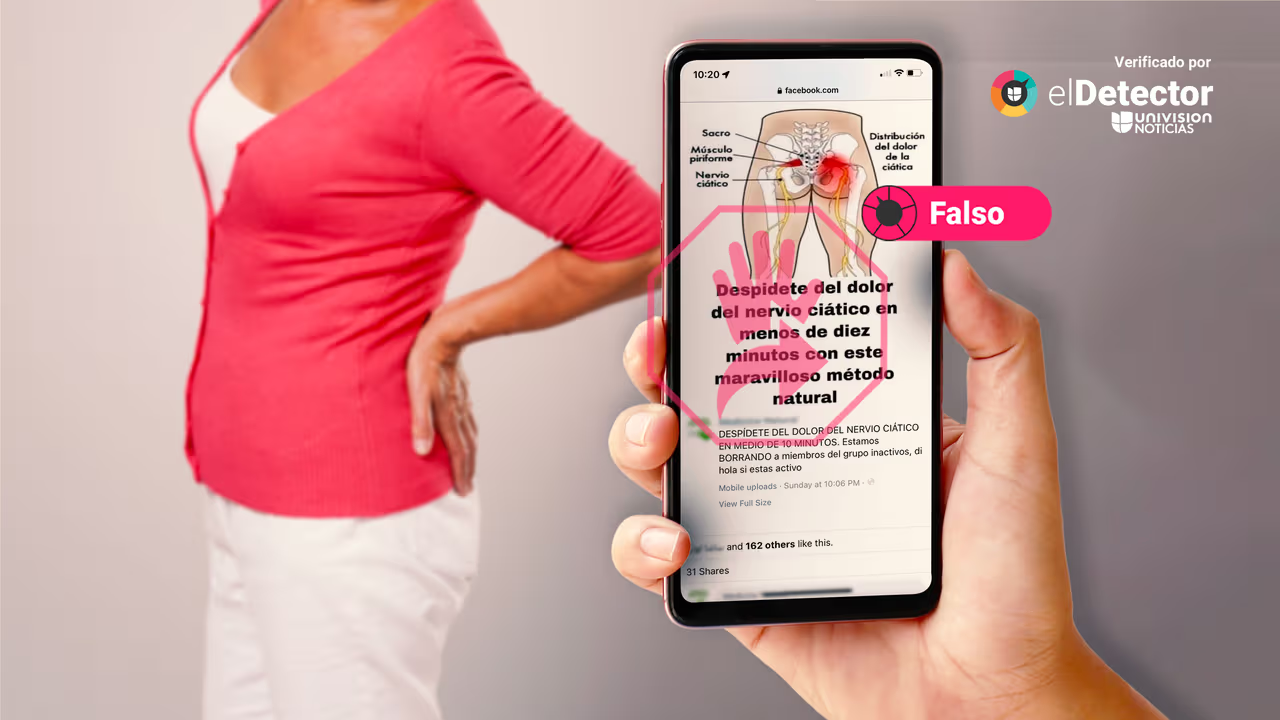
Se pueda eliminar el dolor del nervio ciático en menos de 10 minutos.
Publisher’s rating: Falso
a cheating partner can cause UTI
Publisher’s rating: Missing Context
Research from related reporting describes a doctor’s explanation of UTIs and infidelity concerns among couples. The report says sex can increase infection risk for biological reasons, including possible micro-tears during sex, the shorter female urethra, and changes to the vaginal environment when semen is present. These are explanations of how intercourse may be associated with UTIs; the excerpt does not identify a partner’s cheating as the cause. The report also describes couples who suspected infidelity because one partner repeatedly developed a UTI after intercourse. Dr Mpume Zenda cautioned against treating that pattern as proof of cheating: she said recurrent UTIs after sex should not automatically lead to suspicion or blame. The evidence therefore distinguishes a possible association with sex from the claim that a cheating partner causes a UTI. The supplied excerpt discusses this concern but does not provide study data quantifying risk or independently investigate any particular couple’s circumstances.

Conejos robados de un laboratorio en Cuba están enfermos de tuberculosis.
Publisher’s rating: Falso
The claim concerned 11 rabbits stolen on May 8, 2023, from the animal facility at the University of Medical Sciences in Sancti Spíritus, Cuba. A viral Facebook video warned people not to buy rabbits and said the stolen laboratory animals had tuberculosis. The review reports that the warning was based on an audio message alleging that the rabbits had been used in a tuberculosis study; the audio did not specify when the theft occurred. To check the claim, the investigators searched Google using terms about rabbits stolen from the university. They found reports about the theft and a statement from the Sancti Spíritus Center for Genetic Engineering and Biotechnology (CIGB). According to the review, the CIGB said the rabbits were used in routine immunization experiments with antigens to produce polyclonal antibodies—not that they were infected with tuberculosis. The review also reports that Cuban media, including Escambray, clarified that the rabbits did not have tuberculosis. The review cites virologist José Esparza, who said the antibody-production procedure is common and carries no infection risk, while cautioning against eating animals from a laboratory. Epidemiologist Dione Benjumea Bedoya explained that the antigens described by the CIGB were parts of bacteria unable to reproduce and cause disease. The review therefore concludes that the claim that these stolen rabbits were sick with tuberculosis was false. Its conclusion is about the animals’ reported laboratory use and infection status; it does not recommend consuming them.