PeakMetrics / Fact Checks
Health & medicine fact checks
Explore claims publishers have checked about health & medicine. Read their original ratings and follow the evidence.
Search fact checks
Search by text or image13,667 published reviews in this topic

නිපා වෛරසය ආසාදිත දරුවන් දෙදෙනෙකු මෙරටින් හමුවූ බවට හුවමාරු වන සටහන් පිළිබඳ කරුණු පැහැදිලි කිරීමක්!
Publisher’s rating: Social Media Users

"Transgenderism, especially in kids, is a mental health disorder."
Publisher’s rating: Medical experts disagree
Related reporting identifies the statement as something Vivek Ramaswamy said in a debate. The article places it among his positions on LGBTQ issues in the Ohio governor’s race and quotes him saying, “transgenderism, especially in kids, is a mental health disorder.” The reporting also gives the campaign’s response when asked about LGBTQ issues: it said Ramaswamy believed every Ohioan deserved dignity and respect, then described his priorities as costs, jobs, energy and education. That response does not directly address the medical assertion in the debate quote. These excerpts establish the statement’s attribution and political context, but do not provide medical evidence or an assessment of whether the assertion is accurate. They therefore do not, on their own, resolve the claim’s medical merits.

News report claiming that an Indian doctor has developed a remedy for joint pain
Publisher’s rating: FALSE

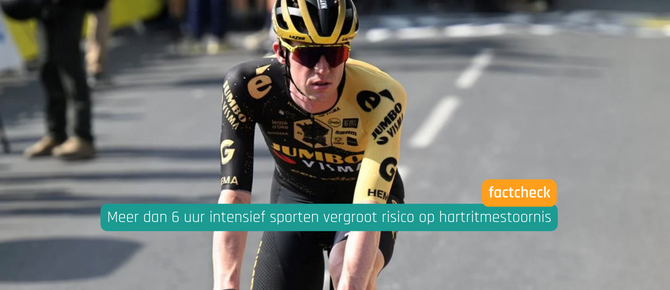
Wie meer dan zes uur per week intensief aan duursport doet, loopt meer risico op voorkamerfibrillatie, een hartritmestoornis.
Publisher’s rating: Waar
The claim arose after professional cyclist Nathan Van Hooydonck suffered a nearly fatal heart rhythm disturbance. Cardiologist Pedro Brugada told VRT NWS that doing more than six hours of intensive endurance sport a week increases the risk of heart rhythm disorders. The review assesses that specific threshold and the broader link between heavy endurance exercise and atrial fibrillation. The review says research supports an increased risk of atrial fibrillation among people who have exercised intensively for more than 300 minutes per week over many years. That supports the claim’s general direction, but the six-hour figure is 360 minutes, and the review cautions that it is difficult to apply a precise threshold to everyone. It describes six hours as a plausible upper limit, not a universal point at which risk necessarily rises. The review identifies factors that can affect individual risk: exercise intensity and type, age, sex, and underlying heart abnormalities; it also says women have lower risk. It recommends 150–300 minutes of moderate-to-vigorous activity weekly as a baseline and says people who go far beyond that may lose some of sport’s health benefits. The excerpt does not describe a new study or a specific research method; it cites research on long-term intensive exercise and atrial fibrillation, including a Belgian Cardiological League reference. Thus, the evidence supports the broad association, while the headline’s exact six-hour cutoff needs the review’s individual-variation qualification.

Karl Lauterbachs angebliche Impfung ist nur inszeniert. Das belegen Fotos, auf denen die Ärztin mal eine Brille trägt und mal nicht.
Publisher’s rating: In einem Video ist die vollständige Impfung zu sehen, dabei hat die Ärztin die Brille nach oben in die Haare geschoben. Die Fotos beweisen nicht, dass Lauterbach nicht geimpft wurde.
The claim concerns Karl Lauterbach’s COVID-19 booster vaccination in September at a Bundeswehr hospital in Berlin. It argues that the vaccination was staged because two photographs show the doctor wearing her glasses differently. The review identifies the images as screenshots from NDR and BR articles: both show the doctor holding a syringe at Lauterbach’s arm, but in the NDR image her glasses are on her nose, while they are not immediately visible in the BR image. The review compares those still images with video of the event. It reports that the NDR image was a video preview; in the video, the doctor has pushed her glasses up into her hair while withdrawing the needle and pressing dressing onto the injection site. A separate AFP video, also published by Web.de, shows the contents of the syringe being injected. The doctor wears her glasses up in her hair throughout that injection, according to the review. Another video, published by Zeit Online on YouTube, shows her wearing the glasses on her nose while preparing the syringe. The review also checked the digital metadata of the two photographs in the post. It says the image showing the glasses on the doctor’s nose was taken at 10:07:53, seven seconds before the image showing the glasses pushed up at 10:08:00. Taken together, the videos and the short interval between the photographs explain the apparent discrepancy without establishing that the vaccination was fabricated. The review notes that it remains unclear why the NDR article’s still image shows the doctor holding the syringe at Lauterbach’s arm.

Die FDA hat Ivermectin gegen Covid-19 nun zugelassen.
Publisher’s rating: Die FDA empfiehlt weiterhin, Ivermectin bei Covid-19 nicht zu verwenden. Es gibt keine neue Zulassung. Ursprung der Falschmeldung ist eine fehlinterpretierte Gerichtsentscheidung.
selenium can cure cancer
Publisher’s rating: Mostly False

Een Duitse studie toont aan dat het gebruik van mondmaskers schadelijk is voor de gezondheid.
Publisher’s rating: De auteurs van de studie deden zelf geen origineel onderzoek, maar selecteerden een aantal studies die vaak niet over mondmaskers gingen om hun standpunt te ondersteunen. Het vormt dan ook geen gedegen bewijs dat mondmaskers schadelijk zouden zijn.
Social media users claimed that an Oct. 4 FEMA alert would "activate" ingredients in the COVID-19 vaccine that would allow the government to track and control the population.
Publisher’s rating: FALSE: This is a conspiratorial claim that is not based on any evidence.
સવારે ફળ ખાવાથી ચયાપચય ઝડપી બની શકે છે
Publisher’s rating: Mostly False
બટાકાનો રસ વાળ ખરતા અટકાવી શકે છે
Publisher’s rating: Mostly False
it is true that humans cannot digest meat
Publisher’s rating: False
સોયા અલ્ઝાઈમર રોગનું કારણ બને છે
Publisher’s rating: Missing Context
હળદરની પેસ્ટ લગાવવાથી પિમ્પલ્સ ગાયબ થઈ શકે છે
Publisher’s rating: Missing Context
શેરડી ખાવાથી કેન્સરના કોષોનો નાશ પામે છે
Publisher’s rating: False
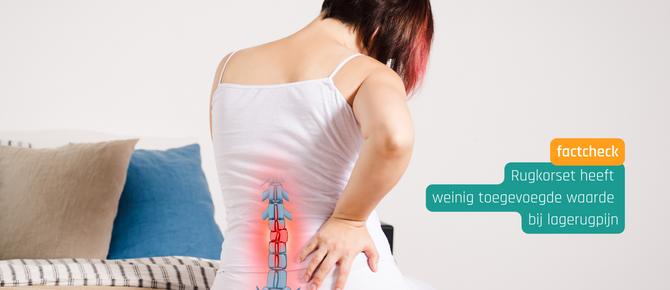
‘Rugbraces hebben een toegevoegde waarde bij de behandeling van rugklachten en kunnen het herstel en de hervatting van dagelijkse activiteiten versnellen.’
Publisher’s rating: Onwaar

you can double hair growth in 30 days at home
Publisher’s rating: Mostly False