PeakMetrics / Fact Checks
Health & medicine fact checks
Explore claims publishers have checked about health & medicine. Read their original ratings and follow the evidence.
Search fact checks
Search by text or image13,667 published reviews in this topic

Este video en el que se ve a una persona verter una sustancia verdosa en agua enseña el proceso de elaboración de lechugas sintéticas que "la industria alimentaria quiere que comas”.
Publisher’s rating: Falso
The claim concerns a viral video showing someone spreading liquid over water to form what looks like lettuce. The review says the post circulated on Facebook in November 2023 and asserted that the footage showed the food industry making synthetic lettuce for human consumption. It identifies the footage instead as the manufacture of display replicas used by Japanese restaurants so customers can see what a dish will look like before ordering. The review names this craft sampuru and says the replicas are made from wax or plastic, not for eating. [S1: “Un video en el que se ve cómo una persona esparce unos líquidos sobre agua para dar forma a una lechuga no enseña el proceso de elaboración de alimentos sintéticos que ‘la industria alimentaria quiere que comas’, como asegura una publicación que se ha viralizado en Facebook en noviembre de 2023.”; “Las imágenes son de la fabricación de muestras de comida hechas de plástico o cera que muchos restaurantes de Japón exhiben para que sus clientes vean cómo lucirá su plato antes de ordenarlo: un arte conocido como sampuru.”] To check the video’s provenance, elDetector reports conducting a reverse image search on Google. It says that search located a TVMAS video containing the same images, in which the process was described as making food replicas from wax (and, more generally, plastic) for restaurant display. The review also points to the TVMAS video’s explanation that the footage had gone viral because people thought the items were edible lettuce. These details identify the specific footage as decorative food replicas rather than evidence of food production. [S1: “En elDetector hicimos una búsqueda inversa de imagen en Google y encontramos un video de la televisora chilena TVMAS en el que aparecen las mismas imágenes y se explica que lo que se observa en ellas es el arte del sampuru: la elaboración de ‘réplicas de comida’ hechas a base de cera (en el caso de estas imágenes, aunque también se hacen de plástico) con fines de exposición en los restaurantes y no de consumo humano.”; “En un momento de ese video (minuto 4:19), publicado en YouTube el 21 de abril de 2022, incluso se menciona que ‘se viralizó porque la gente pensaba que eran lechugas de comer’.”] The review notes that the footage had previously been recirculated with a similar false interpretation: it says fact-checkers debunked claims in 2017 and 2019 that it showed a lettuce factory in China. It concludes that the video shows Japanese-style food replicas displayed for restaurant customers, not synthetic lettuce made for human consumption. [S1: “Pues no es la primera vez que esta grabación es difundida en redes sociales haciendo creer que muestra el proceso de elaboración de lechugas sintéticas para el consumo humano: verificadores desmintieron en 2017 y 2019 que se tratara de una fábrica de lechugas en China.”; “Las imágenes corresponden a la fabricación de réplicas de alimentos que se usan en Japón para que los comensales puedan ver cómo serán sus platos antes de pedirlos, una técnica conocida como sampuru.”]
«(...) en países como Cuba con un sistema sanitario muy desarrollado»
Publisher’s rating: Incompleto

Pendant qu'en France le gouvernement pousse encore à se faire vacciner contre le Covid, l'Islande, elle, a retiré les vaccins contre ce même Covid du marché.
Publisher’s rating: Non, l'Islande n'a pas arrêté la vaccination contre le Covid-19. A l'instar d'autres pays, elle continue de proposer le vaccin de Pfizer aux groupes considérés comme « à risque ».
The claim was that Iceland had taken Covid-19 vaccines off the market and stopped offering them, while France was still encouraging vaccination. The dpa review traced the rumor to a blog post published on 20 November 2023. Its author relied on a short item in Icelandic newspaper Morgunblaðið, whose final sentence said vaccines were not available “for the moment”; the newspaper did not explain why. The review reports that the blog author treated this as evidence of a government decision, but found no evidence supporting that interpretation. The review checked Iceland’s stated vaccination policy and contacted Margrét Erlendsdóttir, communications head at the Ministry of Health. In an email to dpa on 24 November 2023, she said Iceland had not ended Covid-19 vaccination. The ministry’s published explanation said the focus had shifted to people most exposed to severe illness, because most people had been vaccinated or infected and healthy children and adults faced a lower risk of severe infection than in 2020–21. Thus a targeted programme, rather than a universal campaign, did not mean vaccines had been withdrawn. For autumn and winter 2023–24, the review says Iceland offered Pfizer’s Comirnaty XBB.1.5, available there from 2 October 2023. Recommendations covered people over 60, children over five and adults with underlying conditions, pregnant women, and health workers caring for those groups. The evidence therefore contradicts the claim of a market-wide withdrawal: the vaccine remained available to specified groups, while the programme was no longer a general campaign for everyone.
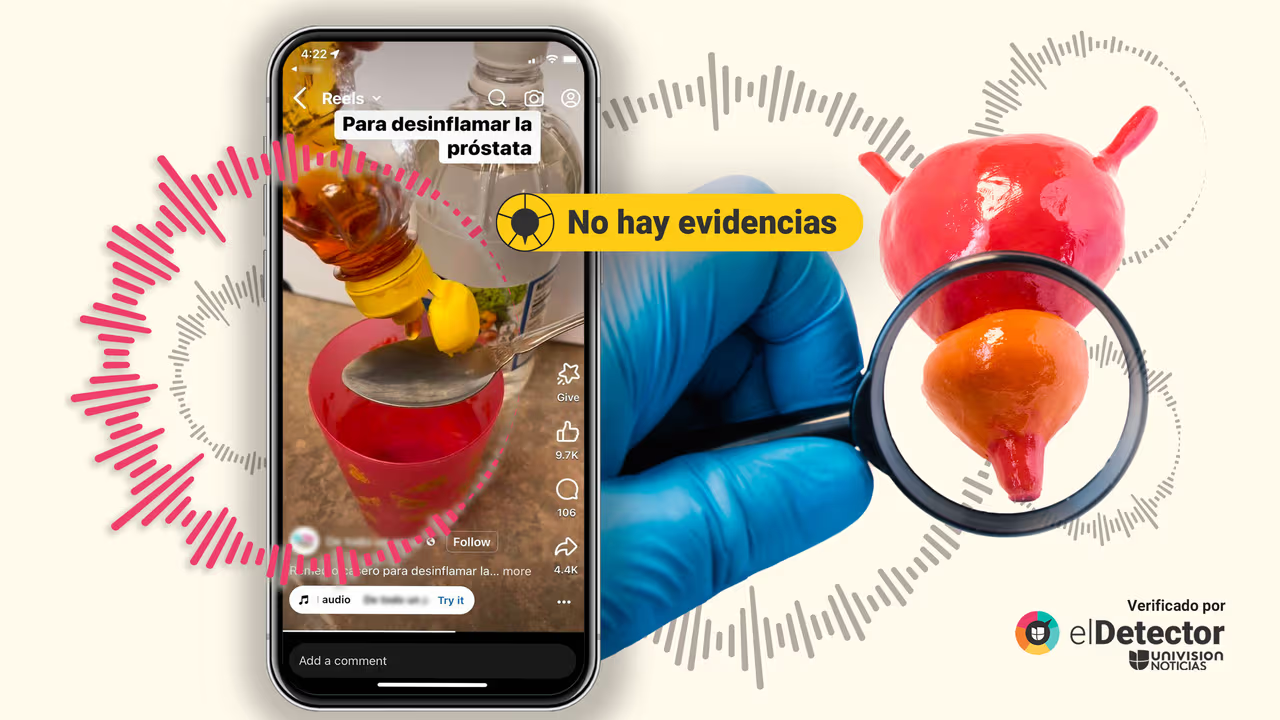
La mezcla de miel, vinagre de manzana y agua desinflaman la próstata.
Publisher’s rating: No hay evidencias

Krebs und alle anderen Krankheiten würden aufgrund eines emotionalen Schocks oder Konflikts entstehen.
Publisher’s rating: Lebensgefährliche Pseudo-Medizin. Für die pseudo-medizinischen Ansichten der "Germanischen Neue Medizin" (GNM) gibt es keine wissenschaftliche Grundlage. Was unbestritten ist: Falls es infolge von psychischen Belastungen zu ungesunden Verhaltensänderungen, wie erhöhtem Rauchen oder Alkoholkonsum, kommt, kann dies das Krebsrisiko erhöhen.
7.8 million people are on NHS waiting lists.
Publisher’s rating: Evaluation: False. NHS England figures, published on November 9, show an estimated 6.5 million unique patients were waiting for treatment in September, with some people waiting for multiple treatments.

Japan has banned BHT due to health risks
Publisher’s rating: It is a misleading claim based on partial facts that don’t present the complete picture.
Related reporting describes BHT as banned in Japan, citing health concerns, but the excerpts do not establish the ban’s precise scope or timing. One account qualifies the status as “banned or severely restricted,” so the supplied evidence does not fully settle that distinction.

Can star Anise and honey cure bronchitis ?
Publisher’s rating: FALSE
The Medical Dialogues review examines an Instagram video claiming that star anise and honey can cure bronchitis. The video recommends roasting and grinding star anise, then taking half a teaspoon of its powder mixed with a teaspoon of honey three times daily for seven days. The review distinguishes a possible role in easing symptoms from evidence that the mixture cures the illness. [S1: “A video on Instagram claims that consumption of star anise and honey cures bronchitis.”; “For consumption, it suggests mixing half a teaspoon of the star anise powder with a teaspoon of honey and taking it three times a day for seven days.”] The review describes star anise as having antimicrobial properties and cites material about anise oil as an expectorant for coughs associated with colds, as well as a study mentioning possible uses of star anise for bronchitis and other respiratory complaints. For honey, it cites research reporting improved symptoms of upper respiratory tract infections, while noting that further high-quality, placebo-controlled trials are needed. These points concern potential properties or symptom relief; the review says none of the cited studies confirms that the ingredients cure bronchitis. [S1: “A study mentioned Anise oil can be used to treat respiratory ailments, mainly as an expectorant for coughs associated with colds.”; “Abuelgasim H et al in their study reported that Honey improved symptoms of upper respiratory tract infections. Honey could help efforts to slow the spread of antimicrobial resistance, but further high-quality, placebo-controlled trials are needed.”; “none confirm their ability to cure bronchitis.”] The review also includes comments from pulmonologist Dr Mrigakshi Agarwal: honey may soothe coughs and sore throats associated with bronchitis, but does not treat the underlying viral or bacterial infection; she says there is no scientific evidence that star anise cures bronchitis. The article distinguishes acute bronchitis from chronic bronchitis, which it describes as a form of COPD, and says chronic bronchitis requires medical treatment for control. Its conclusion is therefore about the unsupported cure claim, not a denial that either ingredient may ease some respiratory symptoms. [S1: “there is no scientific evidence to support its effectiveness as a cure for bronchitis.”; “Honey cannot cure bronchitis. While it is known for its soothing properties and can help alleviate some symptoms of coughs and sore throats associated with bronchitis, it does not have the capability to cure the underlying infection, whether viral or bacterial.”; “chronic bronchitis which is a type of chronic obstructive pulmonary disease (COPD), does not have a cure and requires proper medical treatment for control.”]
Leiam os clinical trials da Pfizer, 1.291 tipos de efeitos colaterais
Publisher’s rating: Falso

Les mammographies peuvent être nocives pour la santé. C'est pourquoi elles ont été abolies en Suisse il y a dix ans.
Publisher’s rating: Cette affirmation est fausse. La Suisse n'a pas décidé d'arrêter de pratiquer des mammographies. Des programmes de dépistage du cancer du sein existent dans la plupart des cantons du pays, a indiqué l'Office fédéral de la santé publique à la Deutsche Presse-Agentur (dpa).
The claim combined two assertions: that mammograms are harmful and that Switzerland had stopped performing them at least ten years earlier. The review traced the social-media post to a 2017 article on The Conversation, titled “Routine mammograms don’t save lives: the research is clear.” That article discussed potential downsides, including overdiagnosis and radiation risks; it was not evidence that Switzerland had ended mammography. The review notes that these risks exist, while describing them as minor in comparison with benefits according to much of the medical community. It also says recommendations can depend on the patient’s age. (S1: “Cette publication Facebook s'appuie sur un article paru en octobre 2017 sur le site de vulgarisation scientifique The Conversation. Celui-ci s'intitule « Les mammographies de routine ne sauvent pas des vies : la recherche est claire ».”; “Ces risquent existent bel et bien mais, d'après une grande partie du corps médical, ils sont minimes par rapport aux bénéfices. Certaines recommandations doivent toutefois être prises en compte, par exemple en fonction de l'âge de la patiente.”) To check whether mammography had been abolished, the review reports that dpa contacted a spokesperson for the Swiss Federal Office of Public Health (OFSP). The spokesperson said mammograms were part of cantonal breast-cancer screening programmes and were offered in most cantons. The review also points to information on the OFSP website showing where programmes had been introduced, while noting that some cantons still lacked one. This distinction matters: the existence of cantons without a programme does not establish a nationwide decision to stop mammograms. (S1: “Contactée par la dpa, la porte-parole du service communication de l'Office fédéral de la santé publique (OFSP) en Suisse a déclaré : « Les mammographies font partie des programmes cantonaux de dépistage du cancer du sein. Elles sont proposées dans la plupart des cantons. Il est donc faux de dire que les mammographies ont été abolies il y a 10 ans ! »”; “On constate également que, même s'ils sont minoritaires, tous les cantons ne disposent pas encore de programmes de dépistage.”) The review gives historical context for why screening policy may have been confused with abolition. It describes earlier disagreement between cantons over systematic screening, including concerns about costs and, later, low participation. It reports that in 2017 only 34% of women concerned were attending screening, and says that by the review’s stated situation date, more than half of cantons had a programme. That history describes uneven adoption and debate—not a national ban or cessation of mammography. (S1: “Depuis des années en Suisse, il y a des avis divergents au sujet du dépistage systématique du cancer du sein.”; “Seulement 34 % des femmes concernées allaient se faire dépister.”; “Plus de la moitié des cantons du pays disposent d'un programme qui a été mis en place pour lutter contre le cancer du sein.”)