PeakMetrics / Fact Checks
Health & medicine fact checks
Explore claims publishers have checked about health & medicine. Read their original ratings and follow the evidence.
Search fact checks
Search by text or image13,667 published reviews in this topic

Zweden stopt met het toedienen van het coronavaccin van Moderna vanwege risico op hartonsteking.
Publisher’s rating: Zweden pauzeert momenteel het gebruik van het coronavaccin van Moderna, maar niet vanwege enig gezondheidsrisico. De reden is een pak onschuldiger: bevoorrading. Ze hebben reeds voldoende voorraad van de coronavaccins van Pfizer en Novavax.
The claim says Sweden stopped administering Moderna’s COVID-19 vaccine because of the risk of heart inflammation. The review confirms that Sweden was not using Moderna’s Spikevax at the time, but reports a different reason: the Swedish Public Health Agency said its contract situation left it with enough Pfizer and Novavax vaccine to meet national needs for that year and the next. The review therefore distinguishes the fact of the pause from the claim about why it happened. The account attributes this explanation to a spokesperson for Folkhälsomyndigheten, Sweden’s public-health agency, speaking to dpa. The quoted explanation specifically says Moderna was not being used “due to the contractual situation” and because the country had sufficient supplies of Pfizer and Novavax. The review’s evidence thus supports a procurement-and-supply explanation, not a decision to stop Moderna because of myocarditis. The review does not say myocarditis is fictitious or that it has never been associated with vaccination. It describes myocarditis as a rare, known side effect of the mRNA vaccines from Pfizer and Moderna, while making clear it was not the reason for the current pause. It also notes that Sweden had already restricted Moderna use to people over 30 in early 2022, a separate earlier measure.
Em sete Lagoas uma frota de ambulância do SAMU estragando no pátio
Publisher’s rating: Falso
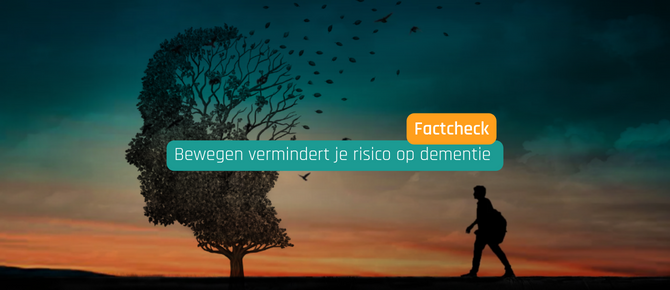
De myokines hebben helende functies in de hersenen. Ze verlagen bijvoorbeeld het risico op dementie en depressie.
Publisher’s rating: Waar

We hebben ontdekt dat resistent zetmeel een reeks kankdersoorten met meer dan 60% vermindert
Publisher’s rating: Geen bewijs

Details des Vertrags mit Pfizer sind erst im Herbst 2023 öffentlich geworden. Es gibt 17 Millionen Todesfälle und Turbokrebs als Impfschaden.
Publisher’s rating: Die Vertragsdetails sind schon seit Jahren im Netz zu finden. Die EU hat weniger Dosen des Corona-Impfstoffes von Biontech/Pfizer bestellt als im Artikel behauptet. Für die angeblichen Impfnebenwirkungen gibt es keine Belege. «Turbokrebs» ist keine medizinische Diagnose oder Bezeichnung.
The claim combines assertions in an article prompted by a post from Kim Dotcom. The post, dated 26 October 2023, presented an EU–Pfizer vaccine contract as newly leaked and alleged that it showed safety information was unknown; the article also asserted 17 million vaccination-related deaths and warned of “Turbokrebs.” The review identifies the linked document as the BioNTech/Pfizer–EU contract, but says it had already been uploaded to the Internet Archive in summer 2021—not first made public in autumn 2023. The review also checked where the quoted contract language could be found. It reports that the relevant clauses appeared unredacted on the Czech health ministry’s website from the end of 2020 and on FragDenStaat from April 2021, according to that site’s operator. The document says vaccines would continue to be monitored after delivery and acknowledges that not all side effects might yet be known at that point. The review adds that BioNTech had already completed the decisive phase III efficacy study. Thus, the contract’s monitoring language does not establish that the details first became public in 2023 or prove the article’s claims about harm. The review says the contract itself contains neither the total number of doses bought nor the price. It contrasts the article’s figures of 5.4 billion doses and roughly €100 billion with EU figures: 2.4 billion BioNTech/Pfizer doses ordered, with an option for another 900 million, and about 760 million distributed to member states by early September 2023. Finally, the review says there is no proof for the alleged 17 million deaths and that “Turbokrebs” is not a medical diagnosis or designation; it reports no evidence supporting the alleged vaccine injuries.
30 people vaccinated on the same day in New Zealand died due to the COVID-19 vaccine
Publisher’s rating: False
there are only four causes of acid reflux
Publisher’s rating: False
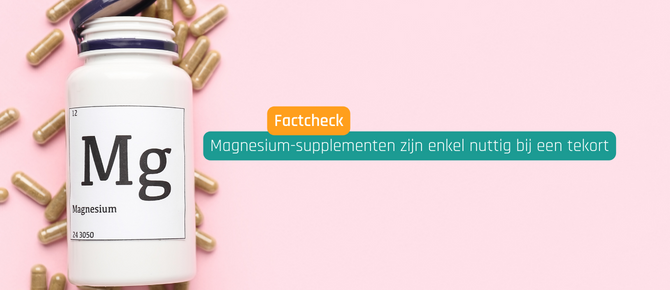
Magnesium draagt bij tot de productie van bouwstoffen voor zowel neurotransmitters (stofjes die in onze hersenen de communicatie onderhouden) als hormonen.
Publisher’s rating: Eerder onwaar
કાળું લસણ કેન્સરને નિવારી શકે છે
Publisher’s rating: False
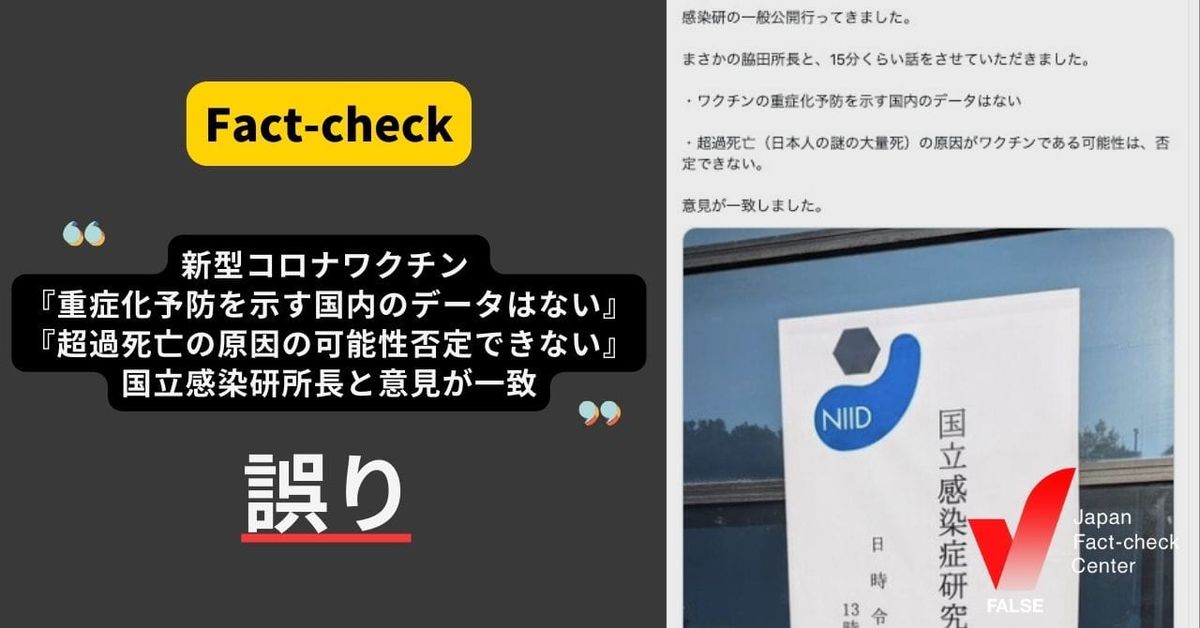
コロナワクチン 「重症化予防を示す国内データない」「超過死亡の原因の可能性」で国立感染研所長と一致
Publisher’s rating: 誤り
you can remove tartar and whiten teeth in a minute
Publisher’s rating: Mostly False


Can Turmeric cure cough in 5 minutes?
Publisher’s rating: Misleading
The review addresses a YouTube video claiming that consuming turmeric can relieve cough and cold symptoms within five minutes. It describes the suggested preparation as roasting half a teaspoon of turmeric in water and drinking it; the video also reportedly recommends inhaling the vapour for a runny or blocked nose. The review’s central distinction is between possible symptom-supporting effects and proof of a rapid cure: it says studies have suggested turmeric may have effects on cough, but that there is no definitive evidence that it cures a cough in five minutes. To assess the claim, the review discusses several kinds of cough and potential underlying causes, and reports comments from pulmonologist Dr Mrigakshi Aggarwal about how cough characteristics can signal different health issues and when medical attention may be warranted. It also summarizes research cited in the article: a review of herbal cough suppressants is described as reporting a therapeutic effect for turmeric particularly on dry coughs; another review describes turmeric’s traditional use for cough; and a paper discusses curcumin’s potential anti-inflammatory effects. These points concern possible effects or historical use, not evidence of a five-minute cure. The review further quotes Dr Kamal Kant Kohli, who says turmeric should not be treated as a standalone cure and that expecting it to cure cough in five minutes is unsupported by medical research. It cautions that cough may arise from serious illness and says relying on turmeric could divert people from appropriate treatment. Thus, the article’s evidence does not establish the video’s promised speed or a cure across causes of cough; its conclusion is that the five-minute claim is unsupported.
Hold your breath to see if you have healthy lungs
Publisher’s rating: False
Você olha para Caraguatatuba, 10 mil mal súbitos em um ano [por causa da vacina contra Covid-19]
Publisher’s rating: Falso

Recent video of doctors removing maggots from Israel’s former Prime Minister Ariel Sharon eyes before his death
Publisher’s rating: FALSE
The claim concerns a video circulated as recent footage of doctors removing maggots from the eyes and ears of former Israeli Prime Minister Ariel Sharon while he was hospitalized before his death. FACTLY’s review identifies the video as footage of someone else: former Faisalabad Deputy Superintendent of Police Anwar Sandal, filmed during his hospitalization in Lahore, Pakistan, in 2021. The review says Sharon died in January 2014 after being in a coma for eight years following a severe stroke in 2006. That chronology rules out the video being recent footage of him before his death. FACTLY also reports that reverse-image searches found the video circulating on social media at least since 2021. In an extended version, a doctor speaks in Urdu and describes the patient as a former police officer. To investigate the footage’s provenance, FACTLY says it found YouTube videos published in October 2021 identifying the patient as Anwar Sandal during treatment at Sarjmeed Hospital in Lahore, as well as news reports about the video from that month. The review’s conclusion is that the circulated footage is from Pakistan and does not show Ariel Sharon.