PeakMetrics / Fact Checks
Elections & voting fact checks
Explore claims publishers have checked about elections & voting. Read their original ratings and follow the evidence.
Search fact checks
Search by text or image5,415 published reviews in this topic

網傳「蔡英文大勝是因為源頭性的大做票,而非投開票過程的大做票,而所謂的源頭性做票,其實是:CIA提供了兩種特殊的隱形墨水?」
Publisher’s rating: 錯誤
The rumor attributed Tsai Ing-wen’s victory to two alleged forms of invisible ink supplied by the CIA: ink supposedly printed on some ballots that would show red under nighttime fluorescent lighting, and stamp-pad ink that would gradually fade after drying. The review assessed both the alleged ballot-printing route and the proposed ink behavior. It consulted the rules for printing and distributing election ballots and interviewed a chemistry teacher about the ink claims. The excerpt does not report an independent chemical test of a sample of the alleged ink. On ballot production, the review says election ballots are printed by municipal or county election commissions according to prescribed formats, with election-observation committee members present. It also recounts an earlier interview with a regional printing-company manager: according to that account, officials supervised printing on site, cameras recorded the process, police were stationed inside and outside, and finished ballots were escorted to election offices. The review therefore said the rumor’s account of the central election commission arranging covert ink on some ballots did not match the described printing process. For the proposed nighttime effect, the interviewed chemistry teacher explained that light-activated color changes mainly rely on ultraviolet light; if sunlight does not reveal the ink, ordinary fluorescent lighting at night is unlikely to do so. For fading stamp-pad ink, he acknowledged that a chemical reaction with air could make ink colorless, but noted that ink exposed to air in the pad would also be affected and the change would be difficult to conceal. These findings address the rumor’s specific mechanisms, while the excerpt does not identify or test any CIA connection.
Ketua KPU Arief Budiman mengaku disuap Megawati Rp 2 triliun dan diancam memenangkan PDIP dalam Pilpres 2019
Publisher’s rating: Keliru

網傳「韓國瑜300萬票,宋楚瑜250萬票,蔡英文450萬票,總共1000萬票,這就是正確的政黨票,多出來的四百多萬票就是配票」?
Publisher’s rating: 錯誤
The claim combined two kinds of votes: it presented rounded figures for the presidential candidates Han Kuo-yu, James Soong and Tsai Ing-wen as if they described party votes, then attributed an alleged excess of more than four million votes to vote allocation. The Taiwan FactCheck Center checked the claim against Central Election Commission figures for both the presidential election and party-list vote. 【S1】 For the presidential race, the review reports 5,522,119 votes for Han, 608,590 for Soong and 8,170,231 for Tsai. Their combined total was 14,300,940, not the 10 million stated in the post. The review therefore found that the post’s candidate figures and total did not match the reported presidential results. 【S1】 The review separately checked valid party votes: the Kuomintang received 4,723,504, the People First Party 518,921 and the Democratic Progressive Party 4,811,241. Those three totals add to 10,053,666. This is a distinct party-vote tally, not the presidential-candidate total asserted in the post. Because the claimed figures did not match either set of election results, the review concluded that its further claim about the supposed excess votes being “allocated” lacked adequate basis. 【S1】

網傳「總統有效票比政黨有效票多出361萬票......唯一能解釋的就是做票」?
Publisher’s rating: 錯誤
The claim concerned Taiwan’s 2020 presidential and legislative elections: a circulating message said the presidential candidates’ votes added up to 14,282,934, compared with 10,666,258 valid party votes, and argued that the supposed 3,616,676-vote gap could only be explained by ballot manipulation. The review checked those figures against results published by Taiwan’s Central Election Commission. It found the three named presidential candidates’ actual totals summed to 14,300,940, and the actual valid party-vote total was 14,160,138—not the figures in the message. (“但三名候選人加總後的總票數為1430萬940票,與傳言所提總得票數為1428萬2934票並不相符。”; “依照中選會公布的政黨票有效票總數為1416萬138票,但傳言所提政黨票有效票為1066萬6258票,數據並不正確。”) Using the review’s stated calculation—subtracting valid party votes from valid presidential votes—the difference was 140,802, not 3.61 million. Thus, the central numerical comparison in the message was unsupported by the official totals it cited. (“查核中心將總統有效票減去政黨有效票,兩者僅相差14萬802票,並未有361萬票差距。”) The review also interviewed political science researchers about why presidential and party-vote totals need not match. They described split-ticket voting: voters may choose a different party on the party ballot than the candidate they support for president. The review therefore concluded that the difference itself did not establish vote-rigging; its finding rested on both correcting the message’s figures and reporting experts’ explanations for differing choices across ballots. (“他表示,同一政黨在總統得票數和政黨票有落差,可能是因為選民「分裂投票」,把區域立委票或政黨票投給其他政黨,藉此得以監督制衡,每次選舉都會有這樣的現象。”)
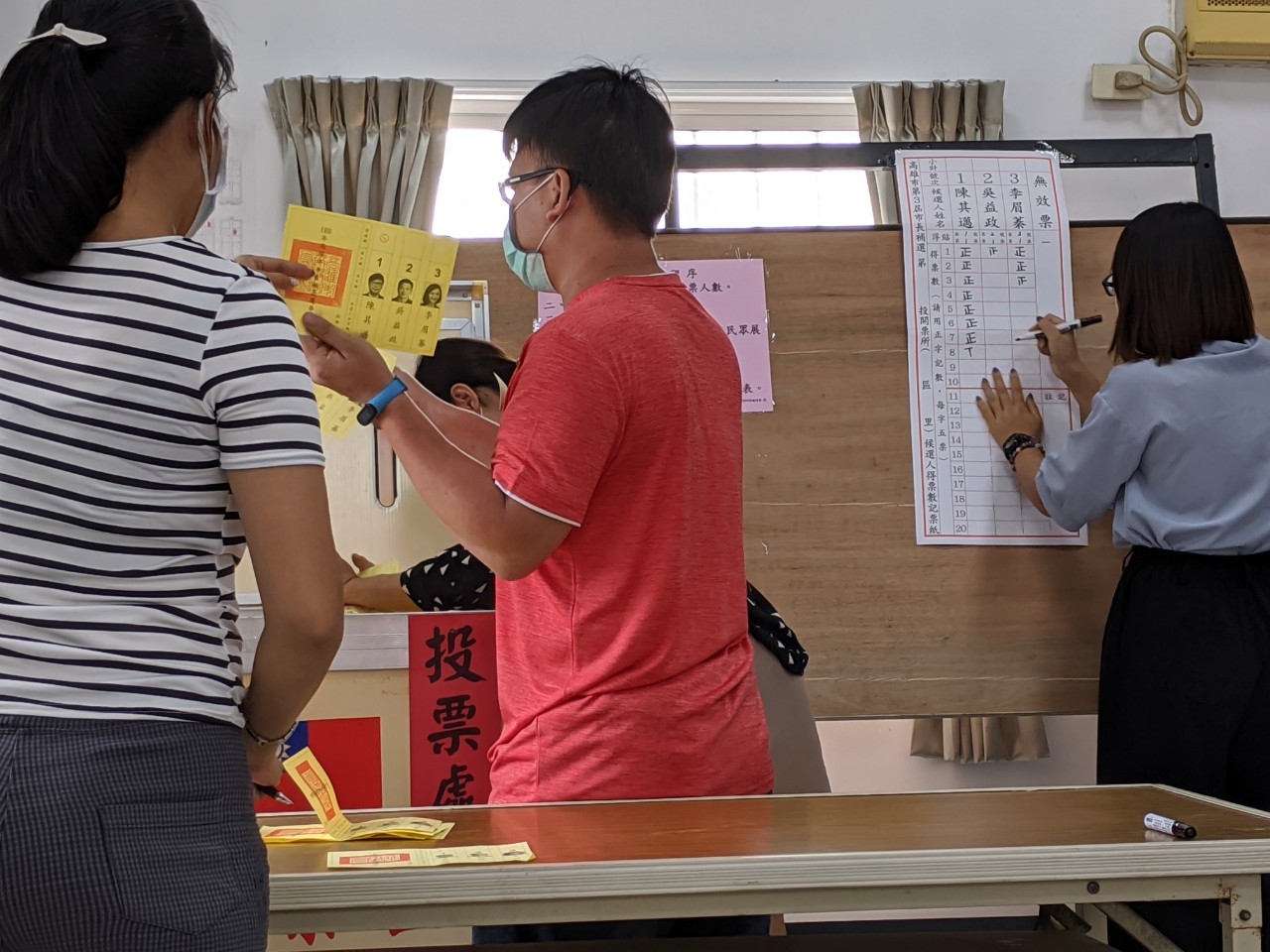
網傳「2016總統票數...少子化人口减少、平時因疾病或意外自然死亡,投票數暴增2百5O萬人...這種選舉票數顯然不合常理」?
Publisher’s rating: 錯誤

網傳「三個總統候選人加起來的票數好像超過總投票人數耶?等同於有百分百的投票率耶」?
Publisher’s rating: 錯誤
The review investigates a message claiming that votes for Taiwan’s three presidential candidates exceeded the total number of voters, supposedly implying 100% turnout. It checks the claim against election figures attributed to Taiwan’s Central Election Commission, distinguishing eligible electors, people who voted, and valid votes. The review reports 19,311,105 eligible electors and 14,464,571 voters. It lists the candidates’ vote totals as 608,590 for Soong Chu-yu and Yu Hsiang, 5,522,119 for Han Kuo-yu and Chang Shan-cheng, and 8,170,231 for Tsai Ing-wen and Lai Ching-te. It says those three totals add to 14,300,940, matching the reported number of valid votes—not exceeding the number of voters or eligible electors. The review also reports a turnout rate of 74.9%, not 100%. Thus, the figures it cites do not support the message’s assertion: the candidates’ combined votes are below the number of people who voted, and the reported turnout is below the claimed rate.


Los del no éramos un millón y pico más de votantes que los del sí
Publisher’s rating: Falso

網傳文章「美媒丟震撼彈籲:台灣不可以讓蔡英文連任四年」?
Publisher’s rating: 部分錯誤
The circulating story claimed that the U.S. magazine The National Interest had issued a call for Taiwan not to give Tsai Ing-wen another four years. The Taiwan FactCheck Center traced the story to a January 5, 2020 National Interest article titled “Taiwan Must Not Give Tsai Ing-wen Four More Years.” Its review identifies the author as Kent Wang and describes the piece as a submitted commentary, not an editorial representing the magazine. The article’s subject and headline were therefore real, but the circulated account misrepresented whose position they expressed. To check that distinction, the Center examined the article and its author information, then contacted The National Interest’s executive editor, Harry Kazianis. The review reports that the author biography identified Wang as a research fellow at the Institute for Taiwan-America Studies. It also says the Center checked that institute’s website and confirmed Wang’s affiliation. Kazianis told the Center that the magazine had no editorial position on Taiwan and that the article did not represent its editorial position. The review further describes the magazine as publishing contributions from different viewpoints, rather than promoting a single position. The key distinction is thus between a commentary published by the magazine and an institutional call by the magazine itself: the review found support for the former, but reported that the editor explicitly disclaimed the latter.

網傳「這次選舉投票結束後現場開票時將不公開唱票,說是直接用鏡頭攝取計票 ~~」?
Publisher’s rating: 錯誤
The claim concerned the 2020 election in Taiwan and alleged that, after voting ended, officials would not publicly call out votes during counting, but would instead use a camera to capture ballots for counting. The review examined the claim against the procedures planned for the January 11, 2020 election. It reports that an experienced polling-station chief administrator, who had also attended that year’s election-worker training, said the counting process would follow the usual practice of calling out votes publicly, not filming ballots with a camera.

網傳「美國《時代雜誌》:這是一場由惡毒演員操弄假新聞、性別歧視、煽動演說主導的選戰」,配上韓國瑜照片?
Publisher’s rating: 部分錯誤

網傳「投票時要注意小心筆的兩端看一下,是不是都有(人)字,如果只有一邊有人一邊沒有人,就要用人的那邊蓋喔,我在2顆子彈阿扁當選那次,我家那的是一邊有,一邊没有,那次有50多萬的廢票...」?
Publisher’s rating: 錯誤
The claim combines two assertions: that only one end of the voting tool can be used to mark a ballot, and that more than 500,000 ballots were invalid in the presidential election associated with the “two bullets” incident. The review addresses both assertions directly. For the voting tool, the fact-check center says it interviewed Central Election Commission deputy chair Chen Chao-jian, who showed photographs of the tool. According to the review, both ends have a marking area with a character-shaped symbol, and the tool had been used for many years. That evidence contradicts the message’s instruction to use only the end with the symbol. For the ballot figure, the review identifies the referenced election as the 11th presidential and vice-presidential election and says it checked the Central Election Commission’s election database. The figures it reports are 12,914,422 valid votes and 337,297 invalid votes—not more than 500,000 invalid ballots. On those two findings, the review concludes that the circulating message is false.

網傳「呂秀蓮問,反滲透法為何急著通過...萬一 2020/1/11 投票結果如是韓國瑜勝出,那麼反滲透法就可派上用埸了...那麼蔡陣營就可提出"選舉無效和當選無效"」?
Publisher’s rating: 錯誤

網傳「持舊式身份證不得憑領選舉票」、「如果沒有更改為新的版本,或台北縣升格為新北市,都要更改。否則在投票當天是不能領選票」,經查:舊式身分證係指民國94年12月21日以前核發的身分證,已於96年1月1日起停用,不得憑領選票。選民只要持94年12月21日起換發的新式身分證,就算為舊縣市名稱,仍可領取選票。此傳言為「部分錯誤」訊息。
Publisher’s rating: 部分錯誤
The review examined two related claims: that people holding an “old-style” identity card could not receive a ballot, and that residents had to replace cards showing county or city names from before administrative mergers or upgrades. It reports that the fact-checking center interviewed Central Election Commission Deputy Chair Chen Chao-chien about what “old-style” meant on the voting notice. The investigation distinguishes a card’s issue date and type from whether its address still uses an older place name. [S1]

網傳「投票所改變地點」、「投票不能帶手機、國外回來投票要帶台灣護照都是新的規定?」,經查:2020年選舉較2018年選舉增加1340間投開票所,選舉人有可能被分配到與上次不一致的投開票所。「投票時不能帶手機」。此為既有規定。國外回台投票時,可能因戶籍被取消導致身分證失效,可改用護照。此為既有規定。此傳言為「部分錯誤」。
Publisher’s rating: 部分錯誤
The rumor combined three claims: that a voter’s polling place had changed, that voters could not bring phones under a new rule, and that people returning from abroad needed a Taiwanese passport under a new rule. The Taiwan FactCheck Center examined each point in relation to Taiwan’s 2020 election and reported that they did not all have the same explanation. On polling locations, the Center said it interviewed the Central Election Commission. The Commission reported that the number of polling stations increased from 15,886 in 2018 to 17,226 in 2020—an addition of 1,340. With voters distributed among more stations, a person could be assigned a different station than in the previous election, though it would still be near their household registration address. The report said voters could check their assigned location on their notice or through the Commission’s website. The phone restriction was not new: the report cited Article 61(3) of the Presidential and Vice Presidential Election and Recall Act, which bars voters and specified family members from taking phones or other photographic equipment into polling stations. The Center said its review of the Legislative Yuan’s amendment history found that this restriction had remained in force since an amendment in 2004. For overseas nationals whose household registration had been moved abroad, the report described a separate process: eligible people could apply to vote in person in Taiwan and, if approved, had to present a valid Republic of China passport. Comparing the 2020 guidance with guidance for the previous presidential election, the Center said this requirement had not changed.

El PSOE aplaudió la intervención de EH Bildu en el pleno de investidura
Publisher’s rating: Falso
The claim concerned a video circulated on 5 January 2020, during the second day of Pedro Sánchez’s investiture session. The posts alleged that the PSOE benches applauded the speech by EH Bildu spokesperson Mertxe Aizpurua. Newtral examined the plenary broadcast and the official record of the proceedings to establish what prompted the applause. [S1: “El pasado 5 de enero, día de la segunda jornada de la sesión de investidura de Pedro Sánchez, tanto el PP como VOX publicaron en sus perfiles de Twitter un vídeo en el que aseguraban que la bancada del PSOE había aplaudido la intervención de la portavoz de EH Bildu, Mertxe Aizpurua.”] [S1: “Como se puede comprobar en la emisión del pleno y en el diario de sesiones”] The review says the PSOE began applauding when Congress president Meritxell Batet intervened to ask that Aizpurua be allowed to continue speaking. Batet made three interventions during the speech, and the PSOE benches applauded after two of them. The review therefore distinguishes the timing of the applause from the claim that it was an expression of support for Aizpurua’s speech. [S1: “los socialistas comenzaron a aplaudir cuando la presidenta del Congreso, Meritxel Batet, pidió durante la intervención de Aizpurua que se dejara continuar a quien estaba haciendo uso de la palabra. Hizo esto en tres ocasiones y la bancada del PSOE respondió con aplausos en dos.”] The cited parliamentary record describes Batet asking for respect for the speaker and invoking freedom of expression; the review also reports applause after a later intervention in which she said parliamentary positions should be defended with words, not shouting or insults. Newtral’s conclusion was that the applause was a reaction to Batet’s interventions, not to Aizpurua’s speech as the posts suggested. [S1: “Señorías, por favor, pido respeto para el orador. (Protestas). Señorías, en esta Cámara vamos a preservar la libertad de expresión.”] [S1: “Por tanto, tal y como se demuestra en la grabación del pleno y en el diario de sesiones, los aplausos del PSOE se producen como reacción a las intervenciones de Meritxell Batet, presidenta del Congreso.”]


網傳「明天起到1/11不要傳任何與候選人或選舉有關訊息圖片等...TVBS宣布,12月31號晚上凌晨開始,所有的選舉民調,不管舊的、新的,都不要再傳,要罰五十萬,尤其反滲透法已通過,任何選舉文宣也請大家都不要再傳...」,經查:法規規定,投票日前10天不得散布「民調資料」。「投票日」當天不得助選或宣傳;在投票日之前(即起至2020年1月10日)仍可以傳遞跟候選人或選舉有關的訊息圖片。《反滲透法》與傳言指稱的「不要傳選舉、民調資訊」無關。傳言為「部分錯誤」訊息。
Publisher’s rating: 部分錯誤
The review assessed a message circulating in Taiwan that urged people not to share election-related material from January 3 through election day, claimed that all old and new polling data would be prohibited from December 31 at midnight, and linked the warning to the Anti-Infiltration Act. It separated those assertions rather than treating the message as wholly accurate or wholly false. For election-related messages and images, the review examined the election laws’ restrictions on campaigning and found that the ban on campaigning or assisting candidates applied on election day. It says that January 3–10, 2020, were not election day, so sharing candidate- or election-related messages during that period was not prohibited by that rule. The review thus distinguishes general election material from polling data, which was subject to a separate restriction. On polling data, the review cites a December 30, 2019, Central Election Commission announcement: from January 1, 2020, at midnight until 4 p.m. on January 11, polling data about candidates or the election could not be published, reported, disseminated, commented on, or quoted. The announcement described fines from NT$500,000 to NT$5 million. This supports a restriction on polling data, but not the message’s claim that all election-related material could no longer be shared from December 31. Finally, the review reports that National Chiao Tung University professor Lin Chih-chieh said the Anti-Infiltration Act did not make simply sharing election statements or images unlawful; the legal conditions she described involved conduct connected to an enemy force and specified unlawful acts. The review’s findings therefore correct parts of the viral warning while recognizing that its polling-data restriction had a real legal basis.

Claim: BJP not won a single seat in Tamil Nadu Panchayat Election
Publisher’s rating: Fact Crescendo Rating: False
The claim concerned the Tamil Nadu rural local-body election and a social-media post asserting that the BJP had lost all 81 district-council seats it contested. The review says the post was shared by a Facebook page called Freedom TV on January 2, 2020, while vote counting was still underway on January 2 and 3. It therefore cautioned that a final tally was not yet available when the post appeared. [S1] To check whether the party had lost every seat, the review consulted the Election Commission’s official results page. It reported that the page showed BJP wins in five district-council seats, identifying two in Kanniyakumari and one each in Ramanathapuram, Theni and Coimbatore. It also noted that news outlets following the count reported six BJP wins once counting was complete. The review further says it contacted the Tamil Nadu BJP, whose representative described the no-win claim as wrong, while cautioning that the final number would be certain only after counting ended. [S1] The evidence directly contradicts the assertion that the BJP won no seats: the review’s account of the official results already records five wins, and its account of later reporting records six. The changing totals reflect the timing of the social-media post and ongoing counting; they do not support the claim of zero wins. The review concludes that the assertion that the BJP lost all 81 seats was false. [S1]