PeakMetrics / Fact Checks
Economy & business fact checks
Explore claims publishers have checked about economy & business. Read their original ratings and follow the evidence.
Search fact checks
Search by text or image7,104 published reviews in this topic

Fish production increased from 186.18 lakh tonnes during 2012-14 to 210.2 lakh tonnes during 2014-16.
Publisher’s rating: TRUE
FACTLY checked whether national fish production rose from 186.18 lakh tonnes in 2012–14 to 210.2 lakh tonnes in 2014–16. The review explains that the infographic figures it was checking were expressed in a way that omitted the scale: “The numbers are odd since the production in the entire country will be a few lakh tonnes. Hence the assumption is that the numbers in the infographic mean lakh tonnes.” It then compared annual production figures reported in parliamentary responses.
Kenya foreign reserves have surpased the maximum Sh10 billion mark
Publisher’s rating: False.
Kenya foreign reserves have surpased the maximum Sh10 billion mark
Publisher’s rating: False.
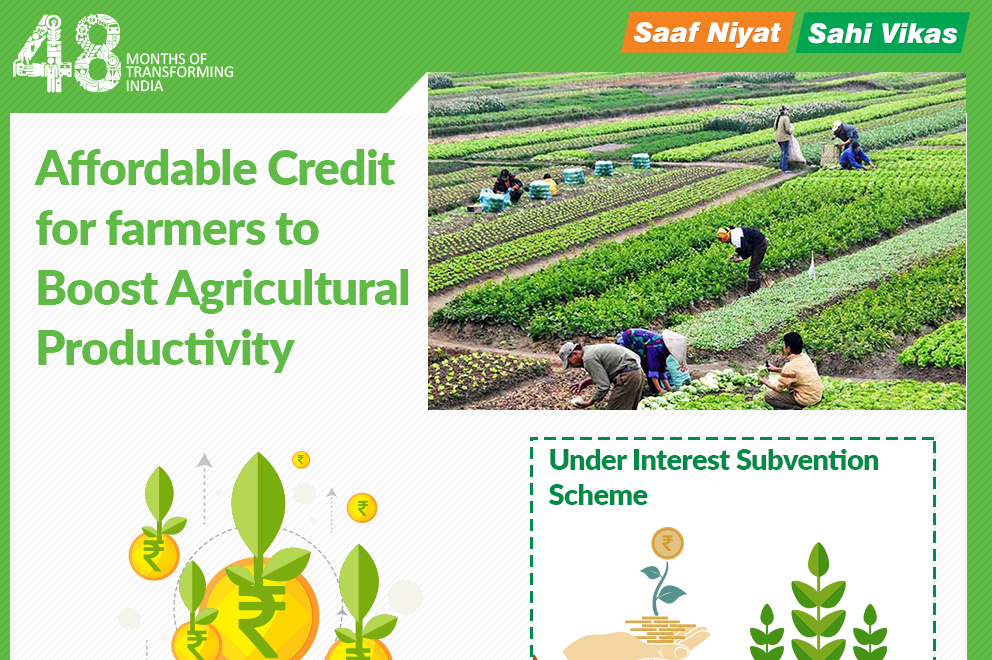
Under the interest subvention scheme, short term crop loans up to Rs. 3 lakhs were extended at an interest rate of 7% per annum for up to one year.
Publisher’s rating: MISLEADING
The claim concerns the terms of the Interest Subvention Scheme (ISS): short-term crop loans of up to Rs. 3 lakh at 7% annual interest for one year. The review says a Lok Sabha response described the scheme as providing 2% annual interest subvention to banks on their own funds used for eligible loans, with an additional 3% for farmers who repay promptly. It therefore treats the stated loan limit, rate and period as accurate, rather than disputing those terms. The review’s central qualification is historical. It cites NABARD’s 2011–12 annual report, which said that 2% subvention was available to specified banks for crop loans up to Rs. 3 lakh per farmer when borrowers received loans at 7%, and that an additional 3% was announced for prompt repayment in 2012–13. On that evidence, the review concludes that these provisions predated the BJP government. Its assessment is that presenting the terms without that history can mislead readers about their origin, even though the terms themselves are true.
24.53 lakh joint liability groups were provided Rs. 26,848.13 crores loan by banks across the country as of 31st March, 2017.
Publisher’s rating: TRUE
The claim concerns the cumulative number of Joint Liability Groups (JLGs) financed by banks across India and the amount of loans provided as of 31 March 2017. The review identifies it as one of two claims in a government infographic about affordable credit, within a broader set of claims concerning efforts to double farmers’ incomes. It treats the JLG figure as a specific, dated total rather than a new programme launched in 2017. [S1: “The BJP government published an infographic on the 48-months portal that makes two claims about affordable credit being provided. This is part of a larger sub-section of claims made about doubling farmers’ incomes.”] For the central figure, the review cites a Lok Sabha response. That response states that, as of 31 March 2017, banks had cumulatively provided loans of Rs. 26,848.13 crore to 24.53 lakh JLGs across the country. The cited wording closely matches the claim in both its figures and its date, supporting the stated total. [S1: “as on 31st March, 2017, cumulatively 24.53 lakh Joint Liability Groups (JLGs) have been provided Rs. 26,848.13 crore loan by banks across the country.”] The review adds historical context that qualifies any implication that the scheme itself originated with the government associated with the infographic. It says NABARD began a pilot project financing JLGs in 2004–05 and cites NABARD’s 2013–14 annual report for an earlier cumulative total. That history does not alter the 2017 figures, but distinguishes the accuracy of the loan-total claim from any broader claim about who established the programme. [S1: “Joint liability groups amongst farmers were first introduced as a pilot project by NABARD (National Bank for Agricultural and Rural Development) in the year 2004-05.”] [S1: “As per NABARD’s 2013-14 annual report, the cumulative loan disbursement as on 31st March 2014 was Rs. 6,075.91 crores to 6.58 lakh JLGs.”]
Labor's dividend imputation policy would overwhelmingly affect the low paid
Publisher’s rating: Misleading

“ மேக் இன் இந்தியா ” திட்டத்தின் மூலம் உருவாக்கப்பட்ட ரயில் ஆஸ்திரேலியாவிற்கு ஏற்றுமதி.
Publisher’s rating: Mix

A claim that 60% of Nigerian women are poor.
Publisher’s rating: This claim is False

A claim that Nigeria loses 1 billion dollars medical tourism every year
Publisher’s rating: This claim is True
A claim that the structure of our economy is such that services constitute 60% of it. The services are not high-earned services, it’s low productivity service.
Publisher’s rating: This claim is False.
کشور ژاپن با ۱۲۰ میلیون جمعیت، فقط ۳۰۰ هزار کارمند دولتی دارد.
Publisher’s rating: نادرست

The payment of wages (amendment) act 2017 is empowering workers
Publisher’s rating: MISLEADING
Job advert claiming that Tuskys is hiring is fake
Publisher’s rating: False.
Employees don’t undergo hassles to transfer EPFO accounts any more since Universal Account Number (UAN) boosts portability.
Publisher’s rating: UNVERIFIED
The claim under review is that employees no longer face hassles transferring EPFO accounts because the Universal Account Number (UAN) improves portability. FACTLY examined this claim as one of three assertions in a government infographic about labour welfare. Its account cites the Ministry of Labour and Employment’s 2017–18 annual report, rather than describing an independent survey of employees or a direct test of account transfers. The review reports the annual report’s figure that portability of social-security benefits had been extended to 6.57 million people through UAN. But the review also points to a countervailing indicator in that same annual report: EPF-related grievances rose from 1.79 lakh in 2014–15 to 2.99 lakh in 2017–18, with the latter figure covering only the period up to December 2017. That increase does not, by itself, establish that the grievances concerned account transfers or that UAN caused them; the excerpt provides no breakdown of grievance types or other evidence isolating the effects of UAN. It does, however, make a categorical claim that employees no longer face hassles harder to establish from the cited portability figure alone. On the evidence it presents, the review accepts that UAN extended portability to millions but says whether it made transfers hassle-free is debatable. The evidence does not show that all employees experienced smooth transfers, nor does the grievance total directly measure transfer difficulty. The review therefore does not treat improved portability as sufficient proof that transfer hassles have disappeared.

Claim that the economy has recovered from recession and we have had six quarters of growth since then. Real Gross Domestic Product growth stood at 1.81 per cent in the third quarter of 2018, compared to 1.17 per cent in the third quarter of 2017.
Publisher’s rating: The claim is True
A claim that In the area of trade, Nigeria has moved from a deficit to surplus in its trade balance.
Publisher’s rating: The president’s claim is TRUE according to the nation’s official data repository.