PeakMetrics / Fact Checks
Economy & business fact checks
Explore claims publishers have checked about economy & business. Read their original ratings and follow the evidence.
Search fact checks
Search by text or image7,104 published reviews in this topic

More than 87.5 lakh farmers and sellers are registered.
Publisher’s rating: TRUE
The claim concerns registrations on India’s e-NAM agricultural trading portal, not the number of people who had completed an online trade. FACTLY says it checked the government’s figures against a response given in the Lok Sabha in March 2018. That response listed 85.41 lakh farmers, 55.4 thousand commission agents, and 1.04 lakh traders or buyers as registered on the portal. Adding those categories gives approximately 87.49 lakh people—close to, but marginally below, 87.5 lakh when expressed to two decimal places in lakhs. The review nevertheless treated the rounded claim as supported by the figures it cited. The distinction between registrations and farmer participation matters. The review says the farmer count alone was less than 7% of households engaged in farming in the country. Thus, the combined total includes sellers and intermediaries beyond farmers; it does not establish that more than 87.5 lakh farmers themselves were registered. Nor does registration show how many users were active or had traded. FACTLY’s surrounding examination of e-NAM also cautions that the number of mandis listed on the platform did not establish how many were actively using it for online trade.
164.53 lakh tones of farm commodities worth Rs. 41,591 crore rupees transacted in one e-NAM.
Publisher’s rating: TRUE
The claim concerns the volume and value of agricultural commodities traded on India’s e-NAM portal. FACTLY checked it against a Lok Sabha response from March 2018, which reported that 1.63 crore tonnes of agricultural commodities, worth Rs. 40,946 crore, had been traded on the portal. Those figures are lower than the claim’s 164.53 lakh tonnes and Rs. 41,591 crore. The review nevertheless labels the claim TRUE, describing the underlying figures as true; it does not explain the discrepancy between the claim and the figures it cites. The review adds important scale context: it says the traded volume was less than 10% of the country’s total food-grain production. Thus, its conclusion is not that e-NAM accounted for a large share of national production, but that the reported portal-trade figures were true while representing a relatively small share. The excerpt does not provide the underlying Lok Sabha document or further calculations supporting that comparison.

There are approximately 100 lorries per day crossing the border between Northern Ireland and Ireland, and cross-border trade represents 0.5% of UK-EU trade.
Publisher’s rating: Inaccurate with consideration. There are 5,900 lorry (heavy goods vehicle) crossings daily. Cross-border trade represents 0.97% of UK-EU trade; alternative figures may be due to different measurement practices between countries.

A claim that Nigeria always set the pace in Foreign Direct Investment (FDI) earnings in Africa under the PDP administration which is more than the ruling All Progressives Congress. Also a claim that Nigeria was Africa’s highest recipient of FDI in 2013.
Publisher’s rating: The first claim is MISLEADING and the other is TOTALLY FALSE.
DUBAWA examined statements attributed to PDP presidential candidate Atiku Abubakar in a Facebook post comparing Nigeria’s foreign direct investment (FDI) performance under the PDP and APC. The review says it contacted Atiku’s media spokesperson, Paul Ibe, who confirmed that Atiku made the claims. It compared FDI figures across African countries using World Bank data for Nigeria from 1999 to 2001, UNCTAD’s World Investment Report for 2002–2017, and UNCTAD’s Investment Trends Monitor for 2018. The review identifies 2011, when the PDP was in power, as Nigeria’s highest FDI year in the 20-year period it examined; that peak does not establish that Nigeria led Africa every year. The review’s year-by-year comparison records that Nigeria ranked first or second in Africa four times under the PDP, but also ranked third seven times and fourth once. Under the APC, Nigeria was second in 2016 and in each of its first two complete years, but fell behind other countries in 2018. The review therefore cautions against treating one administration’s peak year—or a limited run of second-place rankings—as proof that Nigeria consistently led or that one party performed better overall. For the specific 2013 statement, DUBAWA reports that UNCTAD data placed Nigeria third in Africa, with $5.608 billion in FDI, behind South Africa at $8.3 billion and Mozambique at $6.175 billion. It also states that Nigeria ranked first on the continent only in 2002, 2009, 2011, and 2012 during the period reviewed. Thus, the cited data contradict the claim that Nigeria was Africa’s highest FDI recipient in 2013.

各國機師工時比較
Publisher’s rating: 事實釐清
The review examines comparisons of pilots’ working hours in different countries amid the 2019 China Airlines pilots’ strike in Taiwan. It explains that the dispute concerned the airline’s scheduling and staffing practices, while comparisons circulating in the media and online often described government rules. Those rules are minimum standards, not statistics measuring pilots’ actual working conditions across countries, and the union’s demands concerned conditions at China Airlines rather than legal requirements for all Taiwanese pilots. A key finding is that “working time” cannot be treated as one uniform measure. The review distinguishes flight time from flight duty period: the latter includes work from reporting for duty until the aircraft is parked, and can include pre-flight tasks and time between flight segments. It says the US and EU definitions are broadly similar, while emphasizing that regulations set limits for both categories. The country comparisons illustrate why a simple table of hours can mislead. In the US, the stated flight-time limit for one pilot is 8–9 hours, depending on report time; adding pilots can extend the maximum flight time to 13 hours with three pilots or 17 hours with four. But duty-period limits also depend on start time, number of flight segments and the onboard rest facilities. For the EU, the review reports maximum individual duty periods ranging from 9 to 13 hours under specified conditions, with different ranges when crew members’ time-zone adaptation is uncertain. It also notes Korean limits on cumulative flight hours, including 100 hours in 28 days and 1,000 hours in a year for the described two-pilot-or-fewer operations. The review’s overall conclusion is that these figures are government minimums and cannot, by themselves, establish what pilots actually work at particular airlines. Rules also vary with factors beyond crew count and hours, including circadian adaptation, report time, flight segments and rest facilities. The review further points to rest periods, cumulative flight time and consecutive night duties as additional fatigue-related rules, and notes that airline-specific practices may exceed legal requirements.

實際上麥當勞是真的有這樣的優惠活動,在 2019/2/13 到 3/19 持優惠圖片(出示手機、轉寄、影印及複製都可以),就可以享有麥當勞的優惠。
Publisher’s rating: 屬實
Federal Energy Minister Angus Taylor claims AGL, Origin Energy and EnergyAustralia - often referred to as the big three of electricity retailers - are experiencing record profits as their customers struggle to pay their bills. Mr Taylor wants greater protections for electricity consumers.
Publisher’s rating: Somewhat False - Mostly false, but there is more than one element of truth.

LINE 收到影片說建議大家不要只刷卡買機票附的保險,要加買有 SOS 醫療專機的保險。確實出國可以依照需求再規劃不便險,補足保險不足的部分。
Publisher’s rating: 大部分屬實
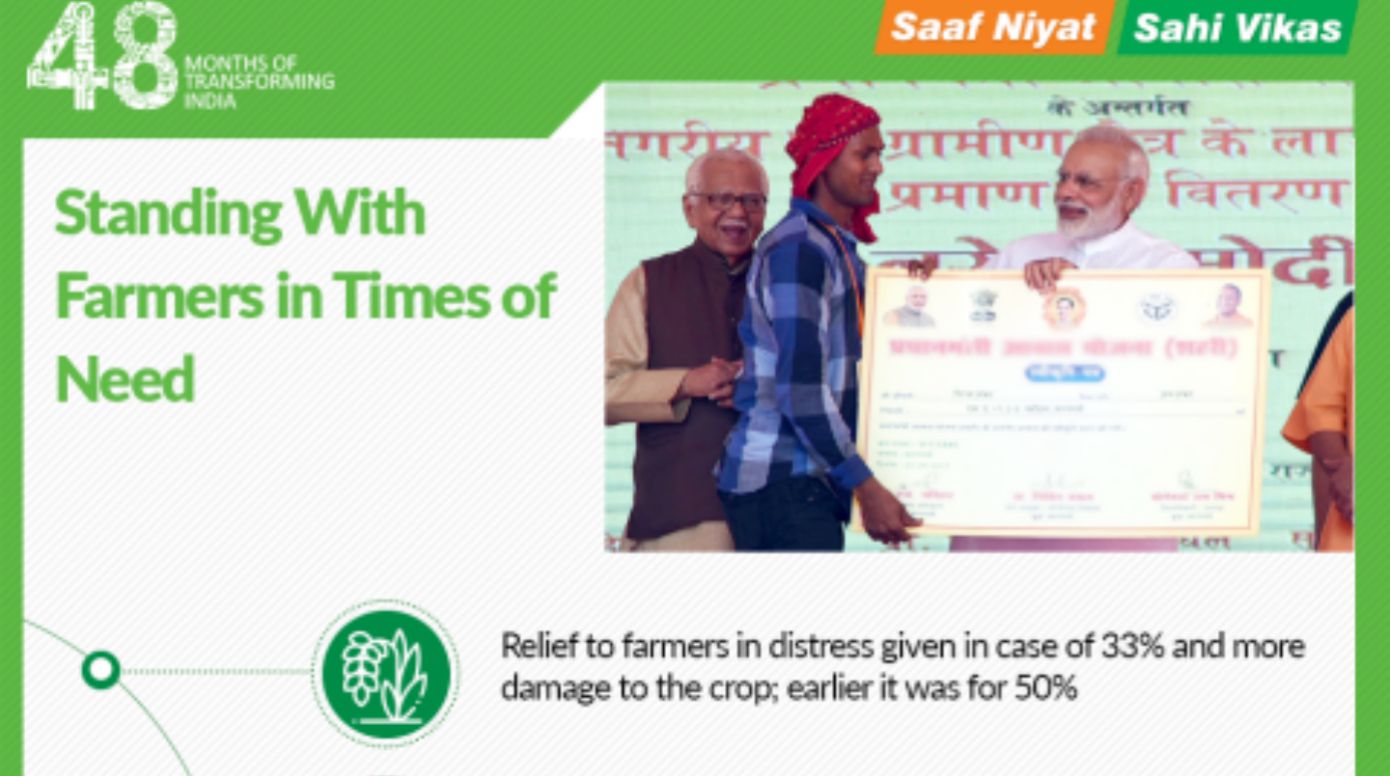
For food grains damaged due to excessive rainfall, full minimum support price to be paid.
Publisher’s rating: MISLEADING
FACTLY examined an infographic claim that food grains damaged by excessive rainfall would be paid the full minimum support price. Its review describes procurement-quality norms as being set annually on the recommendations of a committee that includes state food secretaries. The evidence it cites does not establish an automatic entitlement to full-price procurement for rain-damaged grain. Instead, the review says that when unseasonal rain or another cause affects wheat or rice quality, the government may consider relaxing procurement norms after states make recommendations and grain samples are tested. It notes that some quality requirements can be relaxed for broken or shrivelled grains and grains that have lost their shine, while grain with moisture above 14 percent cannot be stored and procured under the cited rules. The decisive qualification is that relaxation is considered case by case in natural disasters, not guaranteed whenever excessive rainfall damages grain. FACTLY also says this practice predates the government then in office. On that evidence, the review rates the blanket promise of full minimum support price as misleading: the described policy allows conditional relaxation of procurement standards, not automatic full-price payment for all affected grain.

Over half of the residents in Fermanagh & Omagh District Council are living in poverty.
Publisher’s rating: Inaccurate. 25.1% of people in Fermanagh and Omagh lived in relative and/or absolute poverty, from 2012-15. The claim was corrected by the Fermanagh Herald on 6 February 2019.
82% rise in provision under SDRF (State Disaster Relief Fund) during 2015-20, as compared to 2012-15. It went up to 61,220 crore rupees from 33,580.93 crore rupees.
Publisher’s rating: TRUE
The claim concerns the total SDRF provision for the 2015–16 to 2019–20 period compared with an earlier allocation. FACTLY examines the government infographic’s specific claim that provision rose by 82%, from ₹33,580.93 crore to ₹61,220 crore. Its explanation attributes the change to the 14th Finance Commission’s recommendations, rather than treating the allocation as an independent increase decided solely by the government. The review says the earlier ₹33,580.93 crore covered 2010–11 to 2014–15, the 13th Finance Commission period; the ₹61,220 crore covered 2015–16 to 2019–20. Those amounts imply an increase of about 82.3%, supporting the stated percentage. However, the claim’s comparison period, “2012-15,” does not match the earlier five-year period specified in the review. The review’s own accounting uses 2010–11 to 2014–15 as the baseline. FACTLY concludes that the claim is accurate, while its supporting explanation makes that period qualification important: the figures and percentage align when comparing the two five-year Finance Commission periods it identifies. The excerpt does not provide a separate calculation method or underlying allocation table, so the explanation here is limited to the figures and periods reported in the review.

Annual milk production enhanced by 12%. It was 146.3MT between 2011-14 and it was 163.7 MT between 2014-17.
Publisher’s rating: MISLEADING
The claim attributed a 12% rise in annual milk production to two figures—146.3 million tonnes (MT) for 2011–14 and 163.7 MT for 2014–17. The review checked the figures against the Department of Animal Husbandry, Dairying and Fisheries’ 2017–18 annual report and a response to a Lok Sabha question in February 2019. It found that the claimed figures were misassigned: 146.3 MT was for 2014–15, not the 2011–14 period, while the reported 2016–17 figure was 165.4 MT, not 163.7 MT. Using those sources, the review reported production of 146.3 MT in 2014–15, 165.4 MT in 2016–17, and 176.4 MT in 2017–18. It therefore characterized the infographic’s numbers as typos and said the comparison as stated was misleading. The review calculated that production increased by around 28% during the first four years of the current government. The review also gave a comparison for the preceding government period: it reported production of 116.4 MT in 2009–10 and 137.7 MT in 2013–14, describing this as an increase of around 27% over five years. These figures provide the review’s comparative context; they do not validate the claim’s stated periods or its 163.7 MT figure.
Is Naivas supermarket recruiting over 1500 staff in 2019
Publisher’s rating: False.

A claim that PZ is pulling out of Nigeria after 120 years.
Publisher’s rating: The claim is False

Extent of buffer stock of pulses increased from 1.5 lakh tonnes to 20 lakh tonnes.
Publisher’s rating: TRUE
Farmers to get 1.5 times of the production cost as MSP for Kharif crops
Publisher’s rating: MISLEADING
About 16.24 lakh metric tonnes of pulses procured as of March 2018.
Publisher’s rating: TRUE

379.06 lakh hectares of land is insured for a sum of Rs. 1,31,519 crores
Publisher’s rating: TRUE
The review examines a government infographic’s claim that 379.06 lakh hectares of land were insured for Rs. 1,31,519 crores under the Pradhan Mantri Fasal Bima Yojana (PMFBY). It checks the claim in two parts: area insured and total sum insured. For area, it reports that a Lok Sabha answer gave 385.3 lakh hectares for Kharif 2016 under the modified PMFBY, while the figure for Kharif 2017 was 340.5 lakh hectares. Thus, the review’s evidence supports the general scale of the claimed area for Kharif 2016, but its reported 385.3 lakh figure is not the claim’s exact 379.06 lakh figure. [S1]
Biggest financial support till date in crop insurance where 4.05 crore farmers are covered.
Publisher’s rating: PARTLY TRUE

2019 பட்ஜெட்டில் தனி நபர் வருமான வரி விலக்கு உச்ச வரம்பு ரூ.5 லட்சமாக அதிகரிப்பு.
Publisher’s rating: Fake