PeakMetrics / Fact Checks
Economy & business fact checks
Explore claims publishers have checked about economy & business. Read their original ratings and follow the evidence.
Search fact checks
Search by text or image7,104 published reviews in this topic
Nigerians are the biggest consumers of champagne on planet earth, more than the French who make it.
Publisher’s rating: Incorrect
Labor treasury spokesman Chris Bowen claims Australia has the second highest level of household debt in the developed world.
Publisher’s rating: Mostly True - Mostly accurate, but there is a minor error or problem.
From 2007-2010, more than half of Biliran residents were raised from extreme poverty
Publisher’s rating: False

Did UP govt impose 6% GST on Sunday Church offerings?
Publisher’s rating: FALSE


A livello di export l’agricoltura è quella che negli anni è sempre cresciuta.
Publisher’s rating: C'eri quasi

உலகின் பணக்கார விவசாய தொழிலாளி உ.பி-ல் உள்ளார். கதிர் அறுக்க ஹெலிகாப்டரில் தான் தினமும் செல்வார்.
Publisher’s rating: Fake
KPK menyebut pendapatan negara seharusnya bisa mencapai Rp 4000 T. Namun karena bocor, negara hanya dapat setengahnya.
Publisher’s rating: Sebagian Benar - Pernyataan KPK tentang kebocoran anggaran negara sebesar Rp 2000 T adalah benar, namun kebocoran anggaran negara ini sudah berlangsung lama.

Claim Has Kingfisher invented Instant Beer Mix
Publisher’s rating: Fact Crescendo Rating FALSE


10 million Filipinos are jobless
Publisher’s rating: False: Jobless Filipinos numbered 2.29 million as of January 2019
There are "10 million" jobless Filipinos
Publisher’s rating: FALSE: There are 2.29 million jobless Filipinos.
We’re bringing a lot of those car companies back.
Publisher’s rating: This is exaggerated.
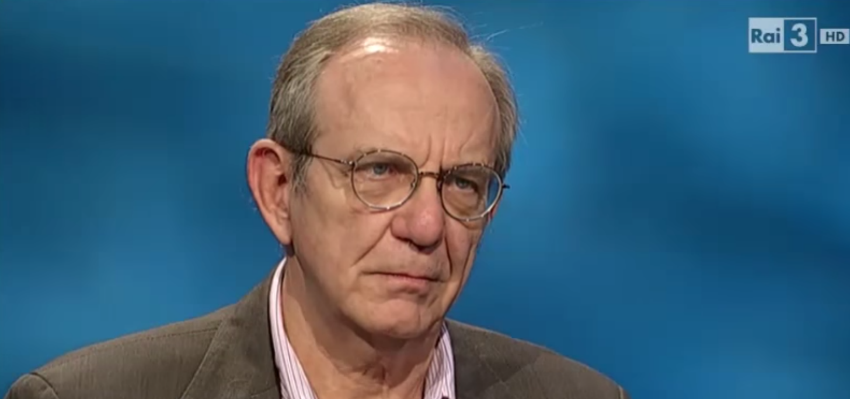
Il tanto vituperato provvedimento degli 80 euro è servito proprio a sostenere la domanda interna e i consumi delle famiglie meno abbienti in un periodo in cui, non dimentichiamocelo, l’Italia ha attraversato la recessione più profonda dal tempo dell’unificazione, in tempo di pace
Publisher’s rating: C'eri quasi
The review checks two parts of Padoan’s claim: whether the €80 bonus supported consumption and domestic demand, and whether it was introduced during Italy’s deepest recession since unification, excluding the world wars. It describes the bonus as an income-tax credit for employees, available from May 2014, and notes that Padoan’s statement concerned support for less well-off households. The review finds the recession claim supported, but treats the bonus’s consumption effect as uncertain rather than established for all economists. (S1: “Secondo l’attuale deputato del Partito democratico, la misura avrebbe aiutato a sostenere la domanda interna e i consumi delle famiglie meno agiate.”; “La crisi iniziata nel 2007-2008 è in effetti la più grave nella storia repubblicana.”) For consumption, the review compares differing research findings rather than presenting a settled consensus. It reports that a 2017 European Central Bank study concerning 2014 estimated higher monthly spending on food and transport and found that households spent 50–60 percent of the bonus that year. However, the study’s sample was sometimes too small for definitive conclusions, and the estimated effect might not be statistically significant. The review therefore says the positive effect was disputed and that further study would be needed. (S1: “Nell’agosto 2017, il professor Giuseppe Marotta su lavoce.info scrisse che gli studi davano risultati molto diversi”; “In generale, il bonus sarebbe stato speso nel 2014 per il 50-60 per cento del totale.”; “Il campione di famiglie analizzate è in alcune circostanze troppo piccolo per trarre conclusioni definitive.”) For the historical comparison, the review uses real GDP changes and cites a Bank of Italy study for estimates covering the Kingdom of Italy. It reports an 8.7 percent contraction from 2007 to 2013, compared with 5.05 percent from 1929 to 1934, and notes that the 2013 downturn’s effects continued into 2014, when the bonus was introduced. This supports the timing claim, but does not remove the review’s qualification that the bonus’s effect on consumption remained contested. (S1: “tra il 2007 e il 2013 sia stata registrata una variazione in negativo del Pil reale dell’8,7 per cento.”; “La crisi del 2008 è stata la più grave dall’Unità d’Italia ad oggi.”; “i suoi effetti hanno continuato a farsi sentire anche nel 2014 (anno di introduzione degli 80 euro).”)

800.000 posti di lavoro cancellati [settore Costruzioni], 120.000 imprese costrette a chiudere in undici anni, 69 miliardi di investimenti in costruzioni andati persi: anche in questo l’Italia è il fanalino di coda del mondo. Il governo giallo-verde, [ha diminuito] gli investimenti in opere pubbliche del 2,3 per cento nel 2018
Publisher’s rating: Vero
The claim concerns figures cited by Anna Maria Bernini, a Forza Italia senator, about the Italian construction sector: 800,000 jobs lost, 120,000 businesses closed, €69 billion in investments lost, and a 2.3% reduction in public-works investment in 2018. Pagella Politica traced Bernini’s figures to a March 12, 2019 interview with Fillea-Cgil secretary general Alessandro Genovesi and compared them with an Ance industry report, Istat figures, and the government’s autumn 2018 economic update. The review found that the 800,000 jobs figure includes more than construction-industry employment. Ance reported about 600,000 construction jobs lost from 2008 to 2018; Istat figures cited by the review showed a fall of roughly 681,000 from 2008 to 2016. Fillea-Cgil told Pagella Politica that the additional 200,000 represented jobs in associated industries, such as materials production. The 120,000 business closures figure matched Ance’s estimate, but that estimate covered 2008–2016, not the full eleven years implied by the claim. For investment losses, the Ance report compared 2018 with 2008 and estimated reductions of €36 billion in new residential construction, €15 billion in private non-residential construction, and €26 billion in public works—€69 billion in total. The review found a small discrepancy in the public-works figure: the claim gave 2.3%, while Ance’s report and the government’s September 2018 update put the projected fall in public-administration gross fixed investment at 2.2%. It therefore characterized the figures as correct with minor qualifications.
“Biz postsovet məkanında birinci, ikinci yerləri bölüşürük. Qonşu dövlətlərdə orta pensiyanın həddi 70 manat çərçivəsindədir”
Publisher’s rating: əsasən yanlış