PeakMetrics / Fact Checks
Economy & business fact checks
Explore claims publishers have checked about economy & business. Read their original ratings and follow the evidence.
Search fact checks
Search by text or image7,103 published reviews in this topic

quem sacar R$ 500 do Fundo de Garantia por Tempo de Serviço (FGTS) perde o direito ao restante do saldo em caso de demissão.
Publisher’s rating: Falso - Artigo com título falso que viralizou no Facebook confunde duas modalidades de saque do FGTS anunciadas pelo governo no dia 24 de julho
"Economic growth hasn't been this slow for 10 years since the global financial crisis"
Publisher’s rating: Fair call
Au total, il y a 1000 milliards de FCFA de salaire à payer au Sénégal
Publisher’s rating: Incorrect

A claim that Kogi state debt rose from N10.3 billion in December 31,2014 to N96.9 billion in December 31,2018.
Publisher’s rating: False
The claim concerned Kogi State’s debt profile on December 31, 2014 and December 31, 2018. The review says governorship aspirant Aminu Abubakar Suleiman made the comparison in a Daily Trust interview on July 7, 2019, citing the Debt Management Office (DMO). The reviewer noted that Suleiman did not specify which debt measure he meant, so the investigation assessed the domestic-debt interpretation: the claim’s figures were in naira, and N10.3 billion matched Kogi’s recorded domestic debt for 2014. [S1] The DMO figures cited in the review support the 2014 figure but not the claimed 2018 figure. Kogi’s domestic debt was N10,304,743,606.40 at the end of 2014; at the end of 2018, it was N84,922,376,449.78, or about N84.9 billion—not N96.9 billion. The review therefore concluded that the claimed increase to N96.9 billion was false. [S1] The review also tested whether adding external debt could account for the difference. It reported an external-debt amount of $32.37 billion and calculated that converting it at the stated official exchange rate of N307 per dollar would add about N9.9 billion to the domestic figure, producing N94.8 billion—still below the claim. The investigation thus distinguished domestic debt from a combined figure rather than treating them as interchangeable. [S1]
"We've got to talk about the working-class issues — the people that take a shower after work who haven't had a raise in 30 years."
Publisher’s rating: Wages have risen modestly
"What makes me qualified to say $200 (billion) to $500 billion? I'll tell you what makes you qualified, if you did the math of 40 acres and a mule, given there was 4 to 5 million slaves at the end of the Civil War, and there were probably 40 acres and a mule for every family of four, if you did the math today it would be trillions of dollars."
Publisher’s rating: Below other figures
Detroit "was nearly destroyed because of awful trade policy."
Publisher’s rating: This is exaggerated.
Do two-thirds of Newstart recipients stop getting the unemployment benefit within 12 months?
Publisher’s rating: Mostly False - The checkable claim is mostly false, with one minor element of truth.

Los datos de paro desestacionalizado son los peores en nueve años
Publisher’s rating: Verdad a medias
The review examines Pablo Casado’s claim, made during the investiture debate, that the latest Labour Force Survey (EPA) showed seasonally adjusted unemployment figures were the worst in nine years. It distinguishes the seasonally adjusted figures he cited from the unadjusted figures: in the latest EPA, unemployment fell 1.26% in the raw data but rose 0.53% after seasonal adjustment. The review explains that seasonal adjustment excludes systematic differences associated with the time of year. The decisive comparison is that the 0.53% increase was the worst since the first quarter of 2013, when the increase was 2.02%—not the worst in nine years. Looking only at second quarters, the 2019 figure was the worst since 2012, seven years earlier. The review therefore says the data were worse than in recent years, but did not support the specific nine-year comparison. The review also reports that the PP communications team acknowledged Casado had involuntarily said nine years when he should have said seven. It notes why that correction matters to the claim’s framing: the nine-year wording pointed back to 2010, during José Luis Rodríguez Zapatero’s government, whereas the relevant second-quarter comparison was with 2012, during Mariano Rajoy’s government.

“Sığorta bazarının 50%-dən artığı təkcə “Paşa Sığorta”ya, “Paşa Holding”ə aiddir”
Publisher’s rating: doğru

వికీలీక్స్ SWISS బ్యాంకులో నల్లధనం ఉన్నవారి యొక్క మొదటి జాబితాను (30 పేర్లు) ప్రచురించింది.
Publisher’s rating: FALSE
Auf einer Webseite erhält der Nutzer unter einem offiziell aussehenden Logo des Sportartikel-Herstellers Adidas ein Angebot: Wer ein paar Fragen beantworte, könne möglicherweise «2 kostenlose Paar Schuhe von adidas» gewinnen. Wer sich durch die Fragen klickt, wird am Ende aufgefordert, persönliche Daten einzugeben.
Publisher’s rating: http://adidas.de.jahrestag-adi.com ist keine offizielle Webseite von Adidas. Sie bietet also auch kein Gewinnspiel des Unternehmens an. Niemand, der dort mitmacht, bekommt von Adidas gratis Schuhe zugeschickt. Bei dieser Webseite geht es darum, in betrügerischer Weise die persönlichen Daten von Nutzern abzugreifen.
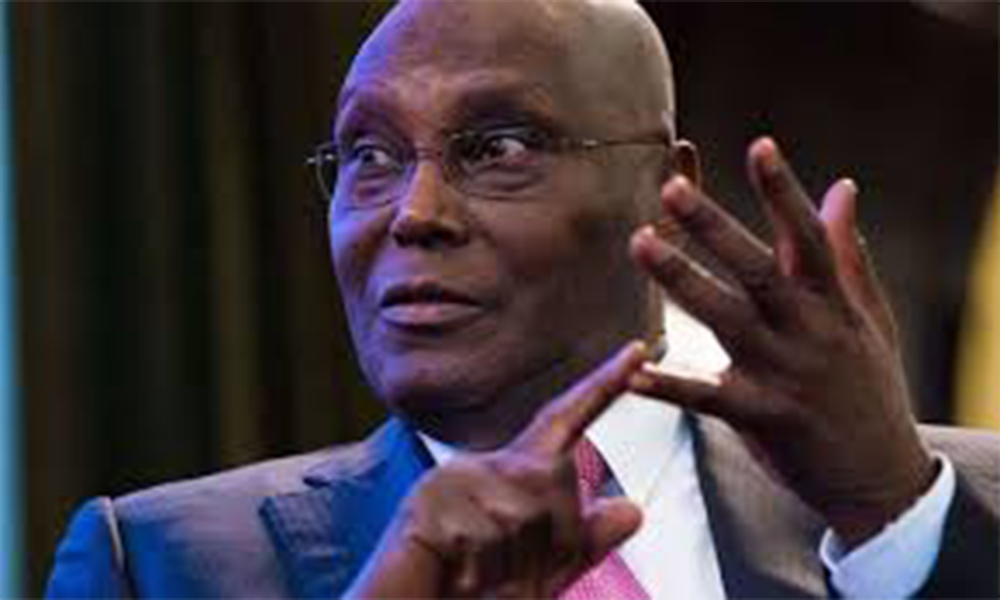
A claim that Nigeria’s debt has more than doubled from N12 trillion in 2015, to N24.9 trillion in 2019.
Publisher’s rating: False, although the figure is close to N24 trillion
The review examines a statement by former Vice President Atiku Abubakar, made after Nigeria’s Debt Management Office released first-quarter 2019 debt figures. The claim described debt as rising from N12 trillion in 2015 to N24.9 trillion in 2019 and said it had more than doubled. The review reports that Atiku made the claim on his official social-media accounts, including a post on July 12, 2019, following the DMO figures’ release. To check it, the review says it used debt data gathered by BusinessDay from the state-owned Debt Management Office. Those figures put total public debt at N12.60 trillion at the end of 2015—not N12 trillion—and at N24.95 trillion in the first quarter of 2019. The review’s comparison treats twice the 2015 total, N25.20 trillion, as the threshold for a doubling. The reported 2019 total fell N250 billion short of that threshold, so it was close to, but below, double. The review also distinguishes external from domestic debt: external debt rose from $10.71 billion to $25.60 billion, while domestic debt rose from N10.49 trillion to N17.08 trillion. That distinction matters because the claim concerns total public debt, not external debt alone. The figures in the review therefore support its conclusion that total debt had not quite doubled by the first quarter of 2019, despite the external component having more than doubled.


A claim that African countries already exporting ‘Weed'.
Publisher’s rating: False
The review examines a statement made on behalf of Ondo State governor Rotimi Akeredolu at a conference on July 22, 2019. His special adviser, Boye Oyewumi, said African countries were already exporting medical cannabis worth billions of dollars. The review’s central distinction is between legal permission to cultivate cannabis and having officially begun exporting it. According to the review, Lesotho, Zimbabwe and South Africa had legal provisions for some cultivation or use, but none had officially started exporting cannabis. It says cannabis exports taking place in Africa were through the black market, which does not establish the claim that countries were officially exporting medical cannabis. The review also notes a United Nations estimate of more than 38,000 tonnes of cannabis produced across Africa annually, while saying that this production was generally part of the black market. The review discusses reports that Uganda had export-related deals, including purported agreements involving Canada and Germany, but says those claims were unconfirmed. It therefore does not treat them as evidence that an African country had officially started exporting cannabis. Its conclusion is that the claim was not true because no African country had officially begun such exports.

España cerró 2018 con el déficit en el 2,5%
Publisher’s rating: Verdadero
Newtral examines the claim in the context of Pedro Sánchez’s first speech in a parliamentary investiture debate. Sánchez linked Spain’s departure from the EU’s corrective procedure to the country having ended 2018 with a deficit of 2.5%. The review says the figure is accurate, while noting that the review attributes management of the period from January through June 2018 to Mariano Rajoy. The article connects the figure to the European Commission’s action on the excessive-deficit procedure. It reports that the Commission formally requested in June that the procedure against Spain be closed, after Spain had been subject to it since 2009. The review explains that this procedure applies to countries whose deficit exceeds the threshold of 3% of GDP, and quotes the Commission recommending closure. The excerpt does not describe how the 2.5% figure was calculated or identify the underlying statistical release, so it supports the review’s conclusion and the procedural context, but does not provide a detailed reconstruction of the deficit calculation.