PeakMetrics / Fact Checks
Economy & business fact checks
Explore claims publishers have checked about economy & business. Read their original ratings and follow the evidence.
Search fact checks
Search by text or image7,100 published reviews in this topic

Rede Makro-RJ está fechando por causa da Pandemia e Carioca manda recado pro Gov. Witzel
Publisher’s rating: Falso

The government has issued a €350 payment to everyone in the country
Publisher’s rating: False

Ignacio Escolar ha tuiteado que habrá una bajada de entre un 8% y 12% de sueldo para los funcionarios
Publisher’s rating: Falso
The claim concerns a Twitter message attributed to journalist Ignacio Escolar saying that an 8%–12% pay cut for public servants had been approved. Newtral reports that the circulating message was not published by Escolar and that the account shown in the image was not his official account. Escolar told Newtral the message was fabricated, and his own social-media profile also denied both that a public-servant pay cut was planned and that he knew of any debate about one. The review distinguishes the forged message from earlier reporting about a possible pay cut during the COVID-19 crisis. It says that, in March, reports had suggested the government was considering such a measure, but that Finance Minister María Jesús Montero ruled it out. That background does not substantiate the specific attributed tweet or establish that a cut had been approved.

Pendiri Alibaba Jack Ma menyebut bahwa tahun 2020 hanyalah tahun untuk bertahan hidup
Publisher’s rating: Keliru

Air India flight flouted social distancing norms and charged the passengers thrice the amount of the ticket
Publisher’s rating: FALSE


H&M tuvo unos beneficios de 14.445 millones de euros
Publisher’s rating: Falso
"We know from past experience that when someone is unemployed for over a year, their chances of securing paid work typically fall by 40 per cent."
Publisher’s rating: Fair call

«Il 55 per cento del nostro export è coi Paesi dell’Ue; l’interscambio con la sola Polonia supera quello che abbiamo con la Cina»
Publisher’s rating: Nì
The claim combines two comparisons about Italian trade. Pagella Politica examined the statement attributed to European Affairs Minister Vincenzo Amendola in an interview with Il Foglio on May 7. It compared 2019 export data for EU countries with total trade (imports plus exports) between Italy and Poland and between Italy and China. For the export share, the review says Eurostat data put Italy’s 2019 exports at €565 billion in total, including €315.5 billion to EU countries. That amounted to 55.8%, so the review finds the claim’s “55 per cent” figure substantially correct. It separately reports that Italian exports to Poland were €13.3 billion, compared with just under €13 billion to China. But the claim about total trade does not follow from export figures alone. Using data from the Italian Foreign Ministry’s international trade observatory, the review adds imports to exports: Italy imported €31.7 billion in goods from China in 2019, versus just under €10 billion from Poland. The resulting trade totals were €44.7 billion with China and €23.3 billion with Poland. Thus, although Poland narrowly led China as a destination for Italian exports, China had substantially greater overall trade with Italy. The review concludes that the statement was only partly correct.
La Agencia Tributaria ha mandado un correo para evitar la suspensión del negocio
Publisher’s rating: Falso
The review investigated an email supposedly sent by Spain’s tax agency, the Agencia Tributaria, which claimed to offer measures to “avoid the suspension of the business.” It reports that the agency told Newtral the email was false and identifies it as a phishing scam. The review gives several reasons the message was suspicious: its sender address did not correspond to an address used by the agency and was poorly written; the purported download file misspelled “Tibutaris”; and the message combined information with a deadline to return signed documents. The article says the agency considered that request to make no sense. It also notes the agency’s guidance that it never asks taxpayers by email for confidential, financial, or personal information, or bank or card numbers.

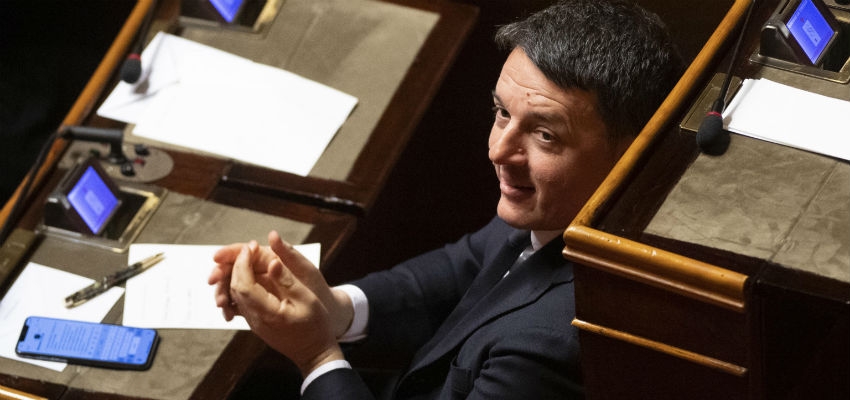
«Secondo una stima di Goldman Sachs il lockdown italiano è stato il più duro di tutti. Francia, Germania, Spagna, stanno ripartendo più velocemente di noi dopo aver rallentato meno di noi»
Publisher’s rating: Vero
The review concerns Matteo Renzi’s 28 April 2020 claim that a Goldman Sachs estimate placed Italy’s lockdown among the strictest, and that France, Germany and Spain had slowed their activity less and were restarting faster. The review examined both the Goldman Sachs analysis and the governments’ announced exit plans. It reports that the analysis constructed an “effective lockdown index” (Eli), combining restrictions with an indicator of their effect on movement, and used a relationship between that index and economic activity to estimate effects on GDP. The publisher cautions that this economic estimate relied on preliminary figures from only four countries and acknowledged other limitations.

«Siamo tra le nazioni con il più alto tasso di under 35 che né lavora, né studia»
Publisher’s rating: Vero
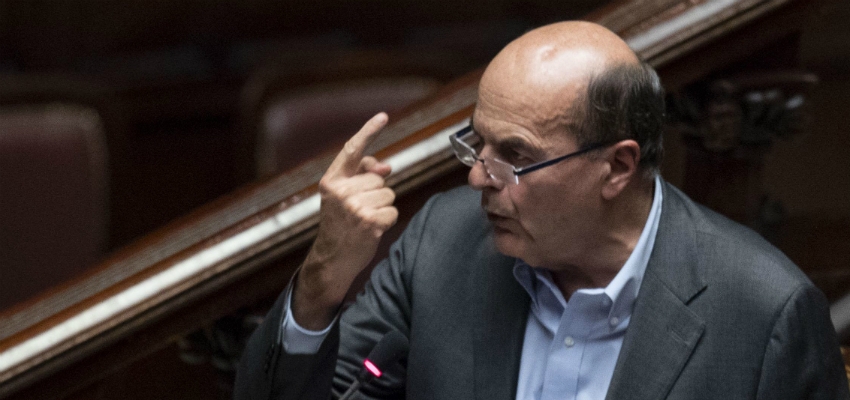
«È possibile che in Italia il 46% dei contribuenti dichiari meno di 15 mila euro? Che solo il 6% dichiari più di 50 mila?» (min. 0:48)
Publisher’s rating: Vero
The claim concerns Pier Luigi Bersani’s remarks during a Piazza Pulita interview on 30 April, as he discussed European negotiations over the coronavirus emergency. He said that 46 per cent of Italian taxpayers declared under €15,000 and 6 per cent declared over €50,000. The review checked those figures against the Finance Ministry’s published data on income-tax returns filed in 2019 for the 2018 tax year. It reports 41,372,851 Italian personal-income-tax taxpayers in the dataset and compares the claimed percentages with the reported taxpayer counts in each income band. (S1: “Il 30 aprile, ospite a Piazza Pulita su La7, l’ex segretario del Partito democratico Pier Luigi Bersani ha detto (min. 0:48) che in Italia «il 46 per cento dei contribuenti» dichiara meno di 15 mila euro, mentre «solo il 6 per cento» ne dichiara più di 50 mila.”; “Il 23 aprile il Dipartimento delle Finanze del Ministero dell’Economia ha pubblicato i dati sulle dichiarazioni dei redditi Irpef – la principale tassa sul reddito nel nostro Paese – presentate nel 2019 e relative all’anno d’imposta 2018. Secondo le rilevazioni più aggiornate del Mef (qui il rapporto completo), nel 2019 i contribuenti Irpef in Italia sono stati 41.372.851.”) The ministry figures cited in the review show about 18.157 million taxpayers, or 43.9 per cent, declaring under €15,000, and about 2.329 million, or 5.6 per cent, declaring over €50,000. The review explains that Bersani’s figures are rounded versions of those percentages, which is why it finds the Italian figures substantially correct. (S1: “Hanno dichiarato più di 50 mila euro quasi 2 milioni e 329 mila contribuenti, circa il 5,6 per cento sul totale (una percentuale arrotondata da Bersani al «6 per cento»).”; “hanno dichiarato meno di 15 mila euro circa 18 milioni e 157 mila contribuenti, il 43,9 per cento sul totale (arrotondato da Bersani al «46 per cento).”) The review also adds context relevant to the broader comparison Bersani made: it says the two income bands together do not describe the distribution of all taxpayers, and notes that taxpayers in the lowest band paid 4 per cent of total personal income tax while those above €50,000 paid 40 per cent. It treats comparisons with Germany and the Netherlands separately, drawing on different years and available income bands; it cautions that the Dutch data did not provide the exact under-€15,000 cutoff. Those comparisons do not alter the review’s assessment of the two Italian percentages. (S1: “Quasi un italiano su due dunque dichiara meno di 15 mila euro e, nel complesso, chi si trova in questa fascia contribuisce appena per il 4 per cento all’Irpef totale. Circa un italiano su 20 invece dichiara oltre 50 mila euro, ma questa fascia di reddito versa il 40 per cento dell’Irpef totale.”; “nel 2018 il 7,4 per cento degli olandesi ha dichiarato più di 50 mila euro, una percentuale più in linea con quella italiana, e il 15,3 per cento fino a 16 mila euro (non sono disponibili i dati fino a 15 mila euro) una percentuale molto più bassa rispetto a quella del nostro Paese.”)


