PeakMetrics / Fact Checks
Economy & business fact checks
Explore claims publishers have checked about economy & business. Read their original ratings and follow the evidence.
Search fact checks
Search by text or image7,100 published reviews in this topic


La Seguridad Social te reembolsa 745 euros por correo electrónico
Publisher’s rating: Falso
The claim concerns an email purporting to tell recipients that Spain’s Social Security system would reimburse them €745.76 after they provided personal information. Newtral says readers submitted an image accompanying such an email, and reports that the message was false, even if it used the Social Security electronic office’s logo or a link that looked official. The source describes the requested personal information as part of the supposed route to receiving the money.


தொழிற்துறையில் இருப்பவர்களைப் பொறுத்தவரை 2020 என்பது உயிர் பிழைத்து இருப்பதற்கான ஆண்டு மட்டுமே. உங்கள் கனவுகள், திட்டங்களைப் பற்றிய பேச்சே வேண்டாம். நீங்கள் உயிருடன் இருக்கிறீர்கள் என்பதை மட்டும் உறுதிப்படுத்திக்கொள்ளுங்கள். நீங்கள் உயிருடன் இருந்தாலே ஏற்கெனவே லாபம் ஈட்டிவிட்டீர்கள் என்றுதான் அர்த்தம். - ஜாக் மா, அலிபாபாவின் நிறுவனர்.
Publisher’s rating: Fake

«[La Liguria è] il primo porto del Mediterraneo» (min. 02:47)
Publisher’s rating: Nì
On 17 May, appearing on Rai3, Liguria president Giovanni Toti described the region as “the first port of the Mediterranean.” The investigation first clarified that Liguria is not one port: it combined figures for Genoa, Savona and La Spezia, while noting that grouping a region’s ports gives it an advantage over comparisons with individual ports. It assessed the claim across different measures rather than treating “first” as a single, self-evident ranking. Using 2018 figures, identified as the latest available in the review, the investigation reported that Liguria’s ports handled nearly 82.4 million tonnes of goods. That put the combined region second in the Mediterranean, behind Algeciras; Genoa alone ranked tenth among Mediterranean ports for goods. For container traffic, the combined Ligurian ports handled about 4.1 million TEU, placing fourth, behind Valencia, Piraeus and Algeciras. The review also reported that Liguria ranked fourth for cruise passengers in 2018, while its position was further back when ferry passengers were included. It described Eurostat as the source for the goods and container comparisons, and MedCruise as the basis for its cruise-passenger ranking. These figures do not support an unqualified claim that Liguria was first: its standing varied by measure, and it ranked second or fourth on the specified comparisons. The review also cautioned that combining Liguria’s ports while comparing them with individual port cities is an uneven comparison, and that a comprehensive economic ranking was not feasible from the available studies. Its conclusion therefore treated the broad claim as dependent on what “first” means, rather than establishing Liguria as the Mediterranean’s leading port system across all measures.


ขยายเวลาขึ้นทะเบียนเยียวยาเกษตรกร
Publisher’s rating: ข่าวปลอม
The review says registration for the farmer-relief measure was not extended and had ended on 15 May 2020. It also notes that officials were checking registrations and that appeals could be submitted through 5 June 2020.

ബാര്കോഡ് നോക്കി ചൈനയുടെ ഉല്പ്പന്നങ്ങള് മനസ്സിലാക്കി ബഹിഷ്ക്കരിക്കുക
Publisher’s rating: PARTLY FALSE
زمین بایر پتروشیمی دهدشت و سهامی که طی یک سال چند برابر شده است.
Publisher’s rating: نیمهدرست


La Seguridad Social te reembolsa 345 euros mediante email
Publisher’s rating: Falso
തൃശൂരില് ലോക്ക് ഡൌണ് കൂലി പുനര്നിര്ണ്ണയിച്ചു. മുതലാളിക്കും തൊഴിലാളിക്കും ഗുണം. തൃശൂരില് കൂലി ഇനി മണിക്കൂറില്.
Publisher’s rating: FALSE
இந்திய ரூபாய் நோட்டு அச்சடிக்கும் மிஷினை ப.சிதம்பரம் அமைச்சராக இருந்த போது பாகிஸ்தானுக்கு விற்றது உண்மை தான். அதன்மூலமே கள்ளநோட்டு புழக்கம் இந்தியாவில் அதிகரித்தது – ரகுராம்ராஜன், ரிசர்வ் வங்கி முன்னாள் கவர்னர்.
Publisher’s rating: Fake
Correos te cobra vía mensaje del móvil para desinfectar paquetes
Publisher’s rating: Falso
The review examined a message claiming Correos would charge €1.40 to disinfect packages before recipients received them. It reports that Correos confirmed it had not sent the message and that it does not request payment by email or SMS. The review therefore identifies the message as not coming from the postal service. [S1] The article also describes how the review checked the claim: its authors spoke with Correos. It says any payment that is due is made when the package is delivered or at a Correos office, rather than through the message described. [S1]
La Agencia Tributaria te permite evitar la suspensión del negocio por correo
Publisher’s rating: Falso
The claim concerns an email presented as a message from Spain’s Tax Agency that purportedly offered a way to “avoid suspension of the business.” Newtral reports that the email was not from the agency and was false. The email invoked Royal Decree-law 15/2020, dated 21 April, and said tax measures would be adopted; it also included a link to download a file. The source does not say that the decree itself contained the email’s offer. [S1] Newtral explains that the agency identified a warning sign in the email: it combined informational language with an alarm and a deadline to submit documentation. The excerpt does not provide the email’s full text, the link destination, or details of any independent technical examination, so those particulars cannot be assessed from this evidence. The reported conclusion is that this specific email was not an authentic Tax Agency communication. [S1]
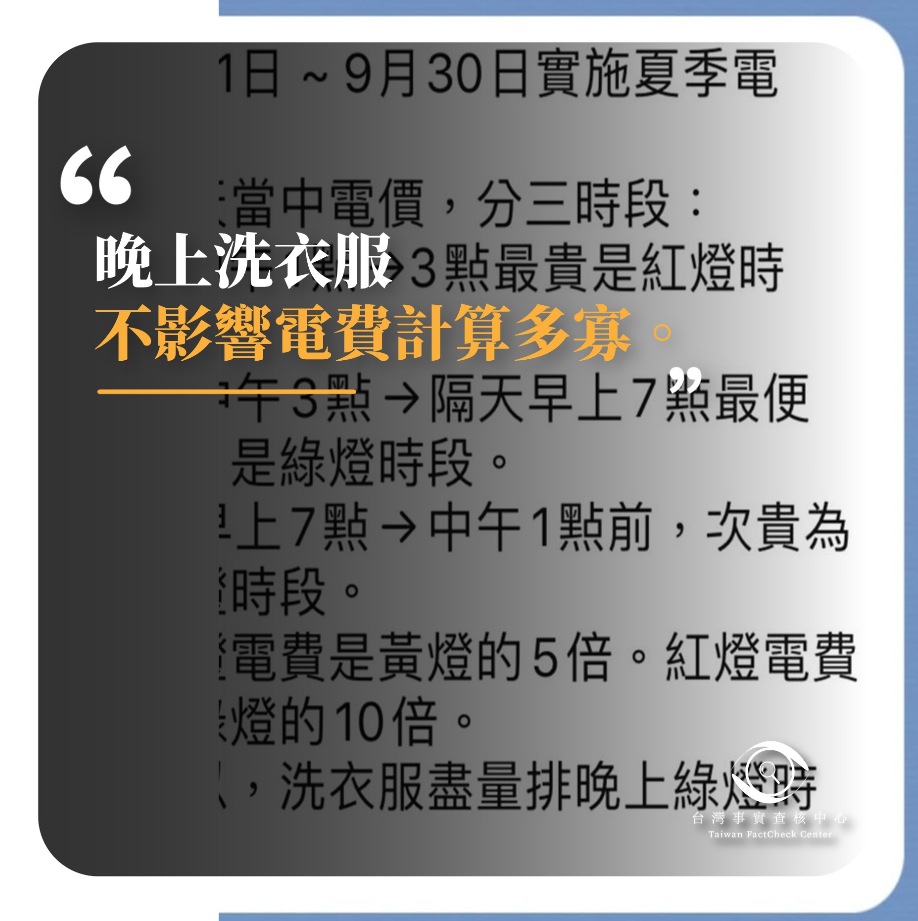
【錯誤】網傳「6月1日-9月30日實施夏季電價!一天當中電價,分三時段...紅燈電費是黃燈的5倍。紅燈電費是綠燈的10倍。洗衣服盡量排晚上綠燈時段」?
Publisher’s rating: 錯誤
The claim combines a real seasonal electricity-pricing period with a purported daily schedule: red from 1–3 p.m., green from 3 p.m. until 7 a.m., and yellow from 7 a.m. to 1 p.m. It further says red-period electricity costs five times as much as yellow and ten times as much as green, and recommends doing laundry at night. The review says summer rates ordinarily apply from June through September, but residential billing is generally based on how much electricity is used, not the time of day: “每年6到9月為「夏季電價」,而夏月/非夏月電價皆採取累進制,但夏季電價「每度」單價比較高。” To investigate the colored time bands, the review reports that it asked Taiwan Power Company specialist 鄭宜婷 about the arrangement. She identified it as a 2019 real-time-pricing experiment conducted with nearly 300 selected customers, not a tariff that had been officially introduced. The review also says it searched for “台電” and “2019年即時電價” and found news coverage of that experiment. Its account is that the rumor misrepresented the trial as the current summer-pricing system: “是台電公司與近300名特定客戶,合作實驗的「即時電價」方案,但至今從未正式實施過。” The laundry advice does not follow for the ordinary residential plan described in the review. That plan calculates charges by total electricity use within consumption tiers, rather than by the hour, so moving laundry to the claimed green period would not change the bill under that plan. The review notes that residential customers may use either a non-time-of-use plan or a time-of-use plan; its conclusion about laundry specifically concerns the commonly used non-time-of-use arrangement: “一般用戶使用的「適用住宅非時間電價」是以總用電量的級距計算費用,並非以不同時段計費。”
All malls, eateries and restaurants in Kenya closed
Publisher’s rating: False.

Correo de la Agencia Tributaria para evitar la suspensión del negocio
Publisher’s rating: Falso

«Otto braccianti su dieci sono italiani» (min. 7.55)
Publisher’s rating: Nì
The claim concerns Matteo Salvini’s assertion, during a May 19 appearance on Stasera Italia, that four-fifths of Italy’s agricultural workers were Italian. The review compared this figure with official worker data and examined whether a statistic about non-EU workers might explain Salvini’s estimate. It reports that the research used INPS data on registered contracts, drawing on a study by the CREA research centre that analyzed foreign workers in Italian agriculture through 2017. The review also checked a separate 2018 report on non-EU agricultural employees. For 2017, the INPS figures counted 1,059,998 agricultural workers: 695,613 Italians, or 65.6 percent, and 364,385 foreign workers, or 34.4 percent. Among fixed-term employees, the foreign-worker share was 35.7 percent. The review therefore found that the Italian share was about six and a half in ten, not eight in ten. It also noted that the foreign-worker count had risen from 268,273 in 2008 to 364,385 in 2017, while the Italian count fell from 768,843 to 695,613. The review identified a possible source of confusion: a 2018 report put non-EU agricultural employees at 195,434, or 18.2 percent of the total. But that category excludes foreign workers from EU countries. The review says nearly 170,000 EU workers were present in the 2017 figures, including about 110,000 from Romania. Thus, treating non-EU workers as the only foreign workers would omit a substantial group and make the Italian share appear closer to four-fifths than the overall figures support. The review also cautioned that the registered-contract figures do not capture irregular work. It cited estimates of irregularity in agriculture ranging from 23.8 percent to 39 percent in 2017, and said many unregistered workers may be foreign. It further noted that the 2017 figures may understate the foreign-worker share in 2020, given the trend through 2017. These qualifications limit precision about the full workforce, but do not make the cited registered-worker data support Salvini’s four-fifths claim.