PeakMetrics / Fact Checks
Economy & business fact checks
Explore claims publishers have checked about economy & business. Read their original ratings and follow the evidence.
Search fact checks
Search by text or image7,099 published reviews in this topic
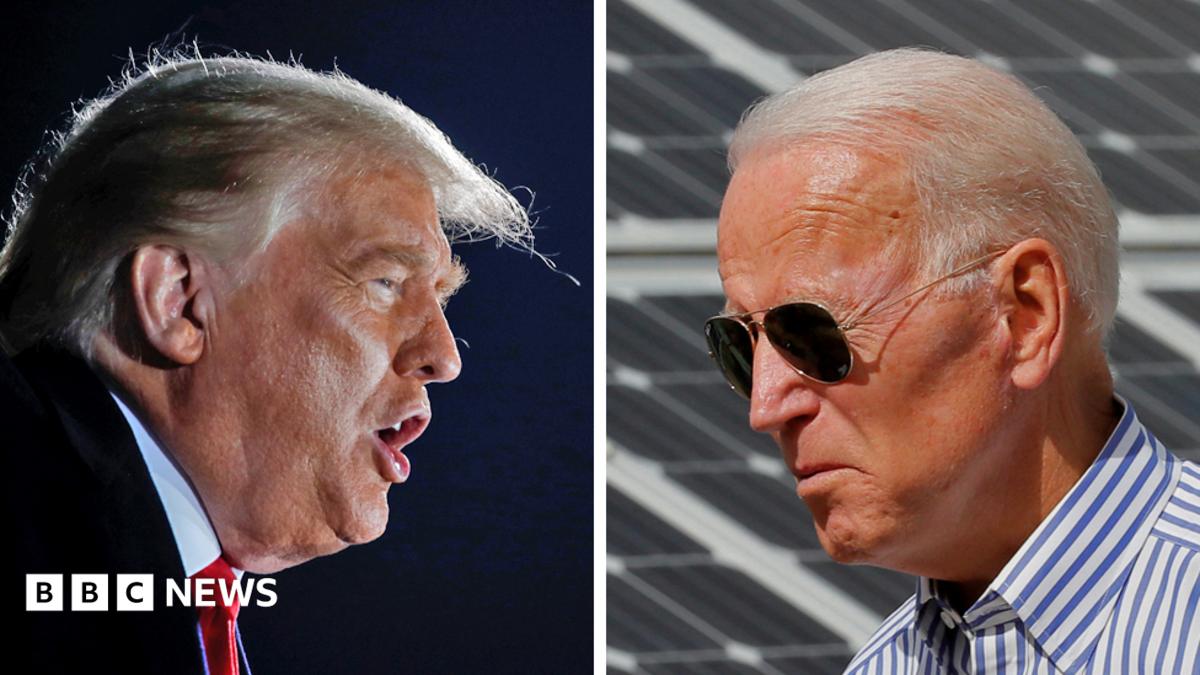
"We've given you the greatest tax cut in the history of our country."
Publisher’s rating: That's not right for tax cuts in general - previous ones have been larger. It is right for corporation tax.
The BBC examined Donald Trump’s statement, “We’ve given you the greatest tax cut in the history of our country,” during a town hall event. The review says it had investigated the claim in 2018, shortly after Congress passed sweeping tax reform legislation, and consulted tax specialists and the Committee for a Responsible Federal Budget (CRFB).
"Mining employs Indigenous people at a greater rate than any other industry."
Publisher’s rating: Yes, but more to it

Gas prices during Obama-Biden years were high.
Publisher’s rating: Missing Context
799,3 Milliarden Euro Steuern hat der deutsche Staat im Jahr 2019 eingenommen - aber woher kommt dieses Geld eigentlich genau? In der Überschrift eines Artikels wird behauptet: «Von 82 Millionen Einwohnern sind bloß noch 15 Mio effektive Netto-Steuerzahler» (hier archiviert). Zum Ausdruck gebracht werden soll, dass die restlichen Erwerbstätigen keinen Beitrag zu den Steuereinnahmen leisten würden, ohne dafür eine Gegenleistung zu erhalten. Dazu angestellt wird folgende Rechnung: Nur 27 Millionen der Erwerbstätigen in Deutschland seien «Nettosteuerzahler». Davon würden «12 Millionen direkt oder indirekt vom Staat abhängen», sie müssten darum rausgerechnet werden: «Denn ihre Löhne werden von Steuergeldern bezahlt und somit auch die Lohnsteuern und anderen Steuern». Deswegen seien es schlussendlich nur 15 Millionen Erwerbstätige in Deutschland, «die effektiv Steuern aus eigener Kraft zahlen».
Publisher’s rating: Die Aussagen zu Nettosteuerzahlern sind stark vereinfacht und nicht in den Kontext gestellt.
The claim takes a calculation about German taxpayers and concludes that only 15 million of 82 million residents are effective net taxpayers. It arrives at that figure by treating 27 million employed people as net taxpayers, then subtracting 12 million whose wages are said to depend directly or indirectly on the state. The review finds this reasoning too simplified: whether someone is a net contributor depends on what is counted as both payments to the state and benefits received from it. The review explains that taxes fund a range of public services and transfers, not an immediate individual return comparable to a purchase. It cites an Institute for the German Economy study and reports its author Martin Beznoska’s estimate that about 16 percent of households were net recipients when the comparison counted monetary transfers and taxes. Including social insurance payments raised that share to 43 percent, mainly because of statutory pensions. Beznoska cautioned that adding in-kind public services, such as education, childcare, health services and infrastructure, would change the picture substantially. The review also addresses the proposed exclusion of public employees. Beznoska said that although their wages are largely funded by taxes, they receive them in exchange for work that produces value; in his view, they should therefore be treated like private-sector workers in a calculation of net burdens. The review’s evidence thus challenges both the claim’s narrow accounting of benefits and its assumption that state-funded wages make a worker ineligible to count as a taxpayer.

Mineradora Norueguêsa se instalou na Amazônia com um acordo com Lula quando Presidente!
Publisher’s rating: Falso
“When Joe Biden was vice president, we lost 200,000 manufacturing jobs.”
Publisher’s rating: Cherry-picked number
"No country in the world has recovered the way we’ve recovered economically or otherwise, not even close.”
Publisher’s rating: False.

ఉపాధి కల్పించే రిక్షాని సీజ్ చేసి పట్టుకెళ్లిపోతున్నారన్న బాధలో ఏడుస్తున్న భారత దేశంలోని ఒక రిక్షా డ్రైవర్
Publisher’s rating: FALSE

Government to provide employment to people with smartphones
Publisher’s rating: FALSE


Kamala Harris said she’ll place a federal tax on homes to pay for reparations
Publisher’s rating: False
The claim concerned a social-media post asserting that Kamala Harris had said homeowners should “get ready to pay a federal tax” to fund reparations. USA TODAY examined that specific allegation and reported that it found no evidence Harris had proposed such a tax. The review distinguishes the alleged tax proposal from Harris’s separately documented support for reparations in some form. The review describes Harris’s public comments about what reparations might mean. In a 2019 interview with The Root, she supported some form of reparations, particularly addressing the residual trauma caused by slavery. In a March 2019 NPR interview, she said reparations could involve mental-health treatment and called for studying the effects of discrimination and institutional racism to determine possible interventions. Later, she told the Des Moines Register that reparations should be studied before action and that the issue was not as simple as writing checks. These statements support the distinction between her expressed views on reparations and the specific claim about a home tax. The review also addressed whether a federal property tax could be imposed, citing Article I of the Constitution and explaining that property taxes are collected at the state and local levels. Its conclusion about the post rested on the absence of evidence that Harris had proposed the tax—not on a finding that she opposed reparations. The review reports that she supported studying reparations and discussed possible interventions, while rejecting the portrayal of her as having announced this specific federal tax.

"Because of a so-called trade war with China, America lost 300,000 manufacturing jobs."
Publisher’s rating: False

"On day one, Joe Biden will repeal that tax bill. He will get rid of it."
Publisher’s rating: Needs context
The Trump administration "inherited the slowest economic recovery" from the Obama-Biden administration.
Publisher’s rating: Misleading
"This administration saw 500,000 manufacturing jobs created."
Publisher’s rating: Misleading

Where did all these luxuries come from…? Income tax officers do not know the address…?
Publisher’s rating: Fake