PeakMetrics / Fact Checks
Culture & entertainment fact checks
Explore claims publishers have checked about culture & entertainment. Read their original ratings and follow the evidence.
Search fact checks
Search by text or image3,169 published reviews in this topic

El País ha distribuido diferentes portadas en Madrid y Cataluña
Publisher’s rating: Falso
The claim concerned two El País front pages dated 19 October 2019: one reporting that violent groups were spreading chaos in central Barcelona, and another about a mass pro-independence march. The review explains that the second cover did exist, but its label as a special Catalonia edition was wrong. It was the newspaper’s first national edition, not a separate cover distributed in Catalonia. The distinction was the timing and reach of the editions. The review says the earlier cover was distributed in Europe and other regions with early deadlines. After unrest in Catalonia worsened, El País produced a second edition with the headline about violent groups in Barcelona, which it identifies as the final national edition. The newspaper said that readers in Madrid and Catalonia received the same cover. Thus, the images showed covers from different editions, but they did not establish that El País distributed different covers in Madrid and Catalonia. The review’s account is that the earlier version was mistakenly presented online as a Catalonia-specific edition, while the later cover was the one read in both locations.

Claim Nusrat Jahaan performing dhunuchi dance during durga puja
Publisher’s rating: FALSE

*FIM DA ÁRVORE GENEALÓGICA* _Luiz Fernando Veríssimo_ *Mãe, vou casar!* Jura, meu filho?! Estou tão feliz! Quem é a moça? *Não é moça. Vou casar com o Murilo.* Você falou Murilo?!? Ou foi meu cérebro que sofreu um pequeno surto psicótico????? *Eu falei Murilo. Por que, Mãe? Tá acontecendo alguma coisa?* Nada, não... Só minha visão que está um pouco turva. E meu coração, que talvez dê uma parada. No mais, tá tudo ótimo. *Se você tiver algum problema em relação a isto, melhor falar logo...* Problema? Problema nenhum. Só pensei que algum dia ia ter uma nora... Só isso! *Você vai ter uma nora, só que meio macho...kkkkkk* Ou um genro meio fêmea. Resumindo: uma nora quase macho, tendendo a um genro quase fêmea... E quando eu vou conhecer o meu ou a minha... O Murilo? *Pode chamar ele de Biscoito. É o apelido.* Tá! O Biscoito. Já gostei dele... Alguém com esse apelido só pode ser uma pessoa bacana. Quando o Biscoito vem aqui?? *Por quê?* Por nada. Só pra eu poder desacordar seu pai com antecedência. *Você acha que o Papai não vai aceitar?!?* Claro que vai aceitar! Lógico que vai... Só não sei se ele vai sobreviver! Mas isso também é uma bobagem. Ele morre sabendo que você achou sua cara-metade. E olha que espetáculo: as duas metades com bigode. *Mãe, que besteira... Hoje em dia, praticamente todos os meus amigos são gays!* Só espero que tenha sobrado algum que não seja... Pra poder apresentar pra tua irmã. 🙏🏽 *A Bel já tá namorando.* 😊 A Bel? Namorando?!! Ela não me falou nada... Quem é????? *A Veruska.* 😨 Como? *Veruska...* Ah! bom! Que susto! Pensei que você tivesse falado Veruska. 😅 *Mãe!!!...* Tá.., tá..., tudo bem... Se vocês são felizes. 🤷🏽♀ Só fico triste porque não vou ter um neto... *Por que não?! Eu e o Biscoito queremos dois filhos. Eu vou doar os espermatozóides. E a ex-namorada do Biscoito vai doar os óvulos.* Ex-namorada? O Biscoito tem ex-namorada? *Quando ele era hétero... A Veruska.* Que Veruska? *Namorada da Bel, Mãe.* "Peraí". A ex-namorada do teu atual namorado... É a atual namorada da tua irmã . Que é minha filha também... Que se chama Bel. É isso? Porque eu me perdi um pouco... 🥴 *É isso. Pois é... A Veruska doou os óvulos. E nós vamos alugar um útero...* De quem? *Da Bel.* Mas... Logo da Bel?! Quer dizer então... Que a Bel vai gerar um filho teu e do Biscoito. Com o teu espermatozóide e com o óvulo da namorada dela, que é a Veruska. *Isso!* Essa criança, de uma certa forma, vai ser tua filha, filha do Biscoito, filha da Veruska e filha da Bel. *Em termos...* A criança vai ter duas mães: você e o Biscoito. E dois pais: a Veruska e a Bel. *Por aí...* Por outro lado, a Bel, além de mãe, é tia... Ou tio... Porque é tua irmã! 😱 *Exato. E ano que vem vamos ter um segundo filho. Aí o Biscoito é que entra com o espermatozóide. Que dessa vez vai ser gerado no ventre da Veruska... Com o óvulo da Bel. A gente só vai trocar* Só trocar, né?! Agora o óvulo vai ser da Bel. E o ventre da Veruska. 😟 *Exato!* Agora eu entendi! Agora eu realmente entendi... *Entendeu o quê?* Entendi que é uma espécie de swing dos tempos modernos! *Que swing, mãe?!!* É swing, sim!!! Uma troca de casais... Com os óvulos e os espermatozóides de um, uma hora no útero de uma, outra hora no útero de outra... *Mas...* Mas uns tomates meu filho! Isso é um bacanal de última geração! E pior... Com incesto no meio... 🤦🏽♀ *A Bel e a Veruska só vão ajudar na concepção do nosso filho, só isso.* Seeei!!! E quando elas quiserem ter filhos? *Nós ajudamos!* 😳 Quer saber?! No final das contas não entendi mais nada. Não entendi quem vai ser mãe de quem, quem vai ser pai de quem, de quem vai ser o útero, o espermatozóide... A única coisa que eu entendi é queeee... *Que Mãe?!?* *FAZER ÁRVORE GENEALÓGICA DAQUI PRA FRENTE, VAI SER FOD.....!!!!!!!* _* (Luiz Fernando Veríssimo)_
Publisher’s rating: Falso
Weil der Musiker Herbert Grönemeyer seit Jahren für Toleranz und gegen Rassismus eintritt, ist er zum Feind der rechten Szene geworden. Im Netz macht die Behauptung die Runde, der Sänger lebe in England, setze sich aber für eine Willkommenskultur in Deutschland ein.
Publisher’s rating: Grönemeyer lebt seit langem nicht mehr in London, sondern in Berlin.
The claim linked Herbert Grönemeyer’s political advocacy—support for tolerance and opposition to racism—to an allegation that he lived in England while calling for a welcoming culture in Germany. The review says the assertion that he lived in London was used to question his right to speak about Germany’s political situation. It reports that Grönemeyer had lived in Berlin since 2009 and had publicly said so on several occasions, including while appearing as a witness at a Cologne regional court in February 2019. The review also cites Grönemeyer’s remarks at a Berlin press conference in November 2018 about his residence. He said he had lived in Berlin for nine years and that, although he had lived in England, he had done so only until 2009. These statements address the central residence claim directly: his past residence in England did not mean he was still living there when the claim circulated. The review describes a related image as a manipulated version of a genuine photograph. In the original, Grönemeyer wore a life jacket and held a sign expressing solidarity with the rescue ship Aquarius. The version circulating online replaced that message with text claiming he lived in England and wanted to bring more Africans to Germany. The review thus distinguishes the authentic image and its rescue appeal from the altered wording used to support the allegation.
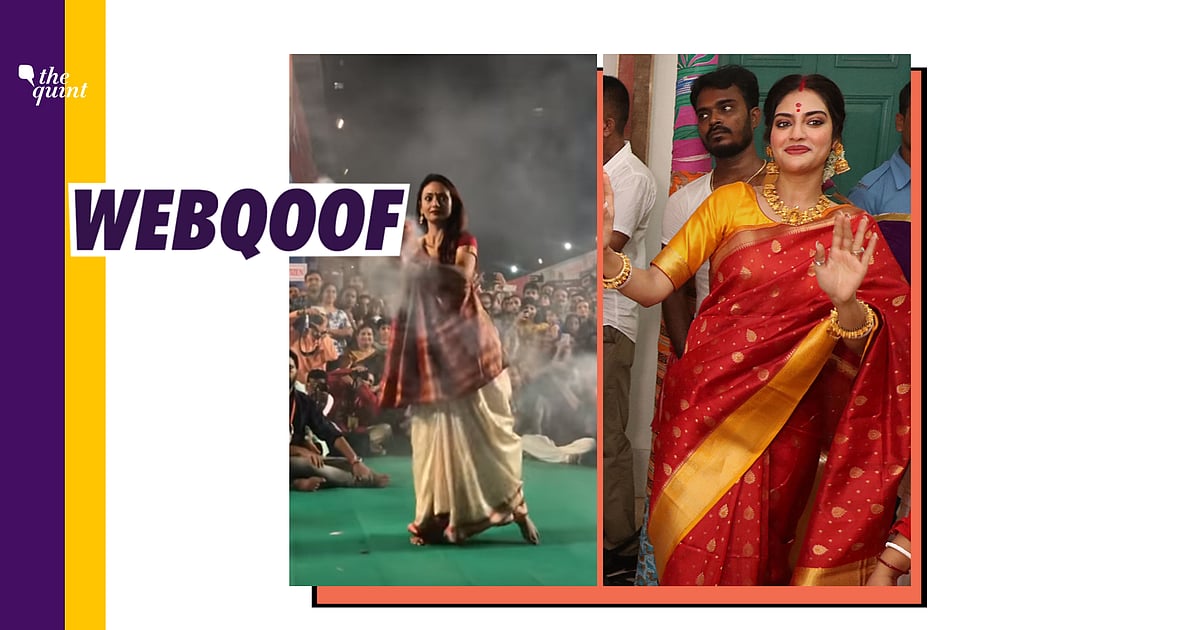
Video shows Nusrat Jahan performing dhunchui dance on Durga Puja
Publisher’s rating: FALSE

Im Internet macht die Behauptung die Runde, der Musiker Herbert Grönemeyer lebe in London, zahle in Deutschland keine Steuern und zeige daher «keine Solidarität» mit dem «Deutschen Volk». Er verfüge über ein geschätztes Vermögen von 18 Millionen Euro
Publisher’s rating: Grönemeyer hat einen Wohnsitz in Berlin und zahlt deshalb Steuern in Deutschland. AfD-Politiker Björn Höcke, der dem Sänger Steuerflucht unterstellte, musste eine Unterlassungserklärung abgeben.
The claim combined several allegations: that musician Herbert Grönemeyer lived in London, paid no taxes in Germany, lacked solidarity with the German people, and had an estimated fortune of 18 million euros. The review reports that Grönemeyer said he had lived in Berlin for nine years and paid taxes in Germany, including during the years he lived in England. It also notes that his stated position on taxation followed his call for higher taxes on wealthy people in a 2015 television discussion about the costs of refugees. For his tax position, the review quotes a statement issued on Grönemeyer’s behalf saying that he had long paid his income taxes in Germany, to the Berlin tax office. It also reports that in November 2018 he said at a Berlin press conference that he had lived in Berlin for nine years, had previously lived in England until 2009, and paid taxes in Germany. These reported statements directly address the claim that he lived in London and paid no German taxes. The review further reports that, in late September 2019, AfD politician Björn Höcke had to submit a cease-and-desist declaration after alleging that Grönemeyer had fled Germany to avoid taxes. On the fortune estimate, however, the article cautions that the amount could only be speculated about: websites cited there placed it between 18 and 20 million euros, while annual income was also presented as an estimate.
விவேகானந்தர் சிகாகோவில் உரையாற்றிய அரிய காட்சி
Publisher’s rating: Fake

Claim PM Narendra Modi's mother Heeraben dancing garba
Publisher’s rating: FALSE
In sozialen Medien kursiert ein angebliches Zitat des deutschen Dichters Theodor Körner. Dem 1791 geborenen Schriftsteller wird die folgende Aussage zugeschrieben: «Noch sitzt ihr da oben, ihr feigen Gestalten. Vom Feinde bezahlt, dem Volke zum Spott. Doch einst wird wieder Gerechtigkeit walten, dann richtet das Volk. Dann gnade Euch Gott!»
Publisher’s rating: Es handelt sich um die leicht abgewandelte vierte Strophe eines Neonazi-Gedichtes. Für eine Urheberschaft Theodor Körners gibt es keinen Beleg.
The claim attributes a quotation beginning “Noch sitzt ihr da oben” to Theodor Körner, a German poet born in 1791. The dpa investigation identifies the wording instead as a slightly altered version of the final stanza of “Anklage,” a poem by the right-wing extremist writer Renate Schütte. It reports that the poem appeared in the third edition of Schütte’s collected poetry, published in 1984 under the title “Der Wind schlägt um.” The stanza in that collection begins “Heut sitzt ihr noch oben,” rather than “Noch sitzt ihr da oben.” (S1: “Die letzten vier Zeilen ihres Gedichtes «Anklage» lauten: «Heut sitzt ihr noch oben, ihr feigen Gestalten, vom Feinde gestützt und uns allen zum Spott.”) The investigation reports two lines of evidence against Körner’s authorship. Literary scholar Erhard Jöst told dpa by email that Körner had not written the lines and that they do not appear in his poems, plays, or prose. Jöst also described the supposed quotation as a forgery imitating Körner’s polemical style. Separately, dpa says it located Schütte’s poem in the library of Berlin’s Center for Research on Antisemitism. (S1: “Theodor Körner hat das nie geschrieben.”; “Man findet sie weder in seinen Gedichten noch in seinen Dramen noch in seinen Prosa-Texten.”; “In der Bibliothek des Berliner Zentrums für Antisemitismusforschung hat die Deutsche Presse-Agentur das Gedicht gefunden.”) The source also traces an earlier public appearance of similar lines: a 1991 documentary shows a man reciting them at a Holocaust-denial event at Munich’s Löwenbräukeller in 1990. Dpa reports that the man later told the agency the lines were by Schütte, not Körner. Thus, the investigated evidence connects the circulating attribution to a modified stanza from Schütte’s poem, rather than to Körner’s work. (S1: “Eine auf Youtube abrufbare Dokumentation von 1991 zeigt, dass diese Sätze ähnlich bereits 1990 von einem Mann auf einer Holocaustleugner-Veranstaltung im Münchner Löwenbräukeller vorgetragen wurden”; “Die von ihm zitierten Zeilen stammen seiner Aussage zufolge nicht von Körner, sondern von der rechtsextremen Schriftstellerin Renate Schütte.”)

Foto de John Lennon y el Che Guevara tocando la guitarra
Publisher’s rating: Falso
The image at issue depicts John Lennon and Che Guevara apparently playing guitar together. Newtral says the picture shared on Twitter was not an authentic photograph of the two men together, but a montage. Its account identifies the photograph used as the base: an image taken around 1972 of Lennon playing guitar with Wayne “Tex” Gabriel, a guitarist in Elephant’s Memories, the band that backed Lennon and Yoko Ono from 1971 to 1973. The source says this photograph was published in James A. Mitchell’s book about Lennon’s post-Beatles years. These details provide a specific alternative provenance for the image rather than merely disputing its caption. [S1] The review also gives chronological reasons the claimed meeting is unlikely. It says Guevara was killed in 1967 and that Lennon’s hair was much shorter then than in the montage. It further notes that during the few years when the two could have overlapped, Guevara was occupied leading guerrilla forces in the Congo and Bolivia. These points support the conclusion that the circulated image combines people from different circumstances; the excerpt does not describe a separate photographic examination or provide additional documentation of a meeting. [S1] The source’s conclusion is therefore specific to this image: the apparent joint guitar performance is fabricated, while the underlying photograph shows Lennon with Gabriel. Its described evidence consists of the alternative identification and provenance of the original photograph, along with the timeline and appearance comparison. [S1]
Friedrich Schiller zählt zu Deutschlands größten Dramatikern und Lyrikern. Kraftvolle Worte des Freiheitsdichters finden auch im digitalen Zeitalter Verbreitung. Das Zitat «Die Großen hören auf zu herrschen, wenn die Kleinen aufhören zu kriechen» wird Schiller zugeschrieben. Einige Nutzer in den sozialen Netzwerken verstehen die Worte als eine Art Vermächtnis Schillers, gegen die bestehenden Verhältnisse aufzubegehren.
Publisher’s rating: Das Schiller (1759-1805) zugeschriebene Zitat von den Großen und Kleinen wird im Netz ohne Quellenangabe verbreitet. Experten des Deutschen Literaturarchivs haben diese Worte im Gesamtwerk des deutschen Dramatikers auf Anfrage der Deutschen Presse-Agentur nicht gefunden. Es gibt keinen Hinweis darauf, dass Schiller diese Worte in seinen Werken, Briefen oder Reden verwendet haben könnte.

LUTO! *Morre aos 68 anos, María Antonieta de las Nieves, a Chiquinha do seriado Chaves* Hoje uma parte da infância de todos nós morreu #CHIQUINHA, Vai com Deus! hoje perdemos uma das maiores celebridades do Brasil, ELA que fez milhões de pessoas darem gargalhadas. E já vai mais uma pessoa especial sempre no coração daqueles que deram muitas risadas com essa pessoa incrível Fica com Deus#CHIQUINHA, vai deixar saudades com certeza, obrigado por fazer parte da nossa infância nunca vamos te esquecer, das tarde de segunda e de manhã na telinha #LUTO #CHIQUINHA
Publisher’s rating: Falso
In den sozialen Netzwerken werden Leonardo da Vinci immer wieder Zitate in den Mund gelegt. Unter einem Bildnis des Universalgelehrten steht auf einem Sharepic der folgende Satz, den der Italiener gesagt haben soll: «Ich habe schon in jüngsten Jahren dem Essen von Fleisch abgeschworen und die Zeit wird kommen, da die Menschen wie ich die Tiermörder mit gleichen Augen betrachten werden wie jetzt die Menschenmörder.»
Publisher’s rating: In der Tat war da Vinci wohl eine Art Vorreiter der Vegetarier-Bewegung. Es liegt aber kein Beleg dafür vor, dass die Worte von ihm selbst stammen. Das radikale Vegetarier-Zitat findet sich erstmals in einem Anfang des 20. Jahrhunderts veröffentlichten Roman über Leonardo da Vinci. Der russische Schriftsteller Dmitri Mereschkowski lässt einen Akteur in der fiktiven Geschichte behaupten, da Vinci habe das Vegetarier-Zitat so gesagt.
The claim concerns a sharepic attributing a statement about rejecting meat and equating killing animals with killing people to Leonardo da Vinci. The review traces the wording to Dmitri Mereshkovsky’s novel about Leonardo, rather than to a verified statement by the historical figure. It says the novel appeared in book form in 1901 and that a character in the fictional story attributes the sentiment to Leonardo. The review compares the sharepic’s wording with the passage in the novel. It reports that, in the Russian original, a character recounts that Leonardo had avoided meat since youth and predicts that people would come to regard killing animals as criminal in the same way as killing humans. This establishes a literary source for the attribution, but does not establish that Leonardo actually said those words. The review also distinguishes the quotation’s attribution from Leonardo’s reported dietary habits: it says he may have been vegetarian, or at least sympathetic to that way of life, while concluding that the quotation itself is not demonstrably his. The sharepic’s accompanying portrait is also not a contemporary image: the review identifies it as a portrait by Lattanzio Querena, made more than 250 years after Leonardo’s death.

Claim: Priya Bhavani Shankar is in love with SJ Surya
Publisher’s rating: FALSE HEADLINE
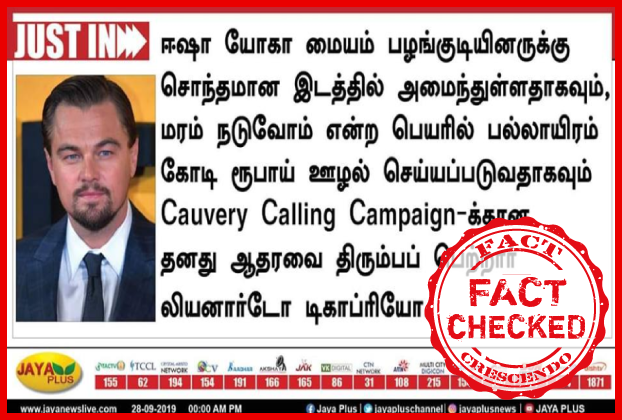
Claim: Leonardo DiCaprio regrets for supporting Isha Foundation
Publisher’s rating: FALSE
The claim concerns a viral Jaya Plus-style news card alleging that Leonardo DiCaprio had withdrawn his support for Isha’s Cauvery Calling campaign. The card reportedly gave reasons including allegations about Isha Yoga Centre’s location and corruption in a tree-planting campaign. The review describes the post as circulating on Facebook and says it checked whether the card was genuine and whether DiCaprio had actually taken back his support. (“ஈஷா மையம் சார்பில் காவிரி கரை ஓரம் மரங்களை நடும் காவிரியின் கூக்குரல் என்ற விழிப்புணர்வு நிகழ்ச்சிக்கு அளித்த ஆதரவை ஹாலிவுட் நடிகர் லியனார்டோ டிகாப்ரியோ திரும்ப பெற்றதாக ஜெயா பிளஸ் நியூஸ் கார்டு ஒன்று வைரல் ஆகி வருகிறது.”) To assess the card, the review compared it with Jaya Plus’s news cards and searched the outlet’s Facebook page. It noted differences in the time format and typography, and that the card did not follow the outlet’s stated convention for distinguishing a person’s name from their comment. The search found no Jaya Plus card about DiCaprio on the date given in the viral post. The review therefore concluded that the purported news card was fabricated. (“செப்டம்பர் 28ம் தேதி 00.00 AM PM என்று நேரத்தை வித்தியாசமாகக் குறிப்பிட்டு இருந்தனர். ஃபாண்ட் கூட சற்று வித்தியாசமாக தெரிந்தது.” “28ம் தேதி லியனார்டோ தொடர்பாக எந்த ஒரு நியூஸ் கார்டும் வெளியாகவில்லை. இதன் மூலம் இந்த நியூஸ் கார்டு போலியானது என்று உறுதியானது.”) The review also checked DiCaprio’s Facebook page and searched for other statements or reporting about a withdrawal. It says the page contained a post about Isha’s Cauvery river restoration project, but found no statement that he had withdrawn support or made another comment about the campaign. It did find reports that volunteer organizations had asked him to withdraw support, and a response from Isha to those organizations. Thus, the review distinguishes calls for DiCaprio to withdraw from evidence that he himself did so; it concluded that he had not said he was withdrawing his support. (“அதில், ஈஷா மேற்கொண்டுள்ள காவிரி ஆறு மீட்பு திட்டத்தைப் பற்றி தன்னுடைய ஃபேஸ்புக் பக்கத்தில் அவர் பகிர்ந்திருந்தது மட்டுமே கிடைத்தது. ஆதரவை திரும்ப பெற்றதாகவோ, காவிரியின் கூக்குரல் திட்டம் பற்றி வேறு எந்த ஒரு தகவலையும் அவர் தெரிவிக்கவில்லை.” “தன்னார்வ அமைப்புகளுக்கு ஈஷா சார்பில் வெளியிடப்பட்ட மறுப்பு தொடர்பான செய்தியும் கிடைத்தது.”)

Церетели построит 193-метровый памятник Назарбаеву
Publisher’s rating: Фейк

Claim: Myth behind Equestrian Statues
Publisher’s rating: FALSE
The review investigates a viral Facebook story, attributed in the article to Vikatan EMagazine, which said that the position of a horse’s legs in an equestrian statue indicates how the rider died. The article describes the story as being shared alongside a school student’s photograph and says that many people were circulating it as true. Its conclusion is that the supposed rule is a long-running belief, not an established convention. Supporting text: “இதில், பள்ளி மாணவர் ஒருவரது புகைப்படத்தை பகிர்ந்து, அதன் மேலே, குதிரை வீரர்கள் சிலையில், குதிரையில் கால்கள், இருக்கும் நிலையை பொறுத்து, அதில் அமர்ந்திருப்பவர் எப்படி இறந்தார் எனச் சொல்ல முடியும், என நீண்ட கதை எழுதியுள்ளனர்.” To check whether there was an official basis for the claim, the publisher says it searched for supporting evidence. It reports finding that statue designs vary: a horse may have all four legs on the ground, one leg raised, or both front legs raised. The article says these arrangements are used for design or stylistic reasons, rather than to encode the rider’s manner of death. Supporting text: “குதிரை சிலை அமைப்பதில் சில டிசைன், ஸ்டைல் நோக்கத்திற்காகவே இவ்வாறு குதிரையின் கால்கள் அனைத்தும் சம நிலையில் அல்லது ஒரு கால் மேலே உயர்த்தியபடி, 3 கால்கள் தரையில் ஊன்றியபடி, அல்லது முன்னங்கால்கள் மேலே உயர்த்தியபடி, மற்ற 2 கால்கள் தரையில் ஊன்றியபடி என நிறுவப்படுகிறது.” The review also refers to earlier English-language fact checks and to an explanation by the Virginia Historical Society, but the supplied excerpt does not give details of those checks or reproduce that explanation. Its stated takeaway is that there is no special rule linking a rider’s death to the horse’s pose; it allows that some statues may happen to fit the supposed pattern, while saying that this does not establish a tradition. Supporting text: “பெரும்பாலான குதிரை வீரர் சிலைகள், அமைக்கப்பட்ட விதத்திற்கும், அதில் இருக்கும் நபர் உயிரிழந்ததற்கும் எந்த தொடர்பும் இல்லை என, தெளிவாகிறது.”
