PeakMetrics / Fact Checks
Culture & entertainment fact checks
Explore claims publishers have checked about culture & entertainment. Read their original ratings and follow the evidence.
Search fact checks
Search by text or image3,169 published reviews in this topic
In sozialen Netzwerken wird seit Jahren ein angebliches Zitat von Friedrich dem Großen geteilt. Der preußische König soll demnach im 18. Jahrhundert gesagt haben: «Ein Staatsoberhaupt, welches sein Volk nicht liebt, für selbiges nicht kämpft und sein Wohl nicht im Sinn hat, ist weniger wert als ein Pferdeapfel.»
Publisher’s rating: Es gibt keinen Beleg dafür, dass Friedrich II. diesen Satz gesagt hat. Wortwahl und Inhalt sprechen nach Expertenmeinung stark dagegen.
The claim concerns a sentence circulating online that supposedly was spoken by Frederick the Great in the 18th century: that a head of state who does not love or fight for his people is worth less than horse droppings. The review examined both the sentence’s online history and whether its wording and ideas fit the historical context. Its search found an early online appearance dated 19 November 2016, on the profile of Jens Braun, who identified himself as a Burgdorf city councillor and AfD deputy parliamentary-group chair. The review says Braun gave no source for the quotation. On 1 December 2016, the Facebook group “Konrads Erben” shared the same sentence and attributed it to a conversation with Voltaire, but likewise supplied no information about when or where the words were supposedly spoken. Historian and Frederick biographer Tillmann Bendikowski gave reasons to doubt the attribution. He said “Staatsoberhaupt” (“head of state”) was not a customary term in 18th-century Prussia, and that Frederick generally used terms such as ruler, king or prince in his writings. Bendikowski also questioned the sentiment expressed: he said Frederick’s concern was the welfare of the state, not love for the people. As a comparison, the review quotes Frederick’s Political Testament, which calls on a ruler to work actively for the state’s welfare and to manage its principal affairs carefully. The review also reports that Wikiquote regarded the words as falsely attributed to Frederick and had removed them. In the evidence presented, the quotation’s documented online appearances are centuries later than the alleged setting, lack a historical source, and are challenged by an expert on both vocabulary and substance. The review does not identify a contemporaneous document or other evidence establishing that Frederick said it.

Claim: Amarnath Ramakrishnan says Keezhadi people followed Vasthu Shastra
Publisher’s rating: FALSE


Claim: Actor Vijay touches Jayalalithaa feet
Publisher’s rating: Fact Crescendo Rating: False
The claim concerns a social-media image presented as showing actor Vijay touching former Tamil Nadu chief minister Jayalalithaa’s feet, with Vijay’s father, S.A. Chandrasekhar, nearby. Fact Crescendo says the image was shared by a Facebook page on September 21, 2019, and that the version examined had text added over it. Its review looked for images or reports of Vijay meeting Jayalalithaa and says it found no matching report or photograph of him arriving in a dhoti and touching her feet. (The review describes the search as its own; this summary does not independently repeat it.)

Claim: Coin with picture of lord ganesha found in Keezhadi
Publisher’s rating: Fact Crescendo Rating: False
The review examines a social-media post claiming that an object bearing Ganesha’s image was found at Keezhadi, the archaeological site in Tamil Nadu. It says the post presented a photograph of the object and described it as a coin-shaped shard found in the excavation. The review notes that the published account of the Keezhadi excavation findings mentioned pottery, ornaments and bones, but no religious symbol. To check the photograph, the review says it used reverse-image search. It reports that the object was not found at Keezhadi: Padma Shri recipient Dr. Prakash Kothari said he bought the terracotta object at Mumbai’s Chor Bazaar. Kothari described it as a red-brown seal-like object with a two-armed Ganesha figure and writing on the back. The review’s account therefore traces the pictured object to a purchase in Mumbai, rather than to an archaeological find at Keezhadi. The review also reports that Kothari sought opinions on the object’s age. A professor at Karnataka University suggested it might date to the fourth or fifth century CE, while an Archaeological Survey of India epigraphy director suggested the second century; the review says others proposed the first century. These differing estimates concern the object’s possible age, not its discovery location. The review concludes that the social-media claim that it was found at Keezhadi is false.

Claim: Nayanthara has affair with her boyfriend's Manager
Publisher’s rating: Fact Crescendo Rating: False Headline
Fact Crescendo investigated a Facebook post sharing an Asianet Tamil News headline that implied Nayanthara had been involved with her boyfriend Vignesh Shivan’s manager. The review says it examined the linked story and found that its account concerned the film Netrikann, not an affair: Vignesh Shivan was the film’s producer, while his manager, Mayilvaganan, was its co-producer. The story described Nayanthara as helping him become a film producer.

David Guetta pincha el himno falangista ‘Cara al Sol’
Publisher’s rating: Falso


Claim: Latha accuses Kasthuri had affair with Prabhu and Sathyaraj
Publisher’s rating: Fact Crescendo Rating: False
இந்திய தேசிய கீதத்தை வாசிக்கும் அமெரிக்க ராணுவ வீரர்கள்.
Publisher’s rating: True

A movie poster named The Sky is pink went viral with the claim that Actress Zaira wasim who quit the film Industry earlier on religious ground had made a comeback. We found that the claims of actress joining back the industry are false and misleading.
Publisher’s rating: False and Misleading

Claim: Sri Divya acted with Superstar Rajini in her childhood
Publisher’s rating: Fact Crescendo Rating: False Headline
The claim concerned a viral headline and cover image suggesting that Sri Divya acted with Superstar Rajini when she was six. Fact Crescendo says it traced the shared posts to an article on the Cine Café website and compared the article’s headline and image with its body. The review’s key finding was that the body said Sri Divya acted with Mahesh Babu at age six, while the headline and cover image named Rajini. That mismatch is the basis for the review’s conclusion: the material it checked did not support the impression created by the headline and image. The review says the reference to “Superstar” and the use of Rajini’s cover photo could confuse readers, and concludes that the headline and cover image were wrong. Its finding is specifically about that presentation; the excerpt does not provide independent details about the film or the underlying production.
Mit einem angeblichen Zitat von Albert Schweitzer über Afrikaner wird seit Jahren rassistisch Stimmung gemacht. Dem Friedensnobelpreisträger wird unterstellt, er habe in einer seiner Schriften die Europäer als intellektuell, geistig und psychisch überlegen dargestellt.
Publisher’s rating: er Satz ist vollkommen erfunden. Kenner der Arbeit und Werke von Schweitzer sprechen von einem «unverschämt unzutreffenden Bild» von dessen Sicht auf Afrika.
The dpa fact-check investigates a quotation attributed to Albert Schweitzer that allegedly says Africans lack the intellectual, mental, or emotional abilities to share in European civilization. The article reports that the passage has been circulated online for years, sometimes attributed to Schweitzer’s book *Afrikanische Geschichten* or to its English version, *From My African Notebook*. The review checks the alleged quotation against both books. It reports that the German book contains no such quotation. It also identifies the English wording commonly given as a source and says that the relevant terms—“intellectual,” “mental” and “emotional”—do not appear in the English book. These reported textual checks directly challenge the attribution rather than merely offering a different interpretation of Schweitzer’s views. The article also cites Lachlan Forrow, a former president of the International Albert Schweitzer Hospital Foundation. In a document from the Albert-Schweitzer-Haus in Gunsbach, Forrow described the quotation as false and said Schweitzer had never come close to saying or writing such sentences. The article reports that Jenny Litzelmann, director of that institution, likewise regarded the quotation as using Schweitzer’s reputation for dishonest purposes and propaganda. The evidence presented therefore supports the conclusion that the alleged wording is fabricated and falsely attributed to Schweitzer. The review notes that South African political scientist Christi van der Westhuizen traced the false quotation to at least 1981, when it reportedly appeared in a now-defunct South African newspaper; the excerpt does not establish who first created it.

Vídeo de la celebración del Ospa Eguna de 2019
Publisher’s rating: Falso

Bollywood stars Ranbir Kapoor and Alia Bhatt got married
Publisher’s rating: FAKE

As mulheres são descritas pela aparência e homens pelo comportamento
Publisher’s rating: Verdadeiro

Claim Dr. Babasahab Ambedkar's statue vandalized in Wayanad
Publisher’s rating: FALSE
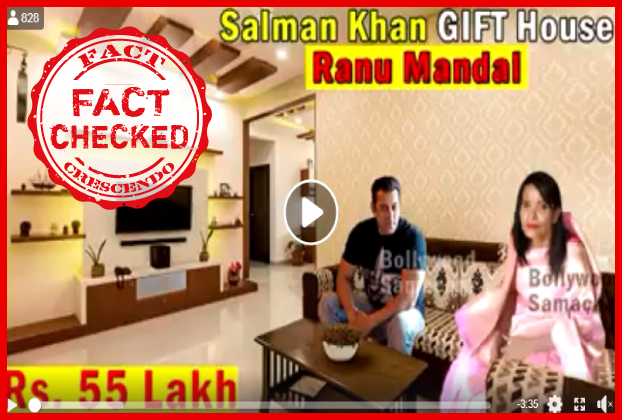
Claim Salman Khan gifted rs55 lakh flat to Ranu Mondal
Publisher’s rating: FALSE