PeakMetrics / Fact Checks
Culture & entertainment fact checks
Explore claims publishers have checked about culture & entertainment. Read their original ratings and follow the evidence.
Search fact checks
Search by text or image3,169 published reviews in this topic

Video of late Air India Express flight Captain Deepak Vasant Sathe, singing a Bollywood song on the stage.
Publisher’s rating: FALSE
The post identified a stage performance as Captain Deepak Vasant Sathe singing a Bollywood song. FACTLY’s review says the performer was retired Vice Admiral Girish Luthra, not Sathe. It places Luthra’s performance at the Indian Western Navy Command’s Golden Jubilee celebration and identifies the song as Udit Narayan’s “Ghar se nikalthe hi.” [S1]
वीडियो में दिख रही गायिका किशोर कुमार की १४ वर्षीय पोती मुक्तिका गांगुली है
Publisher’s rating: False

Claim: This calf with Sun symbol is not from Tamil Nadu
Publisher’s rating: False
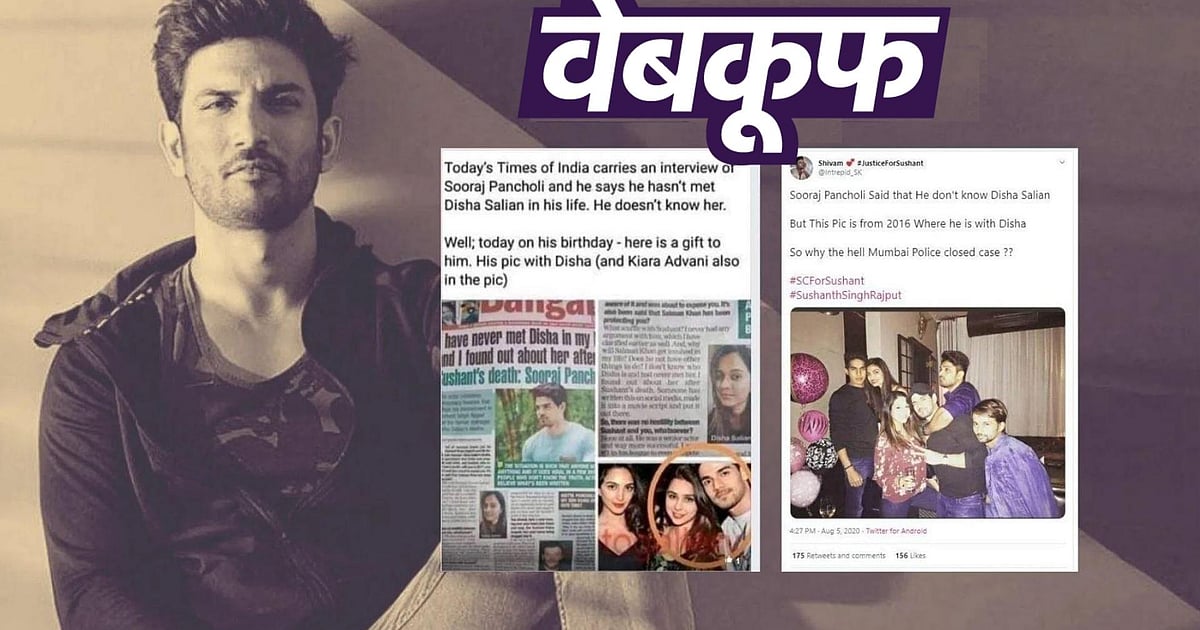
is the girl disha salian with sooraj pancholi in viral pictures?
Publisher’s rating: FALSE

ప్రియాంక చోప్రా బురఖా వేసుకొని ఉన్న ఈ ఫోటో బంగ్లాదేశ్ లో తీసినది.
Publisher’s rating: FALSE
In einem Sharepic wird behauptet, die Schauspielerin Emilia Schüle habe den folgenden Satz gesagt: «Die Verteidigung Europas ist Frauensache.» Das Zitat soll am 26. April 2020 in der ARD gefallen sein.
Publisher’s rating: Teilweise falsch. Die Schauspielerin Emilia Schüle hat die Worte in einer Rolle gesagt und nicht als Privatperson.
The sharepic attributed “Die Verteidigung Europas ist Frauensache” to actress Emilia Schüle and said it was spoken on ARD on 26 April 2020. The review identifies the line as dialogue from the fictional crime series Tatort, not a statement Schüle made as herself: it says the words were spoken by “Marie Jäger,” the character Schüle portrays.
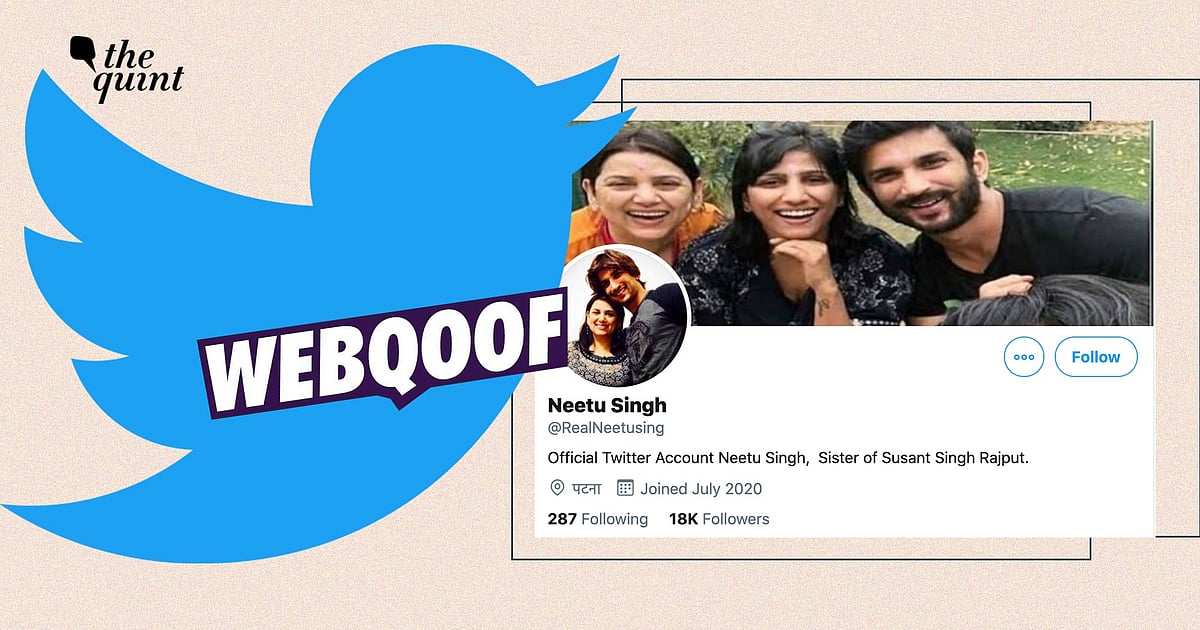
Twitter Handles of Sushant Singh’s Sister and Father
Publisher’s rating: FALSE

ಪ್ರಧಾನಿ ನರೇಂದ್ರ ಮೋದಿ ಇತ್ತೀಚೆಗೆ ಬಿಡುಗಡೆ ಮಾಡಿದ ‘ರಾಮಾಯಣ’ ಅಂಚೆ ಚೀಟಿಗಳ ಚಿತ್ರ.
Publisher’s rating: MISLEADING

عکسی که ادعا میشود ده سال پیش از تاجگذاری رضا شاه توسط یک جهانگرد انگلیسی در اصفهان گرفته شده است.
Publisher’s rating: نادرست
TV5 chairman Manny V. Pangilinan ordered for comedian Vice Ganda be blocked from his network.
Publisher’s rating: False

: Image of ‘Ramayana’ postage stamps recently released by Prime Minister Narendra Modi.
Publisher’s rating: MISLEADING
The claim concerned an image of Ramayana postage stamps said to have been recently released by Prime Minister Narendra Modi ahead of his planned visit to Ayodhya for the temple foundation-stone ceremony on 5 August 2020. The review found that the stamps in the image were not new: Modi had released them in September 2017. Its conclusion turns on the date of the pictured stamps, rather than on whether new stamps might be released later. To trace the image, the review reports using reverse image search. It found the same image in a Sapost.blogspot.com article dated 26 September 2017, whose title identifies a set of 11 commemorative Ramayana stamps issued on 22 September 2017. The review also reports finding the set on the India Postage Stamps website, which said India Post issued the 11 stamps on 22 September 2017. The review adds an important distinction: reports about a possible launch of other postal stamps after the Ayodhya ceremony did not make the stamps in the circulating image recent. It says those reports concerned stamps on a symbolic model of the Ram temple and the Ramayana, whereas the image under review showed stamps released in 2017.
“Lojas Americanas jogam todos os livros do Felipe Neto no lixo!”
Publisher’s rating: Falso
In einem Facebook-Post wird das Zitat «Wenn du wissen willst, wer dich beherrscht, finde heraus, wen du nicht kritisieren darfst» dem Philosophen Voltaire (1694 bis 1778) zugeschrieben.
Publisher’s rating: Das Zitat stammt nicht von Voltaire, sondern von einem US-amerikanischen Neonazi.
The claim concerns a Facebook post attributing the saying “If you want to know who rules you, find out who you are not allowed to criticize” to Voltaire. The review says Nicholas Cronk, director of Oxford’s Voltaire Foundation, traced the wording not to Voltaire but to something written in 1993 by Kevin Alfred Strom, an American neo-Nazi and Holocaust denier. The review identifies Strom’s 1993 radio broadcast, “All America Must Know the Terror That is Upon Us,” as the source of the related wording: it asks who one is “not permitted to criticize.” These details connect the attribution under review to an earlier, documented formulation rather than to Voltaire. [S1: “In einem Facebook-Post wird das Zitat «Wenn du wissen willst, wer dich beherrscht, finde heraus, wen du nicht kritisieren darfst» dem Philosophen Voltaire (1694 bis 1778) zugeschrieben.”; “Nicholas Cronk, Direktor der «Voltaire Foundation» an der Oxford-Universität in Grossbritannien, stellt auf dem Blog der Stiftung klar, dass der genannte Satz nicht von Voltaire stammt: «Dieses Sprichwort, das nun regelmässig Voltaire zugeschrieben wird, scheint auf etwas zurückzuführen zu sein, das 1993 von Kevin Alfred Strom geschrieben wurde, einem amerikanischen Neonazi und Holocaust-Leugner (...)».”; “Tatsächlich geht das abgewandelte Zitat auf eine Radiosendung Stroms von 1993 zurück («All America Must Know the Terror That is Upon Us»), den er über einen eigenen Sender verbreitete: «American Dissident Voices». Darin heisst es wörtlich: «To determine the true rulers of any society, all you must do is ask yourself this question: Who is it that I am not permitted to criticize?»”] The review also reports that Strom addressed the attribution himself in a 2007 article, saying Voltaire had not said the line, or anything similar, and that the wording was his. This provides a further link between the quote’s circulation under Voltaire’s name and Strom’s own account of its origin. The evidence describes a related formulation, so it does not establish that the Facebook post reproduced Strom’s broadcast word for word; it does support the review’s conclusion that the saying was misattributed to Voltaire. [S1: “2007 weist Strom, Mitbegründer der rechtsextremen Plattform «National Vanguard», in einem Artikel sogar selbst darauf hin, dass das Zitat im Netz fälschlicherweise Voltaire zugeordnet würde, obwohl es von ihm selbst stamme: «Voltaire hat das, oder etwas Ähnliches, nicht gesagt», betont Strom.”]
زنان در اتریش خواستار برگزاری کنسرت تک جنسیتی هستند.
Publisher’s rating: نادرست

The address on SpongeBob SquarePants' driver's license is the same as Jeffrey Epstein's compound in the Virgin Islans.
Publisher’s rating: False
Actor Robert Downey Jr. died in a car crush stunt in Hollywood on July 8.
Publisher’s rating: Fake