PeakMetrics / Fact Checks
Culture & entertainment fact checks
Explore claims publishers have checked about culture & entertainment. Read their original ratings and follow the evidence.
Search fact checks
Search by text or image3,169 published reviews in this topic

Claim: Misinformation with this US Army band playing Indian national anthem
Publisher’s rating: False
The review investigated a video of U.S. Army musicians playing India’s national anthem. It describes social-media posts that called the performance the U.S. Army’s first or linked the footage to Prime Minister Narendra Modi’s visit to the United States. The review says the same video had also circulated with a claim that it showed the Army preparing for Modi’s visit: “இதே வீடியோ கடந்த ஆண்டு, அமெரிக்காவுக்கு மோடி வருவதையொட்டி அமெரிக்க ராணுவ வீரர்கள் இந்திய தேசிய கீதத்தை இசைத்து பயிற்சியில் ஈடுபட்டனர் என்று பகிரப்பட்டு வந்தது.” To establish the video’s context, the review traced its earlier circulation and reported finding that the footage was from the conclusion of the 2019 Yudh Abhyas joint U.S.–India military exercise. It says ANI published the video in September 2019 and described the performance as taking place during that exercise: “Yudh Abhyas 2019 இந்திய – அமெரிக்க ராணுவ கூட்டுப் பயிற்சியின் போது அமெரிக்க ராணுவ வாத்தியக் குழு இந்திய தேசிய கீதத்தை இசைத்தது”. The review also says it searched Google and found media reports identifying the performance as occurring on the exercise’s final day. That provenance undercuts the posts’ misleading framing. According to the review, the performance was not connected to Modi’s U.S. visit or India’s Independence Day: “இதன் மூலம் மோடியின் அமெரிக்க பயணத்துக்கும், அமெரிக்க ராணுவத்தினர் இந்திய தேசிய கீதத்தை இசைத்ததற்கும் தொடர்பில்லை என்பது உறுதியாகிறது. மேலும் இந்திய சுதந்திர தினத்துக்காகவும் அவர்கள் இசைக்கவில்லை என்பது உறுதியாகிறது.” The review concludes that sharing the 2019 performance with those claims was false.
Der Steintempel von Stonehenge sei angeblich kein 4000 Jahre altes, sondern ein modernes Bauwerk. Als Beweis werden in einem Facebook-Post einige Schwarz-Weiß-Fotos gezeigt. Darauf: Männer in moderner Kleidung, die mit Lastwagen und Kränen an dem Monument arbeiten. Auf einem Bild ist das Betonfundament eines Steinkolosses zu sehen. Der User kommt zu dem Schluss: «Unser Geschichte ist eine komplette Lüge (Sic!)»
Publisher’s rating: Untersuchungen archäologischer Funde belegen, dass der Tempel von Stonehenge um das Jahr 2500 vor Christus erbaut wurde. Das Monument wurde vor allem in der ersten Hälfte des 20. Jahrhunderts aufwändig erforscht, instandgesetzt und gesichert; die Fotos dokumentieren diese Arbeiten – nicht aber den Neubau von Stonehenge.
A Facebook post used black-and-white photographs of men, trucks and cranes working at Stonehenge—including an image of a stone with a concrete base—to argue that the monument was a modern construction and that history was a lie. The review distinguishes evidence of later work on the monument from evidence of its original construction: the photographs show restoration and alterations, not a modern-era building project. For the monument’s age, the review cites research by archaeologist Mike Parker Pearson and colleagues. They estimated that Stonehenge was built between 2620 and 2480 BC using radiocarbon dating of antlers and pig bones found near the site. The review describes radiocarbon dating as a method for estimating the age of organic material; it does not claim the dated remains were themselves stones or that this method dates the stone blocks directly. The review also explains why the photographs can look like evidence of modern construction. It reports that, from 1901 to 1964, nearly every one of the more than 30 stones was either given a concrete base for safety, moved, or realigned. It points to documented crane work during alterations in the late 1950s, as well as restoration under William Hawley from 1919 to 1926. These interventions altered and secured an ancient monument; the evidence presented does not show that they created it.
Lukisan tahun 1962 yang diklaim telah meramalkan kehidupan pada 2022 usai pandemi Covid-19
Publisher’s rating: Sesat

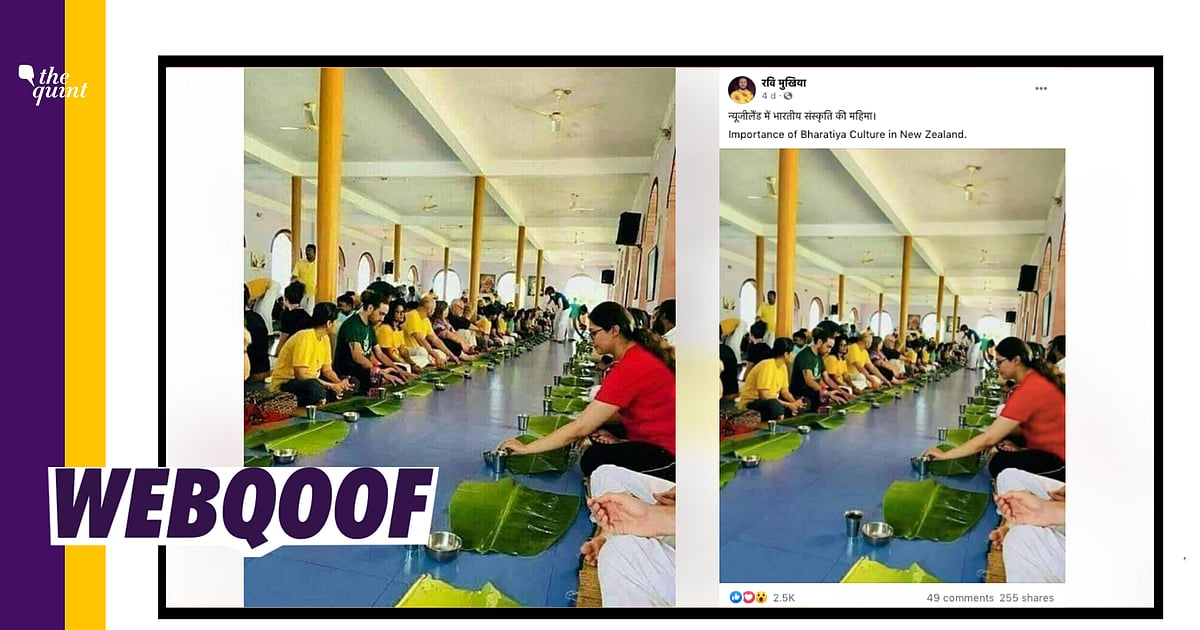
Photo of people in New Zealand following ‘Bharatiya’ (Indian) culture of sitting on the floor and eating in banana leaves
Publisher’s rating: FALSE
The claim concerns a photo of people sitting on the floor and eating from banana leaves, said to show Indian culture being followed in New Zealand. FACTLY’s review identifies the pictured setting instead as Sivananda Yoga Vedanta Dhanwantari Ashram in Kerala, India, and says the photo therefore does not show the claimed New Zealand scene. To investigate the image, the review reports using Yandex Reverse Image Search. It found a similar photo on a travel website that described the image as related to Sivananda Ashram in Kerala. FACTLY also compared visible features: it says the flooring, pillars, window design and ceiling matched between the photos. These details support the identification of the pictured location rather than relying only on the social-media caption. The review further reports that similar images of Sivananda Yoga Vedanta Dhanwantari Ashram appear in Google Images and locates that ashram in Trivandrum, Kerala. Its conclusion is that the photo was taken at an ashram in India, not in New Zealand. The supplied excerpt does not provide the original post’s date or further provenance for the photograph.
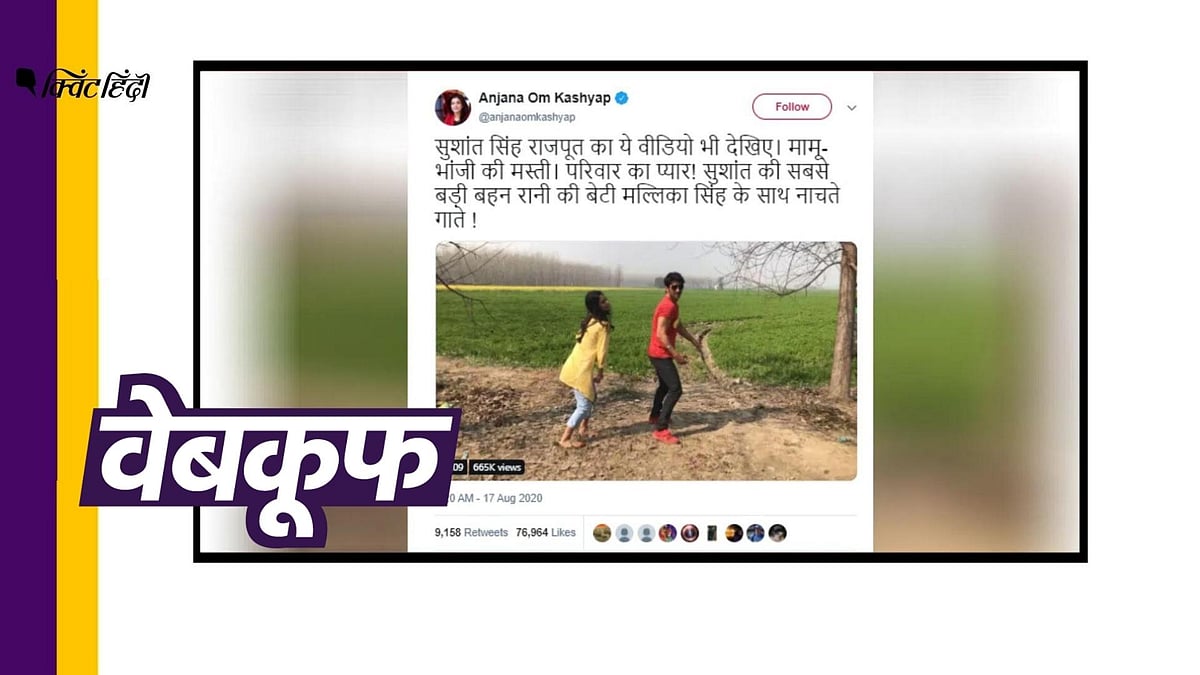
वायरल वीडियो में सुशांत अपनी भांजी के साथ डांस कर रहे हैं
Publisher’s rating: FALSE

Ein Bild, das Menschen zeigt, die in einem Gefährt mit einer Art Glaskuppel um sie herum eine Straße entlang fahren, stammt von Walter Molino, trägt den Namen „Leben im Jahr 2022“ und wurde im Jahr 1962 gemalt.
Publisher’s rating: Richtig sind der Maler sowie das Jahr, in dem das Werk entstand. Es gibt allerdings keine Belege dafür, dass das Bild „Leben im Jahr 2022“ heißt oder sich auf dieses Jahr bezieht. Auch dürfte der Illustrator beim Malen des Bildes keine Social Distancing-Maßnahmen im Sinn gehabt haben.
The claim concerns a widely shared image of people travelling in individual, glass-domed vehicles. The review describes the posts as attributing the work to Walter Molino, dating it to 1962 and calling it “Leben im Jahr 2022.” It distinguishes the image’s authorship and year from the unsupported title and claimed connection to 2022: it reports that Molino made the work in 1962, but says it found no evidence that the image has that title or refers to that year. To check the image’s provenance and meaning, the review reports that it traced the work to a cover of the Italian illustrated magazine Domenica del Corriere, published on 16 December 1962. It also examined the vehicle depicted and the text printed on the full cover. That text, translated approximately, asks how people will travel around the city, while the accompanying small text refers to traffic problems. The review says the social-media versions were cropped so this text was not visible. The review identifies the vehicle as a “Singoletta,” described as a proposed means of addressing traffic in large cities. It reports that the vehicle was intended to be powered by an electric motor and batteries. This context supports a traffic-related interpretation of the illustration, rather than establishing a title about life in 2022 or a pandemic-era social-distancing purpose. The review says it found no evidence in the text or the further information it consulted about the vehicle for either of those claims.
Terdapat gambar baju adat Cina dalam uang baru pecahan Rp 75 ribu edisi Peringatan Kemerdekaan 75 Tahun RI
Publisher’s rating: Keliru

बीजेपी का झंडा वाला मफलर लिए हुए रणवीर सिंह और दीपिका पादुकोण।
Publisher’s rating: FALSE
Eine Illustration von Walter Molino zeigt Menschen, die einzeln in kleinen Glaskuppelfahrzeugen durch die Straßen fahren. In einem Facebook-Posting wird behauptet, dass das Bild 1962 entstand und den Titel «Leben im Jahr 2022» trägt.
Publisher’s rating: Weder das Bild noch der Artikel, der 1962 damit illustriert wurde, beziehen sich auf das Jahr 2022. In der Zeitungsbeilage «Domenica de Corriere» ging es damals um die Zukunft der Mobilität.
The Facebook post described in the review claims that Walter Molino’s illustration was made in 1962 and titled “Life in the Year 2022.” The review identifies the picture as a crop from the Italian newspaper supplement «Domenica del Corriere» dated 16 December 1962, but says its caption and the accompanying article concern the future of mobility, not the year 2022. The review reports that the newspaper «Corriere della Sera» also described the illustration in reporting dated 18 May 2020. (S1: “In einem Facebook-Posting wird behauptet, dass das Bild 1962 entstand und den Titel «Leben im Jahr 2022» trägt.”; “Der Bildausschnitt des Illustrators Walter Molino stammt aus der Beilage der italienischen Zeitung «Corriere della Sera» vom 16. Dezember 1962.”; “Das berichtete die Zeitung am 18. Mai 2020.”) The review gives the caption’s opening question as «In città gireremo così?», rendered in German as asking whether people would travel around the city this way. It identifies that wording as the illustration’s title. The caption’s accompanying text presents a tiny, single-seat car as a possible way to solve future traffic problems; the article it points to describes the vehicle, called «Singoletta», and the growing traffic that the futuristic small car might ease. (S1: “Die Bildunterschrift beginnt mit der Frage «In città gireremo così?», auf Deutsch etwa: «Werden wir uns so in der Stadt fortbewegen?».”; “Das ist nach Angaben der Zeitung auch der Titel der Illustration.”; “Der weitere Text beschreibt, dass durch das dargestellte «winzige einsitzige» Auto die Probleme des Straßenverkehrs in der Zukunft gelöst werden könnten.”; “Der Autor beschreibt den zunehmenden Straßenverkehr und wie der «Kleinstwagen der Zukunft» diesen entlasten könnte.”) The specific “2022” claim is not supported by the cited text: the review states that the year does not appear in the article. The evidence therefore distinguishes a 1962 illustration imagining future urban mobility from the later claim that it was titled or specifically about 2022. (S1: “Die Jahreszahl «2022» kommt im Text nicht vor.”)
Une illustration de l'artiste Walter Molino est largement partagée sur les réseaux sociaux. On y voit des personnes qui se déplacent dans des mini voitures individuelles constituées d'une cloche en verre. Sur Facebook, des internautes prétendent que l'image datant de 1962 serait intitulée « La vie en 2022 ».
Publisher’s rating: « La vie en 2022 » n'est évoquée ni dans l'image ni dans l'article qu'elle illustrait dans le supplément du journal « Domenica de Corriere». Il y était question du futur de la mobilité.
The claim concerns Walter Molino’s illustration of people travelling in individual, glass-bubble-like vehicles. Social-media posts attributed it to 1962 and described its title as « La vie en 2022 ». The review traces the illustration to a publication in the Italian newspaper supplement Domenica del Corriere on 16 December 1962; it reports that the weekly identified that original appearance in a 2020 issue. The review says the image’s caption asks, in Italian, “In città gireremo così?”—a question about whether people would travel that way in the city. It reports that the weekly treated this wording as the image’s title. The accompanying article discussed a possible future solution to road congestion, rather than presenting the illustration as a prediction specifically about 2022. The article also described the “Singoletta,” including how the vehicle worked and was constructed, and discussed rising traffic and the small vehicle’s potential advantages. The review reports that the article does not mention 2022. Thus, the evidence supports the illustration’s connection to future mobility, but not the claimed title « La vie en 2022 ».


The United States military academy band played the Indian National anthem on the occasion of India’s 74th Independence day
Publisher’s rating: FALSE
The claim concerns a video said to show the United States military academy band playing India’s national anthem on the occasion of India’s 74th Independence Day. FACTLY says the band did play the anthem in the video, but the claimed occasion was wrong: the performance took place during Yudh Abhyas 2019, a joint military exercise between the U.S. and Indian armies. FACTLY describes its method as a reverse image search of screenshots from the circulating video. It says the search found similar visuals in a video posted on the ANI website, which identified the performance as occurring during Yudh Abhyas 2019. The review further reports that ThePrint and NDTV posted the same video and likewise described it as related to that exercise. The review places the event in September 2019 at Joint Base Lewis-McChord, Washington, where the 15th edition of Yudh Abhyas was held. That earlier exercise footage was later shared with the claim that it showed a performance for India’s 74th Independence Day. The evidence therefore does not dispute that the band played the anthem; it contradicts the post’s account of the event and occasion.
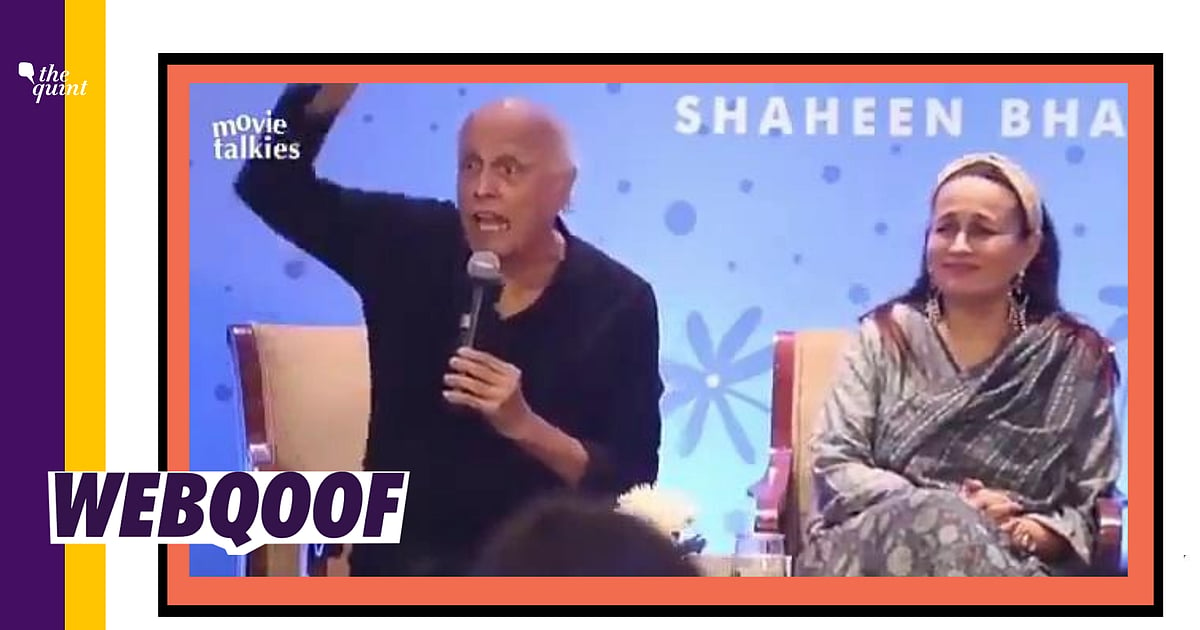
Mahesh Bhatt Lashing Out over Dislikes for Sadak 2
Publisher’s rating: FALSE

Bill de Blasio canceled the annual Tribute of Light over COVID fears.
Publisher’s rating: False

1000 ஆண்டுகளுக்கு முன்பு தமிழன் இராஜராஜசோழன் இந்தோனேசியாவில் கட்டிய நுழைவாய்.
Publisher’s rating: Fake
Das Popstar-Ehepaar Beyonce Knowles und Jay-Z steht vor einem golden umrahmten Porträt-Bild der serbischen Künstlerin Marina Abramovic - kann das stimmen? Das suggeriert ein bei Facebook kursierendes Foto.
Publisher’s rating: Das Foto ist gefälscht. Im echten Foto stehen die beiden vor der Mona Lisa - im Gefälschten ist das Bild von Abramovic reinretuschiert.
The claim concerns a Facebook-circulated image that appears to show Beyoncé Knowles and Jay-Z posing in front of a golden-framed portrait of Serbian artist Marina Abramović. The review identifies the image as altered: the couple’s original photograph shows them in front of the Mona Lisa, and the Abramović portrait was inserted into that image. The review places the underlying photograph at the couple’s visit to the Louvre in Paris on October 7, 2014. It says the visit was private, with the museum open only to the couple and their daughter, and notes that Beyoncé’s website documents the visit. The review also reports that photos of the couple posing in front of the Mona Lisa appear on her website, including the image used as the basis for the Facebook post. The image comparison described in the review distinguishes the original Louvre setting from the circulated version: the Mona Lisa is present in the original, while the Abramović image appears in the altered version. The review separately dates the Abramović portrait to 2012 and says it is often used to illustrate articles about the artist. That provides a possible provenance for the inserted portrait, but the review’s decisive point is that the circulated image modifies the couple’s Louvre photograph.
Het Amsterdams museum Ons' Lieve Heer op Solder krijgt voortaan geen subsidies meer van het gemeentelijke Amsterdams Fonds voor de Kunst (AFK). Volgens de Nederlandse nieuwswebsite De Dagelijkse Standaard zijn die subsidies ingetrokken omdat het museum niet "inclusief" genoeg is en omdat er te veel mensen met een Nederlandse achtergrond werken. Maar kreeg het museum die financiële klap echt om diversiteitsredenen?
Publisher’s rating: Het bericht is fout. De subsidieplannen zijn wel goedgekeurd, maar worden niet uitbetaald omdat het AFK niet voldoende beschikbare fondsen heeft. Wat ook niet klopt, is dat de beslissing van de niet-uitbetaalde subsidies iets te maken zou hebben met de diversiteit in het museum. Het museum scoorde voldoende op diversiteit en inclusiviteit, maar formuleerde een doelstelling te gebrekkig. Het artikel is daarom fout en polariserend.
The allegation concerns Museum Ons’ Lieve Heer op Solder in Amsterdam and says the AFK withdrew its subsidies because the museum was insufficiently inclusive and employed too many people with Dutch backgrounds. The review reports a different explanation: the subsidy applications had been approved in principle, but the AFK did not have enough money to pay all eligible awards. It says the museum was one of 50 organizations affected by the budget shortfall. [S1: “De commissie heeft de bijdrage aan diversiteit en inclusie als 'voldoende' beoordeeld” and “naast 49 andere organisaties, ook Museum Ons’ Lieve Heer op Solder.”] The review says the AFK assessed the museum against four separate criteria, and that diversity and inclusion could not on its own determine whether the museum received funding. It reports that the museum scored sufficiently on all four criteria, including a “good” score on one. Although the committee criticized the specificity and persuasiveness of the museum’s plans regarding staff and oversight, the review distinguishes those proposed plans from the existing workforce. [S1: “Het AFK beoordeelt het museum op vier afzonderlijke parameters.” and “de voornemens van het museum op dit gebied overtuigingskracht en concreetheid missen.”] For the funding explanation, the review reports that the AFK’s assessment said the application would be partially honored, but that there was insufficient budget after all applications had been assessed. It quotes an AFK spokesperson saying the fund had a €6.6 million shortfall for eligible applications. The museum and AFK both rejected the claim that diversity explained the unpaid award; the review therefore identifies the staffing criticism as a comment on the museum’s plans, not the reason the approved subsidy was not paid. [S1: “gedeeltelijk zal honoreren” and “onvoldoende budget” and “Het AFK heeft 6,6 miljoen euro budget tekort om alle honorabele aanvragen toe te kennen” and “De inspanningen van Ons' Lieve Heer op Solder zijn op het gebied van diversiteit en inclusie kortom voldoende”]

A young boy made his self-portrait sculpture
Publisher’s rating: FALSE
The claim concerned an image of a boy sitting beside a sculpture said to be his own self-portrait. FACTLY reports that it traced the image through a reverse image search to a Facebook post by Sn Art Sadananda, where the same image appeared with the caption “SAND ART Today live portrait try.” The review also notes that his timeline included other artworks he said he had created.